What to Know Before You Choose Educational Toys: A Parent’s Guide to Smart, Safe, and Effective Play
Introduction
Educational toys have become a staple in modern parenting. Walk into any toy store or browse online, and you will be bombarded with claims of “STEM,” “Montessori-inspired,” or “brain-boosting” products. While the intention behind these toys is noble—to combine fun with learning—the reality is far more complex. Choosing the right educational toy for your child is not simply a matter of picking the most colorful box or the highest price tag. It requires a thoughtful understanding of child development, safety standards, and the true nature of learning through play. A poorly chosen toy can frustrate a child, stifle creativity, or even pose physical risks. Conversely, a well-chosen toy can spark curiosity, build confidence, and lay the foundation for lifelong skills. This article explores the critical factors every parent, caregiver, or educator should know before investing in educational toys, ensuring that playtime is both joyful and genuinely enriching.
—
1. Age Appropriateness: The Foundation of Learning
The single most important factor in selecting an educational toy is its suitability for the child’s developmental stage. A toy that is too advanced can lead to frustration and a sense of failure, while one that is too simple may bore the child and offer no challenge. Manufacturers typically label toys with age ranges, but these are only rough guidelines. For example, a three-year-old may be ready for simple puzzles with large pieces, but a five-year-old might benefit from more complex ones that require pattern recognition and spatial reasoning. Montessori philosophy emphasizes “following the child,” meaning you should observe your child’s current abilities and interests. A toddler who loves stacking blocks is building fine motor skills and understanding cause and effect; a preschooler who sorts colored beads is practicing categorization and hand-eye coordination. Always consider not just the chronological age but also the child’s unique developmental pace. Do not fall into the trap of buying “advanced” toys to accelerate learning—play should be a natural, joyful process, not a race.
—
2. Safety First: Non-Toxic and Durable Materials
Safety is non-negotiable, especially for young children who explore the world by putting objects in their mouths. The first thing to check is whether the toy is made from non-toxic materials. Look for certifications like ASTM, EN71, or CPSIA compliance, which indicate that the toy has been tested for harmful chemicals such as lead, phthalates, and BPA. Avoid toys with small parts that could be choking hazards for children under three. But safety goes beyond chemicals and choking. Consider the toy’s construction: Are edges smooth? Are magnets securely enclosed? Are batteries inaccessible? Additionally, think about durability. A cheaply made toy that breaks easily can produce sharp edges or small fragments. Educational toys are often used repeatedly, so invest in sturdy materials like solid wood, high-quality plastics (BPA-free), or natural fabrics. A broken toy not only disappoints but can also disrupt the learning process. Remember: a safe toy is one that allows a child to explore independently without constant adult intervention, fostering autonomy.
—
3. Open-Ended vs. Closed-Ended Toys: Encouraging Creativity
One of the most critical distinctions in educational toys is between open-ended and closed-ended playthings. Closed-ended toys have a single correct outcome or a predetermined purpose—such as a puzzle with a fixed picture, a shape sorter with specific holes, or a flashcard set. These toys are valuable for teaching specific skills like matching, sorting, and problem-solving. However, an exclusive diet of closed-ended toys can limit creativity and reduce play to a series of tasks. Open-ended toys, on the other hand, have no fixed outcome. Blocks, LEGOs, play dough, art supplies, sand, water, and simple dolls or action figures all invite children to create their own narratives, structures, and rules. A cardboard box can become a spaceship, a castle, or a car. Open-ended toys promote divergent thinking, imagination, and problem-solving from multiple angles. Before choosing a toy, ask yourself: Will this toy allow my child to use it in more than one way? Will it inspire storytelling or experimentation? The best educational toy collections balance both types—providing structure when needed and freedom when possible.
—
4. Skill Development: Targeting Cognitive, Motor, and Social Skills
Educational toys should be chosen based on the specific developmental skills they nurture. Not all learning is academic. Consider the whole child: cognitive, motor, language, and social-emotional domains.
- Cognitive skills: Toys that encourage logic, memory, and problem-solving. Examples include memory games, simple board games, sequencing toys, and early coding kits (e.g., programmable robots for older children). Look for toys that require planning, trial and error, and cause-and-effect reasoning.
- Fine and gross motor skills: Manipulative toys like beads for threading, scissors for cutting, pegboards, interlocking blocks, and large balls for throwing all strengthen muscles and coordination. For toddlers, push-and-pull toys help with balance and walking.
- Language and literacy: Puppets, picture books with textures, storytelling cubes, and alphabet puzzles can expand vocabulary and narrative skills. Interactive toys that ask questions or respond to sounds can also be beneficial, but be cautious of over-reliance on screens.
- Social and emotional skills: Cooperative board games, role-playing sets (kitchen, doctor, tool bench), and any toy that requires turn-taking, sharing, or negotiation. These teach empathy, patience, and emotional regulation.
Avoid toys that claim to be “all-in-one” learning tools for every skill. Specialized toys often do a better job at developing one area deeply. Also, beware of toys that overemphasize academics (like early reading or math drills) at the expense of creative and physical play.
—
5. Avoiding the Hype: Marketing vs. Real Educational Value
Walk down the toy aisle, and you will see terms like “STEM-certified,” “Montessori-inspired,” “brain training,” and “school readiness.” These are often marketing buzzwords rather than guarantees of educational value. Many toys labeled “educational” are little more than flashy plastic gadgets that do the work for the child—lights flash, sounds play, and the child merely presses a button. True learning requires active engagement, not passive consumption. Research the toy before buying. Read independent reviews from parents and educators. Check if the toy encourages the child to think, create, or experiment rather than simply respond to stimuli. A toy that claims to teach a foreign language but only plays recorded phrases is less effective than a simple set of picture cards that you can use interactively with your child. The best “educational” toy is often the one that requires your presence: a puzzle you solve together, a building set you collaborate on, or a science kit you experiment with side by side. Do not be seduced by glossy advertisements—trust your instincts and your child’s genuine engagement.
—
6. The Role of Technology: Screen Time vs. Hands-On Play
In the digital age, many educational toys now incorporate screens, apps, or electronic components. While some tech-enhanced toys can be beneficial (e.g., tablets with carefully curated learning apps, coding robots that teach logic), the American Academy of Pediatrics recommends limiting screen time for young children. Hands-on, sensorimotor play is irreplaceable for brain development. A child learns more from manipulating physical objects—feeling textures, building towers that fall, mixing colors with paint—than from swiping a screen. Technology should supplement, not replace, tangible play. If you choose a tech toy, ensure it is interactive rather than passive (e.g., a robot that you program to move vs. a video that plays automatically). Also, consider the toy’s “open-endedness” with technology: a basic digital microscope that lets a child explore leaves and insects is wonderful; a toy that simply repeats letters is less valuable. Balance is key. Most of your child’s toy collection should be non-digital, fostering imagination, physical activity, and real-world problem-solving.
—
7. Child’s Interest: The Best Teacher is Curiosity
No matter how educationally sound a toy is on paper, if your child shows no interest in it, it will collect dust. Follow your child’s natural passions. Does she love animals? Get her a set of realistic animal figurines with a habitat playset. Does he adore building? Invest in magnetic tiles or wooden blocks. When a child is intrinsically motivated, learning happens effortlessly. Forcing a child to play with “educational” toys they dislike can create negative associations with learning. Observe your child during free play—what themes emerge? What materials do they gravitate toward? Do they enjoy solitary play, or do they seek cooperation? Matching the toy to the child’s temperament and interests is far more effective than forcing a “prescribed” curriculum. Additionally, allow space for boredom and open-ended exploration. Sometimes the best educational toy is a pile of sticks, a splash of water, or a set of simple kitchen utensils. Remember: You are not just buying a toy; you are buying an experience that should spark joy and wonder.
—
8. Quality over Quantity: Longevity and Sustainability
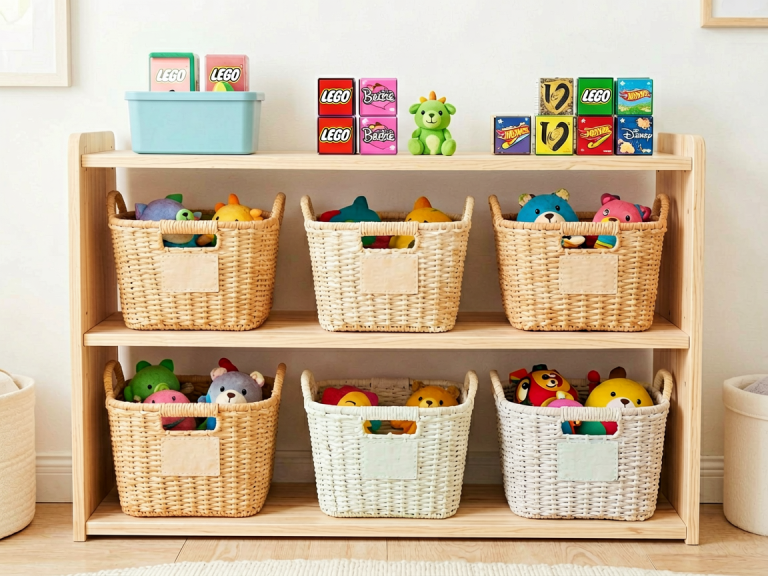
A common mistake is to buy many cheap toys that quickly break or lose their appeal. Instead, prioritize quality over quantity. A single high-quality wooden train set can provide years of play, while a bin of flimsy plastic trinkets might be discarded within weeks. Look for toys that can grow with the child—adjustable difficulty, modular designs, or multiple uses. For example, a set of magnetic building tiles can be used from age two (stacking) through age ten (complex geometric constructions). Choose materials that are durable and sustainable: untreated or natural-finished wood, organic cotton, recycled plastics. Not only do these toys last longer, but they also teach children to value possessions and care for the environment. Additionally, consider the toy’s social and environmental footprint. Does the company use fair labor practices? Are the toys easily repairable or recyclable? By choosing wisely, you model responsible consumption for your child.
—
9. Social and Emotional Learning: Toys That Foster Cooperation
Play is a primary vehicle for social and emotional development. When selecting educational toys, think about whether they encourage cooperation, empathy, and conflict resolution. Competitive games have their place (they teach resilience and fair play), but cooperative toys build stronger interpersonal skills. Board games where everyone wins together, pretend-play sets that require role assignment, and building projects that need teamwork are all excellent choices. For children who struggle with sharing, a set of large blocks that requires two people to build a tall structure can be a gentle lesson in collaboration. Also, consider toys that help children express emotions—puppets for storytelling, art supplies for emotional release, or calm-down jars for self-regulation. Avoid toys that reinforce stereotypes or promote aggression (e.g., overly violent action figures). Instead, choose toys that model positive interactions—a dollhouse with diverse families, a doctor kit for empathy, or a kitchen set for nurturing play.
—
Conclusion
Choosing an educational toy is not a simple purchase; it is an investment in your child’s cognitive, physical, social, and emotional growth. The key lies not in the price tag, the brand name, or the flashy claims, but in understanding the child’s needs, safety, and the nature of true learning. Prioritize open-ended play, follow your child’s interests, ensure safety and durability, and resist the lure of marketing hype. A thoughtful selection process transforms toys from mere objects into tools for discovery, creativity, and connection. Ultimately, the most powerful educational “toy” is a loving, engaged adult who plays alongside the child—asking questions, offering encouragement, and sharing in the wonder of exploration. So, before you click “add to cart,” pause, reflect, and choose with intention. Your child’s playful mind will thank you.