Unwrapping Curiosity: Why Science and Engineering Toys Make the Perfect Christmas Gifts
Christmas is a season of wonder, warmth, and—let’s be honest—mountains of brightly wrapped presents. Yet every year, countless gifts end up forgotten in a corner by mid-January, outshone by the next viral gadget or fleeting trend. This holiday season, why not break the cycle by giving a gift that keeps on giving? Science and engineering toys are not just playthings; they are portals to discovery, problem-solving, and lifelong learning. They spark the kind of wonder that doesn’t fade when the wrapping paper is thrown away—it grows.
The Magic of Learning Through Play
At first glance, a microscope or a set of gears might seem less “exciting” than the latest video game console. But the true magic of science and engineering toys lies in their ability to turn passive screen time into active, hands-on exploration. When a child builds a bridge from toothpicks and marshmallows, they are not just having fun—they are learning structural physics. When they mix baking soda and vinegar to create a volcano, they are internalizing the basics of chemical reactions. This kind of learning sticks because it is experiential.
Modern educational research consistently shows that children retain information far better when they engage multiple senses and manipulate real-world objects. A chemistry set, for example, asks a child to measure, observe, record, and hypothesize—skills that go far beyond the textbook. Engineering toys, like robotics kits or marble runs, teach iterative design: build, test, fail, tweak, succeed. That cycle is the heart of innovation. By giving these gifts, you are not just giving a toy; you are giving a mindset—one that embraces curiosity, resilience, and creativity.
Science Toys vs. Engineering Toys: Two Sides of the Same Coin
While often grouped together, science toys and engineering toys serve slightly different purposes, and understanding the distinction can help you choose the perfect gift.
Science toys are about exploration and discovery. They help children ask “why” and “what if.” Think of telescopes, microscopes, crystal-growing kits, planetariums, and anatomy models. These toys encourage observation and experimentation. A child using a magnifying glass to examine a leaf is a tiny scientist, forming hypotheses about veins and textures. Science toys often have no single “right answer”; instead, they invite open-ended inquiry.
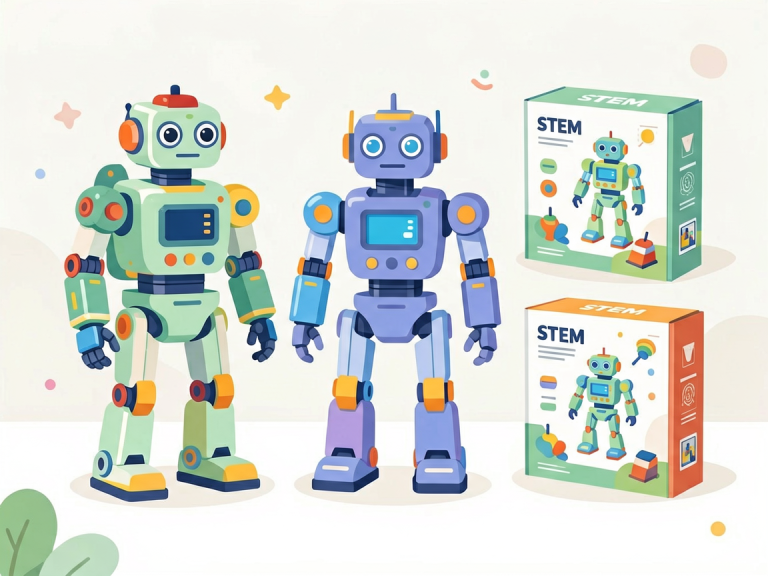
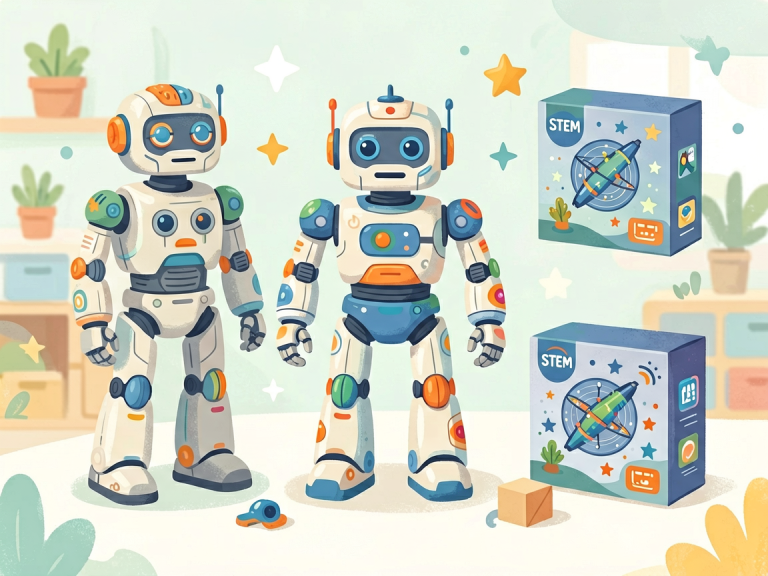
Engineering toys, on the other hand, are about creation and construction. They ask “how” and “how can I make this work better.” Examples include building blocks (like LEGO Technic), simple machines kits, Snap Circuits, coding robots (such as Sphero or Ozobot), and 3D puzzles. Engineering toys emphasize problem-solving, spatial reasoning, and systematic thinking. When a child builds a working catapult or a wind-powered car, they are not just playing—they are prototyping.
Both types reinforce each other. A child who builds a hydraulic arm (engineering) might then test different liquids (science) to see which makes the arm lift the heaviest load. The best gifts combine elements of both, such as a robotics kit that teaches both circuitry (science) and mechanical assembly (engineering).
Top Picks for This Christmas (by Age and Interest)
Choosing the right science or engineering toy depends on the child’s age, interests, and prior exposure. Here are several standout recommendations that have proven to be both engaging and educational.
For Ages 4–7: Curiosity Sparklers
At this stage, the focus should be on sensory play and basic cause-and-effect. A great choice is *Magnetic Tiles* (like Magna-Tiles or PicassoTiles)—they are simple, colorful, and teach magnetic polarity and geometric construction. Another winner is *Primary Science Lab Set* by Learning Resources, which includes real (but safe) lab tools for mixing and observing. For engineering, *Brio Builder Construction Sets* with plastic nuts and bolts allow young hands to develop fine motor skills while building simple machines.
For Ages 8–12: Interactive Builders
This is the sweet spot for more complex kits. *Snap Circuits Jr.* lets children build real working circuits—lights, fans, alarms—without soldering. *LEGO Boost or LEGO Education SPIKE Essential* introduces block-based coding through robotics, allowing kids to program their creations to move and react. For science, a *National Geographic Break Open Geodes Kit* provides the thrill of a real geological discovery. Also consider *Thames & Kosmos Chemistry C500*, a beginner’s chemistry set with safe, guided experiments.
For Teens (13+): Advanced Engineering and Coding
Older children and teenagers crave authenticity and challenge. An *Arduino Starter Kit* offers a genuine introduction to microcontroller programming and electronics. For engineering enthusiasts, *Mechanical Engineering Kits* (like those from Engino or KiwiCo’s Crate line) allow building complex gear trains and pneumatic systems. A *3D Pen* (such as the 3Doodler Start+) turns imagination into tangible objects, teaching design thinking and material properties. For science, a *Celestron FirstScope Telescope* is a fantastic gift that opens up the universe—literally.
Choosing the Gift That Fits the Child
Of course, no two children are exactly alike. A quiet, observant child might be fascinated by a bug-catching kit and magnifying lens, while a rambunctious builder might prefer a motorized LEGO crane. Pay attention to what the child already gravitates toward. Do they love taking apart old electronics? An electronics kit will feel like a treasure chest. Are they always digging in the garden? A soil-testing kit or a terrarium set will resonate.
Also consider the family’s space and resources. Some engineering kits require a dedicated table or a parent’s help with assembly. If the parents are busy, a simpler set that a child can use independently might be better. And don’t forget the digital component: many modern science toys come with companion apps that allow for guided experiments or coding challenges. Check reviews to ensure the app is well-designed and not overly reliant on screen time.
Finally, remember that the best gift is one that invites collaboration. A family rocket-launching kit or a shared robotics challenge can become a holiday tradition. Christmas is about togetherness, and science and engineering toys offer a perfect excuse for parents, grandparents, and siblings to sit down and tinker side by side.
Beyond the Box: The Gift of a Future
When you give a science or engineering toy, you are planting a seed. That child might not become a physicist or an engineer—but they will become a more curious, more resilient, and more creative thinker. They will learn that it’s okay to fail because failure is just data. They will learn that the universe is full of questions worth asking, and that they have the power to build solutions.
In a world that increasingly values problem-solving, adaptability, and technological literacy, these toys are not just fun—they are preparation. And they are far more likely to be remembered than another plastic action figure or a generic video game. So this Christmas, wrap up a little wonder. Give a gift that says, “I believe in your ability to explore, create, and innovate.” Give science. Give engineering. Give the joy of discovery.