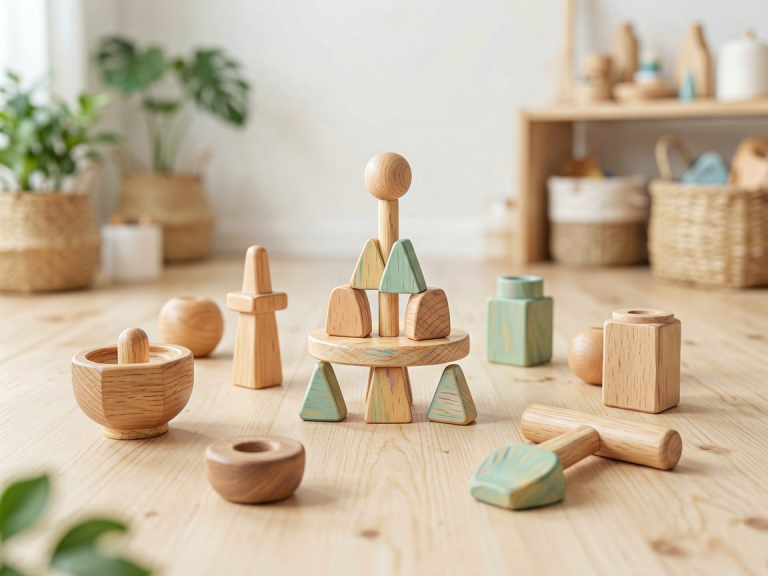
Travel-Friendly Alternatives to LEGO-Style Bricks: Compact Creativity on the Go
Introduction
For decades, LEGO bricks have been the gold standard for creative play, offering endless possibilities for building, engineering, and storytelling. However, for frequent travelers, parents on road trips, backpackers, or digital nomads with limited luggage space, the classic LEGO set presents a major challenge: it is bulky, heavy, and prone to losing tiny pieces. A single misplaced brick can render a cherished set incomplete, and the act of transporting a decent collection can quickly eat up valuable suitcase real estate. Fortunately, a growing market of travel-friendly alternatives to LEGO-style bricks has emerged, offering similar creative and educational benefits without the logistical headaches. These alternatives are designed to be lightweight, compact, foldable, or versatile enough to keep both children and adults entertained in planes, trains, hotel rooms, and campsites. In this article, we will explore several categories of these alternatives, each with its unique advantages, and discuss how they can transform travel downtime into a portable creative workshop.
Magnetic Building Tiles: The Ultimate Space-Saver
One of the most popular and effective replacements for LEGO bricks in a travel context is magnetic building tiles. Unlike interlocking plastic bricks that require pressure and precise alignment, magnetic tiles use embedded magnets along their edges, allowing pieces to snap together effortlessly. This design offers several travel-specific benefits. First, magnetic tiles are typically flat and stackable, meaning they take up minimal space in a backpack or carry-on. A set of 30 to 50 tiles can be stored in a thin pouch roughly the size of a paperback book. Second, because they rely on magnetic attraction rather than friction, building and dismantling is quiet and does not require a hard surface—ideal for use on an airplane tray table or a soft hotel bed. Third, the pieces are large enough that they are difficult to lose, and their smooth, non-jagged edges make them safe for young children. Brands such as Magna-Tiles, PicassoTiles, and Connetix offer sturdy, transparent or colored tiles that can be used to construct castles, geometric shapes, bridges, and abstract sculptures. For travelers, the ability to create 3D structures that hold together firmly without the risk of pieces scattering when the table is bumped is a game-changer. Moreover, magnetic tiles are inherently forgiving: if a structure falls, it rarely breaks into dozens of tiny separate bricks. Instead, the magnets keep clusters together, making cleanup quick and frustration-free.
Origami and Paper Folding Kits: Zero-Bulk Building
For the ultimate in weightless creativity, paper-based alternatives to LEGO bricks are unbeatable. Origami kits come in flat, thin packets that hardly add any weight to luggage, yet they offer a deeply engaging hands-on experience. Unlike LEGO bricks, which require physical pieces to stack, origami transforms a single square sheet into a three-dimensional object through folding, creasing, and shaping. This is perfect for travel because all you need is paper—which can be recycled or repurposed—and perhaps a set of simple instructions. Advanced folders can create elaborate models like dragons, flowers, geometric polyhedra, or modular structures that link multiple folded units together. Some travel-oriented origami kits come with pre-printed patterns or step-by-step guides that are laminated for durability. There is also the “origami brick” concept, where paper is folded into small cubes or rectangular prisms that can be interlocked or stacked like building blocks. Paper building has the distinct advantage of being silent (no clicking or rattling), disposable, and incredibly light. A pack of 100 sheets of origami paper weighs less than a single LEGO figurine. For families traveling with children, origami fosters patience, fine motor skills, and spatial reasoning without the risk of a lost piece ruining the fun. Additionally, travelers can fold a few models and leave them behind as gifts for local children or simply recycle the paper when the trip ends, ensuring zero clutter.
Travel Drawing and Doodle Games: Visual Building Without Pieces
Another category of LEGO alternatives that excels in portability is the range of creative drawing and doodle games. These are not physical blocks but are “building” in the imaginative sense. Products such as the “Quill” or “Boogie Board” electronic drawing tablets, or simple sketchpads with themed prompts, allow users to design cities, vehicles, and characters with a pen or stylus. For instance, the game “Pictopia” or “Drawesome” (travel editions) provides cards with architectural or mechanical challenges: “Build a space station using only triangles and circles.” The user then draws their interpretation. This mimics the LEGO building experience—conceptualizing a structure, problem-solving how to represent it, and iterating—but requires only a thin tablet and a stylus. Electronic writing tablets that use pressure-sensitive LCD technology are particularly travel-friendly: they are paperless, allow endless erasing with a button, and the screen is illuminated for use in dim hotel rooms or airplane cabins. Some tablets even come with stencils or magnetic stamps that let users add “brick-like” outlines. For older children and adults, there are also magnetic drawing boards (like the classic “Etch A Sketch” but modernized) that offer a kinetic building experience. The drawback is that drawings are two-dimensional, but the creative freedom is immense, and the debris-free nature makes them ideal for shared travel spaces.
Collapsible Silicone Building Sets: Squishable and Washable
A more recent innovation in travel-friendly building is the use of silicone-based modular pieces. These sets often consist of small, flexible cubes or geometric shapes with interlocking nubs that can be stretched, bent, and compressed. Unlike rigid LEGO bricks, silicone blocks are soft, which means they are quieter, cannot crack, and are comfortable to handle for long periods. Most importantly, they are collapsible: many silicone building sets can be packed by squeezing the air out of them or by stacking them into a compact bundle. For example, the “BrickMates” travel pouches contain silicone blocks that can be folded inside the carrying case itself, reducing volume by up to 70% when not in use. Another popular option is “B Toys B. Spaces” silicone building sets, which feature large, soft blocks that are easy for small hands to connect. Silicone sets are also waterproof and easy to clean—a huge plus for beach holidays, poolside play, or messy travel meals. They can be washed with soap and water and dry quickly, making them hygienic for repeated use in various environments. While silicone blocks generally do not offer the same precision or intricate detail as LEGO bricks, they provide a satisfying tactile experience and are less likely to cause foot injuries if left on the floor—a notable safety advantage in cramped hotel rooms.
Modular Cardboard Construction Kits: Lightweight and Recyclable
For eco-conscious travelers who still want to build something tangible, modular cardboard construction kits present an excellent alternative. These kits typically include flat, pre-cut cardboard shapes (squares, triangles, rectangles) with interlocking slots or tabs. Users assemble them by sliding pieces together without glue or tape, creating sturdy geometric structures. Because the components are flat, they pack like a deck of cards or a piece of cardboard. Some kits, like “Cardboard Connection” or “Makedo” (which uses reusable connectors), even allow for the addition of cardboard from discarded boxes, meaning you can source materials anywhere. This makes the kit highly adaptable to the travel environment: if you run out of pieces, you can cut new shapes from a pizza box or a cereal container. Cardboard construction teaches the same engineering principles as LEGO—balance, weight distribution, structural integrity—yet the entire kit can weigh under 100 grams. Furthermore, cardboard is recyclable, so you can feel good about leaving no plastic trace behind. The main caveat is that cardboard structures are not as durable as plastic ones, especially in humid climates, but for short-term travel play, they are more than adequate.
Digital Building Apps and Augmented Reality: Virtual LEGO Anywhere
Finally, we cannot ignore the digital realm. Numerous apps and platforms offer virtual building experiences that mimic or even surpass LEGO-style play, with the added benefit of being stored entirely on a smartphone or tablet. Apps like “LEGO Builder,” “Minecraft,” “Sandbox,” or “Tinker Play” allow users to place virtual bricks, rotate them, and build complex structures in a 3D environment. For travel, this is the ultimate space-saving solution: no physical pieces to lose, no cleanup required, and infinite possibilities for undo and redo. Augmented reality (AR) apps take it a step further by projecting virtual bricks onto a real-world surface, such as a hotel table, so you can see your creation right in front of you as if it were physical. These apps also include tutorials and challenges, making them engaging for solo travelers or siblings sharing a device. The downside is screen time, but for long flights or waiting periods, a digital building session can be a focused, educational activity. Many apps are free or low-cost and require no additional accessories. Some even offer multiplayer modes, allowing kids to build together across different devices.
Conclusion
Travel does not have to mean the end of creative building. The alternatives to LEGO-style bricks highlighted above—magnetic tiles, origami kits, drawing games, silicone blocks, cardboard construction, and digital apps—each offer a unique balance of portability, engagement, and versatility. Whether you are a parent trying to keep a toddler occupied during a layover, a minimalist backpacker seeking a quiet hobby, or a teacher leading a field trip, these solutions allow you to enjoy the spirit of construction without the bulk and stress of traditional bricks. The key is to match the alternative to your travel context: magnetic tiles for quick, quiet play on flat surfaces; origami for weightless creativity; digital apps for unlimited variety; and silicone or cardboard for mess-free, adaptable fun. By embracing these travel-friendly options, you ensure that the joy of building—and the cognitive benefits that come with it—can accompany you anywhere on the globe, from a mountain cabin to a bustling airport lounge. So pack light, think creatively, and keep building wherever your journey takes you.