The Toy Overload: Why Buying Too Many Toys for an 18-Month-Old May Do More Harm Than Good
Introduction
It is a scene familiar to many new parents: a living room floor buried under a rainbow of plastic, stuffed animals, musical rattles, stacking cups, and electronic gadgets that beep, flash, and sing. The 18-month-old toddler sits in the middle, face scrunched in confusion, reaching for one toy only to abandon it seconds later for another, then another, until she ends up crawling away from the pile entirely. We buy toys out of love. We buy them to stimulate development, to fill the quiet hours, to celebrate milestones, or simply because the smiling cartoony packaging promises a smarter, happier baby. But research in child development and common parental observation increasingly suggests that a surplus of toys—especially for children as young as 18 months—can actually undermine the very goals we are trying to achieve. Less is often more. This article explores why buying too many toys for an 18-month-old is counterproductive, how it affects the child’s cognitive, social, and emotional growth, and what parents can do instead.
—
The Developmental Stage of an 18-Month-Old
Before we criticize toy abundance, we must understand the unique developmental landscape of an 18-month-old. At this age, a child is in what psychologists call the “toddler” stage, a period of explosive growth. They are transitioning from infancy into early childhood, learning to walk more steadily, speak a handful of words, and assert their newfound independence—often with emphatic “no!” responses. Their brains are forming neural connections at a staggering rate, estimated at over one million new connections per second during the first few years. This is a critical window for sensory-motor integration, cause-and-effect learning, and the foundations of attention.
Eighteen-month-olds are natural explorers. They do not “play” in the way older children or adults understand the word. Instead, they engage in what developmentalists call “sensorimotor play”: they touch, taste, shake, bang, drop, and throw objects to understand their properties. A cardboard box is as fascinating as a high-tech learning tablet because the box has edges, weight, a smell, and the mysterious property of being able to hide a ball inside. Their attention span is naturally short—typically just a few minutes per activity—and that is perfectly healthy. The best learning environment for an 18-month-old is one that offers enough novelty to spark curiosity but not so much that it overwhelms their still-maturing sensory processing systems.
—
The Paradox of Plenty: How Too Many Toys Overstimulate
Imagine walking into a grocery store with hundreds of cereal boxes screaming for your attention. You might feel overwhelmed, unable to decide, and leave with nothing or with an impulsive purchase you regret. For an 18-month-old, a room full of toys creates a similar sensory overload. Their brains lack the executive function to filter out irrelevant stimuli, to prioritize, and to sustain focus. When confronted with an avalanche of options, the child’s nervous system enters a low-grade state of hyperarousal. Instead of settling into deep, exploratory play, they hop from object to object, never fully engaging with any one of them.
This phenomenon is sometimes called the “over-choice” problem, first described by psychologist Barry Schwartz in the context of adult consumer behavior, but it applies even more dramatically to toddlers. A 2017 study published in the journal *Infant Behavior and Development* found that toddlers in a setting with fewer toys (only four toys) engaged in longer, more creative bouts of play than those with a larger selection (sixteen toys). The children with fewer toys showed more sustained attention, more varied uses for each toy, and less frustration. In other words, a limited environment promoted deeper cognitive engagement. When too many toys are present, the child’s brain is constantly scanning for the next shiny object, which trains the mind to be distracted rather than focused—a pattern that may contribute to attention difficulties later in life.
—
Diminishing Returns on Attention and Creativity
One of the most valuable capacities a child can develop is the ability to sustain attention on a single task. This skill—sometimes called “executive attention” or “effortful control”—is a cornerstone of later academic success and self-regulation. But an environment of toy abundance actively works against it. Consider a typical play session: an 18-month-old picks up a shape sorter, tries to jam a square peg into a round hole, fails, and then—instead of persisting and problem-solving—spies a singing train that catches her eye. She drops the shape sorter and toddles toward the train. A moment later, she hears the crinkle of wrapping paper from a forgotten gift bag, and she’s off again. Each shift prevents the brain from forming the neural pathways necessary for perseverance.
Creativity, too, suffers. Creativity is not about having many objects to play with; it is about the ability to see new possibilities in familiar things. When a child has only a few toys, she is forced to invent. A wooden block becomes a phone, a car, a cake, a bridge. A scarf becomes a cape, a river, a blanket for a doll. But when the room is filled with purpose-built toys—a toy phone that only beeps, a toy car that only rolls, a toy cake with plastic candles—the child has no need (and less opportunity) to exercise her imagination. The toy dictates the play, rather than the child dictating the play. This is the difference between being a passive consumer of entertainment and an active creator of experience. An 18-month-old with too many toys is being trained from the very start to expect external stimulation rather than to generate internal engagement.
—
The Social and Emotional Cost
Beyond cognitive development, the number of toys also shapes a toddler’s social and emotional growth. Toys are not just learning tools; they are mediators of relationships. When a child has a small, curated collection, each toy often carries more emotional significance. A favorite stuffed rabbit may become a “transitional object” that provides comfort during separation from parents. But when there are twenty stuffed animals, none of them become special. The child never develops a deep attachment to any one item, which can subtly undermine the development of emotional security.
Moreover, an abundance of toys can reduce the frequency and quality of parent-child interaction. Parents often buy toys as a sort of “educational babysitter”—a way to keep the child occupied while the parent does chores or scrolls on a phone. Yet the most valuable “toy” for an 18-month-old is a responsive adult. The back-and-forth of joint attention—pointing at a picture, saying a word, laughing together—is what builds language, social understanding, and bonding. When toys are plentiful, parents may feel less need to engage directly in play, mistakenly believing that the toys themselves provide sufficient stimulation. In reality, no gadget can replace the nuanced feedback of a human face, voice, and touch. Additionally, children who grow up surrounded by excessive material goods may internalize the message that happiness comes from acquiring new things, a belief that can lead to materialism and dissatisfaction later in life.
—
Practical Alternatives: Quality over Quantity
Given these drawbacks, what should a parent do? The answer is not to ban all toys—that would be neither realistic nor beneficial. Instead, the principle is to prioritize quality over quantity and to adopt a parenting approach that values simplicity. For an 18-month-old, a small, rotating selection of toys works best. Aim for no more than five to eight items available at any given time, and swap them out every week or two to maintain novelty. This is called “toy rotation,” and it has been widely endorsed by early childhood educators such as Magda Gerber and by the Montessori method.
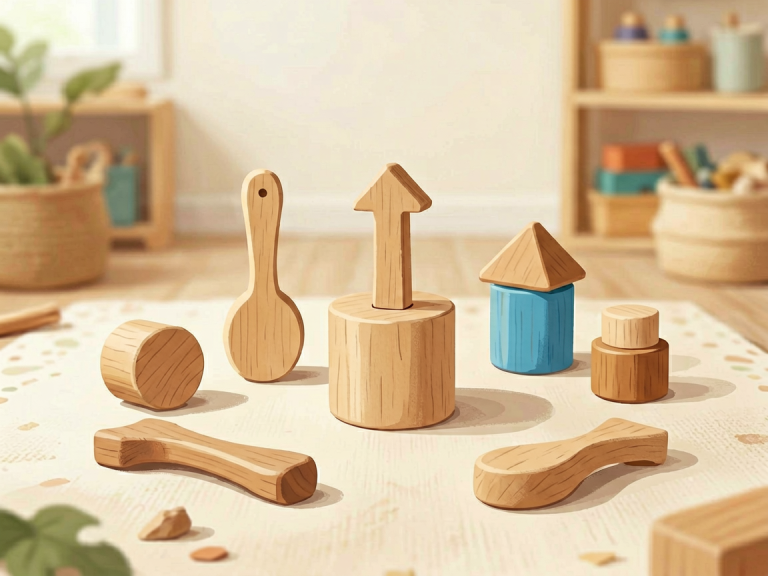
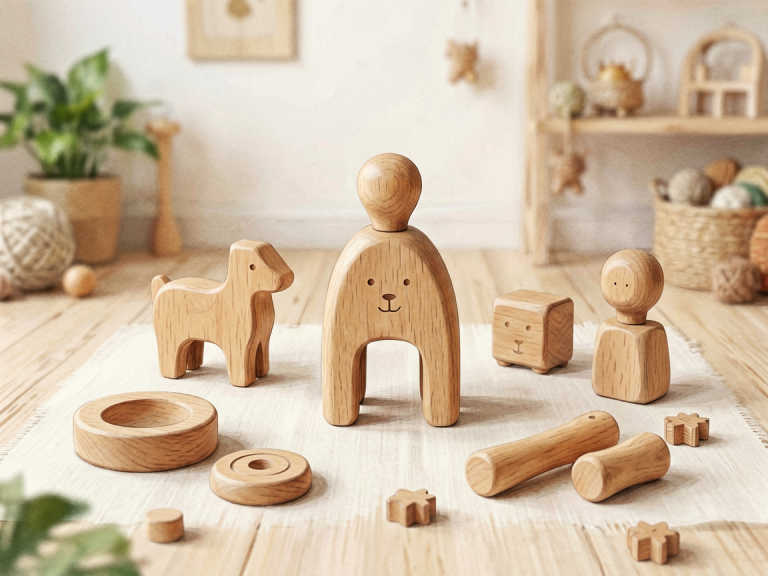
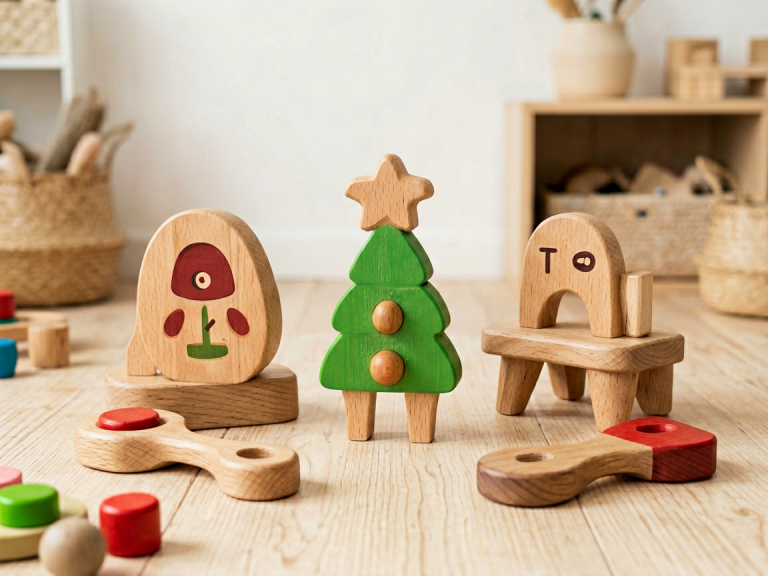
What kinds of toys are ideal? Open-ended toys that can be used in multiple ways. Think wooden blocks, stacking cups, simple shape sorters, nesting bowls, soft balls, a small wagon to pull, and a few board books. These toys encourage problem-solving, fine motor skills, and imagination without overwhelming the senses. Avoid electronic toys that talk, light up, and do the thinking for the child. A 2015 study from the University of Salford found that electronic toys were associated with reduced parent-child language interactions compared to traditional toys like blocks or puzzles. The best toy of all is often no toy at all: a box, a pot and a wooden spoon from the kitchen, a scarf, a handful of sand or leaves from the yard. Everyday objects offer rich sensory experiences that manufactured toys cannot replicate. And do not forget the value of unstructured time: letting a child explore a safe outdoor space, crawl on the grass, or simply watch the clouds builds attention and wonder more effectively than any store-bought product.
—
The Parental Trap: Why We Overbuy
Understanding why parents buy too many toys is as important as understanding why it harms children. The motives are often emotional and deeply human. Many parents grew up with scarcity—not necessarily of food or love, but of material comforts—and they want to give their child everything they lacked. Others feel social pressure: the neighbor’s child has a playroom that looks like a toy store, and we fear our child will be left behind developmentally if we do not keep up. Advertisements relentlessly target parental anxiety, claiming that this particular toy will boost IQ, teach Mandarin, or develop “STEM skills” in infants who can barely walk. There is also simple parental exhaustion: a new toy can buy twenty minutes of quiet time, and in the trenches of toddlerhood, that feels like a lifeline.
But the desire to give should be tempered by knowledge. The best gift we can give an 18-month-old is not another battery-operated gadget but our presence, our patience, and an environment that supports deep, joyful, self-directed play. Before buying that 47th toy, ask yourself: Is this for my child, or is it for me? Does my child actually need it, or am I trying to fill an emotional gap? Often, a hug, a walk outside, or a shared snuggle with a single worn-out picture book will do more for your toddler’s development than the brightest, loudest, most expensive toy on the shelf.
—
Conclusion
Buying toys for an 18-month-old is an act of love, but love expressed without wisdom can become clutter—not just of the living room, but of the mind. The science and the experience of parents and educators converge on a simple truth: less is more. A limited, intentional selection of toys fosters deeper concentration, greater creativity, stronger attachments, and richer parent-child interactions. It teaches the toddler, in a language she cannot yet speak, that the world is not an overwhelming marketplace of distractions but a calm, manageable place full of possibility. So the next time you are tempted to add another toy to the cart, take a breath. Put it back. Walk outside with your child. Point to a bird. Pick up a leaf. Watch your child’s eyes light up. That is the real gift. And it costs nothing at all.