The Ultimate Toy Buying Guide for 6-Month-Olds: Smart Picks Under $50
Introduction: Why the Right Toy Matters at Six Months
At six months old, your baby is undergoing a remarkable transformation. That tiny bundle who once only slept, ate, and stared at the ceiling is now a curious explorer, grabbing at everything within reach, putting objects into their mouth, rolling over with determination, and perhaps even sitting up with support. This developmental explosion makes the sixth month a pivotal time for introducing toys that are not only safe and engaging but also intentionally designed to stimulate growing senses, motor skills, and cognitive abilities.
Yet, as any new parent quickly discovers, the baby toy market is an overwhelming maze of bright colors, blinking lights, and persuasive marketing. Walking into a store or browsing online can leave you paralyzed by choice—and worried about spending too much on something your baby might ignore after five minutes. The good news is that you do not need to break the bank to provide excellent developmental support. With a budget of $50, you can assemble a small but powerful collection of toys that will genuinely benefit your six-month-old. This guide will help you navigate the options, understand what your baby truly needs at this stage, and make smart, affordable purchases that foster growth without cluttering your home.
Understanding a 6-Month-Old’s Developmental Needs
Before diving into specific product recommendations, it is essential to grasp what is happening inside that tiny brain and body. At six months, babies are entering a phase of rapid sensorimotor development. They are beginning to understand cause and effect—if I shake this rattle, it makes noise. They are refining their hand-eye coordination, often transferring objects from one hand to another. Their vision has sharpened significantly; they can track moving objects and distinguish between different colors and patterns. Teething may also be underway, making textured, chewy items particularly appealing.
Socially, six-month-olds are becoming more interactive. They smile at familiar faces, respond to their own name, and may even show preferences for certain toys. They enjoy games like peek-a-boo and are fascinated by mirrors. Their attention spans are still short—usually just a few minutes—so the best toys are those that offer multiple ways to play: something to grasp, something to chew, something to make noise, and something to look at. The key is variety within simplicity. Overly complex electronic toys can overwhelm a baby at this age, while simple, multi-sensory items encourage exploration and independent play.
Safety First: What Every Parent Must Check
When shopping for a six-month-old, safety is non-negotiable. At this age, everything goes into the mouth. That means any toy you choose must be free of small parts that could become choking hazards. A good rule of thumb: if a toy or any detachable piece can fit inside a standard toilet paper roll (approximately 1.25 inches in diameter), it is too small. Look for toys labeled “for ages 0+” or “for ages 3 months+” to ensure they meet safety standards for infants.
Materials matter. Opt for BPA-free plastics, food-grade silicone, and organic cotton or natural wood (with non-toxic finishes). Avoid toys with long strings or cords longer than 12 inches, which pose a strangulation risk. Check for sharp edges, loose buttons, or poorly attached ribbons. Always inspect toys regularly for wear and tear—chewing can break down even durable items over time. Additionally, beware of toys that require batteries if you are concerned about battery compartment security. If a toy does use batteries, ensure the compartment is secured with a screw, not just a sliding door.
Finally, consider the weight and size. A toy that is too heavy could hurt your baby if dropped on their face during tummy time. Soft, lightweight materials are generally best. Washability is another important factor—crawling on floors and drooling mean toys get dirty fast. Machine-washable fabric toys or silicone items that can be boiled or run through the dishwasher are practical choices.
Top Toy Categories That Support Development
The most effective toys for a six-month-old fall into several broad categories, each targeting specific developmental domains. Understanding these categories will help you build a balanced toy collection even on a strict budget.
1. Grasping and Teething Toys
Babies at this age are obsessed with grabbing, shaking, and mouthing objects. Teething toys with varied textures soothe sore gums while encouraging the palmar grasp—the early ability to close the whole hand around an object. Look for rings, rattles, and silicone shapes that are easy to hold. The Sophie the Giraffe teether is iconic, but there are many affordable alternatives. A simple wooden ring or a set of silicone teething beads on a BPA-free chain can cost less than $10 and provide hours of relief.
2. Sensory and Exploration Toys
Sensory toys stimulate touch, sight, and hearing. Crinkle paper inside fabric squares, soft mirrors, and toys with contrasting black-and-white or high-contrast patterns are excellent choices. At six months, babies are still developing depth perception, so toys with bold shapes and bright primary colors capture their attention. Soft blocks with jingle bells inside, fabric books with different textures (furry, shiny, bumpy), and balls with looped handles all fall into this category. These toys encourage reaching, swiping, and cause-and-effect learning.
3. Activity Gyms and Play Mats
While play mats themselves can be expensive, you can find budget-friendly options under $50 that include detachable toys. An activity gym with an arch that holds dangling toys encourages your baby to bat, grab, and kick. This promotes gross motor skills like leg strengthening and hand-eye coordination. Many affordable mats also come with a soft mirror, a rattle, and a crinkle toy. If you already have a basic blanket, you can purchase a separate toy arch for around $20, making it a flexible cost-effective solution.
4. Musical and Sound-Making Toys
Babies love sound. Simple musical instruments like a set of maracas, a small drum, or a xylophone (with a mallet that is safe for tiny hands) encourage auditory exploration. But be careful—some toys are painfully loud. Look for items with adjustable volume or soft, pleasant tones. A musical learning table can be a great investment, but many cost over $50; instead, consider a single maraca or a soft, squeezable squeaky toy. Even a plastic water bottle with a few dried beans sealed inside (with the cap glued shut) can become a homemade sensory rattle.
5. Stuffed Animals and Comfort Toys
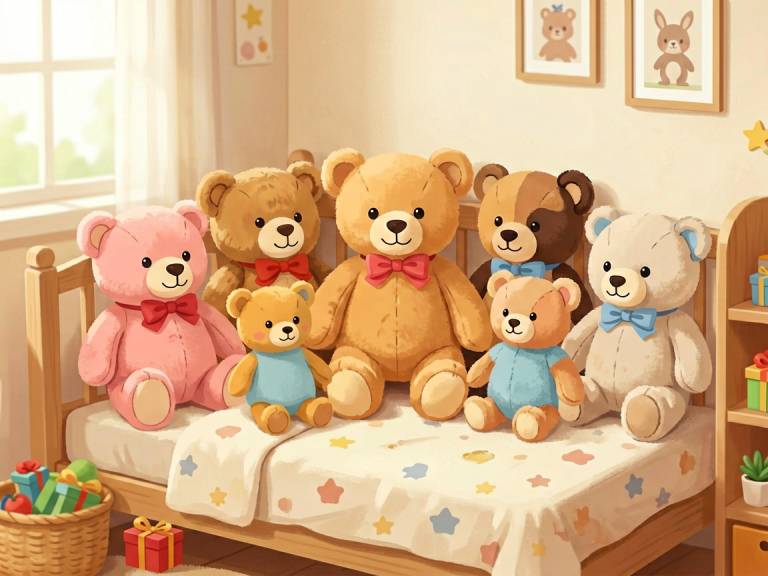
Soft plush toys provide emotional comfort and can become transitional objects as your baby grows. However, they must be designed for infants: no small plastic eyes or buttons that could come loose. Look for embroidery-faced plush toys or those with stitched-on features. A small, lightweight stuffed animal that fits in your baby’s hands can be a wonderful companion during naps or car rides. Under $50, you can find excellent organic cotton or bamboo plush options that are machine washable and hypoallergenic.
Recommended Toys Under $50: Detailed Picks
Now let’s look at specific toys that meet all the criteria—safe, developmental, and budget-friendly. These are not just random products but carefully selected examples that represent the best value for money.
The Pikler-Style Climbing Triangle Alternative: Soft Foam Blocks
While a wooden Pikler triangle costs well over $100, you can achieve similar gross motor benefits with large, soft foam blocks. A set of six to eight colorful foam blocks (like those from the “Soft Blocks” category by brands like Bright Starts or Fisher-Price) costs around $20–$30. Your baby can practice sitting up by leaning against them, stack them (with your help), and eventually crawl over them. These blocks are lightweight, safe for chewing, and double as teethers since many have textured surfaces.
The Multi-Sensory Fabric Book
Fabric books (or “cloth books”) are a staple. Look for one that combines crinkle pages, a squeaker, a mirror, and a teether corner. The “Wee Gallery” or “Lamaze” fabric books often include high-contrast images and are machine washable. Priced around $12–$15, they offer endless engagement. A single book can be “read” together on your lap, explored during tummy time, or chewed on. The mirror page especially fascinates six-month-olds who are just beginning to recognize themselves.
The Rattle and Teether Set
Instead of buying individual rattles, purchase a set. The “Manhattan Toy Winkel” is a classic—a colorful, twisted rattle and teether made of soft, BPA-free plastic. It retails for about $10–$12. Alternatively, a set of silicone teething rings with different textures (like the “Nuby” brand) costs under $10. Having two or three different rattles and teethers ensures you can rotate them, keeping novelty alive. Your baby will learn that different movements produce different sounds—a rudimentary lesson in physics.
The Activity Ball with Handle
A ball with a handle or loop is a fantastic toy for this age. Babies cannot yet throw or catch a ball, but they can grasp the handle, shake it, and roll it. The “Infantino” textured ball with a rattle inside and a fabric loop costs around $8–$10. It’s also a great toy for playing rolling games with you—your baby can sit in your lap while you roll the ball toward them, encouraging visual tracking and anticipation.
The Simple Wooden Pull Toy (with short string)
Wooden pull toys are often marketed for older toddlers, but some versions have a very short string (under 6 inches) and are safe for supervised play. A small wooden animal on wheels, with a knob for grasping, can help your baby practice pulling an object toward themselves. This encourages crawling movements. Make sure the finish is non-toxic and that there are no small wheels that can detach. Brands like “Hape” and “PlanToys” offer affordable options around $15–$20. Always supervise with any toy that has a string.
The Tummy Time Water Mat
A water play mat designed for tummy time is a brilliant sensory tool. It is a flat, sealed plastic mat filled with water and floating toys (like fish or stars). Your baby can press down on the mat, watching the water splash and the toys move. It encourages tummy time endurance and provides a cooling, soothing sensation. These mats typically cost $12–$18 and can be used indoors or outdoors. They are easy to clean—just wipe down the surface. However, check for leaks before each use and discard if punctured.
Tips for Choosing and Rotating Toys on a Budget
Even with a $50 budget, you can create a meaningful toy library if you are strategic. The key is quality over quantity and rotation over accumulation. Babies get bored quickly, but they also rediscover toys they haven’t seen in a week. By rotating three to five toys at a time, you can keep your baby interested without buying more.
Start by assessing what you already have. Many household items become excellent baby toys: a wooden spoon, a silicone spatula, a clean plastic water bottle with pasta inside (glued shut), and a stainless steel bowl. These everyday objects provide novel textures, sounds, and weights. They also cost nothing.
When shopping, prioritize open-ended toys—those that can be used in multiple ways. A set of stacking cups, for instance, can be a teether, a stacking toy, a nesting toy, a bath toy, and a noise maker. They cost around $8–$12 and last well beyond six months. Another open-ended favorite is a set of colorful silicone suction toys that can stick to a high chair tray or a window. These encourage fine motor skills and cause-and-effect learning.
Consider buying secondhand. Baby toys are often gently used because they are outgrown quickly. Check local thrift stores, Facebook Marketplace, or parenting groups for bundles of rattles, fabric books, and soft blocks. Just be sure to sanitize them thoroughly—boil silicone items, wash fabric toys in hot water, and wipe plastic toys with a non-toxic disinfectant.
Avoid toys with too many functions. Electronic toys that light up, play songs, and move independently may seem attractive, but they often do too much for your baby. Babies at six months need to be active participants, not passive observers. A simple rattle that your baby has to shake to hear the sound teaches a clear cause-and-effect lesson. A complex musical toy that randomly plays songs can be confusing and overwhelming.
Final Thoughts: Less Truly Is More
The most important thing to remember is that your baby’s best toy is you. Your face, your voice, your touch, and your attention are more stimulating than any store-bought item. Toys are tools to support development, not substitutes for interaction. So, when you buy a rattle, sit down with your baby and shake it together. When you offer a fabric book, narrate what you see. When you place a ball in front of them during tummy time, roll it gently and cheer when they reach for it.
With a $50 budget, you can easily purchase two or three excellent developmental toys that cover multiple skill areas. Perhaps a set of soft blocks, a fabric book, and a silicone teether set. That’s enough to create meaningful play experiences for weeks. As your baby grows, you can add more, but never feel pressured to buy everything at once. The toy industry thrives on parental anxiety, but you can resist that pressure by trusting your instincts and focusing on what your baby truly needs: safety, simplicity, and sensory richness.
In conclusion, a thoughtful toy buying guide for a six-month-old under $50 is not about limiting your child’s potential—it is about maximizing it through intentional choices. Choose toys that grow with your baby, that invite exploration, and that bring joy without noise pollution. Your baby will thank you with smiles, coos, and that magical spark of discovery that makes parenting the most rewarding adventure of all.