Top Mistakes to Avoid When Choosing Toys for Siblings
Choosing toys for siblings can be a delightful yet daunting task. The joy of seeing two or more children play together harmoniously is precious, but the wrong choice can lead to arguments, jealousy, or even safety hazards. To help parents, grandparents, and gift-givers navigate this challenge, this article highlights the most common mistakes to avoid when selecting toys for siblings—along with practical strategies to ensure that every child feels valued and that playtime remains fun and cooperative.
—
Mistake 1: Ignoring the Age Gap
One of the most frequent errors is purchasing a toy that suits only one sibling’s developmental stage. For example, giving a complex building set to a toddler and a preschooler together can frustrate the younger child and bore the older one. Conversely, a simple rattle might amuse a baby but do nothing for an older sibling, who may then feel left out.
How to avoid it:
Look for toys that offer multi‑level engagement. Building blocks with different sizes, puzzles with varying difficulty, or art kits that include both simpler and more advanced materials allow each child to participate at their own level. Alternatively, consider toys that are specifically designed for a range of ages, such as musical instruments (e.g., a xylophone for a toddler and a small keyboard for an older child) or playsets with interchangeable parts. When in doubt, choose toys that encourage parallel play first—where each child can play side by side with their own pieces—and gradually introduce cooperative elements.
—
Mistake 2: Buying Two Identical Toys to Avoid Conflict
Many parents believe that buying the exact same toy for each sibling will eliminate fighting. While this can work in some situations, it often backfires. Identical toys can still be compared (“Mine is newer!” “Yours has a scratch!”) and may not address each child’s unique interests. Moreover, if the toy is something like a remote‑control car, having two can lead to chaotic collisions and frustration.
How to avoid it:
Instead of duplicates, select complementary toys that encourage interaction. For instance, a play kitchen for one child and a set of pretend food for the other can spark joint imaginative play. Another approach is to choose a “shared” toy that requires teamwork, such as a marble run, a large board game, or a cooperative building set (e.g., a giant floor puzzle). When duplicates do make sense (e.g., two identical scooters for outdoor riding), set clear rules about turn‑taking and safe usage from the start.
—
Mistake 3: Overlooking Individual Interests and Personalities
Siblings often have very different temperaments. A high‑energy child might love action figures or sports equipment, while a quiet, introverted sibling may prefer art supplies or books. A common mistake is to assume that because children are related, they will enjoy the same types of play. Forcing a shared activity on mismatched personalities can lead to resentment.
How to avoid it:
Observe each child’s natural play preferences. Does one enjoy building and engineering? Does the other gravitate toward storytelling or dress‑up? Look for toys that allow each child to express their personality within the same play scenario. For example, a large dollhouse can be used by one sibling to arrange furniture (systematic play) while the other creates elaborate stories with the dolls (imaginative play). Similarly, a craft box with diverse materials—paint, clay, stickers, fabric—lets each child choose their medium. The goal is to create a shared space where individual strengths can shine without competition.
—
Mistake 4: Choosing Highly Competitive Toys
Toys that are inherently competitive—such as board games with a single winner, racing sets, or “last‑man‑standing” style games—can trigger conflict among siblings, especially if the age gap or skill level is large. Younger children may become discouraged, while older ones may dominate, leading to tears and arguments.
How to avoid it:
Opt for cooperative games where everyone works toward a common goal, like “Race to the Treasure” or “The Sneaky, Snacky Squirrel Game.” Also consider toys that encourage creative collaboration: a puppet theater, a large set of magnetic tiles, or a sand and water table. If you do purchase a competitive game, modify the rules to make it more inclusive—for example, using handicaps (the older child must use only one hand) or focusing on personal bests rather than head‑to‑head scores. The key is to emphasize fun and shared success over winning.
—
Mistake 5: Neglecting Safety and Space Considerations
Siblings often share a bedroom or play area, so safety and practicality are paramount. A common mistake is buying toys that require too much space (e.g., a large trampoline in a small room), or that have small parts hazardous for a younger sibling who still mouths objects. In addition, loud or electronic toys can become a source of irritation when multiple children are playing nearby.
How to avoid it:
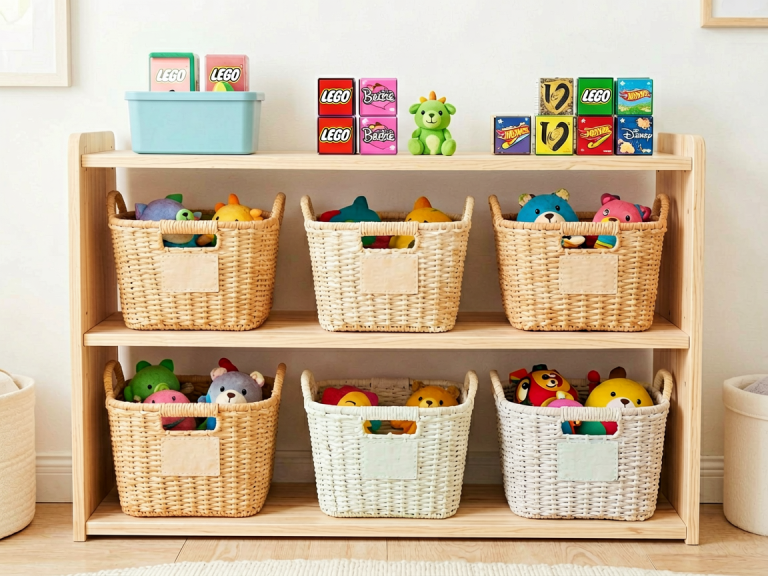
Always check age recommendations on toy packaging and be extra cautious when siblings span a wide age range. Store small parts in sealed containers out of reach of toddlers. For shared spaces, choose toys that are easy to stack, store in bins, or fold away. Consider noise levels: a drum set might be better kept for outdoor use, while a quiet magnetic book or a set of felt storyboards can be used indoors without overstimulation. Finally, involve children in a “toy rotation” system so that only a few toys are available at a time, reducing clutter and keeping play fresh.
—
Mistake 6: Focusing Only on “Educational” Toys
It’s tempting to choose toys that promise STEM learning or literacy skills, but this can backfire if the toys are not genuinely engaging. Siblings may resist “learning” toys that feel like schoolwork, especially if the toys are too advanced for one child. Moreover, purely educational toys often lack the open‑ended, imaginative elements that foster social bonding.
How to avoid it:
Balance educational value with pure fun. Look for toys that teach through play without obvious lecturing: a magnetic building set teaches geometry and balance; a pretend grocery store teaches counting and social roles; a scavenger hunt kit encourages reading clues and teamwork. The best toys for siblings are those that spark curiosity and conversation naturally. And don’t underestimate the power of simple classics—jump ropes, balls, and blankets for fort‑building—which encourage physical activity and cooperation without any pedagogical agenda.
—
Mistake 7: Forgetting the “Together” Factor
Finally, a subtle but critical error is buying toys that are meant for solitary play. While independent play is healthy, toys that siblings can enjoy together—or at least alongside each other—strengthen their relationship. If every toy is something a child can use alone, siblings may drift apart instead of bonding.
How to avoid it:
Prioritize toys that require two or more participants. Board games, card games, building sets with multiple characters, sports equipment (a badminton set, a soccer ball), or a large art canvas that both can paint on—all these encourage interaction. Even a simple toy like a seesaw, a double‑sided easel, or a tandem bike promotes physical cooperation. And don’t forget the value of role‑playing toys: a doctor’s kit, a tea set, or costumes spark collaborative storytelling. The goal is to create opportunities for shared laughter and communication.
—
Conclusion
Choosing toys for siblings is an art that blends understanding, creativity, and practicality. By avoiding these seven common mistakes—ignoring age gaps, buying duplicates thoughtlessly, overlooking individual interests, selecting overly competitive toys, neglecting safety, overemphasizing education, and forgetting the “together” factor—you can choose gifts that bring joy, reduce conflict, and foster lasting bonds. Remember, the best toy isn’t the one with the most features or the highest price tag; it’s the one that invites two or more children to play, imagine, and grow together. With thoughtful selection, playtime can become a cherished time of harmony and learning for every sibling in the family.