Too Much, Too Soon: The Hidden Costs of Buying Advanced Toys for Two-Year-Olds
Introduction
Walking into a toy store today is like stepping into a miniature science fair. Shelves are lined with robotic dogs that respond to voice commands, coding kits promising to teach toddlers binary logic, and “STEM building sets” that require fine motor skills most preschoolers haven’t yet mastered. Advertisements beam with images of smiling infants clutching tablets designed for school-age children, while parenting blogs casually promote “genius baby” toys that claim to accelerate cognitive development. Yet for parents of two-year-olds, the lure of these advanced toys can be a dangerous trap. Despite good intentions—wanting to give their child a head start, stimulate learning, or simply keep up with social media trends—buying toys that are far beyond a toddler’s developmental stage often backfires. Such purchases not only waste money and clutter homes but, more critically, can impede a child’s natural developmental progress, create unnecessary frustration, and even pose safety risks. This article explores the reasons why advanced toys for two-year-olds are a misguided investment and offers evidence-based insights into what young children truly need for healthy growth.
The Developmental Mismatch: Why Two-Year-Olds Can’t Use “Smart” Toys as Intended
Every child develops at their own pace, but developmental psychologists have identified clear milestones for the average two-year-old. At this age, children are typically mastering gross motor skills like running and climbing, beginning to engage in parallel play (playing alongside but not interactively with peers), and developing basic language through two- to three-word phrases. Their cognitive capacity is rooted in concrete, sensory-motor experiences—touching, tasting, shaking, and dropping objects to understand cause and effect. Most importantly, two-year-olds are egocentric and have a very short attention span, often unable to follow multi-step instructions.
Consider a “programmable robot” designed for ages 5+. The toy might require a child to press a sequence of buttons in a specific order to make the robot move across the floor. A two-year-old lacks the working memory to hold that sequence in mind, the fine motor precision to press small buttons reliably, and the conceptual understanding that pressing button A then B creates a predictable result. Instead of engaging with the intended logic, the toddler will likely slap the robot, chew on its antenna, or scream in frustration when it doesn’t respond to random pokes. The toy becomes a source of confusion and anger, not learning. Meanwhile, a simple wooden push cart offers exactly the right challenge: it responds to the child’s push with immediate, predictable movement, reinforcing their understanding of their own agency in the world. The developmental mismatch is not a subtle nuance; it’s a fundamental disconnect between the toy’s design and the child’s actual neurological and physical readiness.
Overstimulation and Cognitive Overload: When More Features Mean Less Learning
The modern toy industry capitalizes on a parent’s fear that their child might “fall behind.” Hence, many toys marketed for two-year-olds are packed with flashing lights, electronic sounds, and multiple interactive modes. The underlying assumption is that more stimulation equals more learning. In reality, the opposite is true for toddlers. Young children’s brains are still developing the ability to filter irrelevant information. When confronted with a toy that blinks, beeps, spins, and talks simultaneously, a two-year-old often becomes overwhelmed. Instead of focusing on the toy’s educational content, they may simply stare blankly, cry, or abandon it altogether.
Research into early childhood development emphasizes the importance of “sustained attention”—the ability to focus on a single activity for a short period. Overstimulating toys fragment attention rather than building it. A classic example is the electronic learning tablet that offers dozens of apps for letters, numbers, shapes, and colors. A two-year-old will naturally swipe rapidly between apps, never spending more than a few seconds on any one activity. This pattern of “digital grazing” trains the brain to expect constant novelty, making quiet activities like reading a book or stacking blocks feel boring by comparison. Contrast this with a set of simple nesting cups. There are no lights, no sounds, no “correct” way to play. The child can stack them, knock them down, hide a small ball inside, or fill them with water in the bath. Each action teaches cause and effect, spatial relationships, and fine motor control—all without overloading the senses. Simple toys invite deep, repetitive play, which is the foundation of genuine learning in early childhood.
Safety Hazards and Frustration: The Physical and Emotional Risks
Beyond cognitive concerns, advanced toys often introduce physical and emotional dangers. Many toys designed for older children contain small parts that pose choking hazards for two-year-olds, who frequently explore objects by putting them in their mouths. A building kit with tiny screws, a robot with detachable wheels, or a board game with miniature pieces can quickly become a trip to the emergency room. Moreover, electronic toys often require batteries that, if swallowed, can cause severe internal burns. Even when batteries are secure, the wires, seams, and plastic components may not withstand the vigorous chewing and throwing that toddlers naturally engage in. Broken pieces can have sharp edges.
Equally important is the emotional toll on the child. Toddlers are developing a sense of self-efficacy—the belief that they can influence their environment. When a toy is too complex, repeated failure leads to frustration and a feeling of helplessness. A child who cannot make the remote-controlled car move might throw it across the room, not out of anger but out of despair. This negative experience can dampen their willingness to try new challenges. In contrast, a simple stacking ring toy allows the child to succeed repeatedly, building confidence and motivation. The emotional safety of age-appropriate toys is just as vital as their physical safety.
The Economic and Environmental Cost: Wasted Money and Cluttered Homes
The financial argument against advanced toys for two-year-olds is straightforward but often overlooked. A sleek interactive globe that teaches geography (recommended age 8+) can cost over $100. A two-year-old will treat it as a shiny ball, likely dropping it until the speaker cracks. The money is effectively flushed away. Meanwhile, a set of classic wooden blocks might cost $30 and last for years, engaging children from age one through early elementary school. When parents buy advanced toys prematurely, they are also contributing to the cycle of overconsumption. The toy gets used for a few days, then abandoned in a corner, eventually donated or thrown into a landfill. Given the growing concern about plastic waste and the carbon footprint of manufacturing electronic gadgets, this practice is environmentally irresponsible.
Furthermore, the obsession with “advanced” toys often leads to a cluttered home environment. Studies in developmental psychology suggest that too many toys actually reduce the quality of play. When a child is surrounded by dozens of complex, noisy options, they tend to flit from one to another without engaging deeply. A minimalist approach—fewer, simpler, but more versatile toys—encourages creativity and prolonged focus. Parents who invest in age-appropriate toys are not only saving money but also creating a calmer, more conducive play environment that respects the child’s natural pace.
What Two-Year-Olds Really Need: Simple Play for Complex Growth
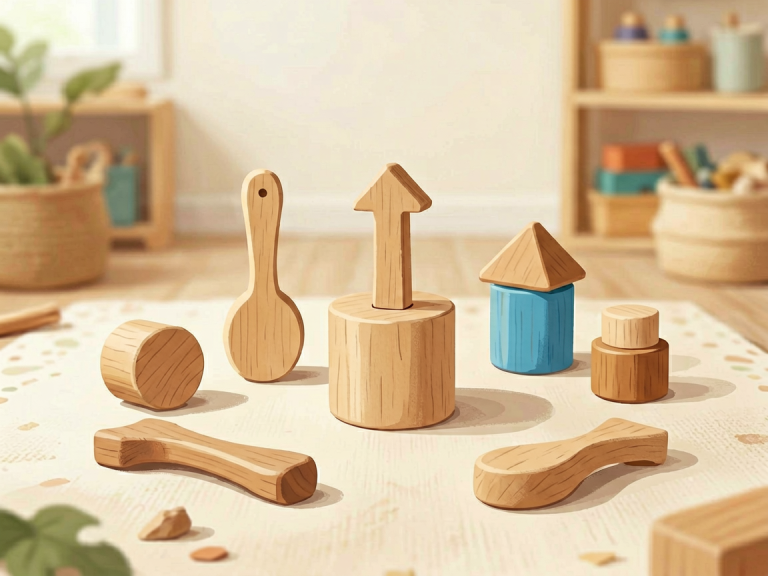
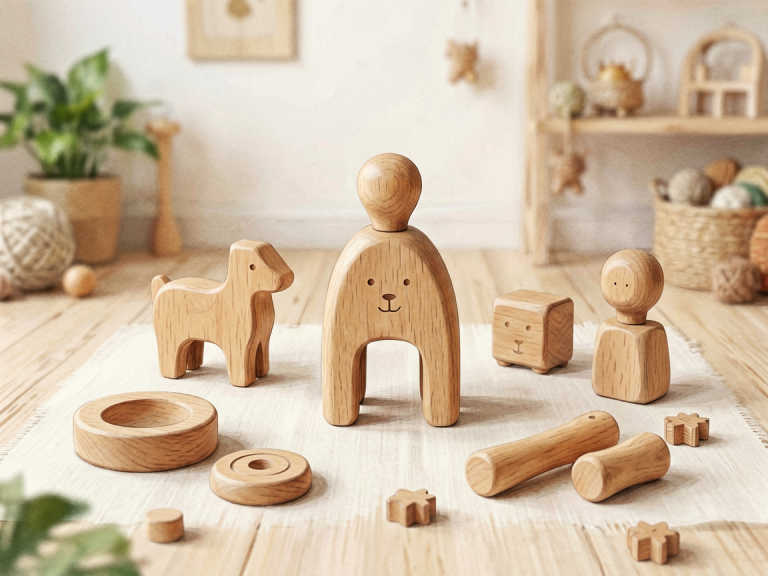
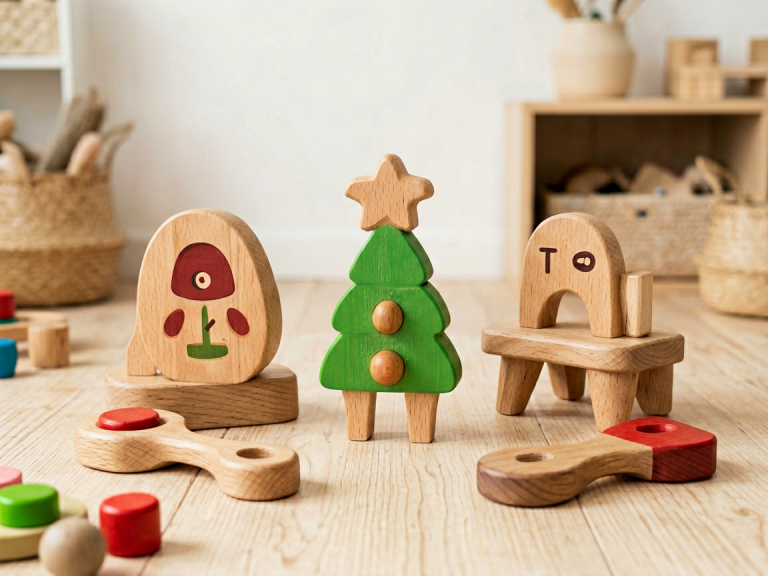
The best toys for two-year-olds are deceptively simple. Open-ended materials such as blocks, stacking cups, shape sorters, push-and-pull toys, crayons and paper (with supervision), simple puzzles with large knobs, sand and water play tools, and household items like empty boxes or plastic bowls—these are the true educational gems. They allow children to explore at their own level, make mistakes safely, and repeat actions until mastery. Language development is best supported not by a talking robot but by a parent narrating a play scenario: “You put the red cup on the blue cup. Now it’s a tall tower!”
Additionally, two-year-olds benefit enormously from physical play: climbing, running, jumping, and balancing. These activities develop the vestibular system, proprioception, and overall body awareness, which are prerequisites for later academic skills like handwriting and reading. No app can replace the neural wiring that happens when a toddler crawls through a cardboard tunnel or rolls a ball back and forth with a caregiver. Social-emotional growth also thrives through simple, interactive play—pretending to feed a doll, taking turns stacking blocks, or playing peek-a-boo. Advanced toys with pre-programmed features often eliminate the need for human interaction, which is precisely what toddlers need most.
Conclusion: Resisting the Hype, Embracing the Real
In a culture that glorifies early achievement and “enrichment,” it takes conscious effort to resist buying the flashiest, most technologically advanced toys for a two-year-old. Yet the evidence is clear: these toys do not accelerate development; they often hinder it. They frustrate children, overstimulate their developing brains, pose physical dangers, waste money, and crowd out the simple, open-ended play that truly fosters growth. The next time you feel tempted by a toy labeled “for ages 3 and up” and think, “But my child is advanced,” pause. Remember that a two-year-old’s job is not to conquer a coding kit or a talking globe. Their job is to discover the world through their senses, to build trust in their own abilities, and to connect with loving caregivers through shared, joyful exploration. Give them a wooden spoon, a cardboard box, and your undivided attention—that is the most advanced toy of all.