The Hidden Pitfalls: Mistakes to Avoid When You Declutter Your Childrens Toys
Every parent knows the scene: you step into the living room and feel a wave of exhaustion as you navigate a sea of plastic dinosaurs, half-finished puzzles, and rogue LEGO bricks. The toy clutter seems to multiply overnight, and after a long day of work and parenting, the last thing you want is to trip over a toy car. So you decide to take action. You declare war on the mess. You buy storage bins, read blog posts about minimalism, and spend a weekend sorting, donating, and throwing away. But a few weeks later, the clutter is back, and your child is crying over a missing favorite doll. What went wrong?
The truth is that decluttering toys is not just about removing objects; it is about managing behavior, emotions, and the very nature of childhood development. Many well-intentioned parents fall into common traps that sabotage their efforts. Avoiding these mistakes is just as important as the act of clearing out. In this article, we will explore the most frequent errors people make when they try to reduce toy clutter, and more importantly, how to sidestep them for a lasting, peaceful home.
—
Mistake 1: Going Cold Turkey – The Purge That Backfires
The most common impulse is to treat toy decluttering like a spring-cleaning event: grab garbage bags, work through the pile rapidly, and eliminate everything that hasn't been touched in months. This “cold turkey” approach might feel satisfying in the moment, but it almost always backfires spectacularly.
Children develop strong emotional attachments to their possessions, even to objects that seem insignificant to adults. A cracked plastic truck might represent a memory of a birthday party; a worn stuffed animal might be a comfort object during nighttime fears. When you sweep these items away without warning or explanation, you are not just removing dust—you are removing a part of your child’s world. The result is often a meltdown, a sense of betrayal, and a deep distrust that makes future decluttering attempts impossible. Moreover, children may start hiding toys or sneaking them back from donation piles, turning your home into a battlefield.
Instead of a dramatic purge, adopt a gradual, gentle approach. Start by involving your child in a conversation about why some toys might need to go to new homes. Explain that other children would love to play with them. Then, work together to select a small number of items to donate—perhaps three or four toys at a time. Over the course of weeks, you can slowly reduce the volume without triggering a crisis. This slow, respectful method teaches children about generosity and decision-making while preserving their sense of security.
—
Mistake 2: Excluding Your Child from the Process
Even parents who avoid the purge often make the second mistake: they do all the decluttering themselves while the child is at school or asleep. They believe that by removing the burden from the child, they are being kind. In reality, they are robbing the child of ownership and control.
Toys are not just objects; they are tools for imagination and autonomy. When a child returns to find half of their possessions gone, they feel powerless and violated. They may react by clinging more tightly to the remaining toys, refusing to put them away, or even regressing in their independence. The hidden message becomes: “Your opinion does not matter; adults decide what stays and what goes.” This undermines the very sense of responsibility you are trying to cultivate.
The better approach is to make decluttering a collaborative effort. Set aside a specific time—say, one hour on a Saturday morning—and sit down with your child. Ask them to sort their toys into categories: “I love this,” “I like this sometimes,” and “I don’t play with this anymore.” You may be surprised at how honest children can be when they feel heard. For younger children who cannot verbalize yet, use a simple three-bin system: keep, donate, and unsure. Your role is to guide, not dictate. By giving your child a voice, you teach them decision-making skills and reduce future resistance. Over time, they will learn to self-regulate their belongings, a skill that will benefit them for life.
—
Mistake 3: Over-Organizing into Inflexible Systems
After a successful declutter, many parents rush to buy a rainbow of bins, labels, and cubbies. They divide toys into categories: “Dolls here, cars there, art supplies in the bottom drawer.” They create a rigid system that looks beautiful on Pinterest but is impossible for a preschooler to maintain. This is the third mistake: over-organizing.
Children think in patterns of play, not in categories. A toddler might need access to blocks, a fire truck, and a red crayon all at once to build a fire station. If each item is stored in a separate labeled bin, the child’s natural flow of play is interrupted. They may become frustrated, dump all the bins onto the floor, and leave the mess for you to handle. Worse, they stop playing with certain toys because it is too much work to retrieve them. The system that was meant to reduce clutter actually creates more mess and stifles creativity.
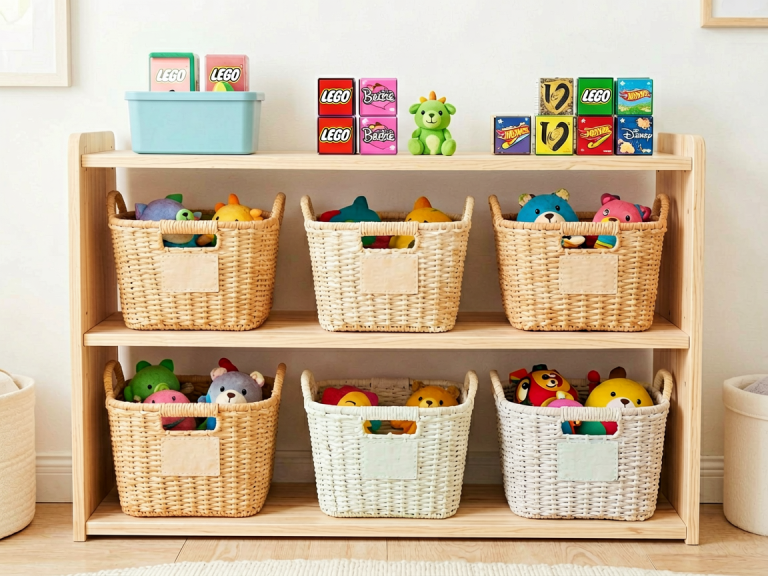
The solution is to embrace “zone-based” organization rather than category-based. Instead of having a bin for “vehicles” and another for “animals,” consider having a bin for “building toys” that includes blocks, LEGO, and magnetic tiles, and a bin for “pretend play” that includes dolls, cars, and animal figures. Keep the most-used toys at the child’s eye level in open baskets or on low shelves. Label with pictures, not words, for pre-readers. Most importantly, keep the system simple enough that a three-year-old can independently put a toy away without needing to decode a complex filing system. A little chaos during play is natural; the goal is easy cleanup, not museum-like order.
—
Mistake 4: Ignoring the Power of Toy Rotation
Another critical mistake is assuming that the only way to reduce clutter is to get rid of toys permanently. Many parents overlook one of the most effective strategies: toy rotation. They keep all toys available all the time, which leads to sensory overload, boredom, and a constant state of disarray.
When a child has access to every toy they own, they often become overwhelmed and cannot focus. They flit from one toy to another, leaving trails of mess behind. The novelty of each toy wears off quickly because there is always something else to grab. In contrast, a rotation system—where you put away a portion of toys and rotate them every few weeks—achieves two things: it reduces visible clutter, and it rekindles excitement when a “new” toy reappears after being hidden.
If you fail to implement rotation, you will find yourself constantly fighting against a tide of toys that your child has lost interest in. They will accumulate dust and guilt, cluttering both the physical space and your mental load. The mistake is not having too many toys; it is having too many toys out at once.
To avoid this, designate a storage area—under the bed, in a closet, or in the garage—for toys that are “on vacation.” Every two or three weeks, swap out a few bins. Your child will rediscover forgotten toys as if they were new, and you will dramatically reduce the daily mess. This method also makes it easier to let go of toys eventually; when a toy has been in storage for months and no one notices, it is a clear candidate for donation.
—
Mistake 5: Focusing Only on Toys, Not on the Environment
Many parents hyper-focus on the toys themselves while ignoring the physical environment that houses them. They sort and purge, but they never address the fundamental problem: the home lacks appropriate storage and play zones. This is like trying to keep a kitchen clean without a sink or counter space.
For example, if you have a large living room but no designated play area, toys will spread across every surface. If your child’s bedroom has shelves that are too high for them to reach, they will drop toys on the floor instead of putting them away. If there are no hooks for dress-up costumes or no bins for art supplies, those items will perpetually clutter the floor. The mistake is treating clutter as a behavioral issue when it is actually a design issue.
To avoid this, take a step back and analyze the flow of your home. Create a dedicated play zone—a corner of the living room, a section of the basement, or the child’s bedroom—with accessible shelving, a rug, and a clear boundary. Use low, open bins that allow the child to see contents without digging. Install hooks on the back of doors for dress-up clothes. Consider a toy hammock for stuffed animals. The goal is to make cleanup easy and intuitive. When the environment supports the system, your child’s natural tendency to create mess becomes manageable. Remember: you cannot organize your way out of a lack of infrastructure. Invest in the right furniture and containers, and the clutter will follow suit.
—
Mistake 6: Forgetting to Account for Your Child’s Age and Interests
Decluttering strategies that work for a four-year-old will fail miserably for a nine-year-old, and vice versa. Yet many parents apply a one-size-fits-all approach, not realizing that developmental stages dramatically affect what toys are needed and how they are stored.
For toddlers and preschoolers, toys are tools for sensory exploration and motor skill development. They need easy access to blocks, puzzles, and art supplies. They cannot understand abstract categories like “donate” or “keep for later.” A toddler may cry if a broken toy is thrown away because they cannot grasp permanence. For this age group, less is more, but you must be extremely sensitive to emotional attachment. Use rotation heavily, and never remove a toy without the child watching and agreeing.
For elementary school children, toys become more complex: Legos with thousands of pieces, board games with small components, craft kits, and collectibles. These children can participate in sorting and may even enjoy the process if framed as a game. However, they also develop strong attachments to “collections”—Pokémon cards, trading figures, or dolls. The mistake is forcing them to part with these collections entirely. Instead, set boundaries: a specific shelf or box for the collection, and if it overflows, they must choose what to remove. School-age children also benefit from clear categories and labels because they can read and follow systems.
For tweens and teenagers, toys shift to hobbies: video games, sports equipment, musical instruments. The mistake here is treating these items as childish clutter. A teenager’s gaming headset or skateboard is not a toy to be decluttered without their input. Respect their space and negotiate storage solutions together. In summary, always tailor your approach to your child’s age and interests. What works for one stage will not work for another, and ignoring this will create conflict and regression.
—
Mistake 7: Seeking Perfection – The Pursuit of a Clutter-Free Ideal
Finally, one of the most insidious mistakes is the pursuit of perfection. Many parents see pictures of immaculate playrooms on social media and feel that their own home is a failure. They set an impossible standard: zero toys on the floor, every bin perfectly labeled, and a pristine aesthetic. When reality inevitably falls short, they become frustrated, give up, and the clutter returns worse than before.
The truth is that children are messy by nature. Play involves dumping, spreading, and mixing. A house that is never messy is a house where play is restricted or supervised too closely. The mistake is equating a clutter-free home with good parenting. In reality, a moderate amount of toy debris is a sign that children are engaged, creative, and comfortable in their environment. The goal of decluttering is not to eliminate all mess but to make the mess manageable and temporary.
To avoid perfectionism, set realistic expectations. Accept that the living room will look messy during playtime, and only require that toys be put away before meals or bedtime. Allow a designated “island of chaos”—a small area where toys can remain out overnight without causing stress. Celebrate progress rather than perfection. When you reduce the total number of toys by 20% and implement a rotation system, you have already reduced clutter significantly. Do not compare your home to staged photos. The best system is the one that works for your family, with all its quirks and spills.
—
Conclusion: The Art of Balanced Decluttering
Avoiding toy clutter is not a one-time event; it is an ongoing relationship with your children, their possessions, and your home. The mistakes outlined here—going cold turkey, excluding your child, over-organizing, ignoring rotation, neglecting the environment, forgetting age-specific needs, and chasing perfection—are all avoidable with awareness and patience.
The key is to shift your mindset from “eliminating clutter” to “creating a harmonious play ecosystem.” Respect your child’s emotional attachments, involve them in decisions, keep systems simple, rotate toys regularly, design child-friendly spaces, adapt to their development, and embrace the beautiful chaos of childhood. By avoiding these common pitfalls, you will not only keep the toy clutter under control but also foster a sense of ownership, creativity, and cooperation in your children. And in the end, that is far more valuable than a magazine-worthy playroom.
So the next time you look at that pile of toys on the floor, take a deep breath. Remember that the goal is not perfection—it is connection. Declutter with love, and your home will feel lighter, not just in space, but in spirit.