STEM vs Montessori Toys: A Comparative Analysis of Educational Philosophies and Play
In the ever-evolving landscape of early childhood education, parents and educators are constantly seeking the most effective tools to foster a child’s cognitive, social, and emotional development. Two prominent categories of educational toys have emerged as frontrunners in this quest: STEM toys and Montessori toys. While both aim to enrich a child’s learning experience, they are rooted in fundamentally different philosophies and employ distinct approaches to play. This article delves into a comprehensive comparison of STEM toys and Montessori toys, examining their origins, design principles, learning outcomes, and practical applications. By understanding the nuances of each, caregivers can make informed decisions that align with their child’s unique developmental needs.
Understanding the Foundations: STEM vs Montessori Philosophy
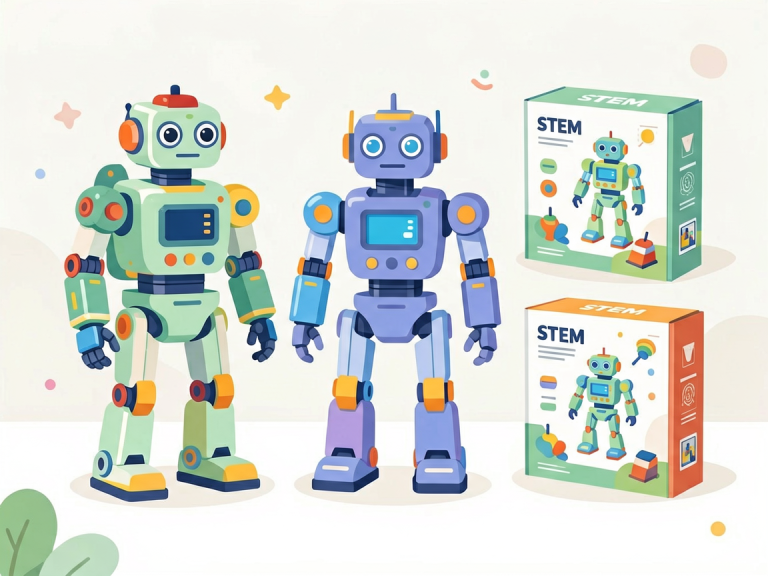
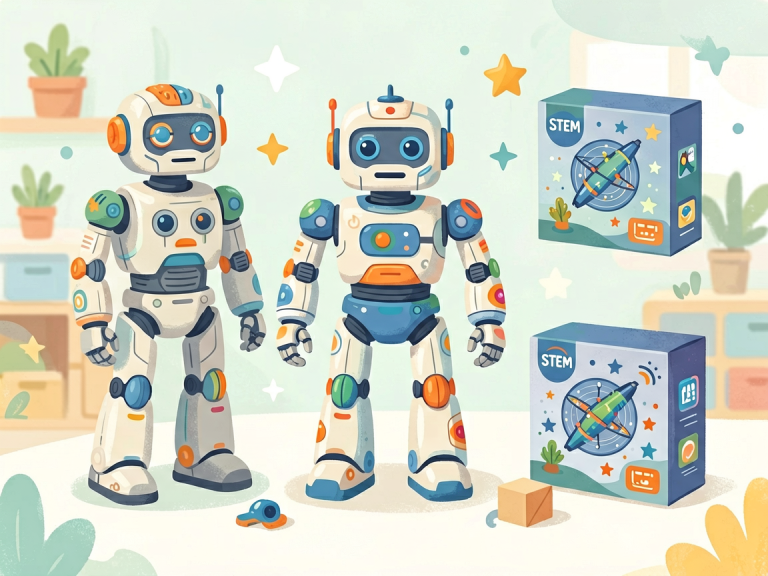
To appreciate the differences between STEM and Montessori toys, one must first grasp the educational theories that underpin them. STEM toys are a product of the 21st-century emphasis on scientific literacy and technological proficiency. The acronym STEM stands for Science, Technology, Engineering, and Mathematics—disciplines that form the backbone of modern innovation. The underlying philosophy of STEM toys is that children should be exposed to these fields early, through hands-on activities that promote problem-solving, critical thinking, and experimentation. These toys are often designed to mimic real-world tools or processes, such as building circuits, coding robots, or constructing bridges, with the explicit goal of preparing children for future academic and professional success in technical domains.
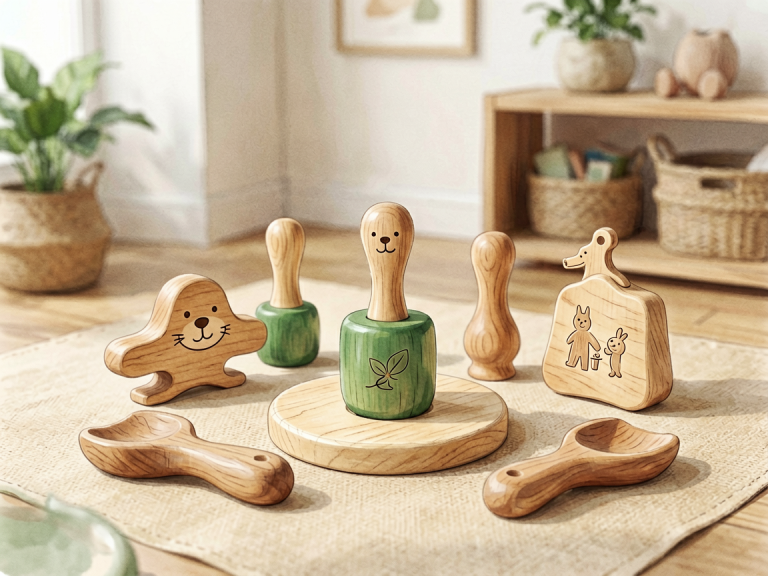
Montessori toys, on the other hand, are rooted in the educational method developed by Dr. Maria Montessori in the early 20th century. The Montessori philosophy emphasizes self-directed learning, respect for a child’s natural psychological development, and the importance of a prepared environment. Montessori toys are not merely playthings; they are carefully crafted “materials” designed to isolate a particular skill or concept. They encourage repetition, concentration, and sensory exploration, often without the need for adult intervention. The goal is not to teach specific subject matter but to allow the child to discover concepts through their own exploration and at their own pace. For instance, a Montessori cylinder block helps a child develop visual discrimination of size, while a Sandpaper Letter introduces the tactile sensation of letter shapes before formal reading.
The core philosophical divergence lies in the intended outcome: STEM toys are goal-oriented and often outcome-driven, while Montessori toys are process-oriented and child-driven. STEM toys frequently incorporate technology and require specific steps to achieve a result, such as programming a robot to navigate a maze. Montessori toys, by contrast, are typically made of natural materials, avoid electronic components, and focus on the repeated refinement of a skill without a predetermined end product. This difference shapes every aspect of the toys, from their design to their role in the child’s daily play.
Design and Purpose: How Each Toy Type Engages Children
The physical design of STEM and Montessori toys reflects their respective philosophies. STEM toys are often colorful, modular, and infused with technology. They may include lights, sounds, or interactive digital interfaces. For example, a popular STEM toy like a coding robot requires a child to input commands via a tablet or a physical coding block, engaging logical sequencing and computational thinking. Another example is a chemistry set with test tubes and powders that yields a visible chemical reaction. The design is intended to captivate a child’s curiosity through tangible results—something happens, a light blinks, a car moves, or a volcano erupts. This immediate feedback loop reinforces cause-and-effect reasoning and can be highly motivating for children who thrive on visual and kinetic stimulation.
Montessori toys, in contrast, are deliberately minimalist. They are usually crafted from wood, metal, or fabric, in neutral or natural colors, with a focus on elegance and simplicity. The purpose is to reduce distractions and allow the child to concentrate fully on the material itself. Take the Pink Tower, one of the most iconic Montessori materials: it consists of ten wooden cubes ranging in size from 1 cm to 10 cm. The child’s task is to stack them from largest to smallest. There are no lights, motors, or digital screens. The beauty lies in the child’s growing ability to discriminate size, control hand movements, and experience a sense of order. A more advanced Montessori material, such as the Binomial Cube, introduces mathematical concepts through a three-dimensional puzzle that, when correctly assembled, represents the algebraic formula (a+b)³. Yet even here, the learning is implicit; the child interacts with the cube purely through physical manipulation and pattern recognition.
In terms of engagement, STEM toys often rely on novelty and external rewards. The excitement of a new app, a blinking light, or a moving part can maintain a child’s interest for a while, but the activity may be quickly abandoned once the desired outcome is achieved. Montessori toys, however, are designed to be used repeatedly over weeks or months. The sense of mastery and internal satisfaction is the primary motivator. A child who successfully builds the Pink Tower for the first time experiences a deep joy of accomplishment, and will likely return to it, building it faster and more precisely, each time refining their motor skills and cognitive understanding.
Cognitive and Developmental Outcomes
When comparing cognitive outcomes, both STEM and Montessori toys offer distinct advantages, but they target different areas of development. STEM toys excel in promoting logical reasoning, spatial awareness, and early engineering thinking. For instance, building a complex structure with magnetic tiles requires planning, trial and error, and an understanding of balance and geometry. Coding toys introduce abstract concepts like loops, conditionals, and debugging, which are foundational for computational thinking. Research suggests that regular engagement with STEM toys can enhance a child’s problem-solving abilities and foster an interest in technical fields, particularly for girls who may otherwise lack exposure to such activities.
Montessori toys, on the other hand, are unparalleled in developing fine motor skills, concentration, and sensory discrimination. The Cylinder Blocks require precise grasps and visual comparisons, laying the groundwork for handwriting. The Sound Boxes teach auditory differentiation, which is crucial for language development. Moreover, the Montessori emphasis on self-correction—many materials have a built-in control of error, meaning the child can see for themselves if they have made a mistake—fosters independence and metacognition. A child using the Long Red Rods, for example, will automatically notice if one rod is out of sequence because the gradual length difference becomes obvious. This self-checking mechanism reduces the need for adult praise or correction, building intrinsic motivation.
However, a potential limitation of STEM toys is that they often require adult guidance, especially when they involve complex instructions or digital interfaces. A child left alone with a robotics kit may become frustrated or rely on a parent to solve problems, thereby diminishing the sense of autonomy. Montessori materials, by contrast, are designed so that a child can use them independently after a brief initial demonstration. This aligns with Montessori’s philosophy that the child is an active agent in their own learning. Additionally, the absence of screens in Montessori toys protects against overstimulation and supports longer periods of focused work, which is increasingly rare in today’s digital age.
Another key difference is in social and emotional development. STEM toys, particularly those that involve team projects like building a Rube Goldberg machine, encourage collaboration and communication. They can be wonderful for group settings. Montessori toys, however, are primarily designed for individual, solitary work within a prepared environment. While Montessori classrooms also incorporate group activities, the typical materials are meant for one child at a time, promoting deep concentration and respect for others’ space. This can be a benefit for children who need quiet, focused time, but it may not suit highly social children who thrive on cooperative play.
Practical Applications: Choosing the Right Toy for Your Child
Given the contrast between STEM and Montessori toys, how should a parent or educator decide which to use? The answer is not an either/or proposition; rather, the choice should be guided by the child’s age, temperament, and developmental stage. For toddlers and preschoolers (ages 1–3), Montessori toys are often more appropriate. At this stage, children are developing sensorimotor skills and a sense of order. Simple, natural materials like stacking rings, shape sorters, and knobbed puzzles align perfectly with their needs. Introducing electronic STEM toys too early can overwhelm a young child’s nascent attention span and may replace the vital tactile exploration that builds neural connections.
For children aged 4 to 7, both types of toys can be beneficial, but the balance may shift. This is when STEM toys start to shine, as children develop the cognitive capacity to understand cause and effect, sequencing, and basic engineering. A magnetic building set or a simple coding board game can spark a lifelong interest in technology. Still, Montessori materials remain valuable for refining academic skills. For instance, the Montessori Sandpaper Letters and Moveable Alphabet are excellent for phonics and early writing, complementing the abstract thinking encouraged by STEM play.
For older children (8 and above), STEM toys become increasingly sophisticated. Robotics kits, electronics labs, and chemistry sets can lead to deep, project-based learning. At this stage, Montessori materials may seem less engaging, but the Montessori method itself expands into more abstract areas, such as the study of the Great Lessons (the origins of the universe, life, and human civilization) which are philosophical rather than toy-based. Nevertheless, the underlying principles of self-direction and hands-on exploration remain relevant. A child who has internalized Montessori habits of concentration and self-discipline may approach a complex STEM project with remarkable perseverance and creativity.
One practical consideration is cost. High-quality Montessori toys, often made of wood and crafted by specialized manufacturers, can be expensive, though they are extremely durable and often passed down through generations. STEM toys vary widely in cost; basic coding toys are affordable, but advanced robots and kits can run into hundreds of dollars. Furthermore, STEM toys may become obsolete as technology evolves, whereas Montessori materials are timeless. On the other hand, STEM toys often provide more immediate novelty, which can be a double-edged sword: they may lead to a shorter play lifespan, whereas a Montessori toy can be used for years in different ways (e.g., a set of geometric solids can be used for stacking, then for classification, then for area and volume calculations in later years).
The Overlap and Synergy: When STEM Meets Montessori
It would be a mistake to treat STEM and Montessori toys as diametrically opposed. In reality, there is significant overlap, and the most effective educational environments often integrate elements of both. For instance, many modern toy manufacturers produce materials that blend the sensory refinement of Montessori with the problem-solving focus of STEM. An example is a wooden balance scale with interchangeable weights: the material is natural and minimalist like Montessori, but it also teaches concepts of mass and equilibrium central to STEM. Similarly, a set of wooden pattern blocks can be used for creative design (Montessori-style open-ended play) and also for exploring geometry and fractions (STEM application).
Another point of synergy is in the approach to failure. Both philosophies encourage a non-judgmental attitude toward mistakes. In STEM play, a failed circuit is an opportunity to debug; in Montessori, a misplaced cylinder cannot fit into the wrong hole, prompting the child to try again. Both models teach resilience and iterative thinking. However, STEM toys often emphasize “success” as achieving a specific outcome (the robot moves), whereas Montessori emphasizes the process itself. A hybrid approach might allow a child to experience both the satisfaction of a finished product and the joy of repeated practice.
Ultimately, the choice between STEM and Montessori toys should reflect a child’s natural inclinations and the values caregivers wish to cultivate. A child who loves building and tinkering will benefit from a mix: use Montessori building materials for fine motor precision and spatial awareness, then supplement with STEM construction sets for more complex, goal-oriented challenges. Similarly, a child who is drawn to technology should not be denied it entirely, but Montessori principles can be used to ensure that screen time remains purposeful and limited. For example, using a coding app in short, focused sessions mimics the Montessori concept of a “work cycle.”
Conclusion
STEM toys and Montessori toys are both powerful tools in a child’s developmental arsenal, but they operate from different philosophical bases and serve different purposes. STEM toys are forward-looking, designed to cultivate technical skills and scientific thinking in an increasingly digital world. Montessori toys are timeless, rooted in respect for the child’s natural development and a belief in the power of hands-on, self-directed exploration. Neither is inherently superior; rather, the wise educator or parent will assess the child’s individual needs, the context of play, and the desired learning outcomes. By understanding the strengths of each, we can create a rich, balanced environment that honors both the wonder of discovery and the joy of mastery—ultimately preparing children not just for school, but for life itself.