STEM Toys vs Montessori Toys: Two Philosophies of Learning Through Play
Introduction
In the world of early childhood education, the debate between STEM toys and Montessori toys has become increasingly prominent among parents, educators, and child development specialists. Both approaches promise to nurture young minds, but they stem from fundamentally different educational philosophies. STEM toys emphasize science, technology, engineering, and mathematics, often through experimentation, coding, and problem-solving activities. Montessori toys, on the other hand, are rooted in Dr. Maria Montessori’s child-led pedagogy, focusing on sensory exploration, practical life skills, and self-directed learning. This article delves deep into the characteristics, benefits, and limitations of each type of toy, offering a comprehensive comparison to help parents make informed decisions. By understanding the core principles behind STEM toys and Montessori toys, you can better align your choices with your child’s developmental needs, temperament, and learning style.
Understanding STEM Toys
What Are STEM Toys?
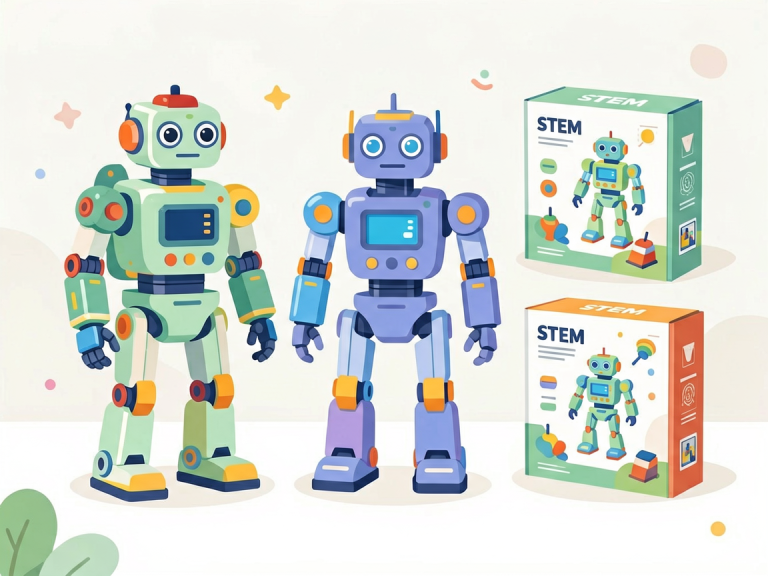
STEM is an acronym for Science, Technology, Engineering, and Mathematics. STEM toys are specifically designed to introduce children to these disciplines in an engaging, hands-on manner. They range from simple building blocks that teach engineering principles to advanced robotics kits that require basic programming skills. Examples include magnet tiles, chemistry sets, coding robots like Sphero or Botley, and circuit-building kits such as Snap Circuits. The underlying goal is to foster critical thinking, problem-solving, and an early appreciation for how the world works through logical and empirical methods.
The Educational Philosophy Behind STEM Toys
The philosophy of STEM toys is deeply influenced by the 21st-century demand for skills in technology and innovation. Proponents argue that children are natural scientists—curious, observant, and eager to test hypotheses. STEM toys leverage this innate curiosity by providing structured opportunities for experimentation. For instance, a child playing with a marble run must hypothesize about slope angles, gravity, and momentum, and then test their predictions. This process mirrors the scientific method and helps develop analytical reasoning. Moreover, many STEM toys incorporate digital elements, such as apps or programmable components, introducing computational thinking at an early age.
Benefits of STEM Toys
One of the greatest advantages of STEM toys is their ability to prepare children for a future dominated by technology. They build foundational skills in mathematics and logic, and they encourage persistence when a project fails to work as intended—a crucial component of resilience. Additionally, STEM toys often require collaboration, especially in classroom or group settings, thereby promoting teamwork and communication. For children who thrive on clear objectives and measurable outcomes (e.g., building a tower that can withstand weight), STEM toys provide immediate feedback that satisfies their need for achievement.
Potential Drawbacks of STEM Toys
Despite their merits, STEM toys are not without criticism. Some educators worry that an overemphasis on STEM can stifle creativity and holistic development. Many STEM toys are goal-oriented and product-focused: the child must assemble a specific model or solve a predefined puzzle. This structure can feel restrictive for children who prefer open-ended play. Furthermore, the integration of screens and electronic components may reduce the sensory richness of physical play. A child engrossed in a coding robot might miss out on tactile experiences like molding clay or sorting natural objects. Finally, the cost of high-quality STEM toys can be prohibitive, and some kits require adult supervision or technical knowledge that not all parents possess.
Understanding Montessori Toys
What Are Montessori Toys?
Montessori toys are inspired by the educational method developed by Dr. Maria Montessori, an Italian physician and educator. These toys are typically simple, made of natural materials like wood, cotton, or metal, and are designed to be self-correcting—meaning the child can easily see and fix their own mistakes without needing adult intervention. Classic Montessori materials include the Pink Tower (a set of progressively sized wooden cubes), the Sandpaper Letters (for tactile letter learning), and the Moveable Alphabet. Practical life toys such as pouring sets, button frames, and child-sized kitchen tools also fall under this category. The emphasis is on process over product, sensory learning, and fostering independence.
The Educational Philosophy Behind Montessori Toys
Montessori philosophy holds that children learn best in a prepared environment that respects their individual pace and interests. Toys are carefully designed to isolate one specific skill or concept at a time. For example, the Cylinder Blocks contain ten cylinders of varying diameters that the child must fit into corresponding holes. This activity hones fine motor control, visual discrimination, and concentration—all without the distraction of bright colors or electronic sounds. The self-correcting nature of Montessori materials encourages intrinsic motivation: the child feels satisfaction from mastering a challenge rather than from external rewards. The adult’s role is to observe and offer minimal guidance, allowing the child to explore freely.
Benefits of Montessori Toys
Montessori toys excel at nurturing independence and focus. Because they are designed for solo or small-group use, children learn to concentrate for extended periods—a skill that is often lost in today’s fast-paced, screen-saturated world. The tactile, natural materials also support sensory integration, which is critical for brain development in the early years. Activities like lacing beads or pouring beans refine hand-eye coordination and prepare children for writing and everyday tasks. Moreover, Montessori toys encourage a growth mindset: mistakes are seen as learning opportunities, and children develop patience and perseverance as they repeat an activity until they achieve mastery.
Potential Drawbacks of Montessori Toys
Critics point out that Montessori toys may not adequately prepare children for the digital and technological realities of modern life. The lack of explicit STEM content can leave gaps in computational thinking if parents do not supplement with other resources. Additionally, some children may find the quiet, minimalist aesthetic of Montessori materials boring compared to the flashy, multicolored world of typical toys. Because Montessori toys are often open-ended and process-oriented, children who are highly goal-driven might feel aimless. Finally, authentic Montessori toys are expensive, and many inexpensive imitations on the market fail to follow the pedagogical principles, offering little more than ordinary wooden blocks.
Key Differences Between STEM and Montessori Toys
Approach to Learning: Directed vs. Self-Directed
The most fundamental difference lies in the locus of control. STEM toys often come with instructions, step-by-step guides, or specific challenges (e.g., “Build a robot that can navigate a maze”). The learning is somewhat directed by the toy’s design, even if the child has freedom within those parameters. Montessori toys, by contrast, are deliberately constructed to allow the child to discover their own sequence and pace. A child using Montessori Number Rods might spontaneously arrange them from shortest to longest, or randomly compare lengths—both are valid forms of exploration. While STEM toys teach children how to follow a process, Montessori toys teach them how to construct their own process.
Materials and Sensory Experience
STEM toys frequently incorporate plastic, electronics, and digital interfaces. They are often colorful, noisy, and visually stimulating to capture attention. Montessori toys prioritize natural materials like wood, metal, glass, and fabric. The textures are varied, the weights are realistic, and the colors are muted to avoid overstimulation. A child holding a smooth wooden geometric solid experiences a different quality of sensation than a child tapping a plastic tablet screen. Montessori educators argue that these authentic materials ground children in the real world, while STEM toys risk creating an abstract, mediated experience.
Skill Emphasis: Hard Skills vs. Soft Skills
STEM toys are heavily focused on “hard” cognitive skills: logical reasoning, coding, math concepts, engineering principles. They are excellent for developing IQ-related abilities. Montessori toys, while also cognitive, place a strong emphasis on “soft” life skills: concentration, order, coordination, independence, and social grace (through practical life activities). Both are valuable, but they target different domains. A child who excels at STEM toys might struggle with patience in everyday tasks, while a child who thrives with Montessori materials might need extra exposure to technology.
Role of Failure and Feedback
In STEM play, failure is often an expected part of the process—the circuit doesn’t light up, the bridge collapses—and the child must troubleshoot. The feedback is immediate and concrete. In Montessori, “failure” is redefined as a learning opportunity because the materials are self-correcting. The child notices that the largest cylinder does not fit into the small hole, so they try another. This subtle difference shapes the child’s emotional response to mistakes. STEM toys may foster a more problem-solving, trial-and-error mindset, while Montessori toys cultivate a calmer, more reflective approach to error.
Which Is Better for Your Child?
There is no universal answer, as every child has unique needs, interests, and developmental stages. Very young children (ages 2–4) generally benefit more from Montessori toys, which support sensorimotor development, language acquisition, and practical life skills. The simplicity and predictability of Montessori materials provide a secure foundation for later learning. As children grow (ages 5–8), they may naturally gravitate toward STEM toys that satisfy their curiosity about how things work and their desire to build, create, and experiment. The best approach is often a balanced one: integrate both philosophies into your home. For example, use Montessori-inspired wooden blocks for open-ended construction, and supplement with a simple coding robot for structured problem-solving. Observe your child’s engagement—do they light up when given a puzzle with a clear goal, or do they prefer to imagine and create without constraints? Let their responses guide your choices.
Conclusion
STEM toys and Montessori toys represent two powerful but distinct pathways to learning through play. STEM toys excel at building concrete skills in science, technology, and math, and they prepare children for a digitally driven world. Montessori toys nurture independence, sensory integration, and a love of process over product. Neither is inherently superior; rather, they complement each other when used thoughtfully. Parents and educators should avoid rigid adherence to a single philosophy and instead curate a rich, varied play environment that respects the child’s individuality. By understanding the strengths and limitations of each approach, you can support your child’s holistic development—intellectually, emotionally, and practically. After all, the ultimate goal of any toy is to ignite a lifelong passion for learning, whether that flame is sparked by a stack of wooden cubes or a blinking circuit board.