The Ultimate Guide to Choosing Toys for Siblings: Fostering Fun, Cooperation, and Growth
Introduction
Selecting toys for siblings is a task that goes far beyond simply picking the trendiest item off the shelf. When two or more children share a home, a playroom, and often a set of parents, the toys they interact with become powerful tools for shaping relationships, developing skills, and creating lasting memories. A well-chosen toy can turn potential squabbles into shared laughter, transform individual play into collaborative adventures, and teach lessons of patience, negotiation, and empathy without a single lecture. Yet the process of choosing such toys can feel overwhelming, especially given the wide age gaps, differing personalities, and competing interests that often exist under one roof. This guide is designed to help parents, grandparents, and gift-givers navigate the complex landscape of sibling toy selection. By considering factors such as age difference, cooperative potential, safety, educational value, and budget, you can make informed decisions that benefit every child in the family. The following sections break down the key principles and offer practical strategies for finding toys that bring siblings together rather than driving them apart.
Understand the Age Gap: The Foundation of Toy Selection
The age difference between siblings is arguably the most critical factor in choosing toys that work for everyone. A two-year-old and a seven-year-old have vastly different cognitive abilities, motor skills, and attention spans. Trying to force them to share a single toy designed for one age group often leads to frustration, boredom, or safety hazards. The goal is not to find one toy that fits both children perfectly—that rarely exists—but to find toys that can be enjoyed in different ways by different ages.
For a wide age gap (four years or more), consider toys with adjustable complexity. Building sets like LEGO Duplo for younger children and standard LEGO for older siblings allow parallel play: the younger one stacks large blocks while the older one follows intricate instructions. Similarly, art supplies such as washable markers, finger paints, and large sheets of paper offer open-ended possibilities. The toddler can scribble freely, while the older child can draw detailed pictures or teach the younger one color names. Another excellent category is active play equipment: a sturdy indoor slide, a balance beam, or a set of soft balls. The toddler practices climbing and balance, while the older sibling invents obstacle courses or games that incorporate the same equipment in more advanced ways.
When the age gap is narrow (two years or less), siblings often share similar developmental stages, making it easier to find toys they both enjoy. However, competition can be fierce. Toys that require turn-taking, such as simple board games (e.g., Candy Land, Snakes and Ladders) or cooperative games where everyone works toward a common goal (e.g., "Hoot Owl Hoot!"), teach patience and fairness. Puzzles with large pieces are another hit: two young children can work side by side on separate puzzles or collaborate on a single one. Role-playing toys like kitchen sets, doctor kits, or tool benches invite imaginative cooperation, with each child taking on a different role.
For mixed-age groups involving multiple siblings, consider "family-style" toys that everyone can use at their own level. Magna-Tiles, or magnetic building tiles, are a classic example. A one-year-old enjoys stacking and knocking down; a three-year-old builds simple towers; a five-year-old creates complex structures with doors and windows; and an eight-year-old might design a castle with secret compartments. The same principle applies to foam building blocks, train sets, and dollhouses. These toys grow with the children and adapt to their changing abilities, offering years of shared enjoyment.
Encourage Cooperative Play: Toys That Build Bonds
One of the greatest gifts you can give siblings is the opportunity to practice cooperation through play. Many traditional toys inadvertently promote solitary or competitive behavior—each child has their own video game console, their own doll, or their own racing car. While independent play is valuable, siblings also need toys that require them to communicate, share resources, and work together toward a common goal. Cooperative play toys are specifically designed to encourage joint effort rather than rivalry.
Look for board games and card games that emphasize teamwork over individual victory. Games like "The Sneaky, Snacky Squirrel Game!" require players to help each other collect acorns before a storm arrives, while "Race to the Treasure!" has players working together to build a path to a treasure before a monster reaches it. These games teach problem-solving and collective decision-making in a fun, low-pressure setting. Similarly, any large construction set—whether it’s a giant marble run, a K'NEX roller coaster, or a complex wooden train layout—demands that siblings plan together, assign tasks, and celebrate shared successes. The process of building something as a team, then playing with it together, creates a sense of joint ownership that reduces conflict.
Outdoor toys also lend themselves beautifully to cooperative play. A large sandbox with shovels, buckets, and molds encourages siblings to dig together, build moats, and create imaginary landscapes. A two-person seesaw or a pedal-powered go-kart requires physical coordination and communication. Even simple items like hula hoops, jump ropes, and balls can be used in cooperative games (e.g., "catch and release" or "group keepy-uppy"). The key is to introduce the idea that the play experience is richer when shared. Parents can model this by joining in and showing how to negotiate roles: "How about you two decide who starts building the track, and then you can switch?"
Respect Individual Interests: Nurturing Unique Personalities
While encouraging shared play is important, it is equally vital to honor each child’s individuality. Siblings are not a single unit; they are two (or more) distinct human beings with their own passions, talents, and preferences. Forcing them to share every toy can backfire, leading to resentment or loss of identity. The most effective toy strategy for siblings involves a mix of shared and personal items.
Start by observing each child’s natural inclinations. One may be drawn to art and crafts, another to science experiments, a third to everything with wheels. When you select a toy specifically for one child, consider how it might be used alongside the other. For example, if you buy a chemistry set for the older sibling, also purchase a set of safe, colorful test tubes and non-toxic liquids for the younger one to mimic the experiments. If one child loves dinosaurs and the other loves dolls, they can create a "dinosaur tea party" where both interests merge. This approach validates each child’s unique identity while still offering a path to joint play.
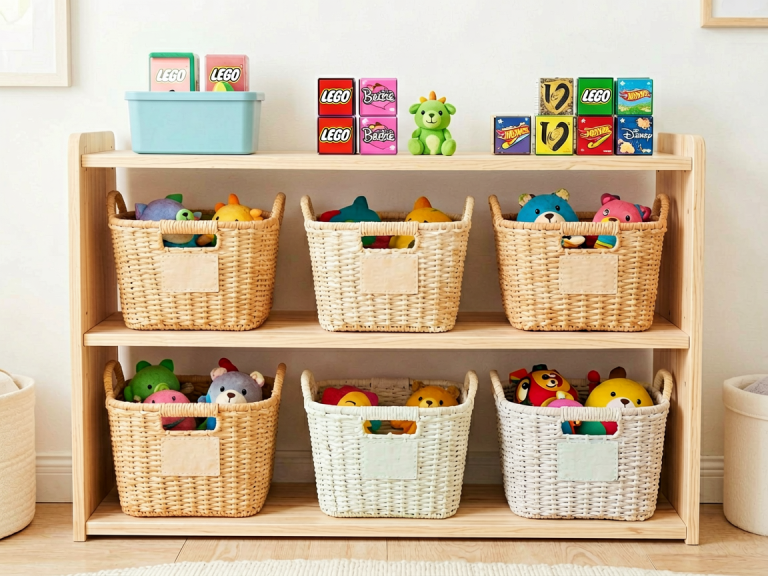
Also be aware of the "shared but separate" concept. For instance, two siblings might each have their own set of markers, but all the markers live in a communal bin. They can choose to work side by side on individual projects or collaborate on a giant mural. Similarly, owning separate LEGO kits is fine, but encouraging the children to create a shared city by connecting their builds (e.g., "Your spaceship can land on my moon base") fosters connection without erasing individuality. When shopping for gifts, consider giving each child one item that is exclusively theirs—a special book, a personalized puzzle, or a craft kit they can work on alone—alongside one or two toys intended for shared use. This balance respects each child’s autonomy while reinforcing the idea that family play is a priority.
Safety First: Shared Toys and Age-Appropriate Risks
Safety is non-negotiable when siblings of different ages play with the same toys. A toy that is perfectly safe for a five-year-old may contain small parts that pose choking hazards to a toddler. Magnets, batteries, small balls, and sharp edges are common dangers. Before introducing any toy to a mixed-age play environment, conduct a thorough risk assessment.
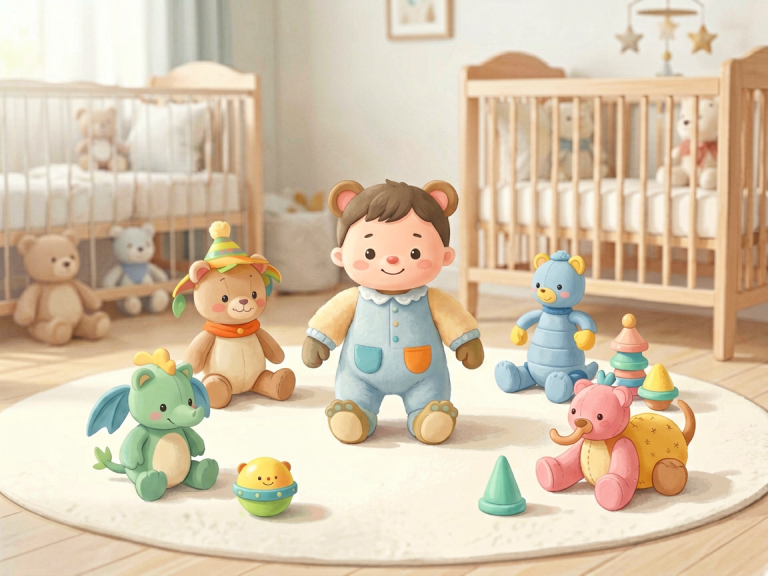
The first line of defense is to choose toys that are explicitly labeled for the youngest child in the group. If the youngest is under three, avoid any toy with parts smaller than a toilet paper roll tube (standard small-parts test). Many manufacturers now produce "family-friendly" toys that are large enough for infants but engaging enough for older children. For example, soft fabric blocks with different textures, sounds, and colors appeal to babies and toddlers, while preschoolers can use them for stacking games and basic counting. Older siblings might use them as props for storytelling or sorting activities.
When a toy does have small parts (e.g., a board game with tiny tokens), establish clear rules: it is "big kids only" and must be played in a separate area or at a table, out of reach of younger children. Alternatively, keep the toy stored high up and bring it out only during designated older-child play times. For families with very wide age gaps, consider "parallel safety zones": a playpen or gated area for the baby with soft, age-appropriate toys, while the older children play nearby with their own items. This allows everyone to be in the same room but with safe boundaries.
Also be mindful of durable construction. Siblings can be rough on toys, especially during heated arguments or enthusiastic play. Avoid flimsy plastics that break into sharp shards, and look for solid wood, thick metal, or high-quality recycled plastic. Check for recall information regularly, and inspect toys for loose parts, splinters, or frayed edges. Finally, never substitute adult supervision for toy safety—even the best-designed toys can become dangerous if used improperly. Teach siblings to respect each other’s space and to alert an adult if a toy breaks.
Educational Value: Learning Through Play Together
Toys that siblings can enjoy together offer tremendous educational benefits, often in areas that are difficult to teach through solitary play. Cooperative play naturally fosters social-emotional learning: turn-taking, patience, empathy, and conflict resolution. But you can also select toys that explicitly promote academic skills such as numeracy, literacy, science, and problem-solving—all while siblings work as a team.
Construction toys (LEGO, magnetic tiles, wooden blocks) teach geometry, balance, and spatial reasoning. When siblings build together, they also learn to measure, estimate, and communicate their ideas. Board games that involve counting spaces, using money, or matching patterns reinforce early math skills in an enjoyable context. For example, "The Game of Life Junior" requires players to count and manage pretend money, while "Sequence for Kids" combines simple reading with strategy. For language development, consider storytelling kits like "Rory's Story Cubes" or "Tell Tale," where siblings take turns rolling dice with pictures and creating a shared narrative. This not only boosts vocabulary but also sparks creativity and cooperation.
Science and nature kits open up fascinating worlds of discovery. A simple microscope set allows siblings to examine leaves, insects, or their own fingerprints together. A crystal-growing kit turns chemistry into a weeks-long project that requires patience and teamwork. For younger children, a magnetic fishing game teaches hand-eye coordination and color recognition while siblings take turns "catching" fish. The key is to choose kits that are designed for multiple users, with enough components for everyone to participate—a single magnifying glass that only one child can look through will lead to fights. Instead, provide two magnifiers or one with a larger viewing area.
Even classic toys like puzzles offer layered educational benefits. A 100-piece puzzle of the solar system teaches geography and astronomy, and siblings can divide tasks: one finds edge pieces, another sorts colors, and a third assembles the center. This division of labor mirrors real-world teamwork. Similarly, a large floor puzzle of a world map can spark conversations about different countries, animals, and cultures. When siblings learn together, they often remember more because they explain concepts to each other—a well-known pedagogical principle called "learning by teaching."
Budget and Durability: Making Smart Investments
Toys for siblings can quickly become expensive, especially when you try to buy separate items for each child. A strategic approach prioritizes durability, longevity, and versatility over volume. The best investment is a toy that lasts through multiple childhoods, withstands rough handling, and remains engaging as children grow.
Look for brands known for quality: LEGO, Melissa & Doug, Hape, PlanToys, and Magna-Tiles are examples of companies that produce sturdy, timeless toys. While the upfront cost may be higher, these toys hold up to years of play and can often be passed down to younger siblings or even resold. Avoid cheap plastic toys that break within weeks, especially those with batteries that die quickly or moving parts that jam. Not only do they waste money, but they also disappoint the children and create frustration.
Consider second-hand options. Thrift stores, garage sales, and online marketplaces are treasure troves for gently used building blocks, puzzles, train sets, and board games. Many families sell toys that their own children have outgrown, often at a fraction of the retail price. Just be sure to clean them thoroughly and check for any missing pieces or safety hazards. A used wooden train set with missing tracks can be supplemented with new pieces, and a vintage board game can become a family heirloom.
Another budget-friendly strategy is to choose toys that serve multiple purposes. A large, sturdy cardboard box can transform into a spaceship, a castle, a car, or a fort—siblings can decorate it together and reinvent it daily. A set of fabric scarves can be used for dress-up, for dancing, for tent-making, or for color-sorting games. By being creative, you can provide endless entertainment without spending much. Remember, the most expensive toy is not always the best; the one that sparks the most collaborative imagination is priceless.
The Role of Open-Ended Toys: Encouraging Creativity
Open-ended toys are those that have no single correct way to play. They allow children to use their imagination, adapt the toy to their needs, and create new scenarios again and again. For siblings, open-ended toys are especially valuable because they can be used differently by each child while still being shared. A single set of open-ended toys can accommodate a wide range of ages, interests, and skill levels, making them the most versatile and cost-effective choice for families.
Examples include wooden blocks, loose parts (such as natural stones, bottle caps, spools), play silks, modeling clay, and dress-up clothes. A collection of colorful scarves, for instance, can become costumes, rivers, tents, or flags depending on the game. Two siblings might build a castle out of blocks today, a spaceship tomorrow, and a race track the next day. The toy never gets boring because the children themselves invent the rules. This kind of play also reduces competition because there is no "right" way to win—everyone’s creation is valid.
When selecting open-ended toys, think about versatility. A set of wooden people (like the ones from Grimm’s or small peg dolls) can represent any character in any story. A bag of assorted wooden beads and strings can be used for threading (fine motor skills), for math counting, or for creating jewelry. A large roll of butcher paper and washable markers can inspire collaborative murals, map-making, or storytelling. The beauty of open-ended toys is that they grow with the children: a toddler might simply stack blocks, while a school-age child builds complex architectural structures with the same blocks.
Practical Tips for Gift-Giving Occasions
Birthdays and holidays often bring heightened expectations and potential for jealousy among siblings. The child who receives a visually impressive gift may be the focus of attention, while the sibling with a smaller present feels overlooked. To avoid this, plan ahead with a few smart tactics.
First, consider giving shared gifts that are large and exciting enough for everyone to enjoy together. A play kitchen, a trampoline, a large dollhouse, or a fully stocked art station can be the centerpiece of the celebration. Each sibling can contribute to the unwrapping, and they all benefit from the gift. To make it feel personal, you can include small individual presents as well—a favorite book, a new shirt, or a small puzzle—but the main gift is communal.
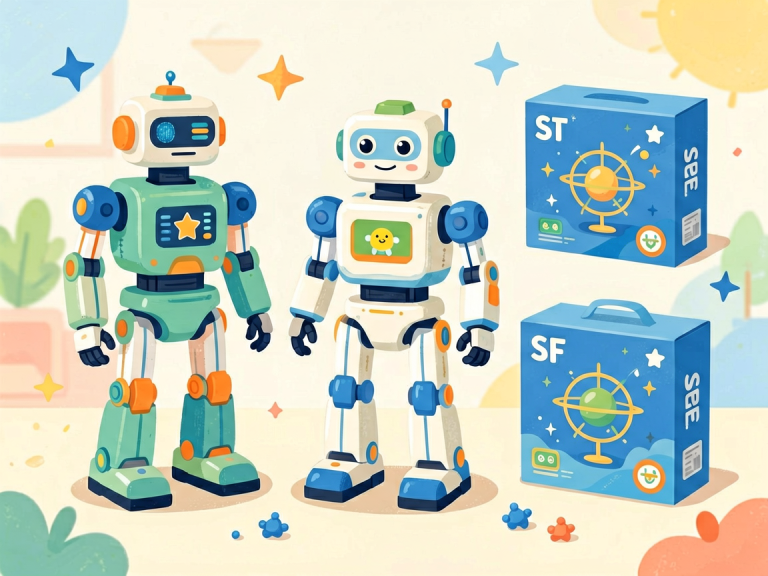
Second, when giving separate presents, try to keep the perceived value comparable. This does not mean spending the same amount of money on each child; rather, ensure that each gift feels special in its own way. For example, one child might receive a set of art supplies that matches her passion, while the other receives a beginner’s robotics kit. Both are thoughtful and tailored, and neither overshadows the other. Avoid giving one child a toy with flashy lights and sounds while the other receives something quiet; the sensory difference can trigger envy.
Third, involve siblings in the gift selection process when appropriate. Ask them to choose a toy for each other. This teaches generosity and consideration, and it often leads to gifts that the recipient will love because the giver knows their brother’s or sister’s interests. Set a rule that the toy must be something they can play with together, reinforcing the idea that siblings are each other’s
Quick Checklist for Choosing Toys Siblings Can Share
- Start with the youngest child’s safety needs: small parts, magnets, batteries, projectiles, and complex mechanisms must be safe around every child who can reach the toy.
- Choose a shared goal: building a structure, completing a cooperative game, creating a story, or solving a challenge reduces arguments over a single “winner.”
- Provide enough active roles: look for sets with multiple pieces, characters, tools, or jobs so one child does not control the entire activity.
- Balance shared and individual ownership: siblings can share the main set while keeping a few clearly assigned pieces or personal projects.
- Match the age gap: use simple entry points for the younger child and optional complexity for the older child instead of expecting identical play skills.
- Plan for predictable conflicts: agree on turn length, storage, rebuilding rules, and what happens when someone wants to pause or protect an unfinished creation.
- Review durability and replacement cost: frequently shared toys should tolerate heavier use and should not become unusable when one small piece disappears.
A good sibling toy does not require children to play in exactly the same way. It gives them enough flexibility to cooperate, play side by side, and rejoin the same activity without constant adult negotiation.