Slime Ingredients in Toys for 18-Month-Olds: A Critical Safety Analysis
Introduction: The Rising Popularity of Slime Toys and the Toddler Market
In recent years, the global toy industry has witnessed an unprecedented surge in the popularity of slime-based products. From glittery unicorn slime to fluffy cloud slime, these stretchy, gooey substances have captivated children of all ages. However, a concerning trend has emerged: the marketing of slime toys for increasingly younger age groups, including toddlers as young as 18 months old. While manufacturers often emphasize sensory play and developmental benefits, the ingredients commonly found in slime products pose serious safety risks for this vulnerable population. This article provides a comprehensive examination of slime ingredients in toys intended for 18-month-olds, evaluates their chemical and physical hazards, and offers evidence-based recommendations for parents, caregivers, and industry stakeholders.
Before delving into the specifics, it is essential to understand what constitutes a typical slime toy. Most commercial slimes are composed of a polymer base—usually polyvinyl alcohol (PVA) or polyvinyl acetate (PVA glue)—crosslinked with a borate compound such as sodium tetraborate (borax) or boric acid. Additional ingredients may include water, food coloring, glitter, foam beads, scented oils, and preservatives. For an 18-month-old, whose oral exploration, immature metabolism, and developing immune system make them uniquely susceptible to toxic exposures, these components are far from harmless.
The Chemical Composition of Slime: Why It Matters for Toddlers
Binders and Crosslinkers: The Boron Problem
The backbone of almost all slime recipes is the crosslinking reaction between a polymer and a borate source. Sodium tetraborate, or borax, is the most commonly used activator. While borax is considered relatively safe for older children when used under supervision and in proper concentrations, the situation is drastically different for infants and toddlers. The European Chemicals Agency (ECHA) has classified boric acid and borates as reproductive toxicants, and the U.S. Consumer Product Safety Commission (CPSC) has established strict limits on boron migration in toys intended for children under three years old.
For a 12- to 24-month-old, the acceptable daily intake of boron is extremely low—typically less than 0.1 mg per kilogram of body weight. A single gram of slime can contain several milligrams of boron, and a curious toddler who mouths or ingests even a small piece may exceed safe exposure limits. Acute poisoning symptoms include vomiting, diarrhea, rash, and in severe cases, seizures or kidney damage. Chronic exposure, even at subacute levels, has been linked to developmental delays and endocrine disruption. Consequently, any slime toy marketed for 18-month-olds that contains boron compounds is inherently unsafe, regardless of the manufacturer’s claims about "non-toxic" labeling—because "non-toxic" often refers to acute lethal toxicity rather than chronic or developmental toxicity.
Colorants and Glitters: Heavy Metals and Microplastics
Beyond the borate issue, the vibrant colors and sparkly additives in slime toys introduce another layer of risk. Many commercial slimes use synthetic dyes such as FD&C Red 40, Yellow 5, or Blue 1. While these are approved for food use in many countries, they are not intended for ingestion in large quantities, and their safety for toddlers who may repeatedly mouth toys has not been thoroughly studied. More alarming is the use of non-food-grade pigments, including metallic powders and fluorescent compounds, which can contain lead, cadmium, or other heavy metals. A 2020 study by the Danish Environmental Protection Agency found that several slime products contained lead levels exceeding EU safety limits by more than 50 times.
Glitter, a beloved slime additive, is essentially microplastic—small particles of aluminum-coated polyethylene terephthalate (PET). When a toddler handles slime, glitter flakes can easily detach and be transferred to the mouth, eyes, or skin. Inhalation of microplastics is an emerging concern, and ingestion poses risks of gastrointestinal irritation or accumulation in tissues. For an 18-month-old, whose hand-to-mouth behavior is almost constant, microplastic exposure from glittery slime is practically unavoidable.
Preservatives and Fragrances: Allergens and Irritants
To extend shelf life, manufacturers often add preservatives such as methylisothiazolinone (MIT) or benzisothiazolinone (BIT). These chemicals are potent skin sensitizers and have been linked to allergic contact dermatitis, particularly in young children with delicate skin. A 2019 case series published in *Pediatric Dermatology* reported several incidents of severe rashes on the hands and faces of toddlers after playing with slime containing MIT. Additionally, synthetic fragrances used to make slime smell like fruit or candy often contain phthalates or other endocrine-disrupting compounds. While fragrance labeling is notoriously opaque, independent testing has revealed phthalates in numerous slime products marketed for children.
Physical Hazards: Choking, Suffocation, and Intestinal Blockage
The Choking Risk of Slime Additives
Aside from chemical dangers, the physical properties of slime toys pose immediate hazards for 18-month-olds. At this age, toddlers have a strong urge to put objects into their mouths, and their airways are small—approximately the diameter of a child’s pinky finger. Slime itself is a cohesive, deformable mass that can conform to the shape of the throat or esophagus, creating a risk of asphyxiation if a large piece is swallowed. More commonly, the small solid additives—foam beads, glitter flakes, sequins, or plastic charms—can break off and become lodged in the airway. Emergency room visits for children under two years old due to slime-related choking incidents have been documented in several pediatric case reports, particularly involving miniature bead-filled slimes.
Intestinal Blockage from Ingestion
If a toddler manages to swallow a significant quantity of slime, the material may not pass through the digestive system easily. Slime’s viscoelastic properties allow it to clump together, and because it is not readily broken down by stomach acid, it can form an obstructive mass in the small intestine. In 2022, the *Journal of Pediatric Gastroenterology and Nutrition* reported a case of a 16-month-old who required surgical intervention after ingesting a large amount of homemade slime containing PVA glue and borax. The slime had congealed into a semi-solid plug, causing bowel obstruction. While such severe outcomes are rare, the risk is non-negligible for a product that is being marketed to the very demographic most likely to ingest it.
Regulatory Gaps and Marketing Misrepresentation
Inadequate Age Labeling
Despite these clear dangers, many slime toys sold online and in stores are labeled as suitable for children aged 18 months and up. In the United States, the Consumer Product Safety Improvement Act (CPSIA) requires that toys for children under three years old must not contain small parts that can be choked on, and must undergo third-party testing for lead and phthalates. However, slime is often categorized as a "sensory toy" rather than a traditional toy, and manufacturers exploit loopholes in testing requirements. For instance, slime is typically exempted from small-part cylinder testing because it is a pliable mass, yet the beads and glitter it contains are not subject to the same scrutiny. In the European Union, the Toy Safety Directive (2009/48/EC) sets migration limits for certain elements but does not specifically address borate crosslinkers in slime, leaving a regulatory blind spot.
Misleading "Non-Toxic" Claims
The term "non-toxic" appears on countless slime packaging, but it is largely unregulated. A product can be certified as non-toxic under ASTM F963 (the U.S. toy safety standard) if it does not cause acute poisoning when ingested in small amounts. However, this does not account for chronic low-level exposure, skin absorption, or inhalation. A 2021 investigation by *Consumer Reports* found that 8 out of 12 popular slime brands labeled as "non-toxic" contained boron concentrations that would exceed safe limits for a 10 kg toddler after just 10 minutes of play. Parents are thus misled into believing these products are safe for their youngest children.
Safe Alternatives for Sensory Play with 18-Month-Olds
Given the significant risks, the most prudent recommendation for parents and caregivers is to avoid any commercial slime product for children under three years old. However, 18-month-olds do benefit greatly from sensory play that promotes fine motor skills, tactile exploration, and cognitive development. Fortunately, there are many safe alternatives that provide similar stretchy, squishy, or gooey experiences without toxic ingredients.
Edible Sensory Materials
For toddlers who still explore with their mouths, the safest sensory play materials are edible. Simple recipes using cornstarch and water (oobleck) or cooked cornstarch and yogurt (edible slime) provide a satisfying texture without borates, heavy metals, or microplastics. Parents can add natural food coloring from beets or turmeric for safe color. Another option is "cloud dough" made from flour and vegetable oil, or homemade playdough using flour, salt, cream of tartar, and water. These materials are non-toxic even if ingested in small amounts, and they can be easily stored in airtight containers for repeated use.
Silicone-Based and Textured Toys
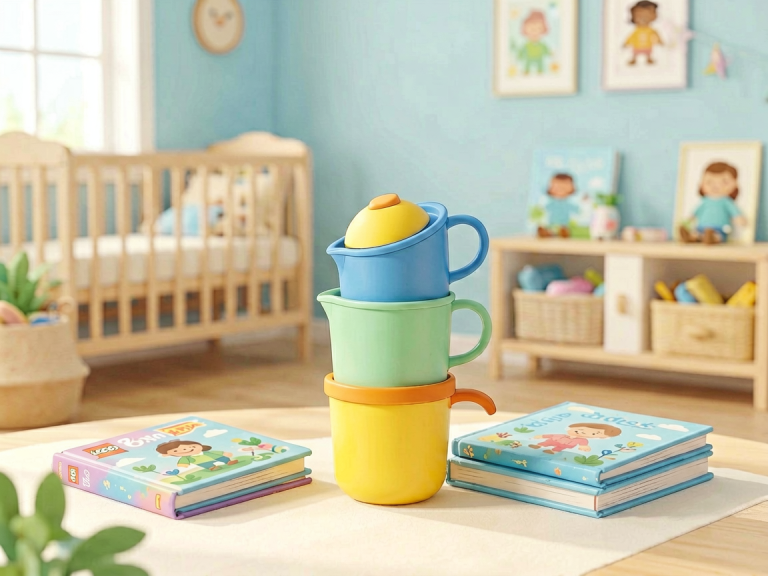
Many reputable toy brands now offer sensory toys made from food-grade silicone—a material that is soft, stretchable, and completely inert. Silicone teethers, stacking cups, and "sensory balls" with bumps or ridges provide tactile stimulation without risking chemical leaching. Unlike slime, silicone does not attract dirt or harbor bacteria as easily, and it can be sterilized in boiling water. For an 18-month-old, silicone bath toys or wall-mounted sensory panels offer endless opportunities for squishing, squeezing, and pulling—all without the hazards of slime ingredients.
Nature-Based Sensory Bins
Filling a shallow bin with safe, natural items such as dry rice, large beans (supervised to prevent choking), or cooked and cooled pasta allows toddlers to dig, scoop, and pour. Adding a few drops of lavender or chamomile essential oil (diluted and under adult supervision) can provide a calming sensory experience. These bins can be refreshed weekly and are far more educational than a pre-packaged slime kit. The key is to choose items that are too large to be swallowed and that are free of synthetic chemicals.
Conclusion: Prioritizing Safety Over Novelty
The slime trend shows no signs of fading, but the toy industry must do better at protecting its youngest consumers. The ingredients found in most slime toys—boron compounds, synthetic dyes, microplastics, preservatives, and fragrances—pose unacceptable risks for 18-month-olds, whose developmental stage makes them especially vulnerable. Regulatory agencies should close loopholes that allow slime to evade rigorous testing for borate content, small parts, and chronic toxicity. Manufacturers should either reformulate slime for this age group using completely edible, non-toxic components or, more realistically, discontinue marketing slime to the under-three demographic altogether.
Parents, in the meantime, have a clear responsibility to read labels with skepticism, ignore vague "non-toxic" claims, and opt for proven safe alternatives made from silicone, natural materials, or simple kitchen ingredients. The joy of sensory play should never come at the cost of a child’s health. By understanding the real dangers behind slime ingredients and making informed choices, we can ensure that our 18-month-olds explore their world safely—without the hidden risks hidden in a jar of glittery goo.