Screen or No Screen? The Great Debate on Learning Tablets versus Screen-Free Toys for Toddlers
Introduction
The first few years of a child's life are a whirlwind of rapid brain development, sensory exploration, and foundational learning. Every parent, caregiver, and educator wants to provide the best possible tools to nurture this growth. In today's digital age, the market offers two seemingly opposing categories of playthings: high-tech learning tablets designed specifically for toddlers, and the timeless, battery-free world of screen-free toys. The decision between these two options is not merely a matter of preference—it touches upon debates in child development, neuroscience, and even sociology. Are interactive screens truly the educational revolution they claim to be, or do the humble wooden blocks and plush dolls hold an irreplaceable advantage? This article delves into the evidence, examines the strengths and weaknesses of each approach, and offers practical guidance for making informed choices for toddlers.
The Allure of Learning Tablets
Interactive Engagement and Digital Literacy
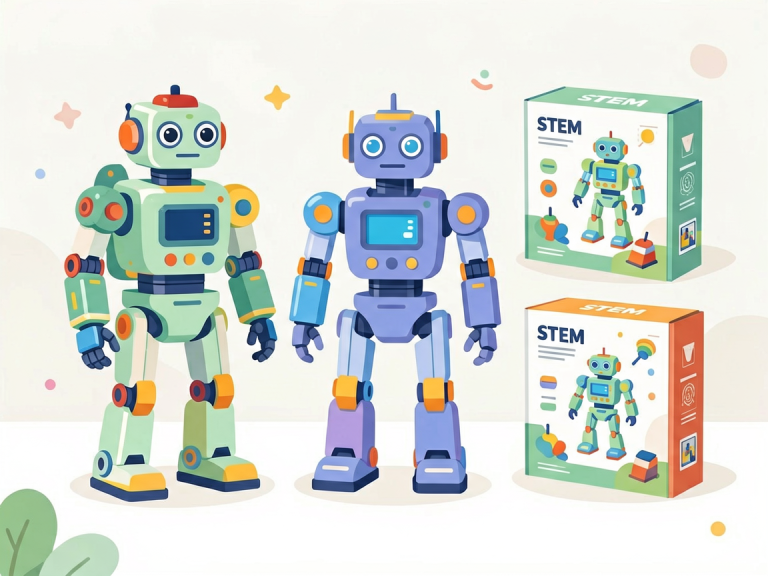
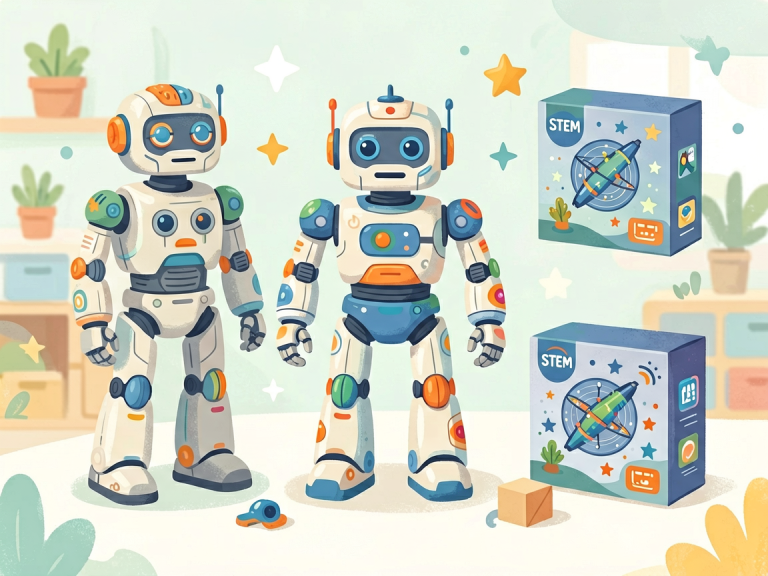
Learning tablets for toddlers—such as those produced by LeapFrog, VTech, or Amazon's Fire Kids Edition—are marketed as comprehensive educational tools. They offer a curated selection of apps, games, and videos designed to teach letters, numbers, phonics, shapes, colors, and even basic problem-solving. From a parent's perspective, the appeal is clear: these devices can hold a child's attention for extended periods, providing a quiet, mess-free activity that feels productive. Moreover, in a world increasingly mediated by screens, some argue that early exposure to digital interfaces is a form of literacy in itself. Toddlers who swipe and tap become familiar with the mechanics of modern technology, which may give them a head start in school and later life.
Personalized Learning and Adaptive Difficulty
One of the strongest arguments for learning tablets is their ability to adapt to a child's individual pace. Many apps use algorithms to increase difficulty as a child masters a skill, or to offer repetition when a concept proves challenging. This personalized scaffolding is difficult to replicate with static toys. A tablet can also provide immediate, consistent feedback—bright animations, cheerful sounds, and verbal praise—that reinforces correct answers. For children who need extra practice with identifying letters or counting, the tablet becomes a patient, tireless tutor. Additionally, some tablets are designed with parental controls, allowing adults to track progress, set time limits, and choose age-appropriate content, thereby giving families a degree of oversight.
The Dark Side of Screen Time
Despite these benefits, the American Academy of Pediatrics (AAP) and other major health organizations remain cautious. For children under 18 months, the AAP recommends avoiding screen time entirely (with the exception of video chatting). For toddlers aged 18–24 months, limited, high-quality programming with a parent present is suggested, and for ages 2–5, screen time should be capped at one hour per day. The reasons are rooted in developmental science. Excessive screen use in early childhood has been linked to delays in language acquisition, reduced attentional control, and poorer executive function. Passive consumption of fast-paced digital content can overstimulate the developing brain, leading to difficulty with self-regulation and real-world social interactions. Furthermore, learning tablets often encourage solitary play, isolating the child from the rich, reciprocal feedback of human interaction—a critical component of early learning.
The Case for Screen-Free Toys
Sensory-Rich, Open-Ended Exploration
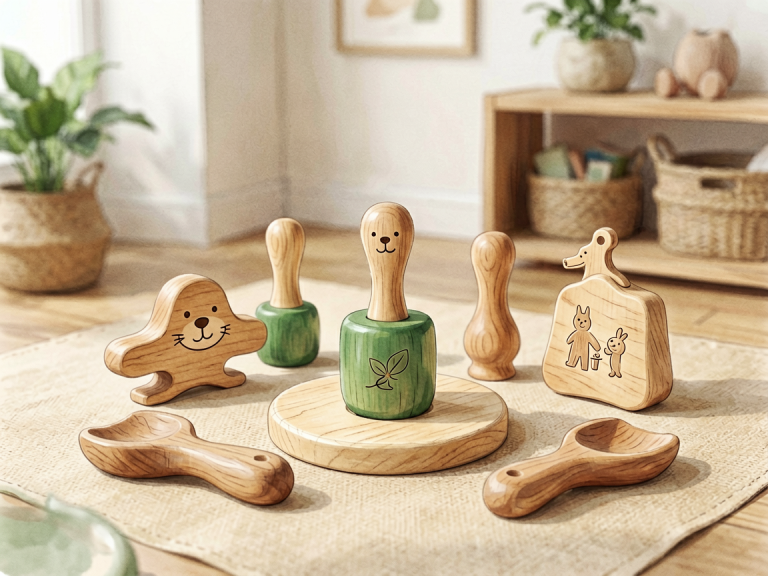
Screen-free toys—think building blocks, shape sorters, stacking rings, sensory bins, art supplies, puzzles, and dolls—offer something that no screen can replicate: direct, multidimensional sensory feedback. A toddler gripping a wooden block feels its weight, texture, and temperature. She hears the clack as it drops into a bucket, sees how it casts a shadow, and learns cause and effect through trial and error. These experiences stimulate the integration of multiple senses, which is essential for the development of neural pathways. Unlike the two-dimensional, visually dominated world of a tablet, real-world toys engage the whole body and encourage gross and fine motor skills—from the pincer grasp needed to pick up a small bead to the balance required to stack a tower.
Fostering Creativity and Imagination
Perhaps the most profound advantage of screen-free toys is their open-endedness. A cardboard box can become a spaceship, a castle, or a car. A set of simple wooden blocks can be arranged into infinite configurations, each time teaching a new lesson in geometry, gravity, or aesthetics. This kind of unstructured play is the birthplace of divergent thinking—the ability to generate multiple solutions to a problem. In contrast, a learning tablet's games are typically closed-ended: there is a right answer and a wrong answer, and the child's creativity is channeled into tapping the correct icon. Over-reliance on such structured tasks may inadvertently limit a child's capacity for invention and wonder.
Social and Emotional Development
Screen-free toys also facilitate critical social and emotional skills. When a toddler plays with another child or an adult using blocks or dolls, they practice turn-taking, negotiation, empathy, and conflict resolution. A shared pretend-play scenario, such as "cooking" a meal in a toy kitchen, requires cooperation and language—the very building blocks of human connection. Tablets, even those marketed as "multiplayer," rarely replicate the messy, spontaneous, and emotionally rich interactions of face-to-face play. Moreover, screen-free toys allow a child to experience boredom—a state that many experts argue is essential for developing internal motivation and creativity. A tablet, with its endless stream of prompts and rewards, eliminates that necessary pause, leaving the child perpetually entertained but rarely truly engaged.
The Evidence: What Research Shows
A growing body of research supports the superiority of hands-on learning for toddlers. A 2019 study published in *JAMA Pediatrics* found that for every 30-minute increase in screen time among 2-year-olds, there was a measurable decrease in vocabulary and communication scores. Conversely, a 2021 longitudinal study from the University of Cambridge showed that children who spent more time playing with conventional toys and less time with screens exhibited stronger fine motor control and problem-solving abilities at age 5. Neuroscientists point to the concept of "contingent responsiveness"—the dynamic give-and-take between a child and a responsive adult, or between a child and a physical object, that fosters learning. A tablet, no matter how sophisticated, cannot fully replicate this contingency because its feedback is algorithmically predetermined, not organically responsive to the child's unique intent.
Practical Guidance for Parents
Striking a Balance, Not a Ban
The most sensible approach is not to frame the decision as an either-or dichotomy but to consider the role of each tool within a broader, developmentally appropriate environment. For toddlers under 18 months, the evidence overwhelmingly supports zero screen time. Between 18 months and 3 years, a highly limited, co-viewed use of a learning tablet can be acceptable if it serves a specific purpose—for example, a short, interactive phonics game that the parent plays together with the child, pausing to discuss what they see. The key is "co-viewing": the adult's presence turns the screen from a passive distraction into a tool for joint attention and conversation.
Prioritizing Quality and Context
For families who choose to introduce a learning tablet, quality matters more than quantity. Look for apps that are slow-paced, have no distracting pop-ups or ads, and encourage active participation rather than passive watching. Avoid apps that rely on "binge" mechanics—endless rewards and level-ups that keep a child hooked. Most importantly, set firm time limits (e.g., 15–20 minutes per session) and enforce them consistently. Never use a tablet as a pacifier during mealtimes, car rides, or whenever the child is upset; this teaches emotional reliance on screens rather than self-soothing strategies.
Building a Rich Toy Library
The best screen-free toys are those that are simple, durable, and adaptable. Invest in a few high-quality items that grow with the child: wooden unit blocks, a set of nesting cups, a doll with simple clothes, a child-sized broom and dustpan for pretend chores, a set of non-toxic crayons and paper. Rotate toys regularly to maintain novelty. And remember that the most valuable "toy" is the parent's time and attention. A toddler learning to stack blocks with a parent who narrates the process ("You put the red one on top! Now the blue one—uh-oh, it fell!") receives a richer educational experience than any tablet can deliver.
Conclusion
The debate between learning tablets and screen-free toys for toddlers ultimately reflects a deeper question: what do we value in early childhood? Tablets promise efficiency, measurable progress, and digital readiness. Screen-free toys offer mess, wonder, and the messy, beautiful process of growing a human brain through real-world experience. The best research suggests that for the youngest learners, the screen-free path is not merely nostalgic—it is neurologically optimal. However, a rigid prohibition on all screens is impractical and perhaps unnecessary in a world saturated with technology. The wisest course is to embrace screen-free play as the foundation of early learning, while using learning tablets sparingly, intentionally, and always together. In doing so, we give toddlers the best of both worlds: the grounding of tangible, imaginative play and the gentle introduction to the digital tools that will inevitably shape their future. The choice, ultimately, is not between old and new, but between passive consumption and active engagement—and for a toddler's developing mind, active engagement will always win.