Science Toys vs Engineering Toys: Divergent Paths to a Unified Future of Play and Learning
Introduction: The Two Pillars of Constructive Play
In the crowded aisles of modern toy stores, parents and educators are increasingly confronted with a tantalizing yet bewildering choice: science toys or engineering toys? Both categories promise to spark curiosity, build skills, and prepare children for a technology-driven world. Yet they represent fundamentally different approaches to learning. Science toys invite children to explore, question, and discover the natural world—they are about understanding *why* things happen. Engineering toys, by contrast, challenge children to design, build, and optimize—they are about figuring out *how* to make things work. This essay delves into the distinctive philosophies, educational impacts, and practical applications of science toys versus engineering toys, arguing that while they are often conflated, each cultivates a unique cognitive muscle, and their true power emerges only when they are used in tandem.
Section I: Defining the Domains – What Sets Them Apart?
To compare science toys and engineering toys, we must first understand their underlying disciplines. Science toys are rooted in the natural sciences—physics, chemistry, biology, and astronomy. They typically involve observation, experimentation, and the testing of hypotheses. A chemistry set with test tubes and powders, a magnifying glass for bug observation, a telescope for star-gazing, or a crystal-growing kit—these are classic examples. The child using a science toy is a mini-scientist: they mix substances to see reactions, watch mealworms transform into beetles, or chart the phases of the moon. The emphasis is on *discovery* and *understanding*. The outcome is often open-ended; the joy lies in the process of asking “What if?”
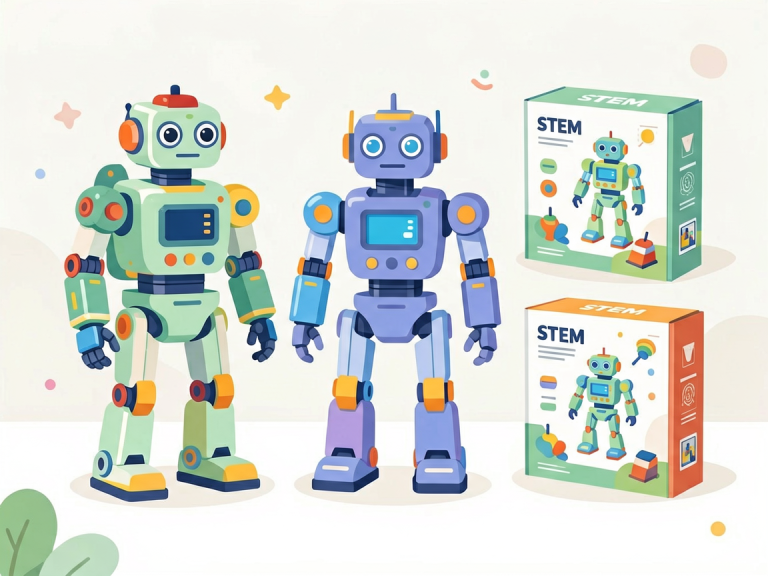
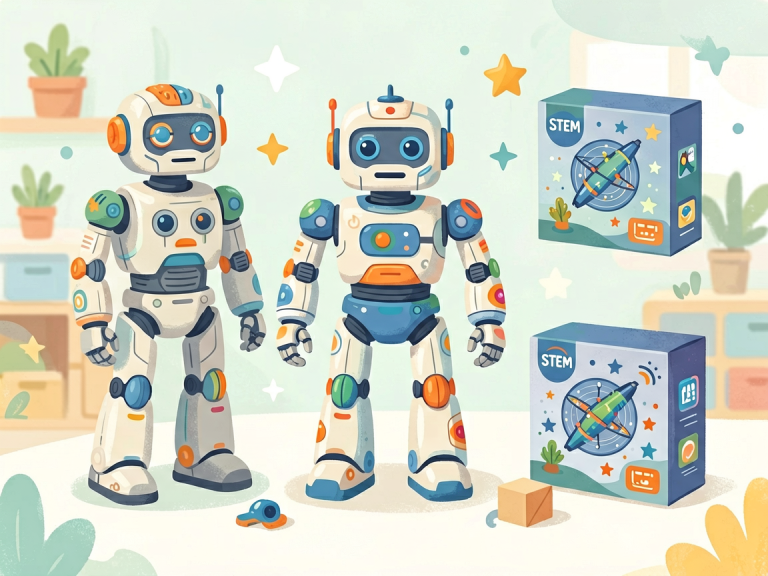
Engineering toys, on the other hand, are grounded in applied science, mathematics, and design. They involve construction, problem-solving, and iterative improvement. LEGO Technic sets, K’NEX bridges, marble runs, build-your-own-robot kits, and 3D-printing pens for young designers are archetypal engineering toys. Here, the child is a mini-engineer: they follow instructions or invent their own blueprints, assemble components, and test for structural integrity, mechanical function, or efficiency. The emphasis is on *creation* and *optimization*. The outcome is often goal-oriented: the bridge must hold ten pennies, the robot must move forward, the marble must reach the bottom without falling off the track.
The distinction can be captured in a simple phrase: science toys answer “why”; engineering toys answer “how.” A science toy about magnetism might ask, “Which metals are attracted to a magnet?” An engineering toy about magnetism might ask, “How can you use magnets to make a car move without touching it?” Both involve magnets, but the cognitive demand differs profoundly.
Section II: Cognitive Skills Cultivated – Different Branches of Intelligence
Science toys primarily nurture *inductive reasoning* and *analytical thinking*. When a child watches a volcano eruption made with baking soda and vinegar, they are not just entertained; they are constructing mental models of chemical reactions. They learn to control variables (e.g., amount of vinegar), make predictions, and record observations. This process hones skills like patience, careful observation, and the ability to tolerate ambiguity—because scientific experiments often fail or yield surprising results. Science toys also foster a sense of wonder and a deep appreciation for the complexity of the natural world. A child who grows crystals learns that order can emerge from chaos, that temperature and concentration matter. Such toys build a foundation for scientific literacy long before formal education begins.
Engineering toys, in contrast, cultivate *deductive reasoning*, *spatial visualization*, and *persistence through iterative failure*. Consider a child building a catapult from wooden sticks and rubber bands. The initial design may launch a marshmallow two inches; after adjusting the lever arm and tension, it may launch five feet. The child learns to diagnose problems, isolate variables (too much tension? Too short an arm?), and systematically improve the design. This is the essence of the engineering design process: define the problem, brainstorm, prototype, test, evaluate, and redesign. Engineering toys also teach resource management—how to use limited pieces to achieve a stable or functional structure—and often require following or creating sequential instructions, which boosts executive function and planning skills. Moreover, the tangible result of a successful build provides a powerful sense of accomplishment.
Section III: Comparative Examples – A Closer Look at Play Scenarios
To make the comparison concrete, let us examine two common categories: chemistry sets (science) versus construction kits (engineering). A chemistry set typically includes safe reagents, test tubes, and a manual with experiments. The child might mix sodium bicarbonate with citric acid to create a fizzy reaction. The learning outcome is an understanding of acid-base reactions. There is no “right” way to mix them—the child can vary amounts and observe different intensities. The focus is on the phenomenon itself.
An engineering construction kit, such as a motorized LEGO set, provides gears, axles, beams, and instruction to build a vehicle. The child must connect pieces in precise ways to ensure the motor drives the wheels. If the gear ratio is wrong, the car might move too fast or stall. The child must troubleshoot: check alignment, lubricate joints, or change gear sizes. The learning outcome is an understanding of mechanical advantage and system integration. Here, there is a clear success criterion—the car moves—and failure is immediate and instructive.
Another vivid contrast: a telescope (science) versus a marble run (engineering). With a telescope, the child scans the night sky, identifies craters on the moon, or spots Jupiter’s moons. The learning is observational and contemplative; it builds a sense of scale and cosmic wonder. With a marble run, the child designs a track with drops, loops, and ramps to guide a marble from start to finish. The learning is hands-on and iterative; the child learns about gravity, momentum, and friction by adjusting the track’s slope and curvature. The telescope asks “What is out there?” The marble run asks “How do I get the marble there?”
Section IV: Educational Value – Strengths and Potential Pitfalls
Both types of toys offer immense educational value, but they also have limitations if used exclusively. Science toys excel at fostering *conceptual understanding* and *intrinsic curiosity*. They encourage children to ask open-ended questions and to embrace the unknown. However, they can sometimes lack a clear feedback loop; a failed chemistry experiment may be dismissed as “it didn’t work” without a structured path toward improvement. Children may become frustrated if they cannot replicate results or if experiments seem too abstract.
Engineering toys, conversely, provide *clear goals and immediate feedback*. A collapsed bridge or a stuck gear is unambiguous: something needs to change. This builds resilience and a growth mindset—children learn that failure is a stepping stone to success. Yet engineering toys can sometimes overemphasize *procedural compliance*. When children rigidly follow instructions to build a pre-designed model, they may miss the opportunity for creative innovation. The joy of engineering is in *design*, not just assembly. Many engineering toys now include open-ended building prompts to counter this, but the market still abounds with kits that prioritize completion over creativity.
Another consideration is *age appropriateness*. Science toys often require more adult guidance for younger children to avoid frustration. A five-year-old might need help interpreting why a plant seed doesn’t sprout. Engineering toys, with their tangible parts and step-by-step instructions, can be more self-directed for the same age group. However, as children grow older, science toys that involve data collection (like weather stations or electronic sensors) become increasingly engaging and open-ended.
Section V: The Synergy – Why Children Need Both
The most powerful play scenario is one that integrates science and engineering. This is where true innovation happens. Consider a child who builds a simple electric circuit (engineering) and then experiments with different materials to see which conduct electricity (science). Or a child who designs a water filter (engineering) and then tests it with muddy water, observing the clarity and chemical changes (science). In real-world professions, scientists and engineers constantly collaborate—a scientist discovers a new material, and an engineer figures out how to use it in a product.
Parents and educators should therefore view science toys and engineering toys not as rivals but as complementary tools. A well-rounded “STEM play diet” might include a science kit for a week, followed by an engineering construction challenge. Better yet, many modern toys blur the lines. Snap Circuits, for example, allow children to build electronic circuits (engineering) while observing the physics of electricity (science). Robotics kits like LEGO Mindstorms involve programming (engineering) and sensor-based experimentation (science). These hybrid toys are perhaps the most valuable because they teach children that knowing *why* and knowing *how* are two sides of the same coin.
Furthermore, integrating both types of play can help bridge the gender gap in STEM. Studies suggest that girls often gravitate toward science toys that emphasize observation and collaboration, while boys are drawn to engineering toys that emphasize construction and competition. By encouraging all children to engage with both, we can counteract stereotypes and build a more inclusive pipeline of future scientists and engineers.
Section VI: Practical Advice for Choosing – The Right Toy for the Right Moment
When selecting between science toys and engineering toys, consider the child’s current developmental stage and interests. A child who loves asking “Why is the sky blue?” may thrive with a science toy that lets them explore light and color. A child who loves building towers with blocks may be ready for an engineering toy that introduces principles of stability, like a geodesic dome kit. Also consider the learning environment: science toys often require a dedicated space for messy experiments, while engineering toys can be used on a dining table with relative ease.
Equally important is the quality of the toy. Look for open-ended possibilities. A cheap chemistry set with pre-mixed powders that yield predictable eruptions may entertain for an hour, but a more sophisticated set that allows independent formulation and measurement can engage for days. Similarly, an engineering kit that includes only one instruction manual may lead to a single build; a kit with multiple challenges or blank pieces for free creation offers far more value.
Finally, do not underestimate the role of adult involvement. Both science and engineering toys become exponentially more educational when a parent or teacher asks guiding questions: “What do you think will happen if we add more vinegar?” or “Why do you think the tower fell when we added the third floor?” Such *metacognitive* prompts help children articulate their thinking, bridging the gap between playful activity and deep learning.
Conclusion: Beyond the Dichotomy – Play as a Continuum
In the end, the distinction between science toys and engineering toys is a useful framework, but it should not become a rigid boundary. The best toys inspire both the scientist and the engineer within every child. A magnetic building set, for instance, is simultaneously a tool for discovering the invisible forces of attraction (science) and for constructing stable forms (engineering). The dichotomy helps us understand the unique cognitive demands of each type, but the magic happens when a child sees the world as a place of both mysteries to be solved and problems to be fixed.
As we prepare children for an uncertain future, we need them to be both curious and capable—to ask profound questions and to build practical solutions. Science toys feed the imagination; engineering toys sharpen the will. Together, they equip young minds with the tools to not only understand the universe but also to transform it. So the next time you face the science-versus-engineering aisle, remember: you do not have to choose. The real victory lies in leaving the store with both—and watching your child’s mind expand at the intersection of wonder and invention.