Safe and Stimulating: The Best Alternatives to Magnetic Tiles for 9-Month-Olds
Introduction: Why Magnetic Tiles Are Not Suitable for 9-Month-Olds
As parents and caregivers, we are constantly searching for toys that spark curiosity and support developmental milestones. Magnetic tiles—colorful, translucent building blocks with embedded magnets—have become a modern classic for toddlers and preschoolers. They encourage spatial reasoning, creativity, and fine motor skills. However, when it comes to a 9-month-old, these same tiles present serious safety concerns. At this age, babies are in a phase of oral exploration: everything goes into the mouth. Magnetic tiles often contain small parts or magnets that can become dislodged. Ingesting a magnet is a medical emergency—two or more magnets can attract across intestinal walls, causing perforations, blockages, or even death. The American Academy of Pediatrics strongly advises against magnetic toys for children under three. Additionally, the hard plastic edges can be uncomfortable for gums, and the tiles themselves are too large and rigid for a 9-month-old’s grasping and stacking abilities.
Fortunately, the market is rich with safe, engaging, and developmentally appropriate alternatives. The best options for a 9-month-old emphasize sensory stimulation, cause-and-effect learning, fine motor practice, and, above all, safety. This article explores the top alternatives to magnetic tiles, each carefully selected to match the unique needs of a baby who is sitting, crawling, beginning to pull up, and eager to explore the world through touch, sound, and sight. From soft building sets to textured sensory toys, these alternatives will support your child’s growth without compromising safety.
1. Soft Building Blocks and Fabric Stackers
The most obvious and recommended alternative to magnetic tiles for 9-month-olds is a set of soft, squeezable building blocks. Unlike the hard plastic of magnetic tiles, soft blocks are made from foam, fabric, or silicone. They are lightweight, easy to grip, and completely safe for mouthing. Many sets come in bright colors, include contrasting patterns, and even incorporate crinkle paper, squeakers, or bells inside to engage auditory senses.
Why They Work for 9-Month-Olds
At 9 months, babies are developing the ability to transfer objects from one hand to another, and they love to bang things together. Soft blocks encourage this without the risk of injury. Stacking—even if it’s just two blocks before a triumphant topple—teaches early concepts of balance and gravity. Fabric blocks with different textures (fuzzy, smooth, ribbed) support tactile sensory development, which is critical in the first year. Moreover, many soft block sets are machine washable, a practical bonus for items that will inevitably be drooled on and dropped into the diaper bag.
Safety Note
Always check that the soft blocks are BPA-free, phthalate-free, and have no small parts like glued-on eyes or ribbons. Seamless or double-stitched fabric blocks are best. Brands like Infantino, Lamaze, and Melissa & Doug offer excellent options. Avoid blocks with magnets embedded inside soft fabric—some manufacturers produce “magnetic” soft blocks, but the magnets can still be a hazard if the fabric tears.
2. Silicone Building Sets and Teething Toys
Silicone has become a superstar material in baby products. For a 9-month-old, silicone building blocks or stacking cups offer a perfect combination of sensory input, teething relief, and constructive play. Unlike magnetic tiles, silicone is flexible, non-toxic, and food-grade. Many silicone sets are designed as nesting cups that double as bath toys—they stack, they don’t stick together, and they can be used for simple water play.
Developmental Benefits
Silicone blocks often feature raised bumps, ridges, or hollow cavities that are satisfying to bite. Teething babies at 9 months are experiencing discomfort as incisors and sometimes first molars emerge. Chewing on a silicone block provides safe gum massage. At the same time, stacking cups teach size differentiation—a precursor to mathematical thinking. The cause-and-effect of placing a smaller cup into a larger one is fascinating for a baby. Some silicone sets even include a suction base that sticks to a highchair tray, adding a new challenge as babies learn to pull it off.
Recommended Products
Look for sets like the “Tiny Love Stacking Rings” in silicone, or the “Silicone Stacking Cups” by Mushie and Oli & Carol. These are free from harmful chemicals and typically come in pastel or earthy tones that appeal to developing vision. Avoid any silicone toy that contains small detachable parts—some have animal figures attached with thin silicone strands; while safe if intact, they can break with aggressive mouthing.
3. Sensory Balls and Textured Grasping Toys
While magnetic tiles focus on construction, a 9-month-old’s primary interest is often in manipulating objects with varied shapes, textures, and responsiveness. Sensory balls are a fantastic alternative. Balls with bumps, nubs, ridges, or reflective surfaces stimulate the tactile and visual senses. Some are designed with internal rattles or chimes.
Why Not Magnetic Tiles? What This Alternative Offers
Magnetic tiles are static—they don’t roll, bounce, or change shape. A 9-month-old is learning about object permanence, motion, and cause and effect. A ball that rolls away when pushed teaches spatial awareness. A textured ball that feels different in each hand encourages bilateral coordination. Look for sets that include multiple balls of different sizes (but always larger than a toilet paper tube to prevent choking). The Oball, made of flexible, woven plastic, is a classic—it is easy to grip even for small hands, lightweight, and can be tossed or dropped without hurting.
Safety Considerations
Check that any ball is made of non-toxic materials and does not contain small pieces inside that could leak if punctured. For example, some “spikey” sensory balls have removable spikes—avoid those. Integrated designs are safer. Also, balls that are too large (like a small beach ball) may frustrate a baby’s ability to hold and manipulate them, so stick to palm-sized options.
4. Activity Gyms and Play Mats with Detachable Toys
For babies who are not yet standing or walking steadily, a play gym or activity mat offers a low-pressure environment for exploration. Many high-quality mats come with detachable toys—soft mirrors, crinkle tags, teethers, and rattles—that can be used independently. This is a more holistic alternative to magnetic tiles because it engages the whole body: reaching, rolling, and eventually scooting toward an intriguing toy.
Integration with Development
At 9 months, many babies are perfecting the pincer grasp (thumb and forefinger). Activity gyms with fabric loops or plastic rings help strengthen this skill. The variety of textures—from satin to terry cloth—provides sensory diversity that magnetic tiles cannot match. Some mats also include musical elements, like a piano mat that plays notes when the baby kicks or presses. This cause-and-effect relationship is critical for cognitive development. While magnetic tiles teach construction, an activity gym teaches the baby that their actions have consequences—a foundational learning principle.
Best Choices
Look for brands like Fisher-Price’s “Deluxe Kick & Play Piano Gym” or the “Skip Hop Treetop Friends Activity Gym.” Ensure all hanging toys are securely attached with sturdy straps and cannot be chewed off. Remove any items with strings longer than 12 inches to avoid strangulation risk. Rotate the toys regularly to maintain novelty.
5. Wooden Stacking Rings and Natural Material Toys
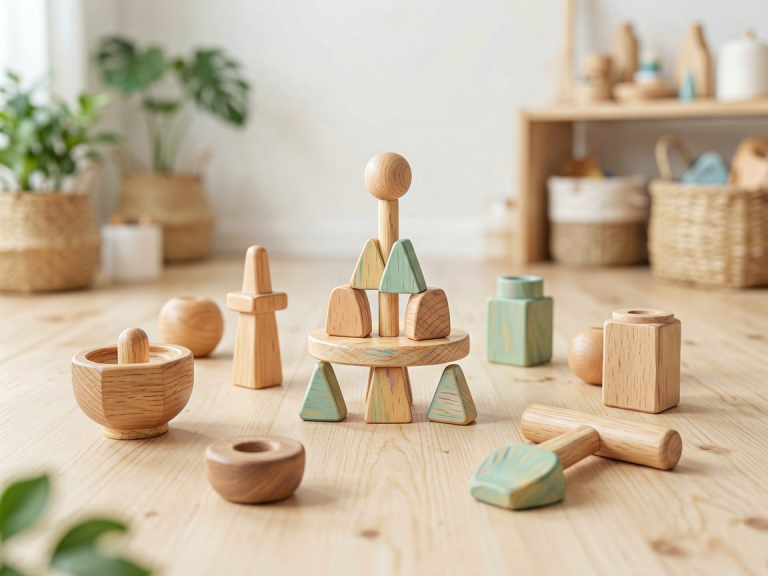
As a more sustainable and aesthetically pleasing alternative, wooden stacking rings or simple wooden blocks (without magnets) are excellent for 9-month-olds. However, wood must be non-toxic and smooth. Unlike magnetic tiles, which are uniform in shape, wooden stacking rings introduce the concept of size sequencing through a central post. Babies learn to place rings onto the dowel, which requires hand-eye coordination.
Why Wood Over Plastic?
Wood offers a natural weight and feel that many babies enjoy. It is also durable and often passed down through generations. For 9-month-olds, look for rings that are chunky and made of beechwood or maple, finished with water-based or vegetable-based stains. Some sets include a rocking base that adds motion. Wooden toys do not have the shimmer and transparency of magnetic tiles, but they provide a different kind of sensory input: the smell of natural wood, the solid sound when two pieces collide, and the smooth texture.
Safety Precautions
Ensure the rings are large enough that they cannot be swallowed or wedged in the mouth. The central post should be securely fixed—some stacking toys have a removable post that becomes a choking hazard. Avoid painted wooden toys that may peel or chip. Brands like PlanToys and Grimm’s are known for rigorous safety standards. Also, avoid any wooden toy with magnets—some “magnetic” wooden blocks now exist, but they pose the same risks as magnetic tiles.
6. Crinkle Books, Fabric Books, and Textured Pages
Before babies can turn paper pages, they benefit from cloth or crinkle books. These are soft, can be washed, and often incorporate multiple sensory features: crinkle sounds, squeakers, mirrors, and teether corners. For a 9-month-old, a “book” is not read but chewed, slapped, and tugged. This is a wonderful alternative to magnetic tiles because it introduces the concept of “turning” and “flipping,” laying pre-literacy skills.
Developmental Alignment
At 9 months, babies are beginning to show an interest in images—especially faces. Fabric books with high-contrast patterns (black and white, or primary colors) capture attention. Crinkle paper provides auditory feedback that strengthens neural connections. Some books have flaps or peek-a-boo elements that teach object permanence. While magnetic tiles might encourage spatial stacking, fabric books encourage interactive storytelling from a caregiver, supporting social-emotional bonding and language development.
Top Picks
The “Indestructibles” series by Workman Publishing is made of a chewable, washable, and rip-proof material. The “Lamaze Peek-a-Boo Forest” book has multiple textures and a mirror. Ensure all attachments (like a plastic ring for clipping to a stroller) are securely fastened and not a choking hazard.
7. Cause-and-Effect Toys: Pop-Ups, Spinners, and Sliders
Nine-month-olds are obsessed with cause and effect: they press a button and a character pops up, they spin a wheel and it clicks. These toys are a superior alternative to magnetic tiles because they directly teach the relationship between action and reaction. Magnetic tiles, by contrast, require a more advanced understanding of geometry and balance.
Examples and Benefits
A simple “pop-up box” with buttons that spring open doors is immensely satisfying. A spinning gear toy (with large, interlocking plastic gears) that clicks as it turns develops fine motor control. A slider toy where a bead moves along a curved wire strengthens visual tracking. These toys often have bright colors and sounds (but avoid toys that are overly loud or have flashy strobe lights, which can overstimulate).
Safety First
Choose toys with a sturdy base that won’t tip over. Ensure all buttons are flush or require enough force to press that they cannot be removed by biting. Avoid toys with batteries unless the compartment is secured with a screw—sometimes babies can tamper with battery covers. The best brands for this age group include Fisher-Price, VTech (the “Busy Learners” series with age-appropriate settings), and Melissa & Doug.
Conclusion: Choosing the Right Alternative Depends on Your Baby’s Stage
While magnetic tiles are a fantastic tool for older toddlers, they are inappropriate—and potentially dangerous—for 9-month-olds. The alternatives outlined above offer a rich variety of sensory, motor, and cognitive stimulation without the risks. Soft building blocks provide safe stacking, silicone toys soothe teething gums, sensory balls encourage movement, activity gyms engage the whole body, wooden rings teach size concepts, crinkle books spark early literacy, and cause-and-effect toys cultivate problem-solving.
No single toy replaces another; rather, a balanced collection of these alternatives supports holistic development. Rotate toys to maintain interest, supervise all play, and avoid any toy that has small parts, sharp edges, or long cords. At 9 months, the best “toy” is a responsive, interactive adult who narrates the play, celebrates the topples, and shares in the wonder of discovery. By choosing age-appropriate alternatives to magnetic tiles, you are not only ensuring safety—you are building a foundation for a lifetime of curious, hands-on learning.