The Play Paradox: Why Open-Ended Toys Shape a Child’s Future Better Than Single-Purpose Playthings
Introduction: The Forgotten Art of Play
In an era of blinking lights, pre-recorded sound effects, and plastic figures that do everything but breathe, a quiet revolution is brewing in the corners of living rooms and kindergartens. Parents increasingly face a bewildering array of choices when selecting toys for their children. On one side sit the sleek, battery-powered marvels that promise educational enrichment, interactive narratives, and instant gratification. On the other lie the humble, unassuming blocks of wood, the lumps of clay, the length of string, and the empty cardboard box that seems to hold infinite possibilities. This is the fundamental dichotomy between open-ended toys and single-purpose toys—a distinction that goes far beyond mere amusement and strikes at the heart of how children learn to think, create, and navigate an unpredictable world.
Single-purpose toys, as the name implies, are designed with a specific, limited function in mind. A remote-control car can only drive forward and backward. A talking doll recites a set of pre-recorded phrases. A puzzle has exactly one correct arrangement. These toys excel at teaching focused skills—hand-eye coordination, cause-and-effect relationships, or pattern recognition—but their utility ends precisely where their design ends. Open-ended toys, in contrast, have no fixed script. A set of wooden blocks can become a castle, a spaceship, a bridge, a mountain, or a dinosaur skeleton. A piece of fabric can be a cape, a tent, a blanket for a doll, or a sail for a pirate ship. The child, not the manufacturer, writes the rules of play.
This article will explore the profound differences between these two categories of toys, examining their impact on cognitive development, creativity, social skills, emotional resilience, and even long-term academic success. Through evidence from developmental psychology, neuroscience, and the lived experiences of educators and parents, we will argue that while single-purpose toys have their place in a balanced play environment, open-ended toys are uniquely suited to cultivating the flexible, inventive, and persistent minds that the 21st century demands.
The Cognitive Scaffold: How Open-Ended Play Builds Executive Function
From Concrete to Abstract: The Brain’s Training Ground
The human brain is not a static organ; it is a dynamic, ever-rewiring network that grows most vigorously during early childhood. Executive functions—the set of mental skills that include working memory, cognitive flexibility, and inhibitory control—are developed through repeated, varied experiences. Open-ended toys are uniquely powerful in this regard because they demand generative thinking. When a child picks up a wooden block and declares it a “cellphone,” they must engage in symbolic representation: holding an abstract idea in mind while manipulating a concrete object. This mental leap from “block” to “phone” requires the brain to suppress the literal perception (it’s just a block) and activate a fictional reality (I am talking to Grandma). Such acts of imaginative transformation are the very building blocks of abstract reasoning, language development, and problem-solving.
Single-purpose toys rarely demand this cognitive gymnastics. A toy phone that plays pre-recorded “ring, ring” sounds requires no imagination; the toy tells the child what it is. The child becomes a passive consumer rather than an active creator. Research by Dr. Alison Gopnik, a leading developmental psychologist, has shown that children learn most effectively when they are allowed to explore causal relationships through active, open-ended play. In one classic study, children who were given a set of blocks and allowed to freely experiment discovered hidden mechanisms more readily than children who were given a pre-assembled toy that performed a single trick. The open-ended play engages what Gopnik calls the “exploration system,” which is fundamentally different from the “exploitation system” that underlies repetitive, single-purpose play.
Problem-Solving Without a Manual
Another cognitive advantage of open-ended toys is their inherent ambiguity. A single-purpose toy presents a problem with a well-defined solution: fit the puzzle piece into its only correct slot, push the button to make the light flash, press the lever to open the door. Success is binary—you either solve it or you don’t. While this can teach perseverance, it also teaches that problems have only one right answer. Life, of course, rarely offers such tidy resolutions. Open-ended toys, by contrast, present problems that are fluid and multifaceted. How do I build a tower that won’t fall? How do I make a roof for my fort? How do I create a story that involves both a dragon and a doctor? These questions have countless answers, and each solution breeds new questions. The child learns that failure is not an endpoint but a data point—the tower falls, so I try a wider base. The fort collapses, so I adjust the fabric. The story stalls, so I introduce a new character. This iterative process of hypothesizing, testing, revising, and retesting is the essence of scientific thinking and creative engineering.
The Creative Furnace: Imagination, Divergent Thinking, and the Joy of Making
The Power of “What If”
Creativity is not a mysterious gift bestowed on a chosen few; it is a skill that can be cultivated through practice. Divergent thinking—the ability to generate multiple solutions to a single problem—is one of its core components. Open-ended toys are perhaps the most effective tools ever invented for nurturing divergent thinking. A single wooden block can become a sandwich, a brick, a book, a phone, a step stool, a weapon, a toy car, a missing puzzle piece, or a miniature person. Each transformation requires a creative leap, and the more leaps a child makes, the more natural such leaps become. Over time, the child internalizes a mindset that says, “I can make this into anything I need it to be.”
Single-purpose toys stifle this process. A plastic fire truck that shoots water is a fire truck, period. The child may love it, but the love is for the object as it is, not for what it could become. The toy does not invite reinvention; it invites repetition. The same siren sound plays every time. The same ladder extends the same way. The child’s role is to witness and interact with the toy’s pre-designed narrative, not to author one. Over time, children who rely heavily on single-purpose toys may struggle with activities that require them to generate ideas from scratch, such as writing stories, inventing games, or improvising solutions to unfamiliar challenges.
The Joy of Boredom and the Rebirth of Resourcefulness
There is a quiet irony in the fact that many parents buy elaborate, expensive single-purpose toys precisely to prevent boredom. Yet boredom, when coupled with open-ended materials, can be a powerful catalyst for creativity. A child who has nothing but a pile of LEGO bricks and an afternoon stretching ahead must find ways to engage. At first, they might feel restless. But then, slowly, the imagination takes over. They begin to build—not because a box instructed them to, but because the materials invite them. This self-directed initiation is a skill that serves children well in school and beyond, where intrinsic motivation and the ability to create one’s own projects are marks of success.
Single-purpose toys, with their shiny distractions and instant feedback, short-circuit this process. They fill time but drain initiative. The child does not need to decide what to do; the toy decides for them. Over years of such structured play, children can lose the capacity for self-amusement. They become dependent on external stimulation, a phenomenon that educators and mental health professionals have linked to rising rates of anxiety and attention difficulties.
Social and Emotional Development: Cooperation, Negotiation, and Resilience
Building Together: The Social Architecture of Open Play
When children play together with open-ended toys, they enter a rich social laboratory. A group of children with a box of blocks must negotiate: Who builds what? How tall can the tower go? What happens if someone knocks it down? These negotiations involve compromise, shared decision-making, and the management of emotions. One child may want to build a castle, another a spaceship. Without a predetermined script, they must communicate, persuade, and sometimes yield. These interactions build empathy and social competence in ways that single-purpose toys rarely do.
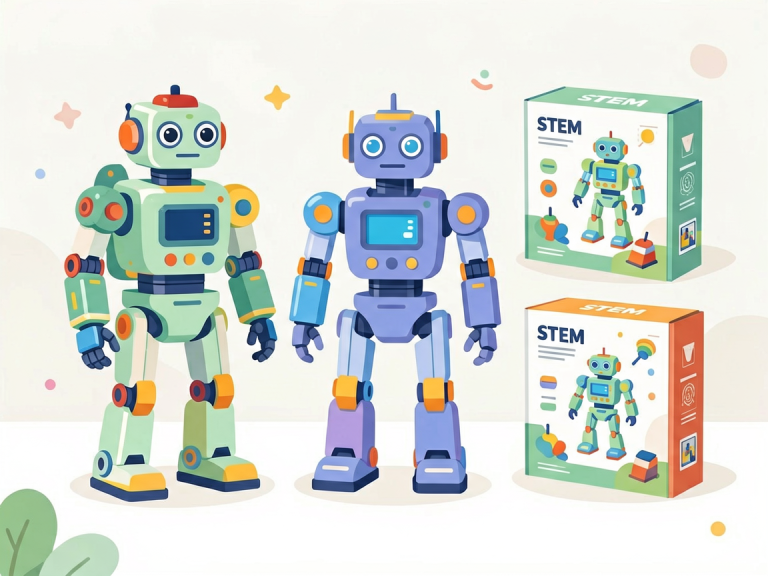
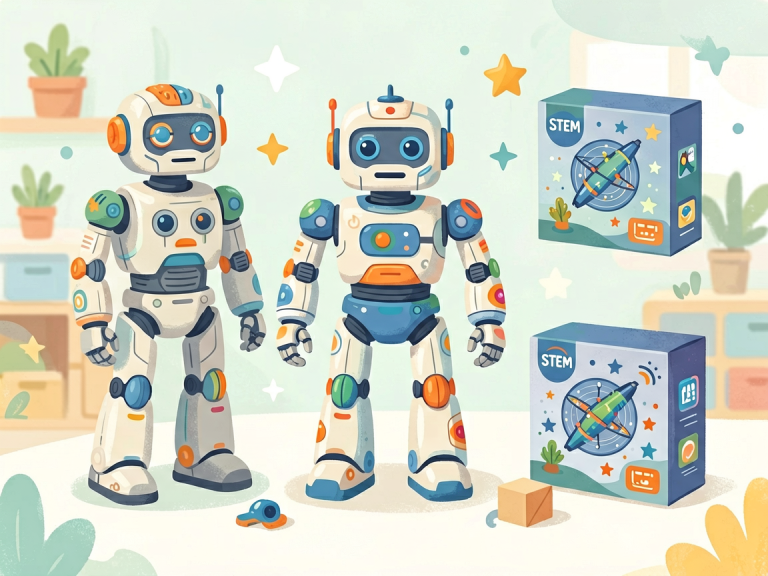
Consider a single-purpose toy like a pre-programmed robot that follows commands. One child can operate it while others watch, but there is little need for cooperative negotiation. The toy’s rules are fixed. If two children disagree about what the robot should do, the conflict often ends in frustration or a fight over control. With open-ended toys, the rules are made up together. The children can agree to combine their ideas: “Let’s make the castle spaceship fly to the moon.” This collaborative creativity fosters social bonds and teaches children that conflict can be resolved through imagination.
Emotional Resilience: Learning from “Failure”
Open-ended toys also teach emotional regulation in ways that single-purpose toys cannot. When a tower made of blocks collapses, the child experiences a small disappointment. But the blocks themselves are not broken; they are simply scattered. The child can try again, build a different structure, or turn the fallen blocks into something new—a river, a pile of rubble, a secret tunnel. This repeated cycle of building, falling, rebuilding, and transforming builds emotional resilience. The child learns that setbacks are temporary and that persistence leads to new possibilities.
Single-purpose toys often have a binary emotional payoff: the toy works, and the child is satisfied; the toy breaks, and the child is devastated. A remote-control car that stops working is not open to reinterpretation—it is simply broken. The child cannot turn a broken car into something else because its identity is fixed. This can lead to frustration, tears, and a sense of helplessness. Over time, children exposed primarily to single-purpose toys may develop lower tolerance for frustration and less creativity in coping with disappointment.
The Case for Balance: When Single-Purpose Toys Serve a Purpose
It would be unfair and inaccurate to demonize single-purpose toys entirely. They have legitimate roles in a child’s development. A jigsaw puzzle, for instance, is a single-purpose tool that excels at teaching spatial reasoning, attention to detail, and the satisfaction of completing a challenge. Musical instruments with fixed notes, like xylophones, help children develop auditory discrimination. Simple electronic toys that flash lights in response to touch can be valuable for infants who are learning cause-and-effect. The key is not to ban single-purpose toys but to ensure they do not dominate a child’s play landscape.
The danger arises when single-purpose toys become the primary or exclusive diet of play. In many modern households, children’s rooms are filled with licensed character merchandise, electronic games, and plastic gadgets that do everything except invite the child to create. The result is a generation of children who are proficient at consuming but less skilled at producing. They can navigate a touchscreen app but cannot build a fort out of blankets. They can memorize the script of a movie but struggle to invent a story of their own.
Practical Recommendations for Parents and Educators
Curating a Play Environment
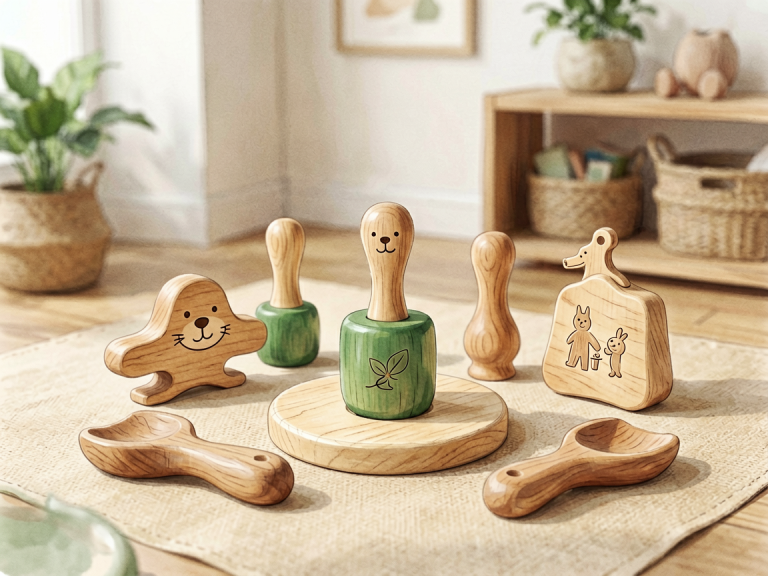
The goal is not to purge single-purpose toys but to cultivate a rich ecosystem of open-ended materials. A simple rule of thumb: for every single-purpose toy, provide at least three open-ended alternatives. These can include wooden blocks, magnetic tiles, dollhouses with unassembled furniture, art supplies (paper, clay, paint, string), loose parts (buttons, bottle caps, fabric scraps, stones), and natural materials (sand, water, leaves, sticks). The more open-ended the material, the more versatile the play.
The Role of the Adult
Adults can enhance open-ended play by modeling curiosity and asking questions. Instead of saying, “Look, a fire engine—press the button to make the siren sound,” an adult might say, “I wonder what we could use these blocks to build. Maybe a house for the little animal figures? Or a bridge over this blue cloth that we can pretend is a river?” Such language invites the child to think beyond the obvious. Equally important is the adult’s willingness to step back and allow the child to direct the play. The adult’s role is to provide the materials and the time, not to dictate the script.
Resisting the Marketing Machine
The toy industry is a multi-billion-dollar enterprise that profits from novelty and obsolescence. Single-purpose toys are often marketed with promises of educational benefits, but these claims are frequently exaggerated. Parents should approach such marketing with healthy skepticism. The most educational toy in the world is the one that the child transforms, not the one that transforms for the child. A cardboard box, three crayons, and a child’s imagination can outperform any tablet-based “learning game” when it comes to fostering genuine development.
Conclusion: Play That Lasts a Lifetime
The debate between open-ended and single-purpose toys is ultimately a debate about the kind of minds we want to cultivate. Do we want children who are passive consumers of predetermined experiences, or do we want children who are active creators of their own realities? Do we want children who seek the one right answer, or children who generate a hundred possibilities? The evidence is clear: open-ended toys are not merely toys; they are the raw materials of thought. They teach children that the world is not a set of fixed problems with pre-written solutions but a universe of potential waiting to be discovered.
In a time when the pace of change accelerates daily, and jobs that exist today may vanish tomorrow, the skills fostered by open-ended play—creativity, flexibility, persistence, social intelligence, and the ability to learn from failure—are not just nice to have; they are essential. The wooden block, the lump of clay, and the length of string may seem humble, but they carry within them the seeds of innovation. The child who learns to see a block as a cellphone, a brick, a sandwich, or a spaceship is learning to see the world as a place of infinite possibility. And that, perhaps, is the greatest gift a toy can give.