The Play Paradox: Why Open-Ended Toys Outshine Single-Purpose Toys in Child Development
—
Introduction
Toys are the tools of childhood. They shape how children explore the world, develop skills, and express their inner lives. Yet, not all toys are created equal. In recent years, a quiet debate has intensified among educators, psychologists, and parents: the clash between open-ended toys and single-purpose toys. Open-ended toys—such as blocks, loose parts, dolls, and art supplies—offer endless possibilities, adapting to a child’s imagination. Single-purpose toys—like electronic gadgets, remote-control cars, or pre-programmed robots—have a fixed function, often with a “correct” way to play. Which type truly nurtures a child’s growth?
This article delves into the psychological, cognitive, and social implications of each toy category, drawing on research and real-world observations. While both have their place, the evidence increasingly suggests that open-ended toys provide richer developmental benefits. Understanding the distinction can empower parents and educators to curate play environments that foster creativity, problem-solving, and emotional resilience.
—
Defining the Two Types of Toys
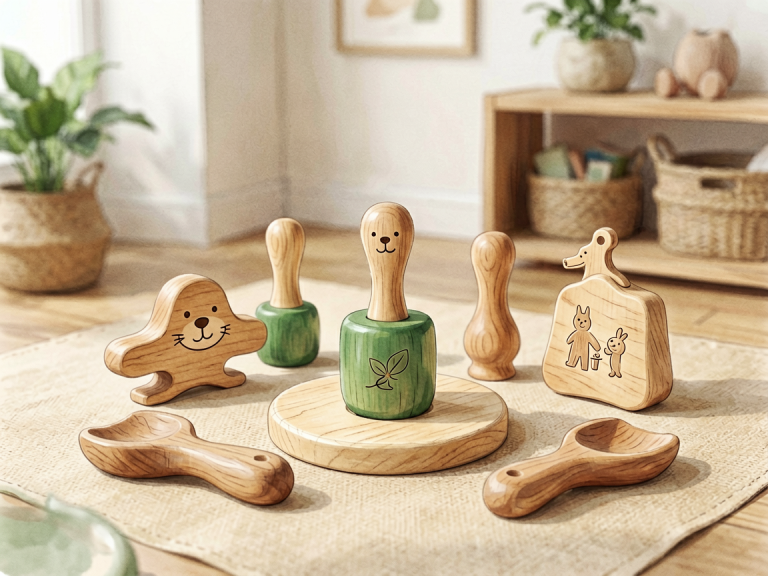
Open-ended toys are characterized by their lack of predetermined outcomes. A set of wooden blocks can become a castle, a spaceship, a bridge, or a simple tower—then be knocked down and rebuilt into something entirely different. Open-ended toys include construction sets, clay, sand, water, dress-up costumes, dolls, and art materials like paint and paper. Their essence is that the child drives the play, not the toy. There is no right or wrong way to use them; failure is simply a step toward a new idea.
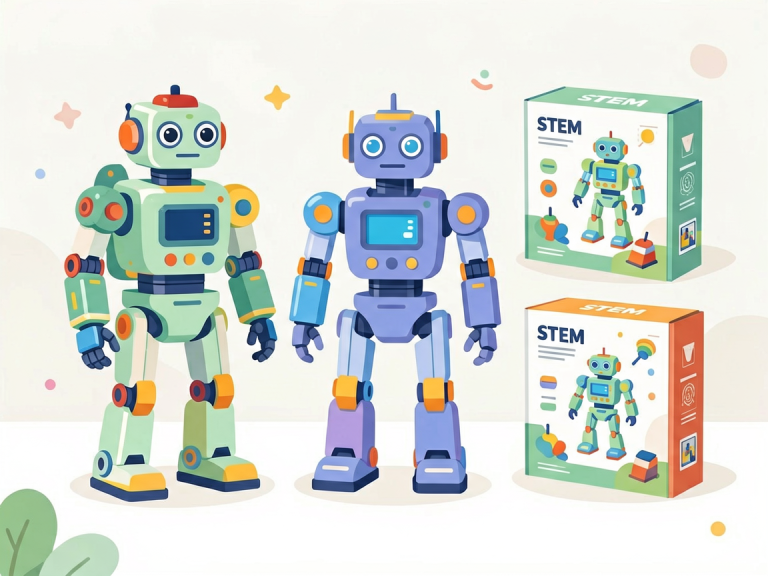
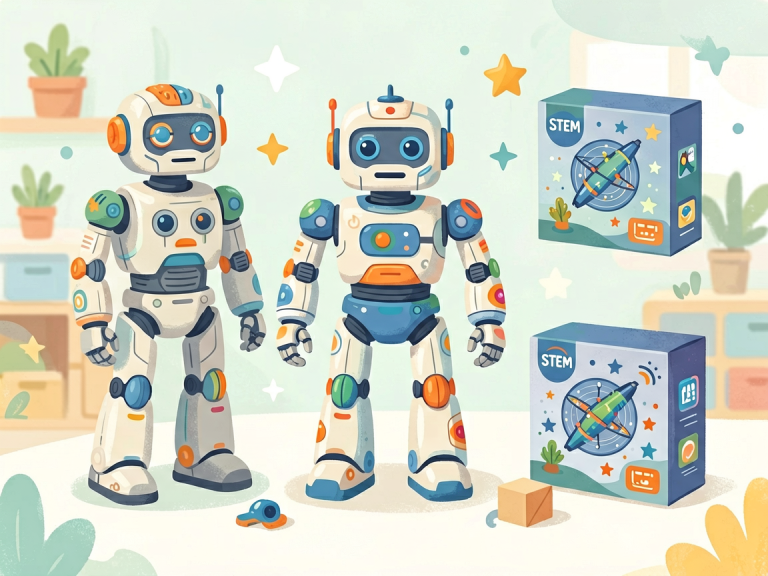
Single-purpose toys, by contrast, are designed for a specific use. A battery-operated car that only moves forward when a button is pressed, a talking doll that repeats scripted phrases, or a puzzle with a single solution—all of these limit the child’s role to that of a passive operator. The toy dictates the experience, leaving little room for improvisation. While such toys can be entertaining and sometimes educational (e.g., a simple shape sorter), they often constrain creativity and reduce the depth of engagement. The toy “plays the child” rather than the child playing with the toy.
—
The Impact on Creativity and Imagination
Creativity is not just about artistic talent; it is the ability to generate novel ideas, solve problems, and see multiple perspectives. Open-ended toys are a gymnasium for the imagination. When a child turns a cardboard box into a rocket ship, they practice symbolic thinking—the cognitive foundation for language, mathematics, and abstract reasoning. A study by the University of Washington found that children who played with open-ended toys (such as blocks) for 20 minutes produced more creative solutions to a subsequent problem than those who played with single-purpose toys. The freedom to invent new uses for objects strengthens neural pathways associated with divergent thinking.
Single-purpose toys, on the other hand, often teach convergent thinking—arriving at one correct answer. While this skill is valuable, an overabundance of such toys can stifle the exploratory mindset. For instance, a child given a toy guitar that plays only one song may never learn to strum their own melody. The toy closes off possibilities instead of opening them. Over time, children accustomed to single-purpose toys may become less willing to engage in unstructured play, expecting external direction rather than generating their own.
—
Cognitive Development and Problem-Solving Skills
Cognitive development involves learning to plan, test hypotheses, and adapt to new information. Open-ended toys excel here because they present open problems. Building a stable tower with irregular blocks requires spatial reasoning, physics intuition, and trial-and-error. When the tower falls, the child must analyze why and adjust their strategy—a miniature lesson in the scientific method. Similarly, playing with loose parts (like buttons, sticks, or fabric scraps) encourages classification, sorting, and pattern recognition, all of which underpin mathematical thinking.
Single-purpose toys often provide immediate gratification without much cognitive demand. Press a button and a light flashes; pull a lever and a figure pops up. These actions may be momentarily satisfying, but they bypass deeper thought. Research from the American Academy of Pediatrics warns that excessive use of “passive” electronic toys can delay language development and reduce the quality of parent-child interaction, as the toy competes for attention rather than fostering dialogue. Conversely, when children play with open-ended materials, they often narrate their actions, ask questions, and engage in complex decision-making.
Moreover, open-ended toys naturally support executive function—the set of mental skills that includes working memory, cognitive flexibility, and self-control. A child deciding how to build a zoo with blocks must hold a plan in mind (working memory), pivot when a block doesn’t fit (flexibility), and resist the urge to throw the blocks (self-control). Single-purpose toys rarely demand such rich executive engagement.
—
Social and Emotional Growth Through Play
Play is not only intellectual; it is a social and emotional laboratory. Open-ended toys are uniquely suited for collaborative play. Two children with a pile of blocks must negotiate roles, share resources, and resolve conflicts (“I want the red block!” “Okay, we can take turns.”). This teaches empathy, communication, and compromise. Dolls and action figures become vehicles for storytelling, allowing children to act out complex emotional scenarios—jealousy, fear, joy, loss—in a safe, controlled environment. Through such role-playing, children develop emotional regulation and perspective-taking.
Single-purpose toys often encourage solitary or competitive play. A remote-control car, for instance, is typically used by one child at a time, and the interaction is limited to pressing buttons. While some single-purpose toys (like board games) do promote social skills, many electronic toys are designed for solo use, isolating children from peers and caregivers. A 2021 study published in *Child Development* found that toddlers who played with electronic toys had significantly fewer vocalizations and back-and-forth interactions with their parents compared to those playing with blocks or books. Social language development thrives on dynamic, responsive exchanges—exactly what open-ended toys foster.
Additionally, failure is a powerful teacher for emotional resilience. With open-ended toys, failure is common and low-stakes. A tower collapses; a clay sculpture sags. The child can try again, learning that mistakes are not endpoints but part of the process. Single-purpose toys often eliminate failure (the toy does exactly what it’s supposed to), robbing children of the opportunity to experience and overcome small frustrations. Overprotected play may lead to lower frustration tolerance later in life.
—
The Hidden Costs of Single-Purpose Toys
Beyond developmental drawbacks, single-purpose toys carry hidden costs. First, many are made of cheap plastic, break easily, and end up in landfills—the average American child owns 238 toys but plays with only 12 on a daily basis, according to a UK study. Single-purpose toys often lose their appeal after the novelty wears off, because the play value is exhausted once the “trick” is learned. In contrast, open-ended toys have near-infinite longevity: a set of Duplo bricks can be enjoyed from age two to ten, only changing in how complex the creations become.
Second, single-purpose toys can be expensive. A single electronic toy may cost $50 or more, while a set of wooden blocks or a bag of natural loose parts can be acquired for a fraction of that price and last for years. Economically and environmentally, open-ended toys are the more sustainable choice.
Finally, there is the attention economy. Many modern single-purpose toys incorporate screens, lights, and sounds that overstimulate and fragment attention. The American Academy of Pediatrics recommends limiting screen-based play for young children, yet many electronic toys mimic screen-like interactions. Open-ended toys, with their quiet, tactile nature, encourage deep focus—a skill increasingly rare and valuable.
—
Practical Considerations for Parents
Given the advantages of open-ended toys, should parents eliminate all single-purpose toys? Not necessarily. A balance is reasonable, but the *proportion* matters. Single-purpose toys can be useful for specific skill development: a shape sorter teaches sorting; a musical instrument introduces cause and effect. The danger is when they dominate the toy box. A good rule of thumb: aim for 80% open-ended toys and 20% single-purpose. This ensures that most play is child-driven.
When selecting open-ended toys, simplicity is key. Blocks, balls, fabric scraps, simple dolls (without voice features), art supplies, magnetic tiles, and natural objects like stones or pinecones are excellent choices. Avoid toys that “do too much”—the best slow toys are those that wait for the child to act. Likewise, consider Toy Rotation: keep a limited number of toys accessible at a time, rotating them every few weeks to maintain novelty without overwhelming the child. Studies show that fewer toys actually lead to deeper, more focused play.
Parents can also model open-ended play. Instead of showing a child the “right” way to use a toy, ask open questions: “What do you think this could be?” or “What happens if we stack it this way?” This invites exploration rather than instruction. And finally, remember that a child’s most powerful open-ended toy is the natural world—a stick, a puddle, a pile of leaves. These require no purchase, only a willing imagination.
—
Conclusion: Choosing Wisely
The debate between open-ended and single-purpose toys is not about nostalgia or anti-technology sentiment; it is about understanding what truly supports a child’s holistic development. Open-ended toys invite children to be architects of their own play, fostering creativity, cognitive flexibility, social skills, and emotional resilience. Single-purpose toys, while convenient and sometimes engaging, often reduce the child to a passive consumer of entertainment.
As families, educators, and society increasingly value skills like innovation, collaboration, and lifelong learning, the choice of toys becomes a meaningful decision. By prioritizing open-ended materials, we give children not just a toy, but a world of possibility. In the end, the best toy is not the one that does the most—but the one that leaves the most for a child to do.