When Play Goes Over Their Heads: The Perils of Buying Toys Too Advanced for 7-Year-Olds
Introduction
Every parent has felt the pull: the gleaming drone that promises to teach coding, the complex board game hailed as “the next chess,” or the build-it-yourself robot kit that appears on every holiday wish list. The marketing is seductive—bright colors, professional-looking packaging, and claims of “STEM education,” “critical thinking,” and “future-proofing your child.” Yet beneath the glossy surface lies a quiet but pervasive problem: the widespread practice of buying toys that are far too advanced for 7-year-olds. What seems like a head start often becomes a source of frustration, a barrier to genuine learning, and a missed opportunity for the kind of open-ended, imaginative play that truly fuels childhood development. This article explores the psychological, social, and educational consequences of this trend, and offers guidance for parents who wish to choose toys that match—rather than overwhelm—a young child’s growing mind.
The Allure of the “Next Level” Toy
Why do parents gravitate toward toys that are labeled for ages 10 and up, or even for teenagers, when their child is only seven? The reasons are rooted in a complex mix of parental aspiration, competitive parenting culture, and clever marketing. Many adults believe that exposing a child to advanced concepts earlier will give them a competitive advantage—a kind of “acceleration” that will pay off in school and beyond. Advertisements for “smart toys” frequently show children who look younger than the recommended age range, subtly implying that any child can master these products with enough effort. Meanwhile, social media feeds fill with images of other people’s children building intricate structures or solving multi-step logic puzzles, creating a subtle pressure that “your child should be doing this too.”
This allure is not entirely baseless; some 7-year-olds are indeed exceptionally bright and may enjoy a modest challenge. But the key word is “modest.” When a parent purchases a toy that requires reading comprehension at a 5th-grade level, fine motor skills beyond typical 7-year-old development, or an ability to plan several moves ahead (as in complex strategy games), they are often trading the child’s natural curiosity for a manufactured sense of accomplishment. The toy becomes a test, not a plaything, and the child senses it immediately.
The Developmental Mismatch: Why Age Labels Matter
Toy manufacturers, through years of research and child development expertise, assign age recommendations for a reason. These labels are not arbitrary marketing numbers; they reflect the cognitive, emotional, and physical abilities typical of children in that age range. For a 7-year-old, the brain is still in a crucial stage of development known as concrete operational thinking, as defined by psychologist Jean Piaget. Children of this age are becoming more logical, but they still struggle with abstract reasoning, hypothetical scenarios, and multi-step processes that require sustained focus.
Consider a typical “advanced” toy: a programmable robot that involves writing simple code on a tablet. While the concept seems straightforward, many 7-year-olds lack the working memory and attention span to troubleshoot when their code doesn’t work. They cannot yet hold multiple variables in mind—e.g., “if I change the speed, I must also adjust the distance”—and they become frustrated when the robot doesn’t respond as expected. What should be playful experimentation turns into tears of defeat. Similarly, a complex board game like *Settlers of Catan* (recommended for ages 10+) involves resource management, negotiation, and probability. For a 7-year-old, the cognitive load is overwhelming; they often resort to random moves or lose interest entirely. The result is not a love for strategy, but a reinforced sense that “games are too hard” or “I’m not smart enough.”
Fine motor skills also lag behind at age seven. Toys that require small, precise assembly—like intricate Lego Technic sets for ages 12+—demand dexterity that many 7-year-olds simply do not possess. Their hands are still developing coordination, and forcing them to manipulate tiny gears and pins can lead to frustration, broken parts, and a sense of failure. Instead of building confidence, the toy erodes it.
The Hidden Costs: Frustration, Disengagement, and Lost Creativity
When a child repeatedly encounters a toy that is beyond their reach, the emotional toll can be significant. Psychologists describe a phenomenon called “learned helplessness,” where a child who experiences repeated failure in a play setting begins to expect failure in all challenges. A 7-year-old who cannot assemble a complicated remote-control car may conclude that they are “bad at building” or that “technology is too hard.” These negative self-attributions can persist into later years, subtly influencing academic choices and career interests.
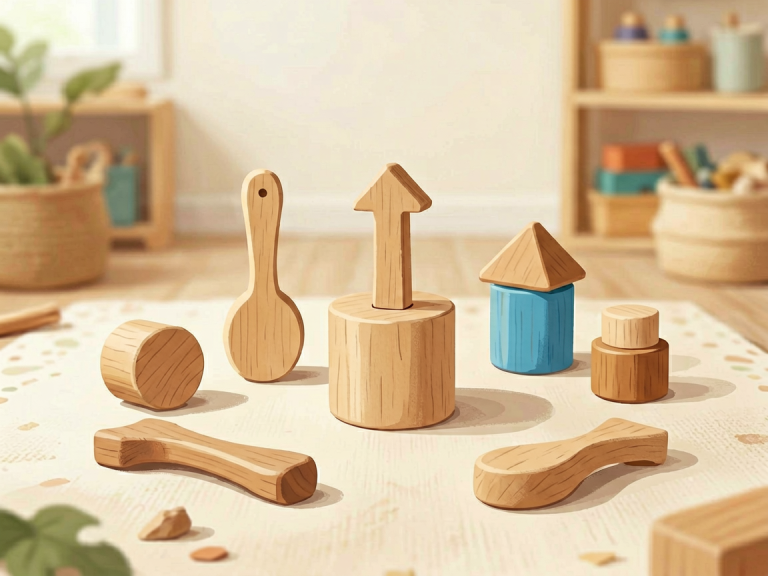
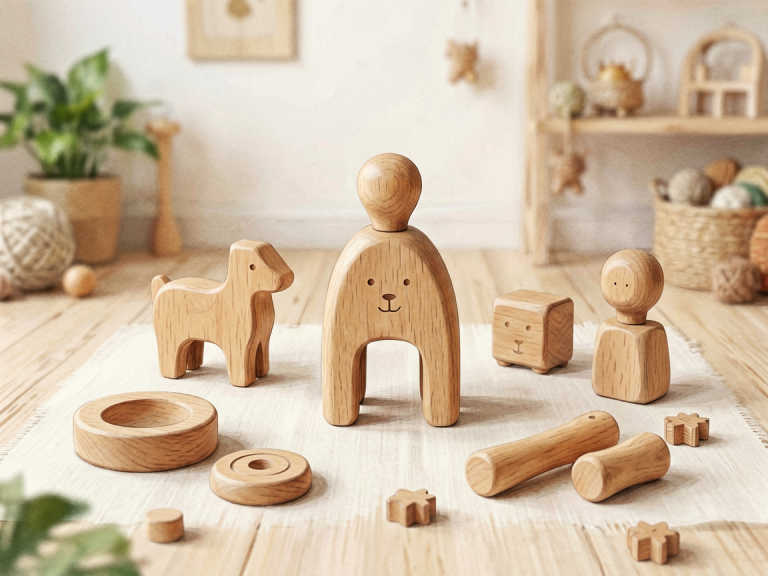
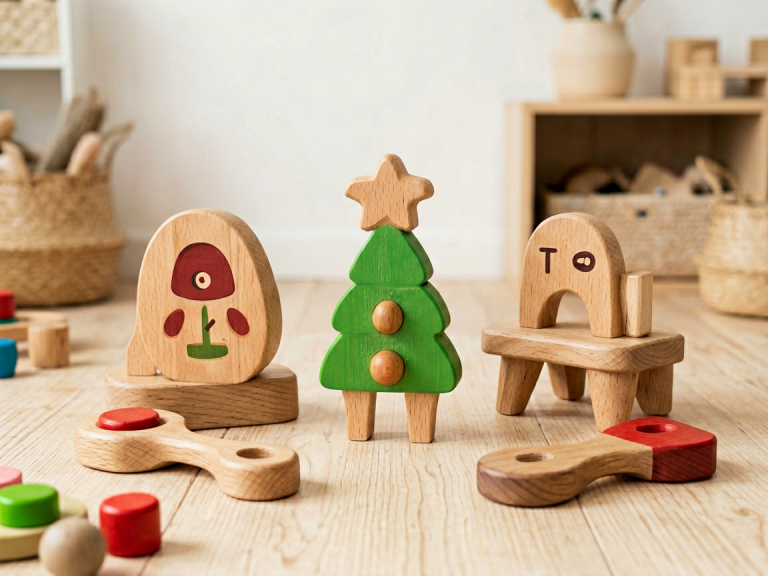
Moreover, advanced toys often come with rigid instructions. They dictate a single “right way” to play: build this model, solve this puzzle, complete this mission. In contrast, age-appropriate toys—blocks, dolls, art supplies, simple games—allow for open-ended exploration. A 7-year-old with a box of wooden blocks can create a castle, a spaceship, a store, or a zoo. They invent stories, negotiate rules with friends, and practice social skills. Advanced toys, by their very design, leave little room for imaginative deviation. The child becomes a passive executor of the manufacturer’s script rather than an active creator of their own play world.
There is also a social cost. A 7-year-old struggling with an advanced toy may become isolated, preferring to play alone rather than risk embarrassment in front of friends. Conversely, when they play with age-appropriate toys, they can easily collaborate with peers of similar abilities, learning turn-taking, compromise, and communication. The advanced toy, intended to sharpen the mind, can instead dull the very social and emotional skills that matter most.
Societal Pressures and Parental Anxiety
Behind the decision to buy too-advanced toys lies a broader cultural phenomenon: the obsession with “acceleration.” In many communities, childhood is treated as a race. Parents feel that if their child isn’t reading by kindergarten or coding by third grade, they are falling behind. This anxiety is amplified by toy industry marketing that positions every product as a “critical learning tool.” A toy that does not promise to teach a specific skill (like algebra or programming) is deemed frivolous or wasted time.
This mindset neglects a fundamental truth: 7-year-olds do not need to be “future-proofed.” They need to be present. They need opportunities to fail safely, to repeat actions until mastery comes naturally, and to experience the deep satisfaction of solving a problem that is *just* slightly beyond their current ability. This is the famous “zone of proximal development,” as described by Vygotsky. A toy should challenge, yes, but not overwhelm. The best toys for a 7-year-old are those that provide a gentle stretch—such as a board game with simple rules but strategic choices, a basic building set that allows for creativity, or a science kit with clear, step-by-step experiments that yield visible results.
Furthermore, parents often underestimate how much learning happens through “simple” play. A 7-year-old playing with a set of magnetic tiles is learning geometry, balance, and cause-and-effect. A child playing dress-up with friends is developing narrative skills, empathy, and cooperation. A child drawing or painting is practicing fine motor control and emotional expression. These are not distractions from learning; they are the foundations of it. Buying a toy that is too advanced implicitly devalues these forms of play, sending the message that only “hard” activities count as progress.
How to Choose Age-Appropriate Toys That Nurture Growth
So, how can a parent resist the temptation of the too-advanced toy? First, trust the age range on the box—not as a rigid boundary, but as a sensible guideline. If a toy is labeled for ages 8 and up, a 7-year-old might still enjoy it with adult help, but if the label says 10–12, that is a clear red flag. Second, look for toys that emphasize process over product. Building blocks, construction kits with large pieces, simple board games, and art sets all encourage trial and error. Third, consider the child’s temperament. Some 7-year-olds are naturally persistent and love a challenge; for them, a slightly advanced toy (with adult support) can be fine. But if the child shows signs of frustration quickly, it is better to choose something they can master independently.
Fourth, resist the urge to “teach” at every moment. Let the child explore the toy at their own pace. If they want to ignore the instructions and build something completely different, that is a sign of healthy creativity, not failure. Fifth, involve the child in the selection process. Ask what they are interested in, and observe what kinds of play they naturally gravitate toward. A child who loves pretending to cook might adore a simple play kitchen set, not a molecular gastronomy kit. A child who enjoys racing cars will be more engaged with a basic track than a complex one that takes 30 minutes to assemble.
Finally, remember that the most valuable toy is the one that gets played with again and again, across weeks and months, not the one that is abandoned after one session of frustration. Simplicity often leads to longevity. A 7-year-old will return to a set of marbles, a jump rope, or a deck of cards far more often than they will return to a robot that requires a reset every time they make a mistake.
Conclusion: Rediscovering the Joy of Simple Play
In an era of hyper-education and achievement, it takes courage to choose a toy that does not promise to accelerate a child’s future. But by buying toys that are appropriate for a 7-year-old’s developmental stage, parents are actually giving their child something far more precious: the freedom to fail, to imagine, and to grow at their own pace. The best playthings do not shout about IQ points or career readiness. They whisper: “You are capable. You are creative. You have time.” Let us listen to that whisper, and let our children play with toys that match their hands, their minds, and their hearts—not the ambitions we project onto them. In doing so, we will raise not only smarter children, but happier, more resilient ones.