The Pitfalls of Play: What to Avoid When Choosing Educational Toys
In an era where parents are inundated with advertisements promising “brain-boosting,” “STEM-certified,” and “future-ready” playthings, the market for educational toys has exploded. Yet beneath the glossy packaging and clever marketing lies a troubling truth: many so-called educational toys actually undermine the very learning they claim to foster. Research in child development, neuroscience, and education consistently shows that not all toys labeled “educational” live up to their promise. Some can stifle creativity, create anxiety, or even delay essential developmental milestones. To help parents and educators make informed choices, this article examines the key pitfalls to avoid when selecting educational toys—because what a toy *doesn’t* teach is just as important as what it claims to teach.
—
Overemphasis on Technology and Screens
The first and perhaps most pervasive trap is the assumption that more technology equals more learning. Touchscreens, voice-activated commands, and blinking lights can make a toy look impressive, but they often transform a child’s role from active explorer to passive observer. Many electronic “learning” toys provide immediate feedback—a correct answer triggers a cheerful sound, an incorrect one a buzz—which trains children to seek external validation rather than internal satisfaction from discovery.
For example, a popular “smart” alphabet toy might say “A is for Apple” when a button is pressed. The child learns to associate a symbol with a sound, but the interaction is shallow. The child does not trace the letter with a finger, feel the curve of a wooden block, or imagine what an apple smells like. Neuroscientific studies indicate that multisensory, tactile experiences are critical for building strong neural connections in the developing brain. When a toy does all the work—speaking, singing, flashing—the child’s own problem-solving and imaginative circuits remain under-stimulated.
Moreover, excessive screen-based play has been linked to shorter attention spans, reduced language development (since children hear recorded voices rather than live conversation), and even sleep disruptions. The American Academy of Pediatrics recommends no more than one hour of high-quality screen time per day for children aged 2 to 5, yet many “educational” tablet apps and electronic toys far exceed this threshold. A better alternative is a simple set of wooden letter tiles or a textured alphabet book—tools that invite the child to manipulate, ask questions, and engage in back-and-forth dialogue with a caregiver.
—
Toys That Dictate, Not Inspire: The Problem of Closed-Ended Play
A second major mistake is choosing toys that dictate a single correct outcome—so-called “closed-ended” toys. Puzzles with only one solution, shape sorters with rigid holes, and building sets that come with a detailed instruction manual for a specific model all fall into this category. While these toys certainly teach spatial reasoning or problem-solving, they do so at the expense of divergent thinking—the ability to generate multiple solutions to a problem, which is a hallmark of creativity and innovation.
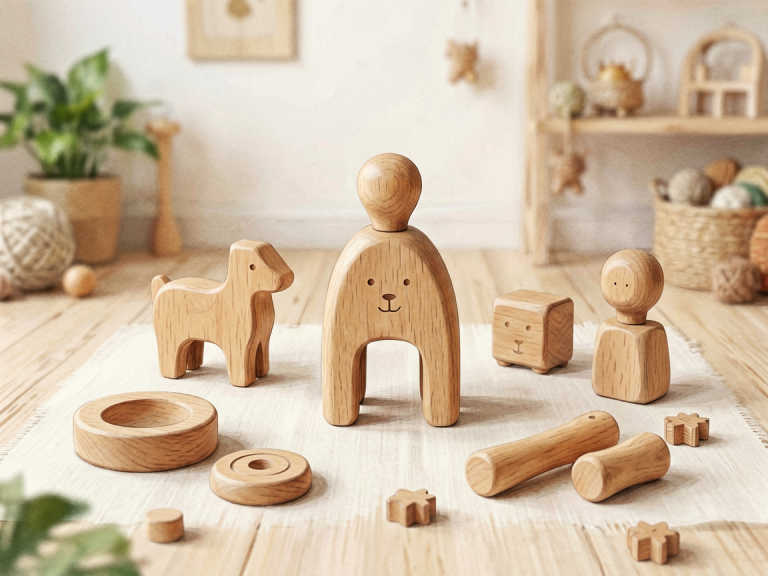
Consider a magnetic building set designed to construct a specific robot. If the instructions are followed step by step, the child learns to follow directions—a useful skill, but not the same as creative play. Contrast this with a set of simple wooden blocks, which can become a castle, a spaceship, a bridge, a mountain, or a pet bed. In open-ended play, the child must negotiate meaning, adapt to changing ideas, and persist through frustration without a predetermined “right answer.” Psychologists call this “executive function”—the cognitive suite that includes working memory, flexible thinking, and self-control—and it is far more predictive of long-term academic and life success than rote knowledge of letters or numbers.
Another danger of closed-ended toys is that they can induce anxiety in children who struggle to achieve the “correct” outcome. A toddler who cannot fit the star-shaped block into the star hole may feel a sense of failure rather than curiosity. Many educational toys marketed for children as young as 18 months include complex puzzles or matching games that are developmentally inappropriate. Instead, look for toys that allow multiple uses: a set of nesting cups, a basket of silk scarves, a collection of pebbles and shells. These items do not come with a manual, and that is precisely why they are so valuable.
—
Gender Stereotyping in Toy Design
A subtler but equally damaging pitfall is the reinforcement of gender stereotypes in educational toys. Walk down any toy aisle, and the division is stark: pink “science kits” focused on cosmetics or fashion, blue construction sets labeled “for boys,” and dolls that exclusively nurture “girls.” This segmentation is not just a marketing gimmick—it actively shapes children’s interests, self-concept, and career aspirations. Research from the National Science Foundation shows that by age 6, girls already perceive themselves as less capable in math and science than boys, partly because of the toys they are given.
What to avoid? Toys that explicitly or implicitly limit play along gender lines. A “princess engineering set” might seem like a progressive attempt to get girls into STEM, but it still reinforces the idea that girls need a feminine wrapper to engage with science. Similarly, a “tough guy” dinosaur excavation kit for boys can discourage emotional exploration and cooperative play. The best educational toys are gender-neutral in design and marketing: open-ended building materials, art supplies, puzzles of nature and animals, and pretend play kits that include both kitchen utensils and tool sets. When children are free to choose their own roles—whether that is a father cooking dinner or a mother fixing a car—they develop a broader sense of identity and capability.
Moreover, gender-stereotyped toys often differ in the skills they promote. Many “girls’” toys emphasize appearance, verbal communication, and fine motor skills (e.g., dressing a doll), while “boys’” toys emphasize spatial reasoning, gross motor activity, and mechanical assembly. A child who is only exposed to one set of skills misses out on essential development in the other areas. Educational toy selection should therefore intentionally break these patterns, offering all children access to the full range of cognitive and physical challenges.
—
The “Educational” Trap: Toys That Feel Like Work
Ironically, one of the most common mistakes is buying toys that are too overtly “educational”—that is, toys that feel more like schoolwork than play. Flashcards disguised as games, early-reading apps with timed quizzes, and math drills hidden in colorful interfaces may teach isolated facts, but they risk extinguishing a child’s natural love of learning. Young children learn best through self-directed, joyful exploration, not through forced instruction. When a toy is designed to teach a specific academic skill (e.g., sight words, times tables), it often strips away the elements of surprise, wonder, and social interaction that make play meaningful.
Take the example of a “phonics-factory” toy that requires a child to press the correct letter on a keyboard to advance to the next level. The child may memorize letter sounds under pressure, but the stress of the timed response can create negative associations with reading. In contrast, a parent reading a rhyming picture book at bedtime, while pointing to words, teaches the same phonics in a warm, relational context. Similarly, a set of counting bears that the child can sort, stack, and pretend to feed is far more effective for early math than a tablet game that flashes “3+2=?”
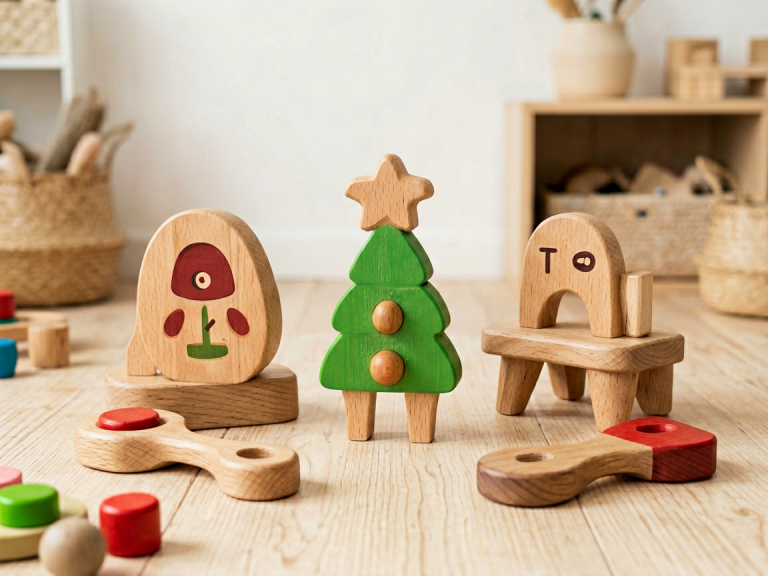
The key is to look for toys that embed learning within play *implicitly* rather than explicitly. A toy does not need to shout “I am educational” to be effective. A simple wooden balance scale teaching weight, a collection of leaves for patterning, or a set of magnetic tiles for geometry are all profoundly educational precisely because they allow the child to discover principles on their own terms. Avoid toys that come with a “learning curriculum” or “achievement levels”—these often prioritize measurable outcomes over authentic engagement.
—
Age Inappropriateness and Safety Hazards
Though it may seem obvious, many parents and gift-givers overlook the critical importance of age-appropriateness. A toy that is too advanced for a child’s developmental stage can lead to frustration, discouragement, and even safety risks. For infants and toddlers, small parts present a choking hazard, but the cognitive mismatch is equally concerning. A complex board game for a 3-year-old, or a chemistry set for a 5-year-old, demands skills the child simply does not possess. Instead of building confidence, such toys can create a sense of inadequacy that lingers.
Conversely, a toy that is too simple for an older child offers no challenge and is quickly abandoned—a waste of money and a missed learning opportunity. The sweet spot is what psychologists call the “zone of proximal development”: a toy that is slightly beyond the child’s current ability but achievable with effort or a little help. For example, a 4-year-old might struggle with a 24-piece jigsaw puzzle but can manage a 12-piece one with guided support. The best labels on toy packages are not the marketing slogans but the age ranges—and even these should be treated as rough guidelines. Watch the child play, and adjust accordingly.
Safety hazards extend beyond small parts. Loud electronic toys can damage hearing (some register above 85 decibels), while cheap plastic toys may contain phthalates or lead. Educational toys sold in dollar stores or online marketplaces with no safety certification should be avoided. Also be wary of toys that encourage unsafe behavior: for instance, some “science kits” include chemicals that are not child-safe, or building sets with sharp edges. Always check for recognized safety marks (ASTM, CE, or other regional standards) and read user reviews for real-world experiences.
—
Single-Use Toys with Limited Replay Value
Finally, a major waste of both money and developmental potential is the single-use educational toy. These are items that do one thing—and only one thing—and lose their appeal after the novelty wears off. Examples include a plastic cash register that only makes dinging sounds (no real math is done), a talking globe that recites facts on demand (but never asks a question), or a craft kit that yields one predetermined project with no leftover materials. Such toys are essentially disposable; they teach a child that learning is a one-time transaction rather than an ongoing process.
Compare this to a set of high-quality magnetic letters. A child can use them to spell their name, invent nonsense words, sort by color or vowel sound, stamp clay, or play a memory game. The same set of letters grows with the child: at age 2 they are simply fine-motor objects; at age 4 they become phonics tools; at age 6 they become spelling aids. The best educational toys have what educators call “low floors and high ceilings”—easy for a beginner to start with, yet complex enough to challenge an older user. A set of ramps and marbles, for instance, can be played with by a toddler who watches the ball roll, and later by a 10-year-old who designs intricate track systems using physics principles.
To avoid single-use toys, ask yourself: Will this toy still be played with in a month? Can it be used in different ways by siblings of different ages? Does it encourage the child to add their own ideas—maybe by combining it with other toys or household objects? If the answer is no, it is probably not worth the price tag.
—
Conclusion
Choosing educational toys need not be a minefield if parents and educators learn to look beneath the surface. The most valuable playthings are not the loudest, the most high-tech, or the most explicitly “curriculum-aligned.” They are the ones that invite exploration, tolerate multiple outcomes, transcend gender boundaries, feel like play rather than work, match the child’s developmental needs, and offer lasting engagement. By avoiding the traps of excessive screens, closed-ended designs, gender stereotypes, overt instruction, age mismatch, and single-use gimmicks, adults can create a home environment where learning happens naturally—through curiosity, creativity, and joy. After all, the best educational toy is not one that teaches a child *what* to think, but one that inspires *how* to think. And that is a lesson no flashing light or digital voice can ever replace.