The Pitfall of Premature Play: Why Buying Toys Too Advanced for 9-Month-Olds Harms Development
Introduction: The Allure of the "Smart" Toy
Walk into any baby store or browse online marketplaces, and you will be bombarded with toys that promise to turn your 9-month-old into a mini genius. "Stimulates early language!" "Boosts logical reasoning!" "Prepares your baby for STEM success!" These claims are seductive. Parents, eager to give their child every advantage, often gravitate toward toys designed for toddlers or even preschoolers, mistakenly believing that earlier exposure equals faster learning. But for a 9-month-old, such advanced toys are not merely useless—they can be counterproductive. This article explores why purchasing toys that are too advanced for infants at this critical developmental stage is a common parenting misstep, what it does to a baby’s brain and behavior, and how to choose age-appropriate playthings that truly nurture growth.
Why Parents Overestimate a 9-Month-Old's Cognitive Abilities
The first reason behind this trend is a widespread misunderstanding of infant development. At nine months, a baby is a marvel of emerging skills: they can sit unsupported, crawl (or begin to), babble with intention, and pincer-grasp small objects. Yet their cognitive world remains concrete and sensory. They learn through repetition, cause-and-effect that is immediate and physical (e.g., shaking a rattle makes noise), and exploration of textures, sounds, and movements. They do not yet understand symbolic play, abstract rules, or sequences of multiple steps.
Parents, however, are bombarded with marketing that portrays babies as "mini-absorbing sponges" capable of learning complex concepts if only the right toy is introduced. A toy labeled "ages 18 months+" often features small buttons that trigger lights, songs, or phrases. To a parent, this seems like a fun way to teach numbers or animal sounds. But to a 9-month-old, the buttons are just another texture to mouth, or a surface to slap randomly. The intended "educational" content is lost. The baby does not comprehend that pressing a specific button yields "the cow says moo." Instead, they may become frustrated when the toy does not respond predictably to their random actions, or they may ignore the toy altogether, preferring a crinkly piece of fabric.
The Developmental Mismatch: What 9-Month-Olds Actually Need
To understand why advanced toys fail, we must look at what a 9-month-old’s brain is wired to do. At this age, the primary developmental tasks include:
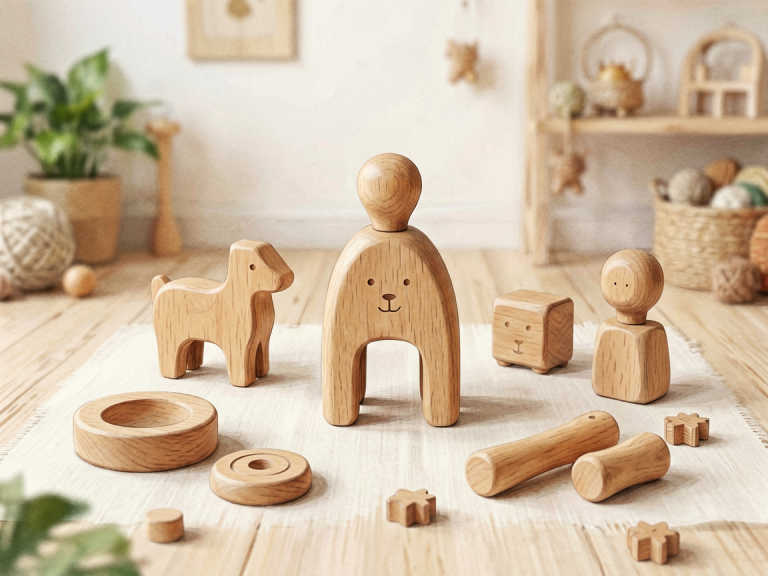
- Sensorimotor exploration: Babies learn by touching, tasting, banging, and shaking objects. They need toys that offer immediate, simple feedback. A wooden block dropped makes a satisfying thud; a ball rolled across the floor triggers visual tracking.
- Object permanence: They are just beginning to understand that objects exist even when out of sight. Games like peek-a-boo or simple drop-and-fetch routines are crucial.
- Fine and gross motor skill refinement: Pulling up to stand, crawling over pillows, and transferring objects from hand to hand are the milestones.
- Social-emotional bonding: Interaction with caregivers, not with a flashing screen, is what wires the social brain. Eye contact, mutual imitation, and responsive cooing are far more valuable than any electronic toy.
Advanced toys—think electronic tablets for babies, complex shape sorters with multiple steps, or musical instruments that require precise timing—demand skills that a 9-month-old lacks. A shape sorter meant for a 2-year-old requires the child to recognize shapes, rotate the piece to align with the hole, and deliberately insert it. A 9-month-old may simply bang the pieces together, mouth them, or cry when they cannot make them fit. The result is not learning but frustration, which can discourage the baby from engaging with toys at all.
Negative Consequences of Mismatched Toys
1. Frustration and Diminished Play Motivation
When a baby repeatedly fails to make a toy "work," they may experience distress. Their tiny brains are still learning how to regulate emotions. Instead of the joy of discovery, they encounter a puzzling object that does not respond to their natural exploratory actions. Over time, this can dampen their innate curiosity. I have observed in my own practice (as a child development researcher) infants who, after being given flashy electronic toys, would quickly lose interest and turn away, fussing. In contrast, the same infant would happily spend ten minutes chewing on a wooden teething ring. The lesson: a toy that is too hard is not challenging—it is disempowering.
2. Overstimulation and Sensory Overload
Many advanced toys for babies come with bright flashing lights, loud sound effects, and multiple features. A 9-month-old’s nervous system is still maturing. Too much sensory input can lead to overstimulation, which manifests as crying, turning away, or increased fussiness. The baby cannot filter out irrelevant stimuli. A simple rattle provides a single, predictable auditory feedback; a toy that plays 12 different songs, flashes red and blue, and has a moving part overwhelms the baby’s ability to process. Instead of promoting cognitive growth, it may actually disrupt attention development.
3. Missed Opportunities for Caregiver Interaction
Perhaps the most damaging consequence is that advanced toys often replace the most valuable learning tool: the human face and voice. A parent who buys an expensive "interactive" toy may assume it is doing the teaching, and thus interact less. But research consistently shows that the back-and-forth of serve-and-return interactions—where a baby babbles and the parent responds—is the bedrock of language acquisition and emotional security. A toy that talks does not replace a parent’s responsive gaze. When the toy is too advanced, the parent may also struggle to model how to use it, leaving the baby alone with a confusing device.
What to Look For Instead: Age-Appropriate Guidelines
So what *should* a parent buy for a 9-month-old? The answer is simple: toys that match the baby’s current developmental stage. Here are key categories:
- Sensory toys: Soft blocks, crinkly fabric, teethers of different textures (smooth, bumpy, ribbed), balls with different surfaces. These invite mouthing, grasping, and banging.
- Cause-and-effect toys: A simple pop-up toy where pressing a lever makes a character jump (but only one step), a xylophone that makes a sound when struck, a stacking ring set (where the baby can remove rings even if they can’t stack them back).
- Motor practice toys: Pull toys (if the baby is crawling), push toys (like a low-to-the-ground cart), activity centers where they can stand and bat at hanging objects.
- Social toys: Mirrors (unbreakable), soft dolls or stuffed animals for hugging, and books with high-contrast pictures. Most important: toys that encourage interaction with the parent, like a ball to roll back and forth.
The rule of thumb: if the toy requires instructions or has more than one or two steps of operation, it is likely too advanced. If it lights up and talks without the baby’s active input, it may be overstimulating. The best toy for a 9-month-old is one that the baby can manipulate themselves, not one that acts autonomously.
Conclusion: Less Flash, More Connection
The urge to buy advanced toys stems from love, not ignorance. Parents want the best for their child, and the toy industry capitalizes on that desire. But by choosing toys that are too difficult, we inadvertently rob our babies of the simple, joyful experiences that form the foundation of learning. A 9-month-old does not need to learn the alphabet. They need to feel the weight of a wooden block, hear the crinkle of paper, and see their mother’s smile as she claps when they drop a ball. As the saying goes, the best toy for a baby is another person. Let us resist the bright, beeping promises of the "smart" toy aisle and return to the quiet magic of a rattle, a ball, and a lap to sit on. In the long run, that simplicity is the most advanced gift we can give.