Should Parents Buy Wooden Toys? A Comprehensive Analysis
Introduction
In an era of plastic abundance and digital saturation, the simple wooden toy has made a remarkable comeback. Parents today are increasingly confronted with a choice that seems trivial yet carries profound implications: should they buy wooden toys for their children? This question, though seemingly straightforward, touches upon issues of child development, environmental sustainability, safety, economics, and even cultural values. While plastic toys dominate the market with their bright colors, flashing lights, and low price tags, wooden toys offer a quieter, more tactile, and often more enduring alternative. This article aims to dissect the arguments on both sides, providing parents with a balanced, evidence-based perspective to help them make an informed decision. By examining the key factors—safety, developmental benefits, environmental impact, cost-effectiveness, and aesthetic appeal—we will ultimately argue that, despite some drawbacks, wooden toys are often a superior choice for conscientious parents.
Safety and Health Considerations
Non-Toxic Materials and Chemical Safety
One of the most compelling reasons to choose wooden toys over plastic ones is the issue of chemical safety. Many plastic toys, especially those produced in countries with lax regulations, may contain harmful substances such as phthalates, bisphenol A (BPA), lead, and other heavy metals. These chemicals can leach out when a child chews on a toy or when the toy is exposed to heat or saliva. Wooden toys, on the other hand, are typically made from natural materials—solid wood such as beech, maple, or pine—and finished with non-toxic, water-based paints or natural oils. High-quality wooden toy manufacturers often adhere to strict safety standards like EN71 (European) or ASTM F963 (American), ensuring that the products are free from harmful chemicals. For parents concerned about their child's exposure to endocrine disruptors and carcinogens, wooden toys provide a reassuring alternative.
Durability and Choking Hazards
Another safety advantage is durability. Wooden toys are less likely to break into small, sharp pieces than their plastic counterparts. A plastic toy that cracks can create jagged edges that may cut a child's skin or be swallowed. Wood, when properly constructed, tends to splinter rather than shatter, and high-quality wooden toys are sanded smooth to eliminate splinter risks. Moreover, wooden blocks, puzzles, and vehicles are often larger and heavier, reducing the likelihood of being swallowed. That said, parents should still be vigilant: small wooden pieces (like beads or dice) can pose choking hazards for children under three. However, the overall risk profile of wooden toys is generally lower than that of cheap plastic toys, which may have detachable parts that break off easily.
Allergies and Sensitivities
For children with allergies or sensitive skin, wooden toys are often hypoallergenic. Plastic can contain synthetic dyes and additives that trigger eczema or respiratory reactions. Wood, especially untreated or finished with natural oils, rarely causes allergic responses. This is particularly important for infants and toddlers who explore the world by putting everything in their mouths.
Developmental Benefits
Sensory Stimulation and Cognitive Growth
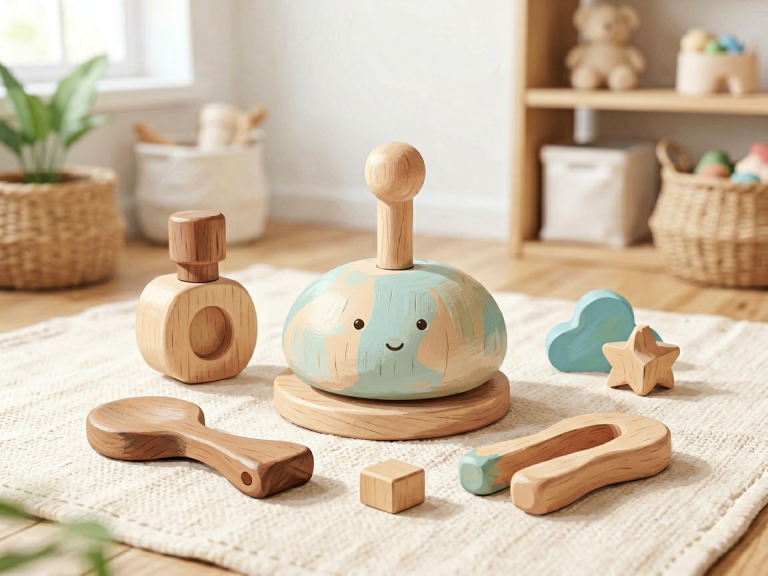
Wooden toys engage a child's senses in ways that plastic toys often fail to achieve. The natural grain, weight, texture, and even smell of wood provide rich sensory input. Unlike plastic toys that are smooth and uniform, wooden toys offer subtle variations that stimulate tactile exploration. This is crucial for developing fine motor skills and hand-eye coordination. For example, a simple set of wooden blocks requires a child to judge weight, balance, and spatial relationships—skills that a plastic stacking toy with a fixed base may not teach as effectively.
Moreover, wooden toys tend to be more open-ended. A set of wooden blocks can become a castle, a spaceship, a bridge, or a simple tower. This encourages imaginative play and problem-solving. In contrast, many plastic toys are highly specific: a plastic fire truck that makes sirens and flashes lights leaves little room for creativity because the toy dictates the play scenario. Research in child development has consistently shown that open-ended play fosters executive function, creativity, and language development. Wooden toys, by their very nature, invite children to invent their own narratives.
Reduced Overstimulation
In an age where children are bombarded with screens, sounds, and flashing lights, wooden toys offer a calm, focused alternative. Plastic electronic toys often overstimulate the developing brain, leading to shorter attention spans and increased frustration when the toy does not perform as expected. Wooden toys, being static and quiet, encourage slower, more deliberate play. They allow children to concentrate on the task at hand—whether it's stacking, sorting, or pretending—without external interruptions. This is particularly beneficial for children with attention disorders or sensory processing issues, as it provides a grounding, predictable experience.
Longevity and Heirloom Quality
Wooden toys are often built to last for generations. A well-made wooden train set or dollhouse can be passed down from older siblings to younger ones, and even to the next generation. This durability not only saves money over time but also teaches children about sustainability and the value of caring for possessions. Plastic toys, by contrast, often break within months and end up in landfills. The emotional attachment to a wooden toy that has been played with by parents and grandparents can also strengthen family bonds and provide a sense of continuity.
Environmental Impact
Renewable Resources and Biodegradability
From an environmental perspective, wooden toys have a clear advantage over plastic. Wood is a renewable resource when harvested sustainably. Many reputable toy companies source their wood from certified forests (e.g., FSC-certified) that practice responsible forestry. Wooden toys are also biodegradable; when they finally outlive their usefulness, they can decompose naturally. Plastic toys, on the other hand, are derived from fossil fuels, take hundreds of years to break down, and often release microplastics into the environment during degradation.
Carbon Footprint and Manufacturing
The manufacturing process for wooden toys generally has a lower carbon footprint than that of plastic toys. Wood processing requires less energy than the petrochemical refining and injection molding needed for plastic. Additionally, wooden toys often involve less packaging—they can be sold without excessive plastic wrapping because they are naturally durable. However, it is worth noting that not all wooden toys are equally eco-friendly. Some are made from tropical hardwoods that may be illegally logged, and certain paints or glues can contain volatile organic compounds (VOCs). Parents should look for toys made from birch, maple, or beech from responsibly managed forests, and finished with non-toxic, low-VOC products.
Waste Reduction
The longevity of wooden toys directly reduces waste. Instead of throwing away a broken plastic toy every few months, a family can keep a wooden toy for years. In a world grappling with plastic pollution, this is a significant consideration. Furthermore, wooden toys can often be repaired—a loose joint can be glued, a scratched surface can be sanded—whereas plastic toys are typically single-use and non-repairable.
Economic Considerations
Initial Cost vs. Long-Term Value
One of the most common objections to wooden toys is their higher upfront cost. A simple wooden puzzle may cost $25, whereas a similar plastic version might be $8. However, when evaluating cost, parents should consider the toy's lifespan and resale value. A high-quality wooden toy can be used by multiple children, donated, or sold secondhand. Plastic toys, especially electronic ones, quickly become outdated, broken, or uninteresting. Additionally, many wooden toys are more versatile: a set of wooden blocks can entertain a child from age one to age ten, while a plastic shape-sorter is only suitable for a narrow age range. Per hour of play, wooden toys often prove cheaper in the long run.
Hidden Costs of Plastic Toys
Parents should also factor in the hidden costs of plastic toys: replacement costs, environmental cleanup (taxpayer-funded), and potential health expenses related to chemical exposure. While these are indirect, they are real. Moreover, the cheap price of plastic toys often encourages overconsumption—parents buy more toys than needed, leading to clutter and wasted money. Wooden toys, being more intentionally selected, promote a minimalist, quality-over-quantity approach that can save money and reduce stress.
Economic Accessibility and Inequality
It is important to acknowledge that wooden toys are not accessible to all families due to their cost. This creates a disparity: wealthier families can afford the benefits of wooden toys, while lower-income families may rely on cheaper plastic alternatives. However, secondhand markets, toy libraries, and community swaps can mitigate this. Some organizations also donate wooden toys to underprivileged children. Governments and NGOs could do more to promote access to safe, durable toys for all children.
Aesthetic and Cultural Value
Beauty and Design
Wooden toys are often works of art in their own right. Their natural colors, graceful curves, and warm textures appeal to both children and adults. Many parents appreciate that wooden toys blend seamlessly into a home's décor rather than clashing with it. Unlike garish plastic toys that can overwhelm a living room, wooden toys have a timeless elegance. This aesthetic quality also encourages children to treat their toys with respect—a beautifully crafted wooden car is less likely to be thrown in anger than a flimsy plastic one.
Cultural and Educational Heritage
Wooden toys have a long history in many cultures. From German wooden nutcrackers to Russian nesting dolls to African wooden puzzles, these toys carry cultural significance and can be used to teach children about heritage and craftsmanship. In an increasingly globalized and digital world, handmade wooden toys connect children to traditional skills and slower ways of living. They also serve as a counterbalance to the fast-paced, disposable culture that plastic toys often represent.
Potential Drawbacks of Wooden Toys
No discussion is complete without acknowledging the limitations. Wooden toys can be heavy, making them less suitable for very young infants who might drop them on their toes. They are also more susceptible to water damage and can warp or crack if left in damp environments. Some wooden toys require more maintenance, such as occasional oiling to prevent drying. Additionally, wooden toys generally lack the interactive features (lights, sounds, movement) that some children find engaging. For parents who want to use toys to teach cause-and-effect or to provide auditory stimulation, simple wooden toys may not suffice. However, this can be addressed by complementing wooden toys with a few well-chosen electronic or plastic items that serve specific educational purposes.
Conclusion
After weighing the evidence, it becomes clear that the question “should parents buy wooden toys?” does not have a single universal answer, but the balance tilts strongly in favor of wooden toys for most families. The benefits in safety, child development, environmental sustainability, and long-term value far outweigh the higher initial cost and minor inconveniences. Wooden toys foster creativity, reduce overstimulation, and provide a healthier, more durable play experience. They are an investment not only in a child's present joy but also in their future well-being and the health of the planet.
However, parents need not be absolutists. A thoughtful approach might involve building a core collection of high-quality wooden toys—blocks, puzzles, trains, dolls, and building sets—while selectively using plastic toys for specific purposes, such as bath toys (which benefit from being waterproof) or educational electronic devices. The key is intentionality: choose toys that align with your values and your child's needs, rather than succumbing to marketing hype or peer pressure.
Ultimately, the choice to buy wooden toys is a small but meaningful step toward a more sustainable, mindful, and creative childhood. In a world that often prioritizes speed and convenience over quality and care, wooden toys remind us of the beauty of simplicity. They invite children—and their parents—to slow down, touch, imagine, and grow. For those reasons, the answer to the question is a resounding yes: parents should indeed buy wooden toys, provided they do so thoughtfully, with attention to safety, source, and the child's developmental stage.