A Parent’s Guide to Choosing Safe and Stimulating Art Supplies for Your 9-Month-Old
Introduction
The first year of a baby’s life is a whirlwind of discovery. At nine months, your little one is likely sitting up confidently, reaching for objects with intent, and perhaps even crawling or scooting. This stage is marked by an intense desire to explore the world through the senses—touching, tasting, smelling, and looking. Introducing art supplies at this age might sound premature, but it can be a wonderful way to support sensory development, fine motor skills, and early creativity. However, the traditional art materials we use as adults are not only inappropriate but also dangerous for a nine-month-old. Babies this age explore with their mouths as much as their hands, so every item they encounter must be non-toxic, free of small parts, and designed for safe sensory play. This guide will help you navigate the confusing world of baby-safe art supplies, offering practical advice on what to buy, what to avoid, and how to set up a positive, mess-friendly environment that nurtures your child’s natural curiosity.
—
Understanding Your 9-Month-Old’s Developmental Needs
Before you start shopping, it is essential to understand what your baby is capable of and what they truly need from an “art” experience. At nine months, infants are in what developmental psychologists call the sensorimotor stage. They learn by acting on the world: grasping, shaking, banging, dropping, and mouthing objects. Their attention spans are very short—often only a few minutes—so any activity must be simple, repetitive, and highly engaging.
Fine motor skills are still emerging. Your baby may be able to pick up small objects using a pincer grasp (thumb and forefinger), but they cannot yet hold a pencil or crayon with controlled precision. Therefore, art supplies for this age should be large, chunky, and easy to grip. More importantly, the goal is not to create a recognizable drawing or painting—it is to provide an experience. The feel of a smooth, cold paint on their fingers, the sound of a soft brush tapping a table, the sight of a bright color smearing across a page—these are the real “art” for a nine-month-old. Keep your expectations low and your camera ready; the process is everything.
Additionally, your baby is entering a phase of heightened oral exploration. Teething may be in full swing, and everything goes into the mouth. This means that any art supply you offer must be made from food-grade or otherwise ingestible materials, or at least non-toxic if incidentally swallowed. The American Academy of Pediatrics and the Consumer Product Safety Commission recommend that products for children under three should not contain small parts, sharp edges, or harmful chemicals. For a nine-month-old, these guidelines apply even more strictly.
—
Safety First: What to Look for in Art Supplies
When you begin browsing online stores or baby boutiques, you will see a bewildering array of products labeled “baby-safe” or “non-toxic.” To make an informed decision, focus on these critical safety features:
1. Non-Toxicity Certification
Look for products that explicitly state they are non-toxic and conform to ASTM D-4236 (a standard used in the United States) or equivalent international standards. Even better, choose supplies that are explicitly labeled as “food-grade” or “edible,” such as finger paints made from vegetable starch and food coloring. For nine-month-olds, you should avoid any paint or ink that contains heavy metals like cadmium, lead, or chromium, as well as phthalates and BPA.
2. No Small Parts or Detachable Pieces
A nine-month-old can easily choke on items smaller than 1.25 inches in diameter. Ensure that crayons are chunky enough that they cannot fit entirely into the mouth. Avoid art sets that include glitter, beads, sequins, or any adhesive decorations. Even the cap of a marker can be a choking hazard; therefore, choose markers that have ventilation holes in the cap (as required by law for older children) or better yet, avoid markers altogether for babies this young.
3. Washability
Art time with a baby is messy. Look for supplies that are labeled “washable” for both skin and fabrics. Water-based, non-staining formulas are best. Test a small amount on a hidden area of fabric if possible. You will also want to protect your floors and surfaces with a drop cloth or an old plastic tablecloth.
4. Fragrance-Free and Hypoallergenic
Babies have sensitive skin and respiratory systems. Avoid art supplies with added perfumes, essential oils, or dyes that could cause allergic reactions. Unscented, simple formulations are safest.
5. Age-Appropriate Design
The product packaging should explicitly state that it is suitable for children 12 months or younger. Some manufacturers produce “baby’s first art kit” with items designed for infants. However, do not rely solely on the age label; always check the materials and construction yourself.
—
Top Recommended Art Supplies for 9-Month-Olds
Based on developmental needs and safety criteria, here are the best categories of art supplies to consider for your nine-month-old. Remember, you do not need to buy everything at once. Start with one or two items and observe your baby’s interest.
1. Edible Finger Paints
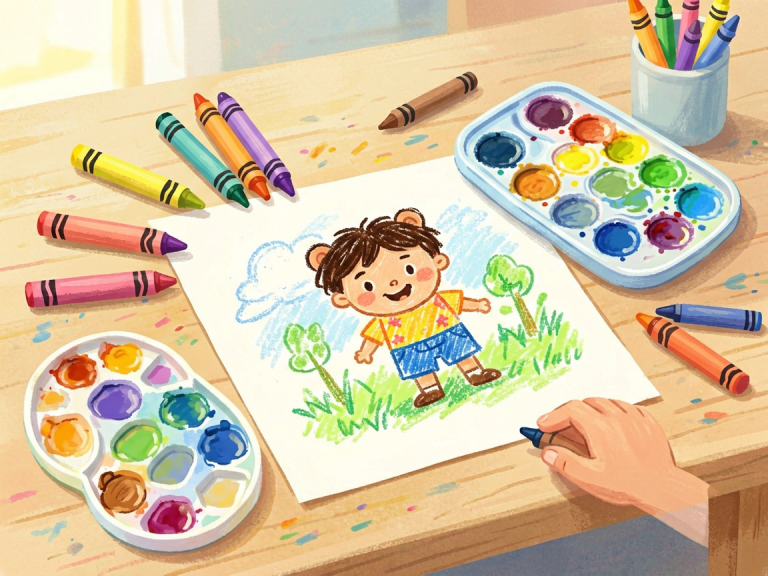
These are arguably the most popular and safest option for this age. Edible finger paints are typically made from cornstarch, water, and food-grade coloring (like beet juice, turmeric, or blueberry concentrate). You can buy them pre-made from brands like *Crayola My First Fingerpaint* (which is non-toxic and washable) or make your own at home. The consistency should be thick enough that it does not run everywhere but still smooth enough to smear. Your baby will likely try to taste it, and that is perfectly fine. Spread a large sheet of butcher paper on a high-chair tray or directly on the floor (with a plastic cover underneath), and let your baby pat, smear, and explore the colors. Always supervise closely to prevent excessive ingestion, though a small amount is harmless.
2. Chunky Baby Crayons
Standard crayons snap easily and can become choking hazards. Instead, buy egg-shaped or triangular crayons that are ergonomically designed for small hands. Brands like *Honeysticks* produce 100% pure beeswax crayons that are non-toxic and have a rounded shape perfect for a baby’s grip. These crayons are also durable and do not break into tiny pieces. However, be aware that a nine-month-old may not have the strength or coordination to make marks intentionally. They will likely just bang the crayon on the paper or try to mouth it. That is fine; the experience of holding a colorful object and seeing a mark appear is magical to a baby. Just ensure the crayon is too large to swallow.
3. Sensory Art Bags
These are a brilliant, no-mess alternative to painting. Fill a strong, double-sealed zip-top bag (or use a purpose-made sensory bag) with a squirt of non-toxic hair gel or clear glue, a few drops of food coloring, and perhaps some safe trinkets like large plastic buttons or pom-poms. Seal the bag tightly and tape it to a table or high-chair tray. Your baby can press, squish, and slide the gel around without any paint getting on their hands or clothes. The visual movement is mesmerizing, and the tactile feedback is excellent for sensory development. Just be sure the bag is puncture-proof—some brands like *Ziploc* are quite strong, but you can reinforce the edges with duct tape.
4. Soft Textured Brushes and Sponges
While a nine-month-old cannot hold a brush properly, they can grip a thick, soft-handled brush or a large sponge. Look for paintbrushes with a chunky, rounded handle (often called “egg brushes” or “baby brushes”) made from silicone or soft plastic. Alternatively, give your baby a clean, large makeup sponge or a piece of soft foam. They can dip it into a shallow dish of edible paint (or just water) and pat it onto paper. The novelty of the different textures—smooth, bumpy, squishy—adds another layer of sensory fun.
5. Water Drawing Mats
A water drawing mat is a reusable mat that turns dark when wet. You simply fill a special pen with water, and your baby “draws” on the mat. The marks disappear as the water dries, providing endless mess-free entertainment. For a nine-month-old, you can skip the pen (which may be too small) and instead let them press a wet sponge or a water-filled silicone teether onto the mat. The sudden appearance of color is a delightful cause-and-effect lesson. This activity is completely safe because there are no chemicals—just plain water.
6. Edible Play Dough
Traditional play dough is high in salt and can be harmful if eaten in large quantities. However, you can make edible play dough at home using flour, water, cream of tartar, and natural coloring. The texture is soft and squishy, perfect for little hands to pincer, roll, and squish. A nine-month-old might not be able to shape it, but they will enjoy the tactile experience. Supervise closely to prevent large chunks from being swallowed, but a taste is inevitable and harmless with a homemade recipe.
7. Large-Scale Art with Feet
A fun variation is to let your baby paint with their feet. Lay a large sheet of paper on the floor, pour a small amount of edible finger paint into a shallow tray, and help your baby step into the paint. Then let them crawl or toddle across the paper. The sensation on their soles is unique, and the resulting footprint art is adorable. Obviously, you will need to be prepared for a tub bath afterward. This activity is best done outdoors or in a tiled bathroom.
—
What to Avoid
Equally important to knowing what to buy is knowing what to avoid. The following items should never be given to a nine-month-old, even under supervision:
- Acrylic or tempera paints – These are not food-safe and often contain preservatives and pigments that can be harmful if ingested in any amount.
- Glitter or any shiny flakes – They are choking hazards and can also irritate the eyes and skin.
- Small markers, pens, or pencils – These pose choking and poking risks. Even washable markers often have caps small enough to be swallowed, and the ink may contain solvents.
- Glue or paste – Standard school glue is not edible and can cause gastrointestinal irritation.
- Clay or modeling compounds that are not edible – Homemade or commercial play dough is acceptable only if it is explicitly labeled edible; otherwise, it can contain high levels of salt or chemicals.
- Sharp scissors or any cutting tools – A nine-month-old cannot handle scissors safely.
- Stickers or adhesive foam pieces – These are small and easily detached, creating a choking hazard.
- Paint brushes with loose bristles – Even if the handle is chunky, cheap brushes can shed bristles that a baby might pull out and ingest.
—
Tips for Supervised Art Time with Your Baby
Even with the safest supplies, you must never leave your baby unattended during art time. Here are practical guidelines to make the experience enjoyable for both of you:
- Prepare the environment. Use a high chair with a removable tray, or set up a designated area on the floor covered with a waterproof mat or an old shower curtain. Have wipes or a damp cloth nearby. Dress your baby in a “messy” outfit or just a diaper if the room is warm.
- Limit the duration. Nine-month-olds can only focus for about 5–10 minutes before becoming overstimulated or losing interest. Pay attention to their cues—if they start rubbing their eyes, turning away, or fussing, end the activity. It is better to have five minutes of joyful exploration than twenty minutes of frustration.
- Model the activity. Show your baby how to pat the paint, squish the sensory bag, or bang the crayon. Use an exaggerated, happy tone. Babies learn through imitation, so your enthusiasm will encourage them.
- Engage all senses. Talk to your baby about what they are doing: “You feel the cold paint! It’s so smooth. Look, red!” This builds language skills alongside sensory awareness.
- Embrace the mess. Your baby will inevitably get paint in their hair, on their clothes, and possibly on the walls. Accept this as part of the process. The benefits of sensory exploration far outweigh the cleanup effort. Keep your camera handy—these messy moments are precious memories.
—
DIY Art Supply Ideas for Frugal Parents
You do not need to spend a lot of money on commercial art supplies. Many safe and effective alternatives can be made from items already in your kitchen:
- Yogurt paint. Mix plain full-fat yogurt with a few drops of natural food coloring (beetroot powder, spirulina, turmeric). The texture is creamy and safe to eat. Use a shallow dish or a muffin tin to offer several colors.
- Oobleck. Combine cornstarch and water (2:1 ratio) to create a substance that feels solid when pressed but liquid when released. Add food coloring for visual interest. Oobleck is completely non-toxic, though it is not especially tasty. Supervise closely to prevent large amounts from being swallowed, as it can be a choking hazard if clumped.
- Edible “chalk.” Crush a few Tums antacid tablets (which are calcium carbonate and safe) into a powder, then mix with water to form a paste. This can be used as a finger paint that dries to a chalky finish. However, this is more of a novelty—stick with yogurt or cornstarch paint for ease.
- Sensory bottles. Fill a clear plastic bottle with water, a drop of food coloring, and lightweight objects like a large plastic bead or a piece of ribbon. Glue the lid shut permanently. Your baby can shake and roll the bottle, watching the colors swirl. This is not exactly art, but it builds visual tracking skills.
—
Conclusion
Buying art supplies for a nine-month-old is about choosing safety, sensory richness, and simplicity over complexity and durability. Your baby does not need an elaborate easel or a 64-pack of crayons. They need opportunities to explore texture, color, and cause-and-effect in a setting that is free of hazards. By investing in non-toxic, oversized, and washable materials—and by being an active, engaged supervisor—you are laying the foundation for a lifelong love of creative expression. Remember, the mess is temporary, but the neural connections your baby is building will last a lifetime. So go ahead, squeeze some edible paint onto the tray, let your baby go wild, and enjoy watching their world become a little more colorful.