The Paradox of Progress: Why Buying Toys That Are Too Advanced Harms Child Development
In an era defined by rapid technological advancement, parents often feel pressured to equip their children with the latest gadgets and interactive toys. The reasoning seems intuitive: expose a child to advanced technology early, and they will develop superior cognitive skills, better prepare for a digital future, and gain a competitive edge. Yet this well-intentioned impulse frequently backfires. When a toy is too advanced for a child’s developmental stage, it ceases to be a tool for growth and becomes a barrier to essential learning. Advanced toys, with their pre-programmed responses, flashing lights, and automated feedback, can stifle creativity, undermine problem-solving skills, and even disrupt the crucial neural wiring that occurs during unstructured play. Understanding why buying overly sophisticated toys is a problem requires examining not just the toy itself, but the complex interplay between a child's mind, their environment, and the nature of play itself.
The Developmental Mismatch: Beyond a Child’s Cognitive Horizon
Every child traverses a predictable sequence of cognitive development, from sensorimotor exploration in infancy to concrete operational thinking in early school years. Toys that are “too advanced” leapfrog these stages, demanding abstract reasoning, fine motor precision, or language comprehension that a child has not yet acquired. A simple wooden puzzle, for instance, requires a toddler to match shapes by trial and error, building spatial awareness and persistence. An electronic tablet game, however, often does the matching for the child: it flashes, beeps, and announces “correct!” without requiring the child to engage in the mental labor. The child is not learning to recognize patterns or solve problems; they are merely reacting to stimuli. This mismatch leads to frustration rather than mastery. When a toy exceeds a child’s zone of proximal development—the sweet spot where challenge meets ability—the child either gives up in confusion or becomes a passive observer of the toy’s own “intelligence.” Research in developmental psychology has consistently shown that children learn best when they are active agents in their own learning. A toy that does too much leaves little room for the child to do the thinking. The result is a missed opportunity for building foundational skills such as cause-and-effect reasoning, trial-and-error, and the satisfaction of independent achievement.
The Death of Imaginative Play: When the Toy Does the Work
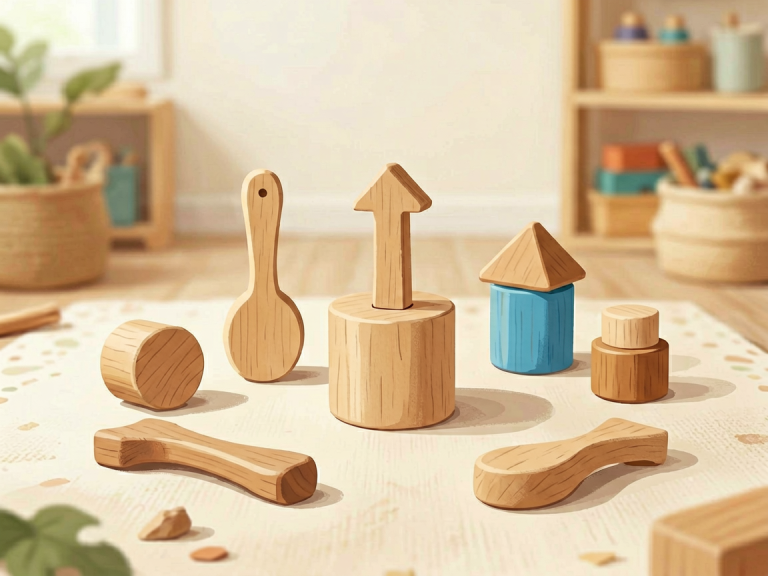
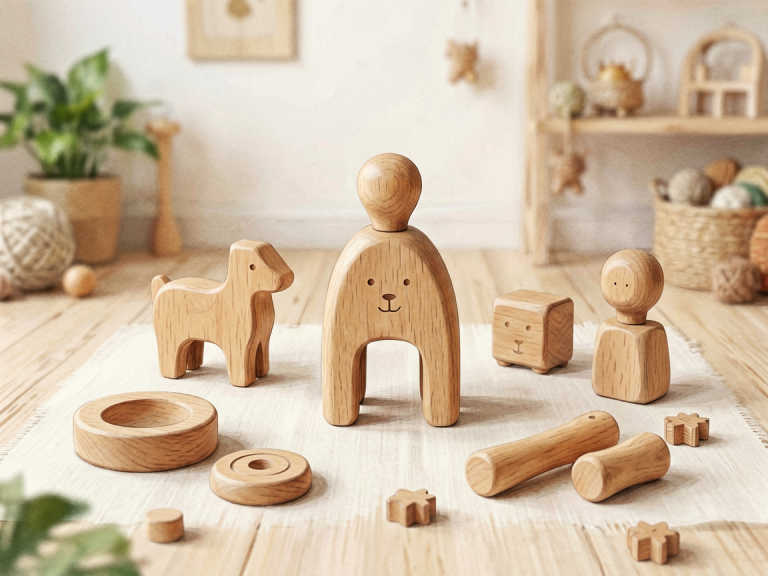
Perhaps the most insidious consequence of overly advanced toys is the erosion of imaginative play. A plain cardboard box can become a spaceship, a castle, or a time machine—limited only by the child’s imagination. A high-tech toy that talks, moves, and follows a script, by contrast, dictates the narrative. The child is not the director of the story; they are a passenger. Imaginative play is not merely a pleasant diversion; it is the laboratory where children practice social roles, experiment with emotions, and develop abstract thinking. When a toy’s pre-programmed behaviors constrain the child’s choices, the cognitive flexibility that comes from open-ended play is lost. Consider a simple set of blocks: a child can build a tower, knock it down, build a bridge, arrange them by color, or pretend they are food for a doll. An advanced robot toy, however, might only respond to specific commands or follow a fixed sequence of movements. The child’s role shrinks to pressing buttons rather than inventing worlds. Pediatric occupational therapists have observed that children who spend more time with passive, electronic toys show reduced creativity in free-play sessions compared to those who use simple, open-ended materials. The problem is not technology itself, but the imbalance: when the toy’s complexity exceeds the child’s capacity to reimagine it, play becomes consumption rather than creation.
Passive Entertainment vs. Active Engagement: The Brain Wired for Boredom
Advanced toys are often designed to be entertaining—and that is precisely the problem. They produce constant stimulation: lights, sounds, vibrations, and digital voices. This sensory overload can hijack a child’s attention system, training the brain to expect high levels of external input to stay engaged. In contrast, simpler toys require the child to generate their own engagement. A ball will not roll unless thrown; a crayon will not draw unless moved. This active engagement is essential for developing executive functions such as sustained attention, impulse control, and goal-directed behavior. Neuroscientific studies indicate that when children are overstimulated by rapid-fire audiovisual feedback, their brains become less efficient at processing slower, more subtle information—the kind found in reading, listening to a teacher, or engaging in a conversation. Over time, a child accustomed to advanced, self-contained toys may struggle with boredom in unstructured moments, leading to a diminished capacity for self-regulation. They become dependent on external entertainment rather than cultivating intrinsic motivation. Moreover, many advanced toys are screen-based, contributing to increased sedentary behavior and reduced physical activity. Fine motor skills, gross motor coordination, and proprioception—the sense of body position—all develop through active, physical play. A child manipulating a virtual character on a screen is not developing the same neural pathways as a child climbing a jungle gym or squeezing playdough.
Social and Emotional Consequences: Isolation, Frustration, and the Loss of Shared Play
Play is inherently social. Even solitary play prepares children for social interaction by teaching them to manage their own emotions and narratives. But advanced toys often operate in a closed loop: the child interacts with the machine, not with other children or adults. A toy that talks back, that gives instructions, and that “plays” independently can actually replace human interaction. Siblings and peers who might negotiate a shared story with a simple toy find themselves competing for control of a single advanced device, or else each child retreats into their own digital bubble. This isolation hinders the development of crucial social skills: turn-taking, empathy, negotiation, and reading nonverbal cues. Additionally, when a toy is too advanced, it can cause emotional distress. A child who cannot make the toy do what it is supposed to do feels incompetent and frustrated. Unlike a stacking ring that simply falls when knocked over, an advanced toy may glitch, crash, or demand a level of dexterity beyond the child’s ability. Repeated failure in play—an activity meant to be joyful and safe—can erode self-esteem and create anxiety around new challenges. Parents may step in to “fix” the situation, but this further reduces the child’s sense of agency. The emotional cost is real: instead of the pride that comes from mastering a simple toy, the child experiences the frustration of being outsmarted by a machine.
Economic and Environmental Costs: The Hidden Burden of Rapid Obsolescence
Beyond child development, the problem of advanced toys has tangible economic and environmental repercussions. Sophisticated toys are expensive. A robotic dinosaur, a tablet-based learning system, or a coding robot for a three-year-old can cost hundreds of dollars. Yet their advanced nature often means they have a short usable lifespan. The child grows quickly, and the toy’s complexity that once seemed cutting-edge soon becomes babyish or, worse, broken. Simple toys like wooden trains, building blocks, and dolls have years of reusability; advanced toys often rely on batteries, software updates, and fragile electronics that fail. Parents end up in a cycle of constant replacement, spending money that could be better allocated to experiences (trips to the park, art supplies, books) or to durable, open-ended toys that grow with the child. Environmentally, electronic toys contribute to e-waste, and their packaging is often excessive. The marketing of “educational” advanced toys—with promises of boosting IQ or ensuring kindergarten readiness—exploits parental anxiety, leading to purchases that deliver little real benefit. Studies comparing high-tech toys with traditional ones have found no significant advantage in cognitive outcomes; in some cases, simpler toys actually produced better problem-solving and language development because they encouraged parent-child interaction.
Striking a Balance: The Case for Developmentally Appropriate Play
The solution is not to ban all advanced toys, but to exercise discernment. A toy’s value lies not in its retail price or its number of features, but in how it invites the child to engage. The best toys are those that are 90% child and 10% toy—they leave ample room for imagination, exploration, and even boredom. A magnetic building set, a set of simple art supplies, a collection of natural objects, or a sturdy dollhouse with open-ended accessories can provide years of rich, developmentally appropriate play. When introducing technology, it should be as a tool for active creation rather than passive consumption. For example, a simple camera that a child can use to take and review photos encourages curiosity and storytelling; a tablet used with parental scaffolding for open-ended drawing apps can be valuable. But the key is moderation and matching the toy to the child’s actual developmental stage, not to the latest trend. Parents can ask simple questions before purchasing: Does this toy require the child to do most of the thinking? Can it be used in many different ways? Will it still be engaging in a year? Does it encourage interaction with others? If the answer is no, the toy may be too advanced for healthy development.
In conclusion, the problem with buying toys that are too advanced is multifaceted. It disrupts the delicate process of cognitive maturation, suppresses the creative engine of imaginative play, fosters passive consumption, impedes social development, and wastes resources. The allure of advanced toys is understandable in a culture that equates complexity with quality. Yet the most profound and lasting learning happens when a child picks up a simple object and, through their own active effort, turns it into something extraordinary. Advanced toys, ironically, can rob children of that very opportunity—the chance to discover their own capacity for invention, persistence, and joy. True educational progress does not come from giving children the most sophisticated tools, but from giving them the time, space, and simple materials to become sophisticated thinkers themselves.