Navigating the Toy Aisle: A Parent’s Guide to Avoiding Overly Advanced Toys
Introduction
Every parent knows the scene: you walk into a toy store, and your child’s eyes light up at a flashy, battery-powered robot that promises to teach coding, or a complex building set with hundreds of tiny pieces. The packaging proclaims it’s “for ages 8 and up,” but your four-year-old is already tugging at your sleeve. In that moment, it’s tempting to think that buying a more advanced toy will give your child a head start—after all, isn’t early exposure to complex concepts a form of enrichment? Yet research in child development and decades of parental experience tell a different story. Toys that are too advanced for a child’s current developmental stage can lead to frustration, disengagement, and even safety hazards. Worse, they can undermine the very learning they are meant to encourage. This article offers a comprehensive, research-backed guide on how to avoid buying toys that are beyond your child’s readiness, helping you make thoughtful, age-appropriate choices that foster genuine growth and joy.
Understanding Child Development Stages
Before you can judge whether a toy is “too advanced,” you need a clear picture of what typical development looks like at different ages. Child development is not a race; it follows a predictable sequence, though each child’s pace varies. Infants (0–12 months) explore through their senses and simple cause-and-effect actions like shaking a rattle or grasping a soft block. Toddlers (1–3 years) are mastering gross and fine motor skills, learning object permanence, and engaging in parallel play. Preschoolers (3–5 years) enter a phase of symbolic thinking, imaginative play, and early problem-solving. School-age children (6–12 years) develop logical reasoning, sustained attention, and social cooperation.
A toy that requires fine motor precision, multi-step instructions, or abstract reasoning will overwhelm a child who hasn’t yet built those foundational skills. For example, a magnetic building kit with tiny neodymium magnets may be perfect for a nine-year-old but dangerous and incomprehensible for a three-year-old. The key is to match the toy’s cognitive, physical, and emotional demands with the child’s current zone of proximal development—the sweet spot where challenge meets capability. When you understand the stages, you can spot mismatches before you buy.
The Pitfalls of “Advanced” Toys
Why is it so harmful to buy toys that are too advanced? First, consider the emotional impact. A child who cannot figure out a toy designed for older children often feels incompetent and frustrated. Instead of sparking curiosity, the toy becomes a source of shame or boredom. I once observed a five-year-old given a chemistry set with real test tubes and powders; within minutes, she dumped the contents onto the floor and started crying because she couldn’t make the instructions work. The toy didn’t teach her science—it taught her that science is confusing and unpleasant.
Second, advanced toys often require adult supervision or intervention, which paradoxically reduces independent play. If a child constantly needs help to operate a toy, the activity shifts from self-directed exploration to adult-led instruction. This can hinder the development of autonomy and perseverance. Third, many “advanced” toys are marketed as educational but rely on passive consumption—pressing buttons to hear pre-recorded phrases or watching a screen—rather than active, open-ended engagement. The American Academy of Pediatrics warns that overly structured, battery-operated toys can limit creativity and language development compared to simple blocks, dolls, or art supplies. Finally, safety risks increase: small parts that are choking hazards, sharp edges, or electronic components that overheat are common in toys intended for older children. Avoiding advanced toys is not just about learning—it’s about physical well-being.
Researching Age Labels and Beyond
The most obvious starting point is reading the manufacturer’s age recommendation. However, these labels can be misleading. Some companies deliberately under-age a toy to broaden their market, while others over-age it for liability reasons. Never rely solely on the box. Instead, treat the age label as a rough guide and then do your own investigation. Look up independent toy reviews from reputable sources like Common Sense Media, which provides detailed developmental analyses. Search for parent feedback on forums or retailer websites—real-world experiences often reveal that a toy labeled “3+” actually works best for 5-year-olds because the pieces are too small for toddlers.
Pay attention to the specific skills the toy exercises. A toy that claims to teach “coding fundamentals” might actually require reading and sequential logic that a four-year-old hasn’t yet mastered. Compare the toy’s required abilities with a developmental checklist. For example, if the toy involves threading small beads, check whether your child can perform a pincer grasp and maintain focus for extended periods. If the toy requires following a sequence of three steps, consider whether your child can remember and execute multi-step instructions. When in doubt, err on the side of simplicity. It is far better to buy a toy that is slightly too easy and watch your child master it with pride than to buy one that is too hard and watch them give up in tears.
Observing Your Child’s Interests and Abilities
No one knows your child better than you. Instead of shopping based on trending products or what another parent’s child enjoys, take time to observe your own child’s natural inclinations. Does your toddler spend twenty minutes stacking blocks and then knock them down with glee? They’re learning about gravity and spatial relationships—a simple stacking toy is perfect. Does your preschooler love pretending to cook? A set of plastic pots, pans, and play food will fuel imaginative play far more than a talking kitchen that demands specific button presses. Notice what your child struggles with. If they become upset when a puzzle piece doesn’t fit, avoid puzzles with more than a few pieces. If they lose interest in a toy after two minutes, it might be either too easy or too hard—test with a few low-cost options first.
You can also involve your child in the selection process, within limits. Take them to a store and let them handle toys. See what they gravitate toward naturally. Many children are drawn to toys that match their current developmental needs—they instinctively seek challenges they can almost master. A child who picks up a wooden shape sorter even though they are three years older than the recommended age may still find joy in the satisfying sensation of fitting shapes. Conversely, if they ignore a high-tech gadget, it’s a clear sign that the toy’s complexity doesn’t engage them. Trust these cues; they are more reliable than any marketing claim.
Prioritizing Open-Ended Play
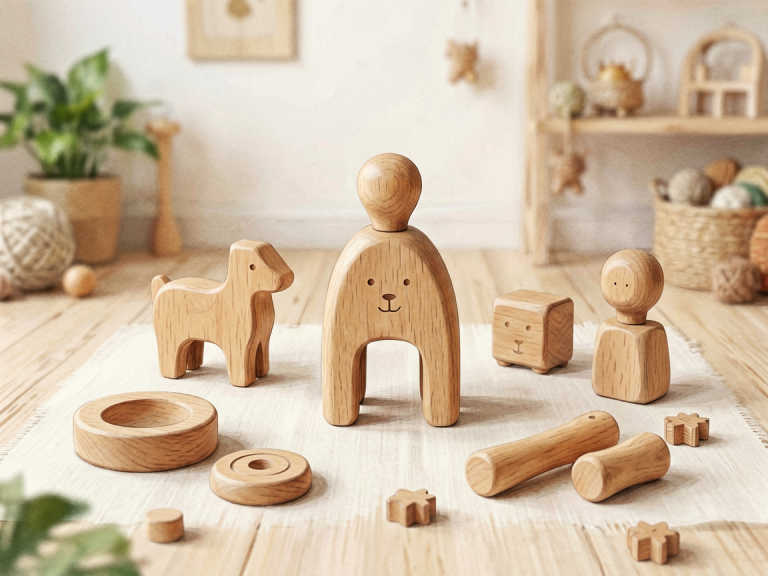
One of the most effective strategies to avoid buying overly advanced toys is to prioritize open-ended toys over closed-ended ones. Open-ended toys—such as building blocks, play dough, art supplies, dollhouses, and simple balls—have no single “right” way to use them. They grow with the child, adapting to their evolving skills and imagination. A set of wooden blocks can be a tower for a two-year-old, a castle for a five-year-old, and an architectural model for an eight-year-old. In contrast, a closed-ended toy like a battery-operated robot that walks and talks on a predetermined path offers limited play possibilities. Once a child masters the few actions it can perform, the toy becomes boring. Worse, if the toy is too advanced, the child can’t even perform those actions.
Open-ended toys are inherently age-appropriate because they let the child dictate the level of complexity. A one-year-old can bang two blocks together; a six-year-old can build a bridge with an arch. By choosing open-ended materials, you bypass the risk of buying something that is “too advanced” because the child self-regulates the challenge. Moreover, these toys support creativity, problem-solving, and fine motor skills without the pressure of learning a specific skill. They are also often more durable and cost-effective in the long run. When you are tempted by a flashy, advanced toy, ask yourself: Does this toy allow my child to direct their own play, or does it dictate the play for them? If the answer is the latter, put it back on the shelf.
Consulting Experts and Other Parents
You don’t have to navigate the toy landscape alone. Early childhood educators, pediatric occupational therapists, and child psychologists can offer invaluable guidance. Many of these professionals maintain blogs or social media accounts where they discuss toy recommendations. For instance, the National Association for the Education of Young Children (NAEYC) publishes lists of developmentally appropriate toys. Librarians who run story time programs often know which hands-on toys captivate different age groups. Don’t hesitate to ask your child’s teacher for advice—they see dozens of children interact with toys every day and can pinpoint common mismatches.
Other parents, especially those with children slightly older than yours, are a goldmine of practical wisdom. Join local parent groups online or in person, and ask specific questions like, “My three-year-old loves cars. Is this remote-control car with a joystick appropriate, or will it be too frustrating?” Often, parents will share real-world stories of toys that looked great but failed at home. They can also recommend alternatives that are similarly engaging but better matched. Remember that every child is unique—one parent’s “advanced but fine” might be another’s disaster. Gather multiple opinions and then compare them with your own observations.
Practical Tips for Shopping
To bring all these principles together, here are concrete steps you can take the next time you are shopping for a toy:
- Create a mental checklist before entering the store or browsing online. Write down your child’s age, key skills they are currently developing, and any recent interests. For example: “Age 4, loves pretending to be a chef, can count to 10 but not yet read, easily frustrated by small pieces.”
- Ignore the hype. A toy advertised as “genius-level learning” or “award-winning” may be excellent for a specific age, but not necessarily for yours. Read the fine print. Look for reviews that mention age appropriateness explicitly.
- Perform the “three-minute test.” If possible, let your child interact with a demo version in a store or borrow a similar toy from a friend. Watch how they respond. If they become engaged and try to figure it out with persistence, it’s likely a good fit. If they look confused or walk away within a minute, it’s too advanced.
- Choose toys that require active participation—pushing, pulling, building, sorting, pretending—over passive toys that do the work for the child. The more the child has to think and move, the better.
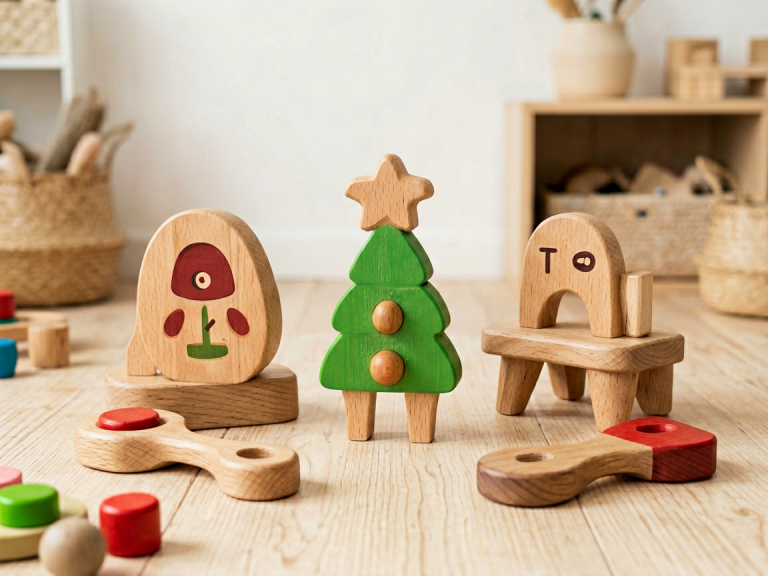
- Consider secondhand or simple versions first. Many classic toys like nesting cups, wooden trains, or crayons and paper have stood the test of time for a reason. They are rarely too advanced. Starting with these foundations prevents you from overspending on complex toys that may be rejected.
- Plan for the future, but not too far. It’s fine to buy a toy that a child will grow into, but only if it has multiple levels of difficulty or can be used in simpler ways now. For example, a magnetic tile set can be used by a toddler just to connect two tiles, and later by a school-age child to build complex structures. However, a board game that requires reading is a poor investment for a four-year-old, no matter how much they will “grow into it” in two years.
Conclusion
Avoiding toys that are too advanced is not about depriving your child of challenge—it’s about offering the right kind of challenge at the right time. When a toy matches a child’s developmental stage, it becomes a tool for joyful discovery, resilience, and skill-building. When it is mismatched, it frustrates, bores, or even endangers. By understanding child development, researching beyond the label, observing your own child, prioritizing open-ended play, consulting experts, and applying practical shopping tips, you can confidently navigate the toy aisle. The result: fewer wasted purchases, more sustained play, and a deeper bond with your child as you watch them learn through toys that respect where they are—not where marketers think they should be. In the end, the best toy is one that invites a child to take the next small step, not a giant leap they aren’t ready for.