The Myth of More: Why Buying Too Many Toys for One-Year-Olds Does More Harm Than Good
In the modern parenting landscape, few things are more tempting than filling a nursery with brightly colored, sound-making, activity-packed toys. The logic seems irrefutable: toys stimulate development, teach new skills, and keep a baby entertained. For a one-year-old, a world of wonder is unfolding every day, and parents naturally want to provide every tool that might help that journey. However, a growing body of research in child development, neuroscience, and even environmental psychology suggests that *more toys do not equal more learning*. In fact, buying too many toys for one-year-olds can overwhelm their developing senses, undermine their capacity for deep play, and even hinder the very skills parents hope to nurture. This article explores why less truly is more when it comes to toys for toddlers, and offers a science-backed guide for choosing quality over quantity.
—
The Developmental Stage of a One-Year-Old: A Window of Simple Needs
To understand why a surplus of toys is problematic, we must first appreciate what a one-year-old’s brain is actually ready for. At twelve to fourteen months, a child is in a period of explosive cognitive growth, yet their attention span remains remarkably short—typically two to three minutes for a single object. Their primary mode of learning is through sensory exploration, repetition, and cause-and-effect experiences. A one-year-old does not need a toy that talks, sings, flashes lights, and offers twenty different activities. Instead, they need simple, open-ended items that invite them to touch, mouth, stack, drop, and repeat.
During this stage, the prefrontal cortex—the brain region responsible for focus and impulse control—is still extremely immature. Overstimulation from an abundance of toys can trigger a stress response rather than a learning response. When a child is surrounded by dozens of options, the brain must constantly switch attention, which is mentally exhausting. The child may flit from one toy to the next without ever truly engaging with any of them. This shallow form of play does not build concentration, problem-solving skills, or the deep neural connections that come from sustained interaction.
Moreover, a one-year-old’s emotional development relies heavily on secure attachment and predictable routines. Toys that are over-engineered or that change sounds and lights unexpectedly can be confusing rather than comforting. The best “toy” for a one-year-old is often a caregiver’s face, a familiar blanket, or a simple wooden block that can become anything. The child’s job is to master the physical world—dropping a spoon repeatedly, pushing a ball, or fitting a shape into a hole. Too many toys rob them of the chance to practice these fundamental skills with full concentration.
—
The Hidden Costs of Toy Overload
1. Attention Fragmentation and Reduced Play Depth
One of the most documented downsides of toy overload is its effect on attention. A landmark study conducted by researchers at the University of Toledo observed toddlers playing in rooms with either four toys or sixteen toys. The results were striking: children in the low-toy condition played with each item for nearly twice as long, explored more creative uses, and exhibited fewer distractions. In the high-toy condition, children moved from toy to toy like miniature channel-surfers, rarely staying with any object long enough to discover its deeper possibilities.
For a one-year-old, this fragmentation is especially concerning because the brain is still wiring its attentional circuitry. Every time a child is interrupted by a more novel toy, the learning process resets. Instead of mastering the joy of stacking rings, the child gets a dopamine hit from the next shiny object. Over time, this can lay the groundwork for a preference for high-stimulation, low-focus activities—a pattern that some researchers link to later difficulties in school and self-regulation.
2. Overstimulation, Crankiness, and Sleep Disruption
The sensory systems of a one-year-old are not equipped to filter out irrelevant stimuli. Bright colors, loud noises, flashing lights, and multiple textures all compete for neural processing power. When a playroom is filled with electronic toys that talk, sing, and beep, the child’s nervous system can become chronically over-aroused. This often manifests as increased fussiness, difficulty winding down for naps, and even sleep disturbances.
Pediatric occupational therapists frequently encounter parents who cannot understand why their one-year-old is irritable, only to discover that the child’s environment is a cacophony of commercially produced sounds. The child may be unable to self-soothe because the brain has never learned to settle into quiet, repetitive play. A simple cardboard box, by contrast, offers no demands—it simply exists, waiting for the child to impose their own imagination upon it.
3. Stifled Creativity and Problem-Solving
Toys that do everything for the child—that press a button to produce a song, that automatically sort shapes, that narrate a story—actually rob the child of the opportunity to invent. True creativity emerges from constraint: a single block can be a car, a phone, a tower, or a cookie. When a toy is hyper-specific (e.g., a plastic phone that only makes ringing noises), the child’s exploratory play is narrowed. They learn the single function the toy is designed for, but they do not learn to reimagine objects.
One-year-olds are natural scientists. They learn through trial and error: “What happens if I bang this cup on the table? What if I drop it upside down? What if I put it on my head?” A toy that limits these experiments (because it is too fragile, too electronic, or too prescriptive) interferes with the fundamental drive to understand the world. Too many toys also mean that when a child does discover a new way to use an object, they are quickly distracted by another, richer stimulus. The “aha” moment is lost.
4. Financial and Environmental Burden
On a practical level, the average middle-class family in the United States spends hundreds of dollars on toys for a one-year-old, most of which are played with for weeks or even days before being abandoned. This is not only a waste of money but also a significant environmental problem. The toy industry produces millions of tons of plastic waste annually, and many toys contain non-recyclable materials, batteries, and electronic components that end up in landfills. A one-year-old does not need a fleet of branded plastic vehicles; they need a few durable, sustainable pieces that can be passed down or repurposed.
—
Quality Over Quantity: The Case for Minimalism
The antidote to toy overload is not to eliminate toys entirely but to curate a small, intentional collection that aligns with the child’s developmental needs. For a one-year-old, the ideal toy set might include:
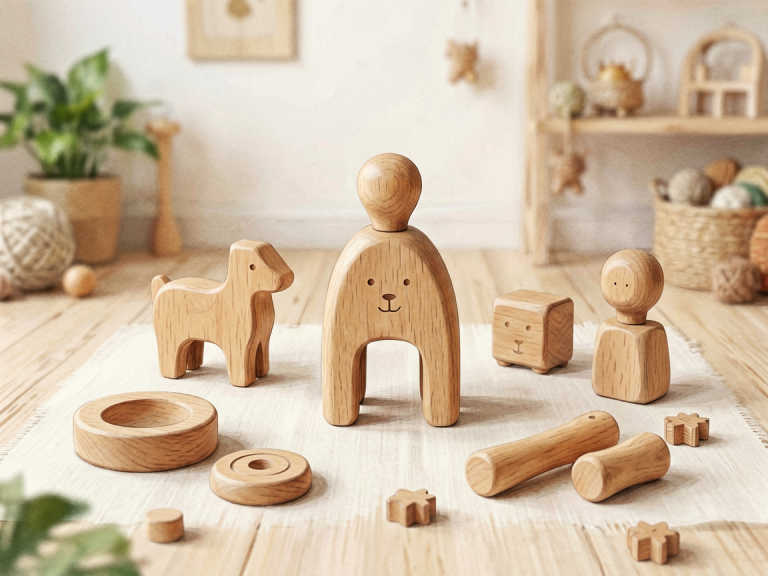
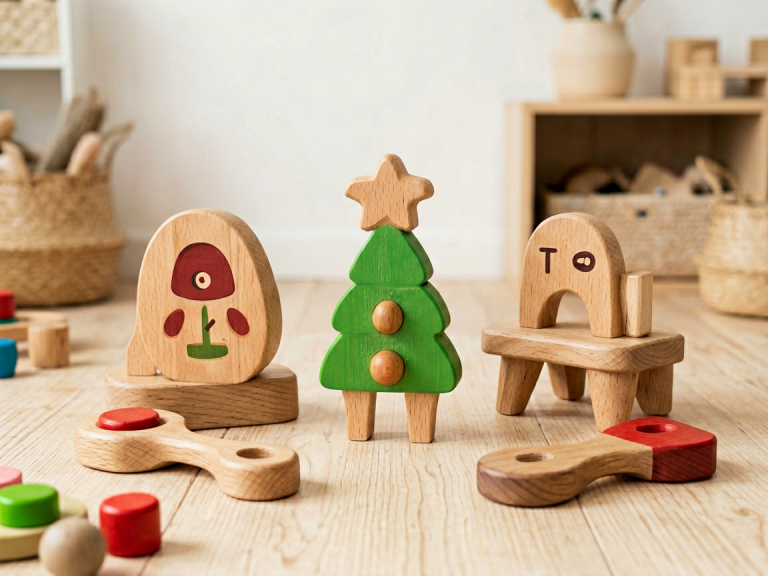
- A few open-ended building blocks: Wooden or silicone blocks of varying sizes encourage stacking, knocking down, sorting, and early geometry.
- One or two simple cause-and-effect toys: A ball that rolls when pushed, a jack-in-the-box, or a shape sorter with large, easy-to-grasp pieces.
- Sensory objects: A set of nesting cups, a teething ring with different textures, a crinkly fabric book, or a silicone spatula (babies love real kitchen tools).
- Push-and-pull toys: A wooden walker or a pull-along animal helps with gross motor development.
- A mirror and a soft doll: For social-emotional growth, one-year-olds benefit from seeing their own reflection and cuddling a simple, soft companion.
Notice what is missing: electronic gadgets, TV-linked toys, battery-operated singing items, and large, complex playsets. The key is that each toy should be used in multiple ways. A set of wooden rings can be stacked, worn as bracelets, rolled across the floor, hidden under a blanket, or chewed on. This versatility fosters creativity and extends the toy’s lifespan.
Furthermore, the environment itself matters. Rather than dumping all toys into a single bin, rotate them. Present only three to five options at a time, stored in low, accessible baskets. Every few weeks, swap out a few items. This “toy rotation” approach keeps novelty alive without overwhelming the child’s senses. It also teaches delayed gratification and helps the child develop a deeper relationship with each object.
—
Practical Tips for Parents: Resisting the Buy-More Urge
Resisting the commercial pressure to buy more is difficult, especially when grandparents, relatives, and friends also shower the child with gifts. Here are concrete strategies:
- Set a limit on the number of toys in the main play area. A good rule of thumb is no more than five to seven visible items for a one-year-old. The rest can be stored out of sight.
- Ask for experiences instead of things. For birthdays and holidays, request a membership to a children’s museum, swim lessons, or a simple picnic outing. These create memories without clutter.
- Borrow rather than buy. Many libraries have toy lending programs. For short-lived interests (e.g., a ride-on car), borrowing or buying secondhand makes sense.
- Observe your child’s play. Watch what they gravitate toward. Often, they ignore the expensive toy and burrow into a laundry basket or play with a wooden spoon. Trust those signals.
- Declutter regularly. Every few months, pass along toys that are no longer engaging. Other parents will appreciate them, and your child will have space for deeper play.
—
Conclusion: The Gift of Presence, Not Presents
One-year-olds do not need more toys. They need more *presence*—more time with a caregiver who is attentive, more space to explore at their own pace, and more opportunities to master simple objects through repetition. The best “toy” in a one-year-old’s life is a patient adult who sits on the floor, stacks blocks, and smiles when the tower falls down. In a culture that equates love with accumulation, it takes courage to resist the buy-more impulse. But the science is clear: fewer toys lead to more focused play, less stress, and stronger developmental outcomes. So the next time you reach for another brightly packaged toy, pause. Remember that for a one-year-old, the world itself is already a toy—and all they really need is room to discover it.