Montessori vs. STEM Toys for Preschoolers: Which Approach Best Nurtures a Lifelong Love of Learning?
The preschool years—typically ages three to five—are a period of extraordinary cognitive, social, and emotional growth. During this window, children’s brains are forming neural connections at a rate never to be repeated, making the quality of their play experiences profoundly influential. Parents and educators today are confronted with a dizzying array of toy options, but two pedagogical philosophies consistently rise to the top of the conversation: Montessori-inspired toys and STEM (Science, Technology, Engineering, and Mathematics) toys. Each promises to cultivate important skills, yet they spring from fundamentally different views of how young children learn. This article explores the core principles, developmental benefits, and practical considerations of both Montessori and STEM toys for preschoolers, offering a balanced guide to help families make informed choices.
Understanding Montessori Toys: Purposeful, Self-Correcting, and Grounded in Reality
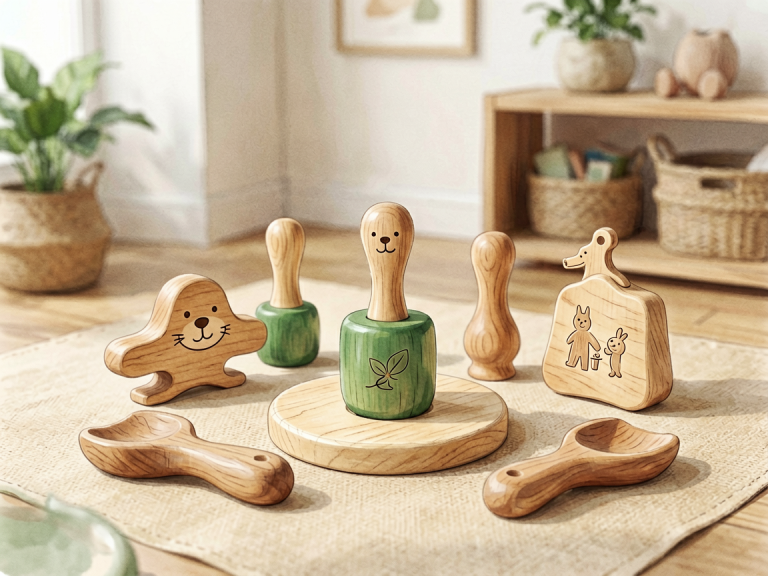
Montessori toys, often referred to as “materials” in Maria Montessori’s original methodology, are designed to support a child’s natural drive for independence, order, and concentration. Unlike conventional plastic battery-powered toys, Montessori items are usually made of natural materials such as wood, metal, and glass. They are intentionally simple, aesthetically pleasing, and isolate a single skill or concept.
Core Features of Montessori Toys for Preschoolers
A hallmark of Montessori materials is that they are *self-correcting*. A puzzle knob, for example, will only fit into its corresponding slot, giving the child immediate, non-verbal feedback. This eliminates the need for adult correction and fosters a sense of personal accomplishment. Another key feature is *purposeful activity*. A set of wooden stacking rings may help a toddler develop hand-eye coordination, but a Montessori “pouring work” with two small pitchers and a tray directly prepares a child for real-life tasks like pouring water or milk. For preschoolers, popular Montessori toys include bead chains for counting, sandpaper letters for tactile letter recognition, and “practical life” tools such as child-sized brooms or dressing frames with buttons and zippers.
Developmental Benefits
The Montessori approach respects the child’s individual pace. A three-year-old who is captivated by the pink tower—ten graduated cubes that must be stacked in perfect order from largest to smallest—may repeat the activity twenty times, perfecting her motor control and concentration. This repetition is not drudgery; it is deep learning. Research in developmental psychology supports the idea that unstructured, repetitive practice with concrete materials strengthens neural pathways more effectively than passive screen-based learning. Furthermore, Montessori toys nurture a sense of *order*. Because each material has a designated spot on the shelf and must be returned before taking out something new, children internalize routines that later translate into organizational skills in elementary school.
Potential Limitations for Modern Families
Montessori toys can be expensive due to their high-quality wood and precision manufacturing. They also require a prepared environment—low shelves, limited choices, and a clean, uncluttered space. In a typical household where toys are stored in large bins and the television is often on, implementing a pure Montessori approach can be challenging. Moreover, the philosophy deliberately avoids fantasy play (no talking animals or superheroes) until after age six, which some parents find overly restrictive for preschoolers who naturally love imaginative stories.
STEM Toys: Building Problem-Solving, Curiosity, and Early Technical Literacy
STEM toys for preschoolers have surged in popularity over the past decade, fueled by a cultural emphasis on preparing children for a technology-driven world. These toys aim to introduce foundational concepts in science, technology, engineering, and mathematics through hands-on, often interactive play.
Core Features of STEM Toys for Preschoolers
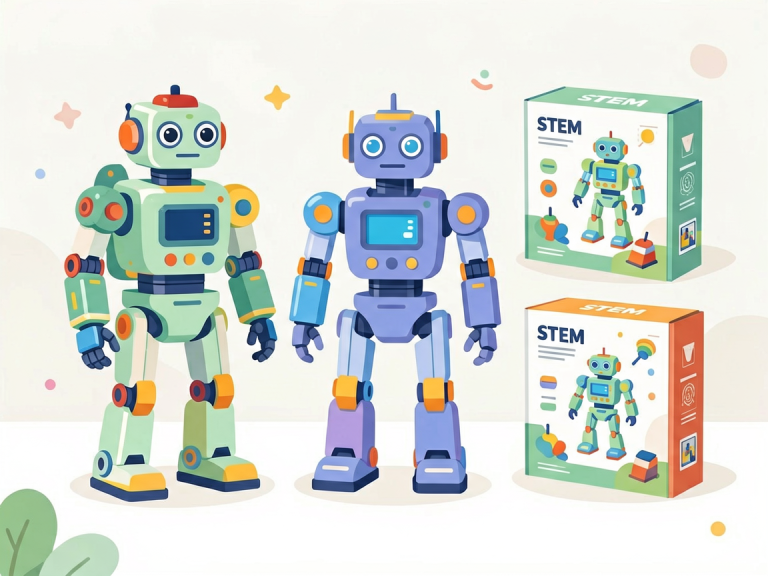
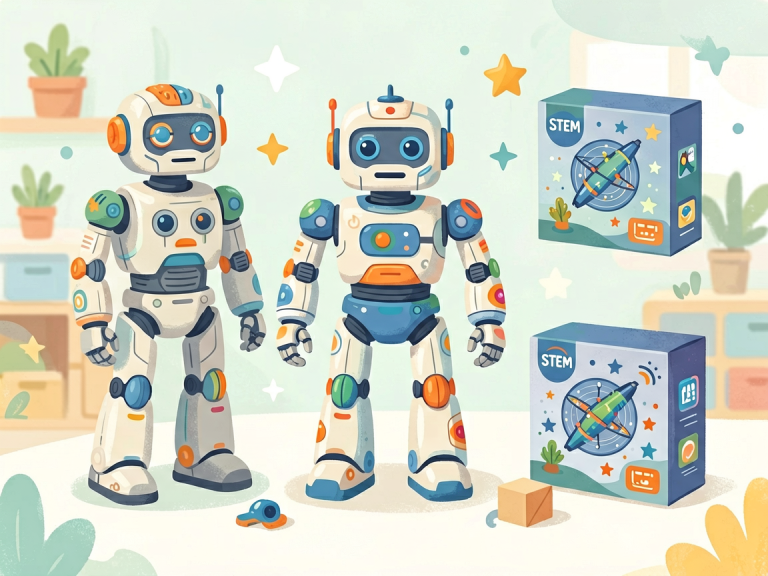
STEM toys come in many forms: magnetic building tiles, simple coding robots like Botley or Code-a-pillar, beginner chemistry kits with non-toxic substances, and construction sets like interlocking gears or marble runs. The common thread is that they encourage *inquiry-based exploration*. A child who connects two magnetic tiles and discovers that they repel each other is engaging in authentic scientific reasoning. Many STEM toys are also *open-ended*—a set of 100 magnetic blocks can be used to build a tower, a bridge, a car, or a spaceship, with no single “right” outcome. This open-endedness contrasts sharply with the single-solution structure of many Montessori materials.
Developmental Benefits
STEM toys excel at teaching cause and effect, spatial reasoning, and early numeracy. A preschooler who experiments with a marble run learns that gravity pulls the marble down, that the angle of a ramp affects speed, and that placing a tunnel changes the trajectory—all without a single worksheet. Research from the University of Chicago found that children who played with construction toys like blocks and gears showed stronger math skills at age four, regardless of socioeconomic background. Additionally, STEM toys often incorporate elements of *collaborative problem-solving*. Two children trying to build a stable bridge together must negotiate, share ideas, and learn from failure—a powerful social-emotional lesson.
Potential Limitations for STEM Toys
A major concern is the temptation to over-rely on electronic components. While some coding robots require a tablet or smartphone app, many experts caution against screen time for preschoolers. The American Academy of Pediatrics recommends no more than one hour per day of high-quality programming for children ages two to five, and even that should be co-viewed with a parent. A STEM toy that requires a glowing screen may undermine the very hands-on, sensory-rich experience that young children need. Furthermore, STEM toys can sometimes be marketed with a misleading emphasis on “making children smarter” or “teaching coding at age three,” which risks turning play into performance. If a child feels pressure to produce a correct result, the joy of discovery may be lost.
Comparing Philosophies: Montessori vs. STEM
At first glance, Montessori and STEM toys seem to occupy opposite ends of a spectrum—one rooted in the early 20th century, the other in the 21st; one quiet and contemplative, the other dynamic and often noisy. But they share a surprising number of commonalities. Both approaches prioritize hands-on learning over passive instruction. Both reject the idea that preschoolers need flashcards or drilling. And both believe that children learn best when they are intrinsically motivated.
Where They Diverge
The fundamental difference lies in *structure and purpose*. Montessori toys are designed to lead a child toward a specific, concrete understanding of a concept—the decimal system, for instance, is represented by golden bead materials that literally show ones, tens, hundreds, and thousands. The child’s role is to master the material through repeated, focused effort. STEM toys, by contrast, encourage *divergent thinking*: there is no predetermined endpoint. A set of magnetic tiles might inspire a child to build a rocket that can launch a LEGO figure, to create a pattern that mimics a mosaic, or to test how many tiles can be stacked before the tower collapses. This divergence reflects different educational goals: Montessori seeks to build a strong foundation in real-world skills and self-discipline; STEM seeks to cultivate innovation, experimentation, and adaptability.
Which Is “Better” for Preschoolers?
There is no universal answer. A child who thrives on routine, who enjoys mastering a task through repetition, and who can focus for extended periods may flourish with Montessori materials. Another child who is highly curious, easily bored by repetition, and constantly asking “what if” may respond better to open-ended STEM construction sets. Moreover, the best approach may change over the course of a single day. A preschooler might benefit from a morning of focused Montessori work—pouring water, tracing sandpaper letters—followed by an afternoon of free-form block building that combines elements of engineering and art.
Practical Recommendations for Parents and Educators
Given the strengths and weaknesses of both types of toys, the most effective strategy is often integration rather than opposition. Here are evidence-informed guidelines for selecting toys for preschoolers:
Look for Toys That Promote Active Engagement
Whether a toy is labeled Montessori or STEM, the critical question is: does it require the child to think, move, and manipulate? A simple wooden puzzle is excellent; a plastic shape-sorter with electronic sounds that cheers when the child gets it right is less beneficial because the reward is external. The self-correcting nature of Montessori materials is a gold standard here.
Prioritize Open-Endedness for Creativity
Some of the best toys for preschoolers blur the lines between categories. A set of Rainbow Wooden Blocks (often associated with Montessori) can be used for sorting by color, learning geometric shapes, and building structures—all of which are foundational STEM concepts. Similarly, a Brio train set (not strictly Montessori but often found in Montessori classrooms) introduces cause and effect, spatial reasoning, and early physics (a train will derail if the track is too steep). These hybrid toys offer the best of both worlds.
Limit Choices to Foster Deep Play
Both Montessori and STEM philosophies agree on one crucial point: overcrowding a child with too many toys undermines attention and creativity. Researchers at the University of Toledo found that toddlers who played with fewer toys (four, versus sixteen) engaged in longer, more creative play sessions. So whether you are selecting Montessori materials or STEM kits, rotate them. Keep just a few accessible at a time, and swap them out every week or two.
Incorporate Real Tools and Materials
One of the most powerful things you can do for a preschooler is to skip the “toy” version and offer real, safe tools. A child can help measure flour with a real measuring cup (math), watch an ice cube melt in a bowl (science), or use a pair of child-safe scissors to cut paper (engineering of fine motor precision). These everyday activities are the original STEM and the original Montessori.
Respect the Child’s Individual Development
No toy, however cleverly designed, can replace a warm, responsive caregiver who observes the child’s interests and provides just enough challenge. A preschooler who is struggling with a complex gear set may need a simpler version, while one who has mastered a Montessori knobbed cylinder block should be offered the next step in the progression. Both Montessori and STEM toys are most effective when used as tools for observation, not as prescriptions for achievement.
Conclusion
The conversation around Montessori versus STEM toys for preschoolers need not be a zero-sum debate. A Montessori wooden number rod and a magnetic tile set both have a rightful place in a child’s playroom. The former builds a deep, tactile understanding of quantity and order; the latter encourages flexible thinking and problem-solving under open-ended conditions. What matters most is that the child is engaged, that the play is self-directed, and that the environment supports exploration without pressure. In the end, the best toy for a preschooler is one that inspires wonder—whether that wonder comes from the quiet satisfaction of stacking ten cubes perfectly in a row, or from the thrill of watching a marble race down a looping track. Both are beautiful, both are learning, and both are exactly what a four-year-old needs.