Are Magnetic Tiles a Good Toy Choice? A Comprehensive Evaluation
Introduction: The Rise of Magnetic Tiles in Modern Playrooms
In recent years, magnetic tiles have become a staple in many households, preschools, and early-learning centers. These colorful, translucent geometric pieces, which snap together via embedded magnets, are often marketed as STEM toys that foster creativity, spatial reasoning, and fine motor skills. But with so many toy options available, parents and educators frequently ask: *Are magnetic tiles truly a good toy choice?* To answer this question, we must examine their educational value, developmental benefits, safety profile, age appropriateness, and potential drawbacks. This article provides a thorough, evidence-based evaluation to help you make an informed decision.
Educational Benefits: A Gateway to Early STEM Learning
One of the strongest arguments in favor of magnetic tiles is their ability to introduce foundational STEM concepts in a playful, hands-on manner. When children build a simple cube, a bridge, or a tower, they are intuitively exploring geometry, symmetry, and balance. The magnetic force itself becomes a tangible lesson in physics — children quickly learn that like poles repel and opposite poles attract, often experimenting with different orientations. Moreover, the translucent colors allow for light exploration (e.g., placing them on a window or light table), which can lead to discussions about color mixing and light transmission.
Research in early childhood education consistently emphasizes the importance of open-ended play. Unlike many battery-powered toys that dictate a single correct use, magnetic tiles have no prescribed outcome. A child can build a castle one day and a rocket ship the next, or simply sort the pieces by shape and color. This flexibility encourages divergent thinking and problem-solving. For older children (ages 5–8), magnetic tiles can be integrated into math lessons: counting sides, understanding fractions (e.g., two small squares make a rectangle), or exploring 2D-to-3D transformations. In this sense, magnetic tiles serve as a bridge between concrete manipulation and abstract reasoning.
Developmental Impact: Fine Motor, Spatial, and Social Skills
Another critical dimension is the developmental impact on fine motor skills. Picking up small triangular or square tiles, aligning them precisely, and pressing them together requires hand-eye coordination and finger dexterity. For toddlers and preschoolers, this repeated practice strengthens the small muscles of the hand, which is essential for later tasks like writing and buttoning.
Spatial reasoning — the ability to mentally visualize and manipulate objects in space — is a cognitive skill strongly correlated with success in mathematics and engineering fields. A study published in *Child Development* found that children who engaged in construction play, including magnetic building sets, performed better on spatial transformation tasks. When a child attempts to build a three-dimensional shape from a two-dimensional diagram, or when they rotate a piece to fit into a corner, they are exercising visuospatial skills in a low-stakes, enjoyable environment.
Socially, magnetic tiles are an excellent tool for cooperative play. When two or more children build together, they must negotiate roles, share pieces, and resolve conflicts (e.g., “Can I use the blue square?”). They also learn to communicate their ideas: “I think we need a triangle here to make a roof.” This peer interaction fosters language development, empathy, and teamwork. In classroom settings, teachers often use magnetic tiles for collaborative projects, making them a versatile resource for both free play and structured group activities.
Safety Considerations: Are Magnetic Tiles Safe?
Safety is a paramount concern for any children’s toy. High-quality magnetic tiles, such as those from reputable brands like Magna-Tiles, PicassoTiles, or Connetix, are designed with enclosed magnets — the magnets are fully sealed inside sturdy plastic, preventing accidental swallowing. This is crucial because if a child were to ingest small, powerful magnets (as can happen with loose magnetic balls), the consequences could be severe, including intestinal perforation. However, magnetic tiles are generally considered safe *provided* they meet two conditions: (1) the magnets are securely encased, and (2) the tiles are large enough (typically 2–3 inches on each side) to pose no choking hazard.
The American Academy of Pediatrics recommends that loose magnets and small magnetic parts be kept away from children under three years old. For magnetic tiles, most manufacturers suggest ages 3 and up. However, many parents introduce them earlier under strict supervision. It is also worth noting that the plastic used in magnetic tiles is typically BPA-free and phthalate-free, though not all budget brands adhere to the same safety standards. Always look for certifications such as ASTM (American Society for Testing and Materials) or CE marking (European conformity).
Age Appropriateness: Who Benefits Most?
Magnetic tiles are most beneficial for children between the ages of 3 and 8. Toddlers (ages 18–36 months) can enjoy stacking and knocking down simple towers, but they may lack the fine motor control to connect tiles at precise angles. Plus, they are more likely to mouth objects, so adult supervision is essential. For preschoolers (ages 3–5), the tiles offer a perfect challenge: simple structures are easily achieved, giving a sense of accomplishment, while more complex builds (like a 3D castle with arches) provide an engaging challenge. Early elementary children (ages 6–8) can incorporate tiles into STEM challenges: building a bridge that supports weight, creating a geodesic dome, or learning about magnetic polarity.
Teenagers and adults may also find magnetic tiles satisfying for stress relief or architectural modeling, but the primary audience remains young children. Some advanced sets include wheels, hinges, or LED lights, extending the play value to age 10 or beyond.
Potential Drawbacks: Limitations and Alternatives
Despite their many merits, magnetic tiles are not without drawbacks. The most common complaint is their cost. A quality starter set of 100 pieces can cost $70–$120, and larger sets easily exceed $200. While they are durable (many families keep them for years), the upfront investment is significant compared to cheaper building blocks like LEGO Duplo or wooden blocks.
Another limitation is that magnetic tiles are somewhat limited in structural complexity compared to traditional interlocking bricks. Because the magnets only connect along flat edges, you cannot create the intricate, load-bearing designs possible with LEGO or K’Nex. Some children may become frustrated when a tall tower collapses because the magnetic connection is weaker than a physical snap-fit. However, this can also be a learning opportunity about stability and center of gravity.
Additionally, some parents worry about screen time replacement. While magnetic tiles are a healthy, screen-free alternative, they cannot replace all types of play. Children still need outdoor physical activity, pretend play with dolls or action figures, and artistic expression. Magnetic tiles are a wonderful supplement to a well-rounded toy collection, but they should not be the only option.
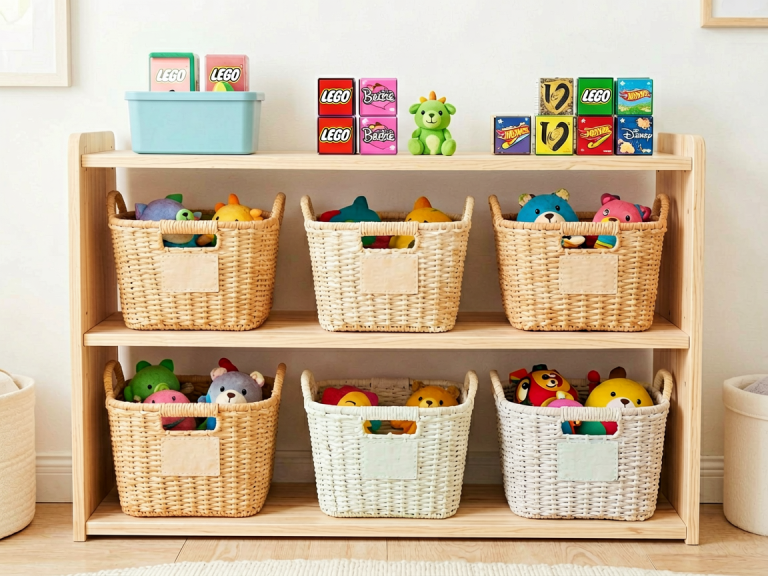
Finally, there is the issue of storage. Magnetic tiles can be bulky, and without proper organization, pieces easily get lost. Investing in a storage bin or a mesh bag is almost necessary to keep the set intact.
Conclusion: A Worthy Investment When Chosen Wisely
So, are magnetic tiles a good toy choice? The answer is a resounding *yes* for most families, provided they are used within the appropriate developmental window and sourced from reputable manufacturers. Their open-ended nature, rich educational value, and ability to engage multiple senses make them a powerful tool for learning and fun. They encourage persistence (building and rebuilding after collapses), creativity (unlimited designs), and social interaction. The safety record of well-made tiles is excellent, and the durability ensures years of use.
However, parents should weigh the cost and consider their child’s interests. If a child already shows a passion for construction and building, magnetic tiles are a natural fit. For a child who prefers dramatic play or sports, they might sit on a shelf. In that case, borrowing a set from a library or a friend could be a smart way to test interest before committing.
In an era where digital distractions are everywhere, magnetic tiles offer a refreshing, hands-on, and cognitively stimulating experience. They are not just a toy; they are a platform for growth. Therefore, with thoughtful selection and reasonable expectations, magnetic tiles are indeed a very good toy choice — one that supports learning, creativity, and joyful play.