are LEGO style bricks good for gross motor skills
Building Big: How LEGO-Style Bricks Can Surprise You by Enhancing Gross Motor Skills
Introduction
When most people think of LEGO-style bricks, they picture tiny plastic studs that require nimble fingers and precise hand-eye coordination. This image naturally leads to the assumption that such bricks are primarily tools for developing fine motor skills. However, the question “Are LEGO-style bricks good for gross motor skills?” invites a more nuanced exploration. Gross motor skills involve the large muscle groups used for actions like walking, jumping, lifting, and balancing. At first glance, sitting at a table snapping small bricks together seems unrelated to these big movements. Yet, when we consider the diverse ways children and even adults interact with LEGO-style bricks—from sorting buckets of chunky Duplo blocks to constructing life-sized models—it becomes clear that these versatile toys can indeed contribute meaningfully to gross motor development. This article examines the evidence and practical scenarios that reveal how LEGO-style bricks, especially when used in larger formats or combined with active play, support the strengthening of large muscles, coordination, and spatial awareness.
1. Understanding Gross Motor Skills and Their Importance
Gross motor skills are the foundation of almost all physical activity. They involve the coordinated movement of the arms, legs, torso, and feet, and they underpin abilities such as running, climbing, throwing, and maintaining posture. Developing these skills in early childhood is critical not only for physical health but also for cognitive and social growth. Children with strong gross motor skills tend to have better balance, greater confidence in physical play, and improved ability to participate in sports and group activities. Typically, gross motor development is nurtured through activities like crawling, ball games, tricycle riding, and playground climbing. Yet, any activity that requires a child to lift, carry, stretch, squat, or shift their body weight can contribute. The question is whether a toy traditionally associated with tabletop precision can also serve this function.
2. The Traditional Association: Fine Motor Skills vs. Gross Motor Skills
It is no secret that standard LEGO bricks—the classic 2×4 studs and small specialty pieces—are superb for fine motor development. Picking up a 1×1 brick and pressing it onto another demands a pincer grasp, controlled finger pressure, and visual-motor integration. Occupational therapists frequently recommend LEGO-based activities for children with fine motor delays. However, this very specificity has led many to dismiss LEGO as irrelevant for gross motor skill building. Such a view overlooks the fact that the way a toy is used often determines its developmental impact. For instance, a child who sits for an hour assembling a tiny model uses only small muscles. But the same child, when given a set of large Duplo blocks and asked to build a tower as tall as themselves, naturally engages the whole body. Therefore, the key is not the brick itself, but the context, scale, and movement pattern involved.
3. Beyond Fine Motor: How Large-Scale Building Engages the Whole Body
When children engage in large-scale building projects—those that involve stacking bricks into structures over a meter tall, or creating forts, ramps, or obstacle courses—they must use their large muscle groups. Lifting a bucket of bricks requires shoulder and core strength. Reaching to place a block on top of a swaying tower demands stability through the legs and trunk. Squatting to pick up fallen pieces works the quadriceps and glutes. Carrying a heavy bin of bricks across the room is a walking and balancing exercise. Even the simple act of stepping over or around scattered blocks on the floor challenges dynamic balance. Moreover, collaborative building projects often involve children moving around the play space, fetching bricks, and adjusting their postures to work from different angles. These activities are not merely play; they are functional gross motor workouts that mimic the movements required in sports and daily life.
4. The Role of Bigger Bricks: Duplo and Jumbo Blocks
One of the most direct ways LEGO-style bricks promote gross motor skills is through the availability of larger formats. Duplo blocks, designed for toddlers, are twice the size of standard LEGO bricks. Their chunky shape requires a whole-hand grasp rather than a precise pinch, which is a gross motor action (often called a “palmar grasp”). To snap two large Duplo bricks together, a young child must apply significant force from the arm and shoulder, not just the fingers. Similarly, jumbo LEGO blocks, sometimes as large as a child’s forearm, demand bilateral coordination (using both hands together) and trunk rotation. Lining up a row of such bricks on the floor engages the core as the child bends and twists. Even stepping onto or over a line of large bricks can be incorporated into a movement game. Thus, the size of the brick directly influences which muscle groups are activated, making larger formats excellent tools for gross motor practice.
5. Creative Play Scenarios That Promote Gross Motor Development
The most effective gross motor benefits come from imaginative play scenarios that turn brick-building into active movement. For example, a child might decide to build a “racetrack” across the living room floor using large flat baseplates and brick walls. To test the track, they may crawl alongside it, push toy cars, or even jump over sections. Another scenario is building a “balance beam” from a line of tall bricks and then walking along it, challenging equilibrium. Stacking bricks into a “mountain” that must be climbed over (using pillows and cushions for safety) involves climbing and stepping motions. Even cleanup time becomes gross motor work: sorting bricks by color into bins requires bending, reaching, and carrying. Many occupational therapists now incorporate “heavy work” activities involving brick bins, such as pushing a box of bricks across a room or lifting a basket onto a shelf, to help children with sensory processing needs. In all these cases, the humble brick becomes a prop for whole-body movement.
6. Comparing LEGO-Style Bricks with Other Gross Motor Toys
To evaluate whether LEGO-style bricks are *good* for gross motor skills, it helps to compare them with traditional gross motor toys like balls, tricycles, climbing frames, and large interlocking foam blocks. Unlike a ball that primarily encourages throwing and catching (which are dynamic gross motor skills), bricks invite a slower, more deliberate type of movement—lifting, placing, stabilizing, and carrying. This makes them excellent for building muscle endurance and postural control rather than speed or agility. In contrast to a climbing frame that focuses on vertical movement, bricks allow for horizontal, vertical, and diagonal building patterns, offering varied movement planes. While a slide or swing primarily works the lower body, a building project with large bricks engages the upper body, core, and lower body in an integrated way. That said, bricks cannot replace the cardiovascular benefits of running and jumping. However, when used intentionally as part of a “movement circuit” or combined with other toys, they complement gross motor development uniquely.
7. Practical Tips for Parents and Educators
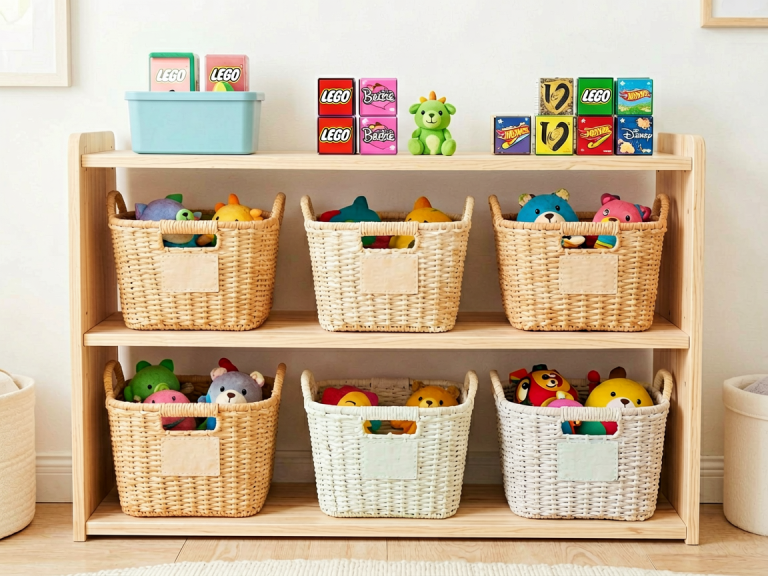
To maximize the gross motor benefits of LEGO-style bricks, adults should consider the following strategies. First, provide bricks in a range of sizes, including Duplo, Mega Bloks, and extra-large building blocks, so children of different ages and abilities can experience varied grasps and lifting demands. Second, create a designated building space on the floor rather than at a table, because floor play naturally encourages crawling, kneeling, squatting, and sprawling positions. Third, set challenges that require standing and stretching, such as “Can you build a tower as tall as you are?” or “Make a bridge you can crawl under.” Fourth, incorporate movement games like “brick relay races” where teams carry bricks from one end of a room to another. Fifth, use bricks as obstacles for stepping over or jumping across, promoting balance and coordination. Finally, allow children to carry their own brick bins—this is a functional strength exercise that builds arm and core muscles. With these simple modifications, the same bricks that hone fine motor skills can simultaneously build gross motor prowess.
8. Conclusion
Returning to the original question: Are LEGO-style bricks good for gross motor skills? The answer is yes, but with conditions. Standard small bricks alone, when used exclusively in a seated position, offer minimal gross motor engagement. However, when children are given large-size bricks, encouraged to build on the floor, and prompted to engage in active, whole-body play scenarios, these versatile toys become powerful tools for developing large muscle groups, balance, coordination, and spatial awareness. Far from being confined to the domain of fine motor skill practice, LEGO-style bricks can surprise us by contributing to a well-rounded physical development program. For parents and educators seeking toys that grow with a child and support multiple skill domains, investing in a varied collection of brick sizes and intentionally designing movement-rich activities is a smart, evidence-informed choice. In the end, it is not the brick itself but how we play with it that determines its impact—and when played with actively, LEGO-style bricks certainly earn their place in the gross motor toolkit.
*(Word count: approximately 1,150 words)*