LEGO-Style Bricks for a 6-Month-Old: A Comprehensive Guide for Parents
Introduction
The question "Should I buy LEGO-style bricks for my 6-month-old?" is one that many eager parents ask, driven by a desire to stimulate early development and introduce classic toys that promise creativity and fine motor skill growth. The image of a baby happily stacking colorful blocks is undeniably charming. However, when it comes to infants who are just beginning to sit up, grasp objects, and explore the world primarily through their mouths, the answer is far from straightforward. While LEGO and similar building bricks are beloved staples for older toddlers and children, the specific needs, safety concerns, and developmental capabilities of a 6-month-old demand a careful, evidence-based examination. This article will delve into the developmental milestones of a half-year-old baby, weigh the potential benefits and significant risks of offering them LEGO-style bricks, explore safer alternatives, and provide actionable, expert-backed advice for parents navigating this decision. By the end, you will have a clear understanding of whether those iconic plastic bricks belong in your infant’s toy basket—or whether it’s best to wait a little longer.
Understanding Your 6-Month-Old’s Developmental Needs
Sensory Exploration and the Oral Stage
At six months, a baby is a whirlwind of sensory discovery. This is the age when infants are transitioning from simply observing the world to actively engaging with it through touch, taste, sight, and sound. According to pediatric developmental theories, particularly those rooted in Jean Piaget’s sensorimotor stage, babies at this age learn primarily by interacting with objects using their senses and motor actions. One of the most dominant behaviors is mouthing. Infants explore texture, temperature, and shape by putting everything—toys, fingers, furniture—into their mouths. This oral exploration is not a bad habit but a critical neurological process that helps map out the world. Any toy intended for a 6-month-old must be safe for this inevitable and essential mouthing. LEGO-style bricks, even the larger Duplo variety, are typically recommended for children aged 18 months and up, precisely because their shape, size, and material properties are not designed for the intense oral and sensory demands of a younger infant.
Fine Motor and Gross Motor Milestones
A 6-month-old’s motor abilities are rapidly evolving. Most babies can sit with support, and some may sit independently for short periods. They are developing the palmar grasp, where they use their whole hand to scoop up objects, though the pincer grasp (thumb and forefinger) is still months away. Hand-eye coordination is improving, but it remains crude. A baby at this age might bat at a dangling toy or clumsily pass a rattle from one hand to another. The ability to intentionally stack, connect, or even purposefully place small objects (like LEGO bricks) is far beyond their current capacity. Instead, they will likely drop, throw, bang, and—most concerning—attempt to swallow anything small enough to fit in their mouths. The developmental mismatch between the fine motor precision required for LEGO play and the actual abilities of a 6-month-old is a primary reason why these toys are not recommended for this age group. Their play is about *sensory input and cause-and-effect feedback*, not constructive assembly.
The Risks of LEGO-Style Bricks for Infants
Choking and Aspiration Hazards
The most immediate and serious risk is choking. LEGO bricks, even the standard 2×2 block, are small enough to become lodged in an infant’s airway. The American Academy of Pediatrics (AAP) and the Consumer Product Safety Commission (CPSC) have strict guidelines for toys intended for children under three: they must be large enough that they cannot fit through a standard choke tube (approximately 1.25 inches in diameter). Standard LEGO bricks, measuring about 0.75 inches in width and 0.5 inches in height, pose a clear choking risk. Duplo bricks, being larger (approximately 1.25 inches in length and 1.25 inches in width, though thinner in height), are safer in terms of size, but they are still not designed for infants who mouth everything. Moreover, LEGO sets include many smaller accessories—wheels, mini-figures, flowers, flags—that are extremely hazardous. A 6-month-old who grabs a handful of bricks is highly likely to put them in their mouth. Even with constant adult supervision, a moment of distraction can have devastating consequences. The risk is simply too high to justify.
Chemical and Physical Safety Concerns
Beyond size, the material composition of LEGO bricks raises questions for very young infants. While LEGO has long phased out harmful substances like phthalates and BPA in its products, the plastic itself is manufactured from acrylonitrile butadiene styrene (ABS). ABS is generally considered safe for older children who are not mouthing toys extensively. However, for a baby who will gnaw, suck, and drool on a toy for hours, there is a concern about microplastic ingestion and the potential release of trace chemicals when the plastic is repeatedly chewed. Furthermore, LEGO bricks have sharp edges and corners that can cause gum injuries or scratches inside the mouth. The bricks are also quite hard; if a baby falls or rolls onto a pile of bricks, they could sustain bruises or cuts. Lastly, small LEGO pieces like rods or hinges can break off—though LEGO is durable, it is not indestructible, and cracked bricks can create sharp edges or tiny parts that become new choking hazards.
Developmental Mismatch and Frustration
From a developmental perspective, offering LEGO-style bricks to a 6-month-old can be counterproductive. Infants at this age thrive on toys that respond to their actions in simple, predictable ways: a rattle that makes noise when shaken, a ball that rolls away, a soft book that crinkles. LEGO bricks require specific fine motor coordination and cognitive understanding of connecting and stacking—skills that won’t emerge until around 12 to 18 months. Handing a baby bricks may result in frustration when they cannot make the blocks stay together, leading to tears or disinterest. Worse, it might encourage throwing or scattering, which, while entertaining, does not build the intended skills. The baby might simply mouth the brick, drop it, and move on. Meanwhile, the parent may feel disappointed that their expensive “educational” toy is being ignored. The money could be better spent on age-appropriate sensory items that actually support the baby’s current developmental stage.
Potential Benefits? A Closer Look
Sensory Stimulation: Color and Texture
It is true that LEGO bricks offer vibrant colors and distinct textures—two things that appeal to infant vision and touch. A 6-month-old’s color vision is nearly mature, and they are drawn to high-contrast hues like red, yellow, and blue. The smooth surface and precise edges of LEGO bricks provide interesting tactile feedback. However, these same sensory benefits can be achieved with safer, larger, and more infant-friendly toys. For example, a set of large, soft, plush blocks in primary colors provides similar visual and tactile stimulation without the choking risk. Oball-style rattles with colorful plastic rings also mimic the sensory variety. The unique “click” sound of two LEGO bricks snapping together is indeed engaging, but again, a simple bell inside a soft cube achieves a similar auditory reward. The potential sensory benefit of LEGO bricks is not unique enough to outweigh the safety hazards.
Cause and Effect: Dropping and Banging
Another argument for LEGO bricks is that they teach cause and effect: when dropped, they make a sound; when banged together, they clack. These are valid learning experiences for a 6-month-old. However, again, these same cause-and-effect lessons can be taught with objects that are purpose-made for infants, such as stacking cups, wooden rings on a post, or activity tables with buttons and levers. The risk of a baby accidentally breaking a LEGO brick by dropping it (unlikely) or swallowing a small detached piece (much more likely) is not worth the marginal learning gain. Moreover, a 6-month-old does not need to “learn” about cause and effect through precisely snapped-together plastic blocks; they learn it through everyday interactions with rattles, balls, and even household items (safe kitchen spoons and plastic bowls) under supervision.
The Myth of “Early Exposure” to STEM
Some parents believe that introducing building toys early will foster engineering and problem-solving skills. This is a misconception. The cognitive ability to plan, visualize spatial relationships, and execute constructive play is not present at six months. Early exposure is not the same as early learning; development follows a predictable sequence. Forcing a toy before a baby is ready does not accelerate skills—it often leads to frustration. In fact, research in child development suggests that “overstimulation” with inappropriate toys can actually hinder natural exploration, as the baby may become overwhelmed or disengaged. The best toys for a 6-month-old are those that meet them where they are developmentally, not those that push them toward a future milestone.
Safer Alternatives for Sensory and Motor Play
Soft Building Blocks and Fabric Cubes
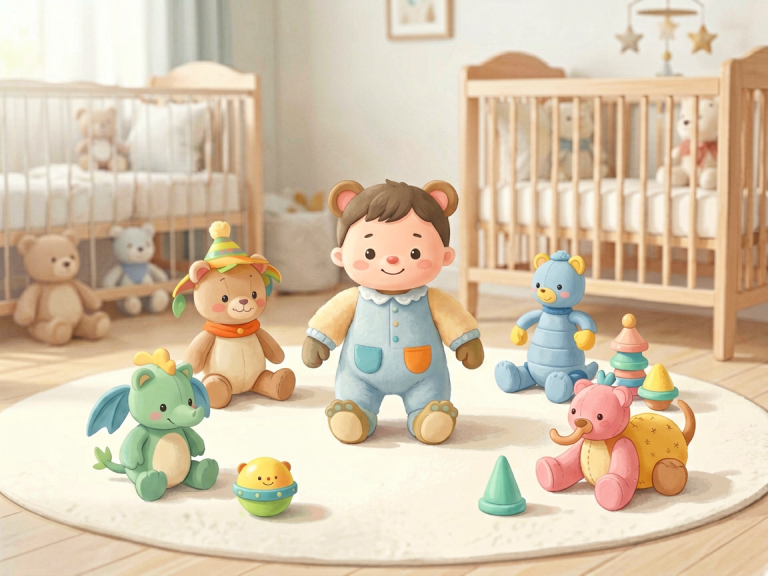
Instead of hard plastic bricks, consider large, soft building blocks made of foam or fabric. Many brands offer blocks that are lightweight, washable, and too large to swallow (typically 4-5 inches in size). These allow the baby to practice grasping, banging, and even mouthing safely. They also have the advantage of being quiet and gentle if the baby falls on them. Some fabric blocks include hidden crinkle paper, squeakers, or mirrors to boost sensory engagement without the hazards.
Rings, Rattles, and Teethers
For fine motor development, a 6-month-old benefits more from rings of different textures (like the Oball brand or silicone teething rings) that are easy to hold and mouth. Teethers designed specifically for this age are often made of food-grade silicone or soft rubber, are large enough to prevent choking, and can be chilled for soothing sore gums. Rattles with beads inside encourage visual tracking and cause-and-effect understanding. These items target the same developmental domains—grasping, shaking, mouthing, and listening—that LEGO bricks would, but with built-in safety.
Activity Gyms and Play Mats
An activity gym with dangling toys, mirrors, and different textures provides an ideal environment for a 6-month-old who is spending time on their back or tummy. The baby can reach, bat, and kick, strengthening muscles and coordination without the risk of small parts. This type of play is far more developmentally appropriate than sitting with a pile of bricks.
Stacking Cups and Simple Nesting Toys
Stacking cups are a classic and safe alternative. They are large, have smooth edges, and can be nested inside each other or stacked upside down. A 6-month-old can knock down a tower, which teaches cause and effect, and later (around 12-18 months) will begin stacking them. This toy grows with the child, making it a much better investment than LEGO bricks at this stage.
Guidelines for Introducing Building Blocks Later
The Right Age for LEGO Duplo
When should you consider introducing building bricks? The general recommendation from child development experts is to wait until at least 18 months for Duplo (the larger LEGO line). At that age, a toddler has greater fine motor control, understands the concept of stacking, and, crucially, has mostly outgrown the intense oral exploration phase. Even then, supervision is required, especially when any small accessories are present. Standard LEGO bricks (the classic small size) are typically appropriate from age 4, as the choking risk persists for younger children.
How to Introduce at 18–24 Months
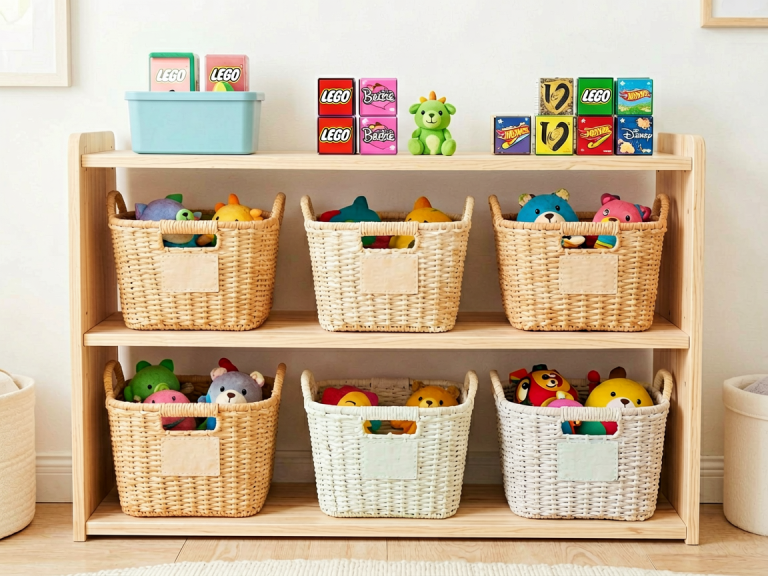
When the time comes, start with a small set of Duplo bricks (perhaps 20–30 pieces in basic shapes and colors). Demonstrate how to push the bricks together and pull them apart. Encourage unstructured play rather than modeling specific structures. Let the toddler explore freely—they will likely start by knocking down towers before building them. Provide positive reinforcement and avoid pushing for “correct” use. Keep the play area free of small parts that could be swallowed. Consider purchasing a storage bin that is easy for little hands to open, teaching cleanup habits from an early age.
Signs Your Child Is Ready
Look for signs that your child has the motor control and understanding needed: they can stack two or three large blocks (like wooden cubes) without help; they show interest in attaching objects (e.g., trying to snap Duplo together even if unsuccessful); they no longer habitually put everything in their mouth; and they can follow simple instructions like “push” or “pull.” If your child still mouths non-food objects frequently, wait a few more months.
Conclusion
The answer to the question “Should I buy LEGO-style bricks for my 6-month-old?” is a clear and definitive no. While the intention behind this purchase—to support early learning and development—is admirable, the risks far outweigh any potential benefits for a baby at this age. The choking hazard, the lack of age-appropriate design, the prevalence of mouthing behavior, and the developmental mismatch all point to the same conclusion: save your money and choose safer, more suitable toys that actually meet your infant’s current needs.
Instead of focusing on bricks, invest in soft building blocks, textured teethers, rattles, stacking cups, and activity gyms that will provide rich sensory experiences without compromising safety. Remember that the best toy for a 6-month-old is one that engages their senses, encourages movement (rolling, reaching, sitting), and can be safely mouthed. The time for LEGO will come—perhaps as early as 18 to 24 months with Duplo—but for now, let your little one explore the world through play that is as safe as it is joyful. Your baby’s development will not be delayed by waiting; on the contrary, it will flourish when their play is perfectly aligned with their readiness. So, resist the siren call of those bright plastic bricks and embrace the beautiful, messy, and wonderfully simple play that belongs to infancy.