Introduction
Title: Are Science Kits Worth It for 12-Year-Olds? A Balanced Exploration of Educational Value, Engagement, and Practical Considerations
Walk into any toy store, educational supply shop, or browse online marketplaces, and you will be met with a dazzling array of science kits. From crystal-growing experiments to robotic arms, chemistry sets to circuit-building labs, these products promise to transform a child's bedroom into a miniature laboratory. For parents and educators of 12-year-olds, the question often arises: are these kits genuinely worth the investment? At an age where children are transitioning from concrete to more abstract thinking, and where academic interests begin to solidify, a well-chosen science kit can be a powerful tool. Yet, skeptics point to the risk of mess, short-lived novelty, and the potential for kits to oversimplify complex topics. This article examines both sides of the coin, offering a nuanced perspective on the value of science kits for 12-year-olds, with particular attention to developmental appropriateness, educational outcomes, cost-effectiveness, and alternatives.
The Appeal of Science Kits: Hands-On Learning and Intrinsic Motivation
One of the strongest arguments in favor of science kits is their ability to provide hands-on, experiential learning. Research in educational psychology consistently shows that active engagement with materials improves retention and understanding, especially in STEM fields. For a 12-year-old, turning a theoretical concept—like chemical reactions or electrical circuits—into something tactile and visual can be transformative. A science kit does not simply tell a child that vinegar and baking soda produce carbon dioxide; it lets them see the fizz, feel the temperature change, and observe the reaction in real time. This sensory experience creates a lasting memory that a textbook paragraph can rarely replicate.
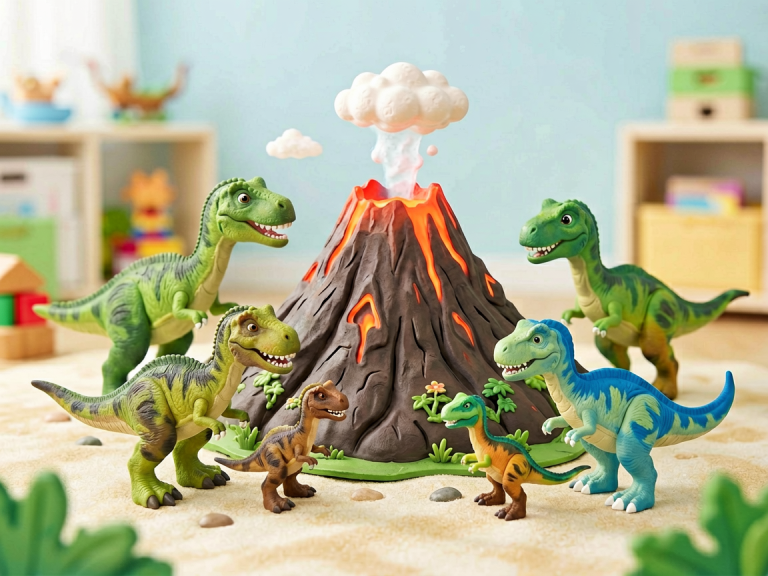
Moreover, science kits often tap into a child's intrinsic motivation. The promise of building a working volcano, extracting DNA from a strawberry, or constructing a solar-powered car can spark curiosity that leads to deeper exploration. At age 12, many young people are beginning to question how the world works and to develop personal interests outside of school requirements. A well-designed kit can serve as a gateway, showing them that science is not just a school subject but a way of understanding and creating. This autonomy-driven learning—where the child chooses to engage because they are genuinely interested—is one of the most powerful forms of education. When a kit includes a clear goal (e.g., "Build a working telegraph") and allows for some open-ended experimentation, it can foster patience, problem-solving skills, and even resilience when experiments fail.
Educational Benefits: Alignment with Curriculum and Critical Thinking
Another key advantage of science kits for 12-year-olds is their potential to supplement or enrich formal science education. In many school systems, the science curriculum for this age group covers topics such as physics (forces, energy, simple machines), chemistry (states of matter, chemical reactions), and biology (cells, ecosystems, human body systems). A science kit that directly aligns with these subjects can reinforce classroom learning in a low-pressure, enjoyable environment. For instance, a kit focused on building simple machines (levers, pulleys, gears) can make abstract concepts like mechanical advantage concrete. A chemistry kit with safe, guided experiments can help a child understand the difference between physical and chemical changes before they even see those terms on a test.
Additionally, many high-quality kits introduce scientific method fundamentals. They require the child to follow instructions, make observations, record data, and sometimes repeat steps to achieve desired results. These skills—hypothesis formation, measurement, error analysis—are foundational for any future scientist or engineer, but they also benefit all children by cultivating a systematic, evidence-based approach to problem-solving. Some kits even include extension activities that challenge the user to modify the experiment, thereby encouraging creativity and critical thinking beyond simple assembly. For example, a kit for building a simple radio might ask, "What happens if you change the antenna length?" This kind of prompt pushes a child to think like a real engineer, not just a consumer following directions.
Potential Drawbacks: Cost, Mess, and the Shelf-Life Problem
Despite their many benefits, science kits are not without significant drawbacks. The most obvious is cost. A high-quality science kit can range from $30 to over $100, and many families may not have the budget to invest in multiple kits throughout the year. Moreover, kits often contain materials that are used once and then exhausted—the chemicals are consumed, the batteries run out, the components are glued or assembled permanently. This "one-and-done" nature can make them feel wasteful and expensive per use. Even reusable kits, like those with electronic breadboards or microscope slides, may require additional purchases (e.g., more chemicals, replacement parts) to maintain engagement.
Another common complaint is mess and parental involvement. Many science kits require adult supervision, especially when they involve chemicals, heat, or small parts. For a busy parent, the prospect of supervising a potentially messy experiment after a long day at work can be daunting. A failed experiment—spilled liquids, broken components—can lead to frustration rather than learning. Additionally, some kits promise dramatic results but deliver disappointing outcomes, either because the instructions are unclear or the materials are low-quality. This can discourage a child and reinforce the idea that science is frustrating rather than fun.
Perhaps the most subtle drawback is the "shelf-life" of interest. A 12-year-old’s attention span and developmental stage vary widely. Some children may engage deeply with a kit for weeks, using it as a springboard for independent projects. Others may lose interest after the first experiment, leaving the kit to gather dust. The novelty factor is real: a kit is exciting because it is new, but once the experiments have been done, there is little incentive to revisit it. This is especially true for kits that have a linear, "do experiment A, then B, then C" structure without any open-ended exploration. In such cases, the kit becomes a chore rather than a passion.
Developmental Considerations for 12-Year-Olds
The age of 12 is a pivotal developmental juncture. Cognitively, most 12-year-olds are entering Piaget’s formal operational stage, where they can reason about abstract concepts and hypothetical situations. However, they still benefit from concrete, hands-on experiences to anchor those abstractions. A science kit that strikes the right balance—offering a tangible experiment that leads to a conceptual understanding—can be highly effective. For instance, a kit that allows a child to build a small motor from scratch can help them grasp the abstract concept of electromagnetic fields by seeing them in action.
Socially and emotionally, 12-year-olds are often seeking autonomy and peer validation. Science kits that can be done with friends or siblings can become a social activity, fostering collaboration and communication. Alternatively, a child who prefers solitary exploration can use the kit to build confidence and a sense of accomplishment. The key is to match the kit's difficulty and content to the child's current interests and abilities. A kit that is too simple will bore a 12-year-old, while one that is too complex will frustrate them. Consideration should also be given to safety: at this age, children may be trusted with more responsibility, but they still need clear warnings about hazards like sharp tools, hot substances, or electrical components.
Another important factor is the child's motivation. A science kit given as a gift without any context may be less valued than one chosen by the child themselves. If a 12-year-old has expressed an interest in a specific area, like astronomy, robotics, or geology, a targeted kit can feel like a passport to their passion. Conversely, a generic "100 experiments" kit might feel like a random collection of activities with little coherence, leading to fragmented learning.
How to Choose the Right Science Kit
Given the mixed evidence, the answer to "are science kits worth it?" depends heavily on the specific kit and the specific child. To maximize value, parents and educators should consider several criteria. First, look for kits that are open-ended rather than strictly procedural. A kit that includes building instructions but also encourages modifications (e.g., "Try changing the angle of the solar panel") will have a longer shelf life. Second, prioritize kits that teach real scientific principles rather than flashy tricks. A glowing slime kit might be fun, but it teaches little chemistry unless the instructions explain polymerization. Third, consider the quality of materials. Kits with sturdy, reusable components (like metal gears, real glassware, or durable plastic parts) can be used for multiple projects or even combined with household items.
Cost-effectiveness can be improved by choosing kits that offer digital resources, such as access to online videos or downloadable experiment guides. Some companies sell refill packs for consumables, extending the life of the kit. Additionally, parents can supplement a kit with library books or YouTube channels that explain the underlying science in more depth. This transforms the kit from a standalone product into a launching pad for self-directed learning.
Alternatives to Commercial Science Kits
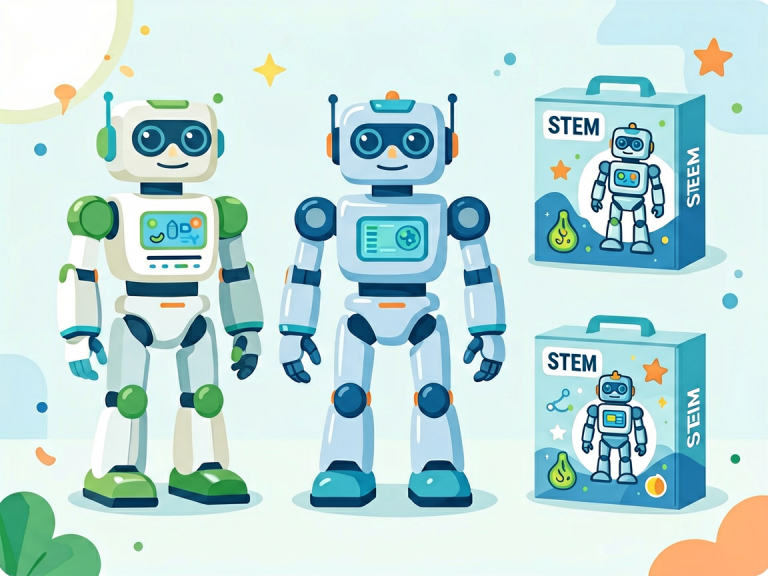
It is also worth considering alternatives that may offer similar benefits without the high cost or waste. For example, a subscription to a science magazine or a monthly STEM box service delivers new experiments over time, refreshing the novelty. Another option is to invest in basic science equipment—a microscope, a multimeter, a set of beakers, a soldering iron—that can be used for countless experiments with household materials. Many classic experiments (growing salt crystals, making a vinegar rocket, dissecting a flower) require nothing more than common items and a good instruction book. A well-chosen book like "The Dangerous Book for Boys" or "The Big Book of Experiments" can provide years of engaging activities for a fraction of the cost of multiple kits.
Furthermore, digital resources like PhET interactive simulations (from the University of Colorado Boulder) offer free, high-quality virtual laboratories that allow 12-year-olds to explore circuits, chemical reactions, and physics phenomena without any mess or cost. For tech-savvy children, coding kits or single-board computers like Raspberry Pi or Arduino provide a more open-ended platform for learning electronics and programming, though they require more guidance. Finally, local maker spaces, science museums, or after-school STEM clubs can offer hands-on experiences with expert supervision, often at a lower cost than buying kits.
Conclusion: A Qualified Yes, With Caveats
So, are science kits worth it for 12-year-olds? The answer is a qualified yes—but only when chosen thoughtfully, matched to the child's interests, and used as part of a broader learning environment. A single, poorly chosen kit that gathers dust can be a waste of money, but a carefully selected kit that ignites a passion for discovery can be priceless. The best kits are those that not only entertain but also educate, encourage critical thinking, and provide a sense of accomplishment. They should be seen as tools, not toys—tools that, like any tool, are only as effective as the person using them and the context in which they are used.
For parents and educators, the key is to stay involved: ask questions about what the child is learning, help them troubleshoot when experiments go wrong, and connect the kit’s activities to real-world applications. Above all, remember that the goal is not to produce a perfect experiment every time, but to cultivate curiosity, resilience, and a love for learning. In that sense, a science kit can be an excellent investment—not just in a child’s STEM knowledge, but in their lifelong relationship with discovery.