Introduction
Title: Are Science Kits Worth It for 9-Year-Olds? A Balanced Investigation into Educational Value, Engagement, and Practical Considerations
—
The question “Are science kits worth it for 9 year olds?” is one that many parents, educators, and caregivers find themselves asking in an era of screen saturation and STEM advocacy. At age nine, children are typically in the concrete operational stage of cognitive development (according to Jean Piaget’s theory), meaning they can think logically about concrete events, understand cause and effect, and perform simple classifications. They are curious, eager to manipulate objects, and capable of following multi-step instructions—yet they still benefit from guided discovery rather than abstract textbook learning. Science kits, which promise hands-on experiments and ready-made materials, seem like a perfect fit. But the market is flooded with options ranging from cheap plastic lab sets to expensive robotics kits, and the investment—both financial and in terms of time—can be significant. This article examines the educational, developmental, and practical dimensions of science kits for nine-year-olds, weighing their benefits against their drawbacks to help you decide whether they are a worthwhile addition to your child’s learning journey.
—
The Appeal of Science Kits: Engagement and Excitement
Capturing Natural Curiosity
At nine, many children still possess an innate wonder about the natural world. Science kits tap directly into this by offering immediate, tangible results. A chemistry set that produces a colorful reaction or a crystal-growing experiment that yields sparkling formations within hours can ignite a spark that no textbook can replicate. According to a 2021 survey by the Toy Association, 72% of parents reported that their children showed more enthusiasm for STEM subjects after using hands-on science kits at home. The sensory experience—mixing, observing, measuring, and sometimes failing—makes abstract concepts like pH, density, or chemical reactions feel real and memorable.
Overcoming the “Boring” Stigma
School science lessons can sometimes feel dry, especially when they rely heavily on worksheets or lectures. Kits often package the same content in a game-like format: build a volcano, launch a rocket, or code a robotic arm. This gamification of learning is particularly effective for nine-year-olds, who are still developing sustained attention spans. The promise of a “cool” outcome—like a glowing slime or a working circuit—provides intrinsic motivation that reduces the need for external rewards. For many children, a science kit turns a chore into a hobby.
—
Cognitive and Educational Benefits
Hands-On Learning Aligns with Developmental Stage
Nine-year-olds benefit enormously from kinesthetic learning. Research from the National Science Teaching Association indicates that children retain 75% of information when they learn through hands-on activities, compared to just 10-20% from reading or listening. Science kits allow them to test hypotheses (“What happens if I add more vinegar?”), make predictions, and observe outcomes—all core scientific practices. This active engagement reinforces critical thinking and problem-solving skills that transfer to other subjects like math and reading.
Fostering STEM Identity and Future Interest
Early exposure to science tools and terminology can shape a child’s self-concept. A 2019 study published in the *Journal of Research in Science Teaching* found that children who regularly used science kits at home were more likely to describe themselves as “science people” by age 11. This identity is crucial because it influences later course selection and career aspirations. For a nine-year-old who might otherwise see science as something only “geniuses” do, successfully building a simple motor or growing crystals can build confidence and demystify the field.
Practical Skill Development
Beyond content knowledge, kits teach procedural skills: following instructions, organizing materials, cleaning up, and recording observations. Many kits include a lab notebook or prompts for writing conclusions, which integrates literacy and STEM. Time management also comes into play when experiments have waiting periods (e.g., plant growth) or require step-by-step execution over several days. These executive function skills are exactly what nine-year-olds are beginning to develop, and a structured kit provides a safe framework for practicing them.
—
Potential Drawbacks and Limitations
The “One-and-Done” Problem
One of the most common criticisms of science kits is that they are often used only once. After the excitement of the first experiment fades, the remaining materials may sit unused, or the kit’s novelty wears off. Many kits are designed for a single purpose—for example, a crystal-growing set that yields one batch—and offer little room for open-ended exploration. This can be frustrating for parents who expected a sustained learning tool. A 2022 analysis by the consumer group *Which?* found that 40% of purchased science kits for children aged 8–10 were used fewer than three times before being abandoned.
Quality and Safety Concerns
Not all kits are created equal. Budget options may contain poorly fitting tubing, inaccurate scales, or chemicals that are improperly labeled. For a nine-year-old, safety is paramount. Kits that require adult supervision (and many do) can create a burden on parents who are already busy. Moreover, some kits emphasize flashy results over genuine understanding. A “lava lamp” experiment might work beautifully, but if the child cannot explain why oil and water separate, the learning is superficial. Parents must read reviews and check for certifications (like the US CPSC or EU CE marks) before purchasing.
Mismatch with Child’s Readiness
Every nine-year-old is different. Some are advanced in fine motor skills and can handle delicate manipulations; others may become frustrated with tiny screws or fragile glassware. A kit that is too difficult can lead to tears and a feeling of failure, while one that is too easy can bore the child. The age recommendation on the box is a rough guide, but it does not account for individual variation. Without proper scaffolding from an adult, a child may miss key steps and end up with a failed experiment, which can be discouraging.
—
Factors to Consider When Choosing a Science Kit
Curriculum Alignment vs. Pure Fun
Consider why you are buying the kit. Is it to supplement school learning? Then look for kits tied to topics your child is studying—for example, a weather kit if earth science is on the syllabus. Is it to foster general curiosity? Then open-ended kits like a “snap circuits” set (which allows endless circuit configurations) or a chemistry set with multiple experiments may offer more long-term value. Avoid kits that promise “100 experiments” but reuse the same materials in slightly different ways; often, only a handful are genuinely unique.
Durability and Reusability
The best kits for nine-year-olds are those that can be reconfigured. Robotics kits with modular parts, building sets that teach mechanics, or programmable devices (like entry-level micro:bit kits) allow for repeated play and increasing complexity. For example, a basic Lego Boost kit can be used to build multiple robots, and the child can learn to code different behaviors. The upfront cost is higher, but the per-use cost drops significantly over time.
Parental Involvement Requirements
Honestly assess how much time you can commit. Some kits require constant supervision—for instance, any kit involving heat, sharp objects, or electricity. Others are more independent. Look at the instruction booklet: are the steps clear and illustrated? Are there troubleshooting tips? A kit that includes a parent guide or online video tutorials can make the experience smoother. Remember, a nine-year-old can do a lot alone, but they still need an adult to help with reading complex instructions, handling safety issues, and discussing the science behind the results.
—
The Role of Parental Involvement
Guided Discovery vs. Free Play
The value of a science kit skyrockets when an adult engages with the child during the experiment. Simply handing a kit to a nine-year-old and expecting them to learn independently is often unrealistic. Instead, parents can ask questions: “What do you think will happen if we change the temperature?” or “Why do you think the solution turned blue?” This Socratic dialogue transforms a rote activity into a genuine inquiry. A 2020 study from the University of Chicago found that children whose parents used elaborative questioning during science play scored higher on subsequent tests of scientific reasoning.
Avoiding Overcorrection
On the flip side, parents who hover and correct every mistake can kill the child’s autonomy. Part of the beauty of science kits is that they allow for “productive failure.” If the volcano doesn’t erupt because the vinegar wasn’t acidic enough, the child can learn to test and adjust. Allow room for error, and treat failed experiments as learning opportunities rather than disasters. This builds resilience and a growth mindset—invaluable traits for a nine-year-old.
—
Comparing Cost vs. Value
Financial Investment
Science kits range from under $10 to over $200. A cheap crystal-growing kit might cost $12, but if it’s used once and the child loses interest after 20 minutes, the cost per minute of engagement is high. Conversely, a $150 robotics kit that is used weekly for a year yields a much lower cost per hour of educational play—often less than a dollar per hour. Additionally, consider hidden costs: batteries, extra chemicals, broken parts, or replacement items. Some kits require consumables that must be repurchased, which can add up.
Intangible Returns
Value is not just monetary. A kit that sparks a lifelong interest in engineering or medicine is priceless. Yet not every child will have that reaction. For many nine-year-olds, the best return on investment comes from kits that integrate with other activities—for example, a nature identification kit for a child who loves hiking, or a kitchen chemistry set for a budding chef. When the kit aligns with existing interests, the learning is deeper and more sustainable.
—
Real-World Examples and Recommendations
What Works Well
- Snap Circuits Jr. (SC-100): Approx. $30. This classic electronic kit allows children to build over 100 projects—lights, fans, alarms—by snapping components onto a board. It requires no soldering, is durable, and can be used repeatedly in different configurations. Ideal for nine-year-olds who like engineering.
- Thames & Kosmos Chemistry C500: Approx. $45. This kit contains safe, non-toxic chemicals for 28 experiments, including color changes and simple reactions. The manual explains the science clearly, and the experiments are manageable with minimal adult supervision.
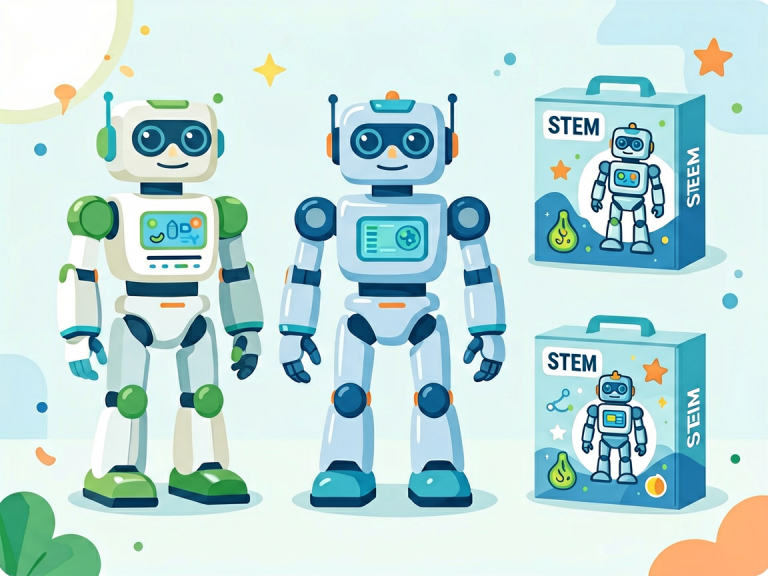
- Makeblock mBot (Robot Kit): Approx. $60. This programmable robot introduces basic coding through a drag-and-drop interface. It’s reusable, upgradeable, and teaches both mechanics and software. Perfect for a child who enjoys puzzles.
What to Avoid
- Overly commercial “lab” sets with cheap plastic test tubes and fake microscopes: Often these are gimmicky and break quickly. The “play lab” style with no actual chemicals or meaningful activities is a waste of money.
- Kits with excessive screen time: Some modern kits require a tablet or phone app for every step, which can defeat the purpose of hands-on learning. Look for kits that use physical interactions rather than passive video watching.
—
Conclusion
So, are science kits worth it for 9 year olds? The answer is a qualified yes—but with important caveats. A well-chosen, age-appropriate, and reusable science kit can be a powerful educational tool that nurtures curiosity, builds practical skills, and fosters a positive attitude toward STEM. However, the kit itself is only part of the equation. Parental involvement, realistic expectations about usage frequency, and careful selection based on the child’s individual interests and abilities are essential. A cheap, one-off kit that sits on a shelf is not worth the money; a thoughtfully selected kit that becomes a springboard for ongoing exploration is an investment in a child’s intellectual development. For most nine-year-olds, the best approach is to start with one high-quality, open-ended kit, use it together with your child, and observe whether it sparks deeper engagement. If it does, consider adding more. If not, redirect the investment toward a library subscription, museum trips, or outdoor exploration—because at the end of the day, the goal is not to own the shiniest box, but to kindle the flame of scientific wonder that will last a lifetime.