Introduction
Title: Are Science Kits Worth It for Preschoolers? A Balanced Look at the Benefits, Drawbacks, and Practical Considerations
In an era where parents are constantly bombarded with advertisements for educational toys, science kits for preschoolers have become a booming market. These colorful boxes promise to turn your three‑year‑old into a mini‑Einstein, complete with test tubes, magnifying glasses, and instructions for “volcano eruptions” made from baking soda and vinegar. But before you click “Add to Cart,” it is worth asking: are science kits actually worth the investment for children aged two to five? The answer is not a simple yes or no. It depends on the child’s developmental stage, the quality of the kit, the role of the parent, and the realistic expectations we hold about early childhood learning. In this article, we will examine the potential benefits, the common pitfalls, and the practical guidelines that can help you decide whether a science kit belongs on your preschooler’s shelf or if your money is better spent on simpler, open‑ended play.
The Promised Benefits: What Science Kits Claim to Offer
Proponents of science kits for preschoolers often highlight several appealing advantages. First, these kits are designed to introduce foundational scientific concepts—such as cause and effect, observation, and basic chemistry—in a hands‑on, engaging manner. A child who mixes colored water and watches it change color is not just playing; she is experiencing a simple chemical reaction. Second, many kits come with structured activities that can help a busy parent facilitate learning without having to invent experiments from scratch. The convenience factor is real: a box that contains all necessary materials, step‑by‑step instructions, and sometimes even a storybook saves time and reduces mess‑planning anxiety. Third, proponents argue that early exposure to “science” can spark curiosity and build a positive attitude toward learning. When a child sees a parent excitedly saying “Let’s see what happens!” and then witnesses a fizzy reaction, the emotional association with discovery becomes powerful. Finally, some kits claim to develop fine motor skills through pouring, measuring, and handling small objects, as well as language skills when children describe what they see.
However, these benefits are not automatic. They depend heavily on how the kit is used and the mindset of both the adult and the child.
The Hidden Drawbacks: When Kits Fall Short
Despite their shiny packaging, many science kits for preschoolers have significant shortcomings. The most common criticism is that the “science” in these kits is often superficial. A toddler who watches a volcano erupt once may be thrilled, but the experience rarely leads to deeper understanding. Without repeated, varied exploration, the activity becomes a one‑time spectacle rather than a learning opportunity. Moreover, many kits include instructions that are too complex for a preschooler to follow independently. If the parent is not willing to sit down, read the steps, and guide the child through the process, the kit may end up gathering dust—or worse, the child may become frustrated and lose interest.
Another major issue is the quality of materials. Some budget‑friendly kits contain plastic items that break easily, small parts that pose choking hazards, or chemicals that are not truly safe for young children (e.g., powders that can be inhaled). Even “non‑toxic” labels do not guarantee that the kit is age‑appropriate in terms of cognitive and motor demands. Furthermore, the structured, outcome‑oriented nature of many kits can stifle creativity. A preschooler’s natural way of learning is through open‑ended play—pouring water back and forth, mixing sand and dirt, exploring texture and volume. A kit that says “do steps A, B, C to get result D” may teach compliance but not curiosity. The child may learn that science is about following recipes rather than asking questions.
There is also the risk of over‑stimulation. Preschoolers have short attention spans, and a kit with multiple components and long instructions can overwhelm them. Instead of feeling empowered, they may feel pressured to “perform” correctly. This can create anxiety and diminish the joy of exploration. Finally, we must consider cost. A typical preschooler science kit can range from $15 to $40 or more. For the same amount, you could buy a bag of baking soda, a bottle of vinegar, food coloring, and a set of plastic cups—materials that allow for endless open‑ended experiments, repeated as many times as the child wants, without the constraint of a single “correct” outcome.
When Are Science Kits Most Worthwhile? Key Factors for Success
Science kits can indeed be valuable, but only under specific conditions. First, the kit must be genuinely age‑appropriate. Look for kits labeled for ages 3‑5 that feature large, safe parts; simple, clear instructions (preferably with pictures); and activities that take no longer than 10–15 minutes each. The best kits are those that allow for repetition and variation. For example, a kit that provides several different color‑mixing activities or multiple ways to build a simple circuit encourages the child to explore and experiment repeatedly.
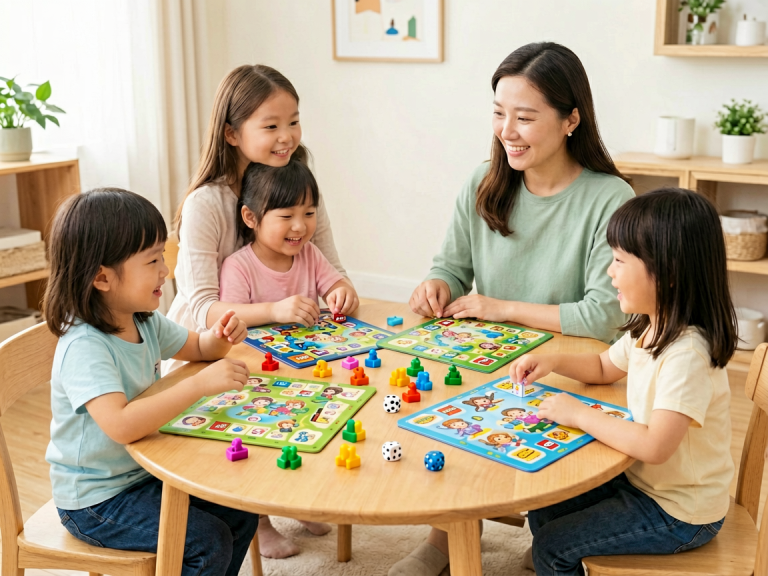
Second, the role of the adult is crucial. A science kit is not a babysitter; it is a tool for shared discovery. The parent or caregiver should sit with the child, narrate the process, ask open‑ended questions (“What do you think will happen if we add more vinegar?”), and allow the child to take the lead. If the experiment “fails” (the volcano doesn’t erupt as expected), that can be an even better learning moment: “Oh, the baking soda didn’t fizz much. Maybe we need more vinegar? Let’s try again!” This kind of guidance transforms a kit from a scripted activity into a genuine scientific inquiry.
Third, choose kits that emphasize process over product. Kits that simply create a finished product—like a plastic model or a single “cool” reaction—are less valuable than those that teach observation, prediction, and comparison. For instance, a kit that includes a simple weather station with a rain gauge and a wind sock allows a child to make daily observations over weeks, building a habit of scientific thinking. Similarly, a living‑things kit that involves hatching butterfly larvae or growing plants offers longitudinal learning that a one‑time volcano cannot match.
Fourth, consider your child’s temperament. Some preschoolers are naturally curious and enjoy structured activities; others prefer unstructured free play. If your child tends to reject instructions and wants to do things her own way, you might be better off assembling your own “kit” from household items. For example, a set of measuring cups, a funnel, a turkey baster, and a tub of water can provide hours of scientific play (sink/float, volume, flow) without any pre‑printed guide.
Alternatives to Commercial Science Kits: Simple, Low‑Cost Approaches
If you are still uncertain about spending money on a commercial kit, rest assured that many of the best science experiences for preschoolers come from everyday objects and natural materials. A walk in the park can become a nature‑observation lesson: collect leaves, compare shapes, sort by color, and talk about why leaves fall in autumn. The kitchen is a fantastic laboratory: mix flour and water to make dough, observe what happens when you freeze water, or watch bread rise. Even bath time offers lessons in buoyancy and water displacement.
These activities require no special equipment, and they value repetition—a child can mix play dough every day and discover something new each time. They also encourage the development of what educators call “executive function” skills: planning, predicting, and revising ideas. Moreover, they are far less likely to create frustration because there is no “wrong” way to play. The only “cost” is your time and attention, which, as research consistently shows, is the most valuable ingredient in early learning.
Practical Guidelines for Choosing (or Skipping) a Science Kit
To help you make an informed decision, here is a quick checklist:
- Read reviews carefully. Look for feedback from other parents about durability, safety, and whether the activities actually held their child’s attention. Avoid kits with overwhelmingly positive five‑star ratings that may be fake; focus on detailed four‑star reviews that mention pros and cons.
- Check the material list. If the kit includes many single‑use items (like pre‑measured packets of powder), consider whether you could replicate the activity with common household ingredients. If so, you might skip the kit.
- Assess your own involvement. Be honest: will you consistently sit down and supervise the experiments? If your schedule is packed, a kit may just add clutter. Instead, set aside 15 minutes each day for simple water play or sensory bins.
- Think long‑term. Will the kit be used more than once? Kits that offer multiple activities (e.g., 10 different experiments) tend to have better value than those with just one or two. Also, can you reuse components (like test tubes or tweezers) for other projects?
- Prioritize open‑ended pieces. A kit that includes a magnifying glass, a mirror, a flashlight, and a set of translucent colored shapes can be used in countless ways—sorting, shining, magnifying—and will remain interesting for months. That is a better investment than a kit with a single dramatic reaction.
Conclusion: The Verdict
So, are science kits worth it for preschoolers? The answer is: they can be, but they are not essential, and they are certainly not a substitute for everyday, adult‑guided exploration. The best science kit is one that does not feel like a “kit” at all—it feels like a collection of interesting objects that invite curiosity and conversation. If you choose a kit that is simple, safe, reusable, and supported by your active participation, it can be a wonderful addition to your child’s play. But if you buy a kit expecting it to magically teach your preschooler science without your involvement, you will likely be disappointed. In the end, what matters most is not the price tag or the brand name, but the joy of discovering together—whether that discovery happens with a store‑bought microscope or a pile of autumn leaves.