Introduction
Title: Building Blocks vs. Magnetic Tiles for Toddlers: A Comprehensive Guide to Choosing the Best Tool for Early Development
When it comes to selecting the first construction toys for a toddler, parents and educators are often torn between two beloved options: classic wooden or plastic building blocks and the increasingly popular magnetic tiles. Both promise hours of creative play and developmental benefits, but they differ fundamentally in design, interaction, and the skills they nurture. Understanding these differences is crucial for making an informed choice that aligns with a child’s age, temperament, and developmental stage. This article offers a detailed, evidence-based comparison of building blocks and magnetic tiles for toddlers, exploring their unique advantages, potential drawbacks, and the specific ways each supports cognitive, motor, and social growth. By the end, you will have a clear framework to decide which toy—or better yet, which combination—will best support your toddler’s journey of discovery and learning.
The Timeless Value of Building Blocks
Building blocks are among the oldest educational toys known to humanity, and their simple design belies their profound developmental impact. Typically made from solid wood, cardboard, or non-toxic plastic, these blocks come in various shapes, sizes, and colors. Their defining characteristic is that they rely entirely on gravity and friction to stay in place. A toddler must carefully judge balance, weight distribution, and alignment to create a stable structure.
Motor Skill Development and Physical Coordination
From a fine-motor perspective, building blocks are superb. Picking up a block, rotating it to the correct orientation, and placing it precisely requires controlled hand movements, finger dexterity, and hand-eye coordination. Toddlers learn to gauge the force needed to set down a block without knocking the whole tower over. This process strengthens the small muscles in the hands and fingers, which later supports writing, buttoning, and other precise tasks. The act of stacking also challenges gross motor skills as children may squat, stretch, or lean to reach higher levels, building core strength and balance.
Cognitive and Spatial Reasoning
Cognitively, building blocks are a living lesson in physics. Every time a child adds a block, they test cause and effect: “If I put this heavy block on top of that narrow one, will it fall?” They experiment with symmetry, geometry, and weight. Research in early childhood education has repeatedly shown that block play enhances spatial reasoning—the ability to mentally visualize and manipulate objects in three dimensions. This skill is strongly correlated with later success in mathematics, engineering, and science. Furthermore, building blocks encourage problem-solving and persistence. When a tower collapses, a toddler must decide whether to rebuild with a different strategy, adjust the base, or abandon the idea. Each failure is a powerful learning opportunity.
Creativity and Open-Ended Play
One of the greatest strengths of building blocks is their pure open-endedness. There are no magnets, no predefined connection points. A block can become a wall, a bridge, a car, a hat, or a cookie. This ambiguity fosters symbolic thinking, the foundation of pretend play. A child might narrate a story while building a castle for a toy knight, integrating language development with spatial construction. Blocks also allow for collaborative play: two toddlers can negotiate which blocks to use, share space, and build a shared structure, thus practicing social skills like turn-taking and communication.
Safety and Practical Considerations
Traditional building blocks are generally very safe for toddlers, provided they are large enough to prevent choking. Most commercial sets for toddlers have blocks that exceed the standard choking hazard diameter (1.75 inches). However, wooden blocks can be heavy if dropped on a foot, and sharp edges or splinters can be a concern with lower-quality sets. They are also prone to being scattered across the floor, creating a tripping hazard. Cleaning up requires sorting and stacking, which can be a valuable organizational exercise but may overwhelm a very young child.
The Modern Appeal of Magnetic Tiles
Magnetic tiles represent a more recent innovation in the construction toy market. These are typically square, triangular, or rectangular plastic pieces with strong, sealed magnets embedded along their edges. When two tiles are brought close together, they snap into place with an audible click. This magnetic connection creates instant stability, allowing toddlers to build structures that would be impossible with ordinary blocks—such as overhangs, arches, and tall, thin towers.
Ease of Use and Frustration-Free Play
For very young toddlers, say from 18 months to 2.5 years, magnetic tiles are often easier to master. The magnetic attraction provides immediate feedback and success. A child does not need to precisely align a block on top of another; they simply need to bring two tiles close enough for the magnets to engage. This low barrier to entry builds confidence and encourages repeated attempts. Because the pieces stick together firmly, structures rarely collapse accidentally—a common frustration with blocks that can discourage a toddler still developing fine motor control. The satisfying “click” sound also adds a sensory reward that reinforces the action.
Cognitive Learning: Geometry and Magnetism
Magnetic tiles introduce toddlers to fundamental principles of geometry and magnetism. Children quickly learn that squares can form a cube, triangles can make a roof, and that opposite magnetic poles attract. They begin to understand that the shape of the tile determines how it can be used to cover a given area or create a 3D form. Some sets include transparent or translucent tiles that, when held up to a light, create beautiful patterns of color and shadow, stimulating visual perception. The tiles also offer a unique opportunity to explore symmetry, reflection, and pattern-making—for example, creating a mirrored design by placing identical tiles on opposite sides.
Enhancing Creativity Through Structural Freedom
While magnetic tiles are less ambiguous than blocks (they are clearly meant to stick together to form buildings or geometric shapes), they still allow for remarkable creativity. A child can build a rocket ship, a castle, a house, or a maze. The magnetic connection enables cantilevers and overhangs—for instance, a tile can be attached to the side of a standing tower, creating a floating balcony. This structural freedom encourages architectural thinking beyond the simple stacking of blocks. Additionally, many magnetic tile sets come with small accessories like ramps, balls, or figurines, extending the play possibilities into marble runs or pretend play scenarios.
Safety and Durability
Magnetic tiles are generally safe, but they require a few special considerations. The magnets are sealed inside the plastic; however, if a tile cracks or breaks, the small magnets inside can become a choking hazard or, if swallowed, cause serious internal injuries. Therefore, parents must inspect tiles regularly and discard any damaged pieces. The plastic itself is typically BPA-free and easy to clean. Magnetic tiles tend to be more expensive than basic wooden blocks, and the magnets can lose strength over time with repeated stress. They also occupy more surface area per piece, making storage a bit bulkier. On the positive side, cleanup is quick because tiles stack neatly using their magnetic attraction.
Comparative Analysis: Building Blocks vs. Magnetic Tiles
When placed side by side, these two toys reveal distinct developmental profiles.
Fine Motor Skills – Building blocks demand more precision and finger strength. They are like a weightlifting session for tiny hands. Magnetic tiles are less demanding—the magnets do much of the alignment work—which can be a benefit for younger toddlers but may offer less challenge for older ones. Ideally, a toddler’s fine motor toolkit benefits from both: blocks to train control and strength, tiles to build confidence and spatial planning.
Cognitive Challenge – Both toys develop spatial reasoning, but in different ways. Blocks require the child to understand and overcome gravity, which is a constant and sometimes frustrating teacher. Magnetic tiles remove that obstacle, allowing the child to focus on geometric relationships and structural design without the fear of collapse. This can lead to more complex creations at an earlier age. However, the learning from failure—watching a tower of blocks tumble—is a valuable lesson in resilience and physics that magnetic tiles largely bypass.
Creativity and Pretend Play – Building blocks win in sheer open-endedness. A block can represent anything. Magnetic tiles, while versatile, are more visually defined as building components. That said, children do incorporate them into rich pretend scenarios, especially when accompanied by small figures. The translucent tiles are particularly engaging for light and shadow play, which can inspire artistic exploration.
Social Play – Both toys work well in groups, but building blocks can lead to more negotiation challenges (e.g., “You took the big red block I wanted!”). Magnetic tiles encourage collaborative builders to work side by side because the magnetic connections make it easy to attach their creations together. Teams can build a larger shared structure more seamlessly.
Age Appropriateness – For toddlers aged 12–18 months, large magnetic tiles are often safer and easier to handle than small, heavy wooden blocks. Around 2–3 years, building blocks become increasingly suitable as fine motor skills improve. Many experts recommend starting with magnetic tiles and introducing wooden blocks around age 2, when the child can better manage the frustration of toppling towers.
Cost and Longevity – Basic wooden block sets are generally more affordable and can last for decades. Magnetic tile sets are pricier, and the magnets can degrade over time. However, magnetic tiles often retain play value into elementary school, as children use them for more complex builds, including marble runs and geometric exploration.
Recommendations for Parents and Educators
Given that both building blocks and magnetic tiles offer significant but complementary benefits, the optimal approach is not to choose one over the other but to thoughtfully integrate both into a toddler’s play environment. Here are practical guidelines:
- Start with magnetic tiles around 18 months. Their ease of use builds early confidence and a love for construction. Choose a set with large pieces and strong, well-sealed magnets. Ensure that the tiles are made from non-toxic, BPA-free plastic.
- Introduce wooden or plastic building blocks around age 2–2.5 years. Begin with a modest set of 20–30 blocks in varied shapes. Emphasize the process of stacking and balancing rather than building specific structures. Allow frequent collapse—it’s part of the learning.
- Create a rotating toy system. To maintain novelty and deepen skills, alternate between blocks and tiles every few days. This prevents boredom and allows the child to apply lessons learned from one medium to the other.
- Use both toys to teach mathematical language. With blocks, talk about “heavy,” “light,” “tall,” “short.” With tiles, discuss “corner,” “edge,” “side,” “square,” “triangle.” Reinforce concepts like “more,” “less,” “same,” “different.”
- Encourage cross-play. Combine blocks and tiles in a single play session. For example, use magnetic tiles as a base or roof on a block tower, or use wooden blocks as supports for a magnetic structure. This hybrid play sparks creative problem-solving.
- Prioritize supervision with magnetic tiles. Check regularly for cracks or loose magnets. Never allow a toddler to bite or chew on tiles. Set clear rules about no throwing (tiles are hard and could chip teeth or break).
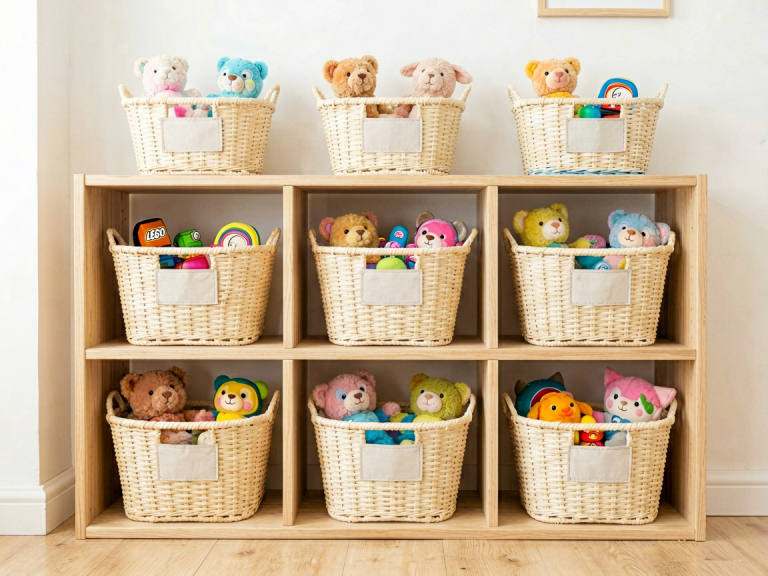
- Invest in storage solutions. Keep blocks in a low, open bin so the child can see and reach all pieces. Store magnetic tiles in a shallow tray or on a metal sheet where they can stick and be displayed. Visual organization helps toddlers learn sorting and cleanup.
Conclusion
In the timeless debate of building blocks versus magnetic tiles for toddlers, there is no single winner—only a beautiful partnership. Building blocks offer the raw, unfiltered experience of physical laws: gravity, balance, and the honest consequence of a misaligned placement. They build patience, persistence, and fine motor mastery. Magnetic tiles, by contrast, provide a forgiving, instantly gratifying platform that emphasizes geometry, symmetry, and the magic of invisible forces. Together, they create a full spectrum of constructive play, nurturing a toddler’s cognitive flexibility, spatial intelligence, and creative confidence. The wise parent or educator will embrace both, allowing the child to discover the unique satisfaction of stacking wood and snapping tiles—and, in the process, build the foundational skills for a lifetime of learning.