Essential Considerations Before Selecting Toys for Classroom Use
—
Introduction
Selecting toys for a classroom is far more than a simple shopping trip. Unlike home environments where a child’s individual preference often drives decisions, classroom toys must serve a broader purpose: they need to support educational goals, accommodate diverse developmental levels, encourage collaboration, and maintain safety for groups of children. A poorly chosen toy can lead to distraction, conflict, or even safety hazards, while a well‑selected one can become a powerful tool for learning, creativity, and social development. This article outlines the key factors educators and administrators should weigh before adding any item to their classroom toy collection.
—
Alignment with Educational Objectives
The first and most critical question is: *What learning outcomes do I want this toy to foster?* Classrooms are intentional environments, and every toy should contribute to cognitive, physical, social, or emotional growth.
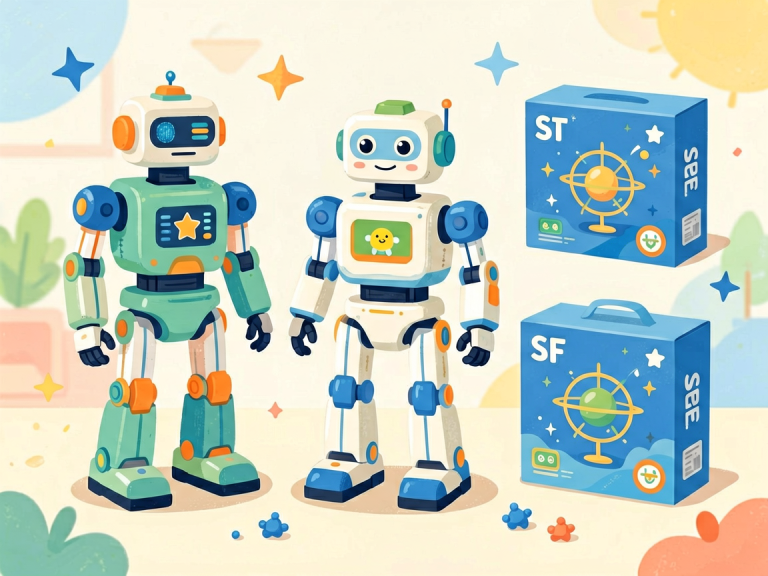
- STEM and Problem‑Solving Skills: Construction sets, simple coding robots, and pattern‑based puzzles encourage logical thinking, spatial reasoning, and perseverance. For example, a set of interlocking blocks can teach basic engineering concepts while allowing open‑ended creativity.
- Literacy and Language Development: Puppets, storytelling cards, and alphabet games promote vocabulary, narrative skills, and turn‑taking in conversations.
- Social‑Emotional Learning (SEL): Board games that require cooperation, role‑playing sets (e.g., a pretend grocery store or doctor’s kit), and emotion‑faced dolls help children practice empathy, negotiation, and self‑regulation.
- Fine and Gross Motor Skills: Lacing beads, playdough, scissors, and small manipulatives strengthen hand muscles, while larger items like balance boards or tunnels support whole‑body movement.
Always tie the toy’s purpose to your curriculum or developmental milestones. If a toy cannot be justified as a learning tool, it likely belongs in a home playroom rather than a classroom.
—
Age Appropriateness and Developmental Range
Classrooms rarely contain children of exactly the same ability level. Even within one age group, developmental differences can be wide. Therefore, a toy must be suitable for the *range* of children who will use it, not merely the “average” child.
- Safety First: Always check manufacturer age recommendations. Small parts that are safe for a five‑year‑old can be a choking hazard for a three‑year‑old. Avoid toys with sharp edges, long cords, or toxic materials.
- Challenge vs. Frustration: A toy that is too easy will bore children and lead to disruptive behavior; one that is too difficult will cause frustration and abandonment. Look for toys with adjustable difficulty (e.g., puzzles with varying numbers of pieces, or building kits with multiple design levels).
- Multi‑Age Utility: In mixed‑age classrooms (e.g., Montessori or family‑style preschools), choose toys that can be used in different ways by different ages. A set of wooden blocks, for instance, can be stacked by a toddler, used for pattern sequencing by a preschooler, and incorporated into a math lesson about volume by a kindergartner.
Conducting a trial period with a small group of children can reveal whether a toy truly fits the classroom’s developmental spectrum.
—
Durability, Cleanability, and Storage
Classroom toys endure heavy, daily use from multiple children. They are dropped, thrown, chewed on, and smeared with paint. A toy that falls apart after one week is not only wasteful but also poses safety risks from broken pieces.
- Material Quality: Opt for solid wood (sealed, splinter‑proof), high‑grade plastics (BPA‑free), or reinforced fabrics. Avoid flimsy cardboard or thin plastic that cracks easily.
- Ease of Cleaning: Children’s toys quickly become reservoirs for germs. Choose toys that can be wiped down with disinfectant wipes or washed in a dishwasher (if designed for it). Porous materials like untreated wood, fabric with stuffing, or paper‑based items are difficult to sanitize.
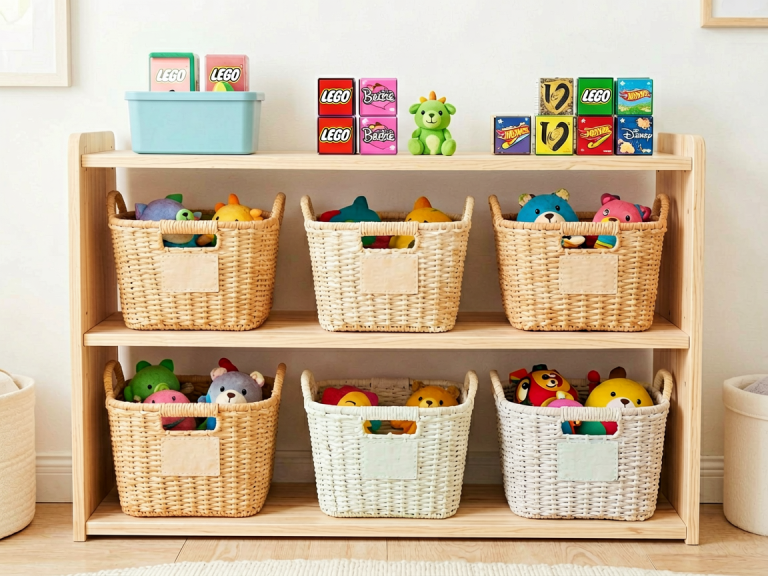
- Storage Compatibility: Think about where the toy will live when not in use. Does it fit neatly on a shelf in a bin? Does it have multiple small pieces that will inevitably scatter? Consider toys that come with a storage container or can be collapsed. Having a designated, labeled spot for each toy teaches children responsibility and keeps the classroom organized.
A durable toy may cost more upfront, but its longer lifespan and reduced replacement frequency often make it more economical in the long run.
—
Promoting Open‑Ended Play vs. Prescribed Outcomes
One of the most important distinctions in classroom toys is between *open‑ended* and *closed‑ended* designs. Both have a place, but open‑ended toys generally offer greater long‑term value.
- Open‑Ended Toys: Items like unit blocks, loose parts (stones, shells, fabric scraps), playdough, and art supplies have no single “correct” way to use them. They encourage creativity, divergent thinking, and problem‑solving across multiple contexts. Children can transform a set of wooden rings into a stacking game, a counting tool, or a set of bracelets.
- Closed‑Ended Toys: These have a specific goal or solution, such as a jigsaw puzzle, a shape‑sorter, or a matching game. They are excellent for teaching focus, sequencing, and cause‑effect, but overusing them can limit imaginative exploration.
A balanced classroom will include both types. However, educators should prioritize toys that “do 80% of the work” – meaning the child, not the toy, drives the activity. Electronic toys that flash lights and play sounds in response to a single button press often leave little room for imagination and quickly lose their novelty.
—
Encouraging Collaboration, Not Competition
Classrooms are social environments, and toys should facilitate positive peer interactions rather than isolate children or create unnecessary rivalry.
- Group‑Size Considerations: Note how many children can comfortably play with the toy at once. A single‑player game may be fine for a calm‑down corner, but for group centers, look for items that naturally invite cooperation – for example, a large train set that requires two children to build tracks together, or a parachute that needs multiple hands to lift.
- Competition vs. Cooperation: While some competition can be healthy (e.g., a simple board game that teaches turn‑taking and good sportsmanship), avoid toys that pit children against each other in ways that lead to tears or conflict. Cooperative games where everyone wins or loses together (like a team‑based memory game) are ideal for early childhood.
- Inclusivity: Ensure toys represent diverse cultures, abilities, and family structures. Dolls with different skin tones, puzzles showing children using wheelchairs, and storybooks with non‑traditional families help all children feel seen and respected.
Observing how children interact with a new toy during the first few days can give you immediate feedback on whether it fosters the kind of social climate you want.
—
Budget, Replacement, and Sustainability
Finally, practical constraints cannot be ignored. Classroom budgets are often tight, and toy purchases must be wise investments.
- Cost per Use: A $100 sensory table that is used daily for three years is a better value than a $20 puzzle that falls apart in a month. Calculate the toy’s expected lifespan and versatility.
- Fair Trade and Eco‑Friendly Options: Whenever possible, support brands that use sustainable materials and ethical manufacturing. This not only models responsible consumerism for children but also reduces exposure to harmful chemicals.
- Replacement Parts: Some toys come with replaceable pieces (e.g., spare marbles for a marble run, extra laces for threading cards). Check if the manufacturer sells individual parts – it can extend the toy’s life significantly.
Also consider rotating toys in and out of storage. Children’s interest in even the most wonderful toy will wane if it is available every day. Storing half the toys and rotating them every month keeps the classroom fresh without requiring constant new purchases.
—
Conclusion
Choosing toys for a classroom is an act of thoughtful curation, not mere acquisition. By focusing on educational alignment, developmental appropriateness, durability, open‑ended potential, social dynamics, and budget sustainability, educators can create a play‑based learning environment that truly serves every child. The best classroom toys are those that spark curiosity, invite collaboration, and stand the test of time – both in quality and in the memories they help build. Before making any purchase, pause, reflect, and ask: *Does this toy belong in a space designed for learning?* If the answer is a confident yes, it has earned its place on the shelf.