The Enduring Appeal of Wooden Toys: Why They Are Worth Every Penny
Introduction
In an age dominated by flashing screens, plastic components, and disposable consumer goods, the humble wooden toy stands as a quiet rebel. It does not beep, it does not require batteries, and it rarely comes with a manual. Yet, for generations, wooden toys have held a cherished place in children’s playrooms and in the hearts of parents who value quality over quantity. Are wooden toys really worth buying? The answer, for a growing number of families, educators, and environmentalists, is a resounding yes.
Wooden toys are not merely nostalgic relics; they are investment pieces that offer a unique combination of durability, safety, developmental value, and environmental responsibility. While they often come with a higher upfront cost than their plastic counterparts, their long lifespan, timeless appeal, and positive impact on child development make them a purchase that pays dividends for years. This article explores the multifaceted reasons why wooden toys are worth buying, from their ecological footprint to their role in fostering creativity, and offers practical guidance on selecting high-quality pieces that will stand the test of time.
—
1. Environmental Sustainability: A Toy That Gives Back to the Planet
One of the most compelling arguments for choosing wooden toys is their environmental footprint. In an era of climate crisis and overflowing landfills, the materials and production methods behind children’s toys matter more than ever. Plastic toys, many of which are made from petroleum-based polymers, can take centuries to decompose. They often contain toxic chemicals such as phthalates and BPA, and their short lifespan—frequently ending in the trash after a few months of use—exacerbates the waste problem.
Wooden toys, conversely, are typically crafted from renewable resources. High-quality wooden toys are made from sustainably harvested hardwoods like maple, beech, or birch, often sourced from certified forests managed with reforestation in mind. Many manufacturers use non-toxic, water-based paints and finishes, ensuring that the toys are safe for children and biodegradable at the end of their life cycle. When a wooden toy finally wears out, it can be composted or recycled, returning nutrients to the earth rather than lingering in a dump for millennia.
Moreover, the production of wooden toys generally consumes less energy than that of plastic toys. The manufacturing process involves fewer chemical treatments and less reliance on fossil fuels. By choosing wooden toys, parents are making a conscious decision to support sustainable forestry and reduce their family’s carbon footprint. This eco-friendly aspect is not just a feel-good factor—it is a concrete, measurable benefit that aligns with global efforts to combat environmental degradation. For families seeking to raise environmentally aware children, wooden toys serve as a tangible example of mindful consumption.
—
2. Developmental Benefits: More Than Just a Plaything
Beyond their ecological virtues, wooden toys are prized for their profound impact on early childhood development. Experts in child psychology and education consistently advocate for open-ended, minimally designed toys that allow children to lead the play. Wooden blocks, stacking rings, puzzles, and dollhouses are classic examples of such toys. They do not dictate the narrative; instead, they invite children to imagine, create, and problem-solve.
Cognitive Growth
Wooden toys encourage cognitive development in ways that electronic or overly prescriptive plastic toys often cannot. For instance, a set of wooden building blocks requires a child to plan, balance, and adjust—skills that underpin mathematical and spatial reasoning. Sorting shapes or fitting pieces into a wooden puzzle sharpens pattern recognition and logical thinking. Unlike a tablet game that provides instant feedback and rewards, wooden toys demand patience and persistence, teaching children that success often comes through trial and error.
Fine Motor Skills and Sensory Integration
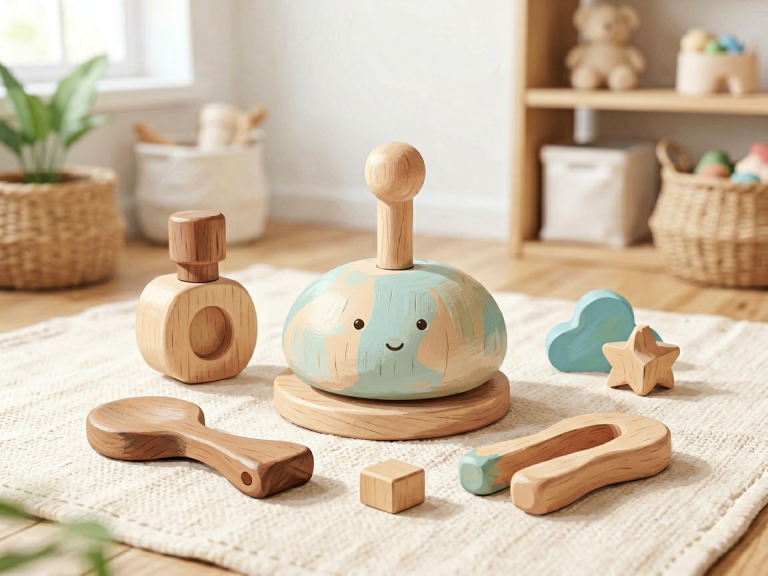
The tactile experience of wooden toys is unmatched. The weight, texture, and natural grain of wood provide rich sensory input that plastic cannot replicate. When a toddler grasps a wooden rattle or pushes a wooden train, they are not just playing—they are refining their grip, hand-eye coordination, and muscle control. The slight resistance of a wooden knob on a puzzle helps develop finger strength. The sound of wooden blocks clacking together is more organic and less jarring than the electronic beeps of plastic toys, promoting a calmer sensory environment.
Imagination and Creativity
Perhaps the most cherished attribute of wooden toys is their ability to spark imaginative play. A simple wooden car can become a racecar, a delivery truck, or a spaceship depending on the child’s mood. A set of wooden food items can inspire a pretend restaurant, a grocery store, or a picnic in the living room. Because these toys lack pre-programmed scripts, the child is the director of the story. This freedom to create narratives is critical for developing language skills, social understanding, and emotional intelligence. Studies have shown that children who engage in open-ended play with simple materials often display higher levels of creativity and problem-solving abilities later in life.
—
3. Durability and Longevity: Built to Last, Not to Landfill
One of the most practical reasons to invest in wooden toys is their remarkable durability. A well-made wooden toy can survive decades of roughhousing, teething, and even the occasional drop from a staircase. Unlike plastic toys that crack, chip, or lose their moving parts, wooden toys can be sanded, repaired, or refinished. They are often passed down from siblings to cousins, from one generation to the next, becoming cherished heirlooms that carry memories as well as play value.
Consider the economics: a cheap plastic toy might cost $10 but break in six months, forcing a replacement. A wooden toy might cost $40 but last ten years—or more. The cost per use drops dramatically, making the wooden toy the more economical choice in the long run. Furthermore, wooden toys retain their aesthetic appeal even after years of use. Scratches and wear can add character, much like a well-loved piece of furniture. Many parents find that wooden toys are also easier to keep clean: a simple wipe with a damp cloth or a gentle soap solution usually suffices, whereas plastic toys with crevices and seams can harbor germs.
For families with multiple children, or for those who intend to donate or sell toys after use, durability is a key factor. High-quality wooden toys from reputable brands often have excellent resale value. Even second-hand, they can fetch a good price on marketplaces like eBay or local consignment shops. This longevity aligns perfectly with a minimalist or Montessori-inspired philosophy, where fewer, better-quality items are preferred over an abundance of cheap clutter.
—
4. Aesthetic and Sensory Appeal: Beauty That Nurtures the Soul
There is an undeniable beauty to a well-crafted wooden toy. The natural grain of the wood, the warmth of the material, and the simplicity of the design create an object that is as pleasing to the eye as it is functional. In a world where children’s rooms are often cluttered with garish, fluorescent-colored plastic, wooden toys offer a visual calm that can actually reduce overstimulation.
Many parents and educators note that wooden toys foster a deeper sense of connection with the natural world. When a child holds a wooden block, they are holding a piece of a tree—a living organism that grew under the sun and rain. This connection can be a subtle but powerful lesson in appreciating nature, encouraging children to respect materials from an early age. The neutral tones of unfinished or lightly stained wood also blend well with any décor, making wooden toys a favorite among parents who value a tidy, harmonious home environment.
The sensory experience extends beyond sight. The scent of natural wood, the grain under fingertips, and the satisfying weight of a solid piece all contribute to a more grounded, focused play session. For children with sensory processing disorders or those who are easily overwhelmed by noise and bright lights, wooden toys can be a therapeutic alternative. They promote slower, more mindful play—a stark contrast to the frantic tapping and swiping that characterizes digital entertainment.
—
5. How to Choose Wooden Toys That Are Truly Worth Buying
Not all wooden toys are created equal. The term “wooden toy” can apply to anything from a cheap slab of pine with toxic paint to a carefully sanded, ergonomically designed heirloom piece. To ensure that your purchase is truly worth the investment, consider the following guidelines:
Material Quality
Look for toys made from solid hardwood (e.g., maple, beech, birch, or rubberwood) rather than softwoods like pine, which dent easily. Avoid particleboard or plywood, which may contain formaldehyde-based glues. Check that the finish is non-toxic—look for certifications like EN71 (European safety standard) or ASTM F963 (American standard). Water-based, lead-free paints are essential for young children who may mouth the toys.
Construction and Safety
Examine the toy for sharp edges, splinters, or loose parts. Wooden toys should be smoothly sanded and free of cracks. For younger children, avoid small parts that could pose a choking hazard. Knights, animals, or figurines should be sturdy enough to withstand rough play. Wheels on wooden vehicles should spin freely without wobbling.
Open-Ended Design
Prioritize toys that can be used in multiple ways. A set of wooden blocks, a rainbow stacker, a simple wooden doll, or a collection of animal figures are more versatile than a toy that mimics a specific movie character or electronic function. The best wooden toys invite the child to create their own rules and scenarios.
Brand Reputation
Invest in brands known for quality craftsmanship and ethical production. Companies like Grimm’s, PlanToys, Hape, Lovevery, and Melissa & Doug (for higher-end lines) have strong track records. Read reviews and check for safety recalls. Many small artisans also produce exceptional wooden toys on platforms like Etsy, often using locally sourced wood and handmade techniques.
Age Appropriateness
Choose toys that match the child’s developmental stage. A one-year-old will benefit from chunky grasping toys and simple shape sorters, while a five-year-old might enjoy complex building sets, marble runs, or dollhouses. Avoid toys that are too advanced, which can frustrate a child, or too simplistic, which can bore them.
—
Conclusion
Are wooden toys worth buying? Without a doubt. They are an investment in sustainability, in childhood development, in beautiful design, and in long-term value. While the initial price tag may be higher than a flashy plastic alternative, the true cost of a wooden toy is measured not in dollars but in the hours of imaginative play it inspires, the skills it builds, and the memories it carries.
In a world that often pushes for speed, convenience, and disposability, choosing wooden toys is an act of intentionality. It says that we value quality over quantity, creativity over passivity, and the planet over convenience. Whether you are a parent, a grandparent, an educator, or a friend looking for a meaningful gift, wooden toys remain a timeless choice—one that will keep giving long after the wrapping paper is gone. So the next time you see a beautifully crafted wooden train or a set of rainbow blocks, do not hesitate. Pick it up, feel its weight, and imagine the stories it will help a child tell. That is a purchase worth making.