A Comparative Analysis of Montessori Toys and STEM Toys: Philosophy, Design, and Educational Impact
Introduction
In the ever-evolving landscape of early childhood education and toy manufacturing, two distinct pedagogical approaches have captured the attention of parents, educators, and researchers alike: Montessori toys and STEM toys. Both categories claim to foster critical thinking, creativity, and a love for learning, yet they stem from fundamentally different philosophical roots. Montessori toys, inspired by the work of Italian physician and educator Maria Montessori in the early 20th century, emphasize self-directed activity, hands-on learning, and respect for a child’s natural psychological development. STEM toys, a more recent phenomenon driven by the global emphasis on science, technology, engineering, and mathematics education, aim to equip children with problem-solving skills and technical literacy in a rapidly digitizing world. This article offers a detailed comparison of these two toy categories, examining their underlying principles, design characteristics, educational goals, age appropriateness, strengths, and limitations. By understanding the nuances of each, parents and educators can make informed choices that align with their children’s unique developmental needs and interests.
Foundational Philosophies: Discipline vs. Discovery
The Montessori Method: A Child-Centered Approach
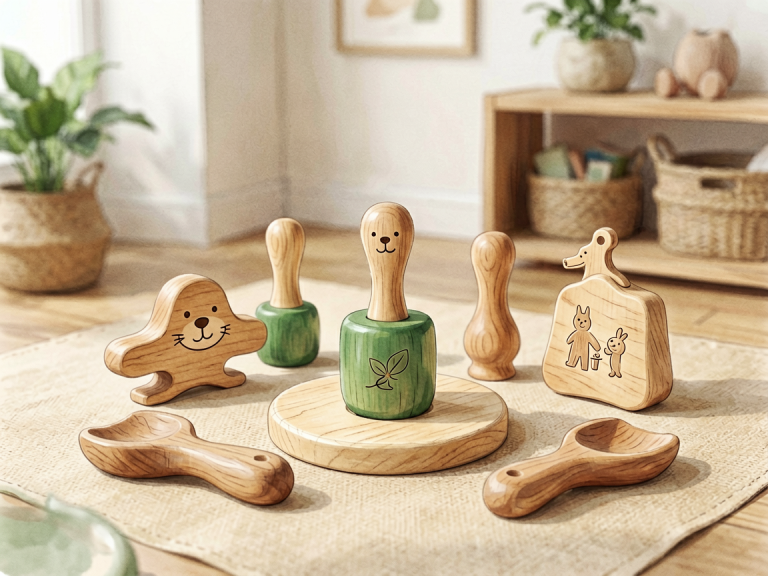
Montessori toys are not merely playthings; they are carefully crafted learning materials designed to support the Montessori method, which prioritizes the child as an active participant in their own education. The core belief is that children possess an innate drive to learn and that the environment should be prepared to facilitate exploration at their own pace. Montessori toys are typically made from natural materials such as wood, metal, and cloth, avoiding plastic and electronic components that might overstimulate or distract the child. They are often isolated in purpose—each toy targets a specific skill or concept, such as fine motor coordination, sensory discrimination, or mathematics. For example, the classic pink tower consists of ten wooden cubes that vary in size, allowing a child to build a tower while unconsciously grasping the concept of dimension and spatial relationships. The adult’s role is that of a guide: to present the material, demonstrate its use, and then step back, allowing the child to repeat the activity as many times as needed for mastery. The Montessori philosophy values concentration, order, independence, and respect for the child’s inner timetable.
STEM Education: Integration and Application
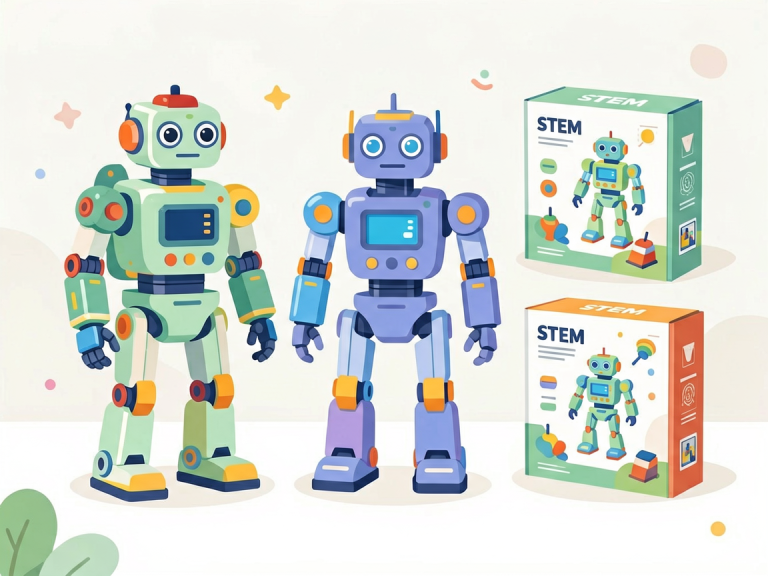
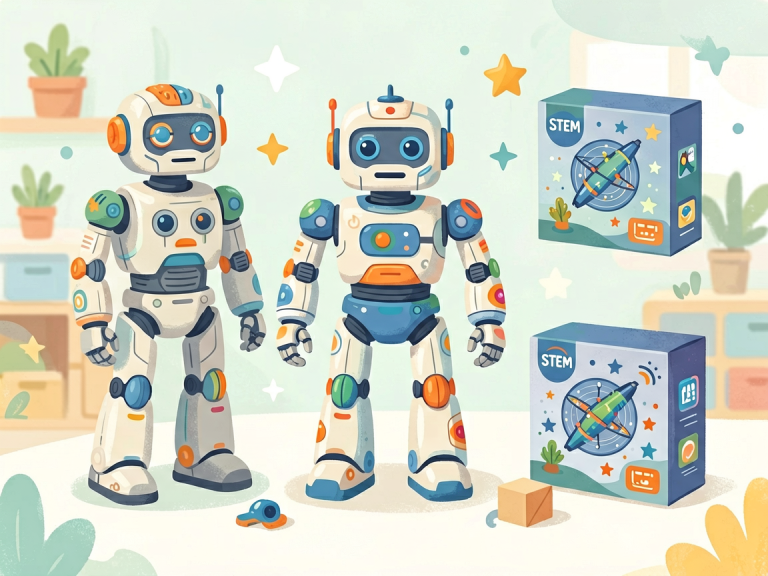
STEM toys, in contrast, are rooted in a more modern educational movement that seeks to integrate science, technology, engineering, and mathematics into playful experiences that mirror real-world problem-solving. The underlying philosophy is that children should develop foundational skills in these disciplines early on to thrive in an innovation-driven economy. STEM toys often encourage collaboration, trial-and-error experimentation, and the application of abstract concepts to concrete challenges. Unlike Montessori toys, which emphasize solitary, self-correcting work, many STEM toys are designed for group play or cooperative construction—think of building a bridge with a set of K’NEX or programming a small robot to navigate a maze. STEM toys frequently incorporate batteries, sensors, screens, or coding interfaces, reflecting their connection to contemporary technology. The goal is not merely to teach isolated facts but to cultivate a mindset of inquiry, perseverance, and interdisciplinary thinking. While Montessori focuses on the child’s natural developmental rhythms, STEM is more teleological: it prepares the child for future academic and professional demands.
Design and Material: Minimalism vs. Multi-Sensory Complexity
Montessori Toys: Simplified Beauty and Purpose
A Montessori toy’s design is characterized by minimalism and aesthetic appeal. Materials are chosen for their natural textures, warmth, and sustainability. Wooden blocks, metal bells, glass beads, and sandpaper letters are common components. The absence of loud colors, flashing lights, or electronic noises is intentional: it reduces sensory overload and allows the child to focus deeply on the task at hand. Each toy includes a built-in “control of error”—a feature that allows the child to self-detect mistakes without adult correction. For instance, in the Montessori cylinder blocks, each cylinder fits only into its corresponding hole; if a child inserts a cylinder into the wrong slot, it will not fit properly, providing immediate feedback. This design principle fosters independence and problem-solving without external judgment. Furthermore, Montessori toys are often graded—from simple to complex—so that successive materials build upon previous competencies. The explicit aim is to isolate a single concept (e.g., weight, texture, sound) and allow the child to explore it exhaustively before moving on.
STEM Toys: Modular, Interactive, and Technologically Infused
STEM toys are typically more modular, colorful, and technologically robust. They are often made from plastic, metals, and electronic components. Construction sets like LEGO Mindstorms or Snap Circuits allow children to combine pieces in endless configurations, encouraging creativity within a structured system. Many STEM toys are battery-operated or require connection to a computer or tablet, enabling interactive feedback such as sound effects, movement, or digital displays. The design is intentionally multi-sensory—bright LED lights, motors, and sensors engage a child’s visual and auditory senses while providing immediate results from their actions. However, this complexity can sometimes be a double-edged sword: if a toy malfunctions or requires sophisticated setup, the child may become frustrated or dependent on adult assistance. STEM toys also often include step-by-step instructions or online tutorials, which can limit open-ended exploration if the child strictly follows the prescribed path. The balance between guided instruction and free play is a critical design challenge.
Educational Goals: Inner Discipline vs. Outer Competence
Montessori Toys: Cultivating the Whole Child
The primary educational goal of Montessori toys is the holistic development of the child—cognitive, physical, emotional, and social. Specific skills include fine motor control (e.g., threading beads, using tweezers), sensory awareness (e.g., distinguishing sounds with sound cylinders), mathematical reasoning (e.g., the golden bead material for understanding place value), and language acquisition (e.g., sandpaper letters that combine tactile and visual learning). Montessori materials also promote concentration, orderliness, and executive function skills such as planning and self-regulation. Because the child is free to choose an activity and repeat it as desired, the learning is deeply internalized. There is no external reward or grade; the satisfaction comes from the activity itself. This approach is particularly effective for fostering intrinsic motivation and a love of learning that extends beyond early childhood. However, critics argue that the Montessori method may not adequately prepare children for the collaborative, technology-driven environments of later schooling and careers.
STEM Toys: Building Future-Ready Skills
STEM toys are explicitly designed to develop competencies directly applicable to the 21st-century workforce. They aim to promote problem-solving, logical reasoning, computational thinking, and engineering design processes. For example, a robotics kit teaches coding logic, spatial planning, and iterative testing. A chemistry set introduces the scientific method of hypothesis, experiment, observation, and conclusion. Many STEM toys also emphasize failure as a learning tool—children are encouraged to try, fail, and revise their models, building resilience and grit. Collaboration is another key goal; group STEM projects teach communication and teamwork, much like real-world engineering teams. The measurable outcomes of STEM play can be more tangible: a working robot, a structurally sound bridge, or a correctly programmed game. Yet, some educators caution that an overemphasis on STEM can neglect the equally important areas of arts, humanities, and social-emotional development. Moreover, the commercial nature of STEM toys often means they are rapidly updated, encouraging a consumption mindset rather than deep, sustained engagement.
Age Appropriateness and Developmental Stages
Montessori Toys: From Infancy to Elementary
Montessori toys are carefully sequenced to align with sensitive periods of development. For infants (0–12 months), materials include mobiles, grasping objects, and rattles that refine visual tracking and hand-eye coordination. Toddlers (1–3 years) engage with practical life materials such as pouring jugs, dressing frames, and simple puzzles that build independence and fine motor skills. Preschoolers (3–6 years) work with the full range of sensorial and academic materials: the binomial cube, sandpaper letters, spindle boxes, and color tablets. Early elementary children (6–9 years) use more abstract materials like the checkerboard for multiplication and specialized grammar symbols. The progression is gradual and respects the child’s readiness; there is no pressure to accelerate. Montessori toys are designed to be used repeatedly over weeks or months, allowing for deep mastery.
STEM Toys: Broad Categories but Often Age-Screened
STEM toys are typically marketed with broad age ranges, but their suitability varies greatly. Simple building blocks or magnetic tiles are appropriate for toddlers (18 months+) for spatial exploration. More complex construction sets (e.g., LEGO Duplo, simple gears) suit preschoolers. Elementary-age children (6–10) can handle snap circuits, basic coding robots like Botley or Code-a-Pillar, and beginner chemistry kits. Older children (10+) engage with advanced robotics (VEX, LEGO Mindstorms), microcontrollers (Arduino), and programming languages (Scratch, Python). One pitfall is that STEM toys often have a “sweet spot” of difficulty: too simple, and the child loses interest; too complex, and they become frustrated. Unlike Montessori’s built-in self-correction, the guidance of an adult or older sibling is frequently required for STEM toys to be effective. Additionally, many STEM toys are designed for a limited number of uses—once a circuit is built or a robot is programmed, the child may not revisit the same kit with the same enthusiasm, leading to a pattern of quick consumption.
Strengths and Limitations: A Balanced View
The Case for Montessori Toys
Montessori toys excel at nurturing concentration, independence, and a sense of order. They are durable, often heirloom-quality, and environmentally sustainable. The self-correcting feature reduces the need for adult intervention, making them ideal for independent play. Children who engage deeply with Montessori materials often demonstrate strong executive function skills and a calm, focused demeanor. The lack of electronic stimuli supports healthy sensory development and protects against the addictive dopamine loops of digital devices. Furthermore, Montessori toys are ageless in some respects—even adults find the geometric puzzles and classification activities soothing. The main limitation is that they can be expensive and require a significant investment in time for the adult to learn how to present them effectively. In a classroom setting, they demand trained Montessori guides. At home, parents may need to adopt a more hands-off approach, which can be challenging in a culture that prizes active instruction.
The Case for STEM Toys
STEM toys are unparalleled in demystifying technology and empowering children to become creators rather than passive consumers. They make abstract concepts tangible—a child who builds a circuit learns about electricity in a way no textbook can match. Many STEM toys encourage teamwork and communication, skills that are essential for modern workplaces. The iterative design process builds resilience and a growth mindset. Additionally, STEM toys are widely available at various price points, from affordable snap circuits to premium robotics kits. Their popularity has spurred innovation in educational toys, pushing even traditional manufacturers to include more problem-solving components. However, the downsides are notable: screen-based STEM toys can contribute to excessive screen time; electronic components may break or require replacements; and the sheer variety can lead to choice overload. Moreover, there is a risk that children focus on the “wow” factor (lights, sounds, movement) rather than the underlying learning. Without careful guidance, a child might treat a STEM kit as no more than a high-tech toy, missing the educational intent altogether.
How to Choose: Integration, Not Competition
Parents and educators need not choose one philosophy over the other. In fact, the two approaches can complement each other beautifully. A well-rounded play environment might include Montessori sensorial materials for the early years, gradually introducing simple STEM construction toys as the child’s fine motor skills and logical reasoning mature. For example, a three-year-old might work with the Montessori cylinder blocks to develop precise hand movements, then later build with magnetic tiles (a STEM toy that also involves spatial reasoning and geometry). An older child could use the Montessori golden beads to understand place value, then apply that understanding to a coding activity that involves counting loops or variables. The key is to observe the child’s interests and developmental stage. If a child shows fascination with how things work, STEM toys can be an excellent extension. If a child struggles with concentration or order, Montessori materials can provide a calming, structured counterbalance. Ultimately, the best toys are those that respect the child as an active learner, provide appropriate challenge, and invite repeated engagement—whether through the quiet self-correction of a Montessori puzzle or the collaborative excitement of building a working model.
Conclusion
Montessori toys and STEM toys represent two rich, evidence-informed traditions in childhood education. Montessori toys emphasize self-directed, sensory-based learning that cultivates inner discipline, concentration, and a deep connection to the natural world. STEM toys focus on external skills—problem-solving, technological literacy, and collaborative innovation—that prepare children for a future shaped by science and engineering. Each has its strengths and limitations, and neither is a panacea. The most effective approach is to curate a diverse play environment that draws from both philosophies, allowing children to experience the calm, purposeful exploration of Montessori alongside the dynamic, hands-on experimentation of STEM. By understanding the values embedded in each toy category, caregivers can make thoughtful choices that honor the whole child—mind, body, and spirit—while equipping them for the challenges and opportunities of the 21st century. In the end, the best toy is not defined by its label but by the quality of engagement it inspires, the questions it provokes, and the joy it brings to the process of discovery.