The Ultimate Guide to Choosing Screen-Free Toys: Tips for Parents
In an era where children as young as toddlers can swipe a tablet before they can tie their shoes, the concept of a "screen-free" childhood seems almost radical. Yet pediatricians, child development experts, and educators increasingly warn that excessive screen time can impair language development, reduce attention spans, and limit creative play. The antidote lies not in banning technology outright, but in deliberately curating a home environment filled with thoughtfully chosen screen-free toys. This guide will walk you through evidence-based tips for selecting toys that foster imagination, social skills, fine motor development, and a genuine love for unstructured play—all without a single pixel.
Why Screen-Free Toys Matter More Than Ever
Before diving into the "how," it’s essential to understand the "why." Screen-free toys are not simply the absence of digital interactivity; they are active tools for cognitive and emotional growth. When a child builds a tower with wooden blocks, they learn physics through trial and error. When they pretend a cardboard box is a spaceship, they engage in narrative construction, perspective-taking, and problem-solving. Screen-based toys, by contrast, often deliver pre-packaged stimuli that require passive consumption. Studies from the American Academy of Pediatrics link high screen exposure in early childhood to delays in executive function—the mental skills that help us plan, focus, and regulate emotions. Screen-free toys, on the other hand, provide open-ended opportunities for children to create their own rules, experience boredom, and discover intrinsic motivation. This foundational understanding will guide every decision you make as a parent or caregiver.
Key Tips for Choosing Screen-Free Toys
1. Prioritize Open-Ended Play Potential
The single most important criterion for a screen-free toy is that it offers multiple ways to play. A set of plain wooden blocks can become a castle, a parking garage, a bridge, or a counting tool. A simple doll can be a baby, a friend, a doctor’s patient, or a superhero. Open-ended toys adapt to a child’s developmental stage and interests, growing with them over years. Conversely, toys with a single fixed purpose—like an electronic robot that only repeats pre-recorded phrases or a puzzle with only one correct solution—limit creativity. When you browse a store or an online catalog, ask yourself: "Can my child use this toy in three different ways? Can they invent a new game with it next week?" If the answer is no, it’s likely a better candidate for a screen-based activity than a truly enriching toy.
2. Match the Toy to the Child’s Developmental Stage
A toy that is too advanced can frustrate a child; one that is too simple will bore them. Understanding age-appropriate milestones helps you select toys that challenge without overwhelming. For infants (0–12 months), focus on sensory exploration: soft rattles, textured balls, crinkly fabric books, and wooden teethers. These toys stimulate touch, sight, and hearing without batteries. For toddlers (1–3 years), push-and-pull toys, shape sorters, nesting cups, and simple peg puzzles support gross motor skills and early problem-solving. Preschoolers (3–5 years) thrive with construction sets (e.g., magnetic tiles, large LEGO Duplo), pretend-play props (kitchen sets, doctor kits, costumes), and art supplies (chunky crayons, watercolor paints, play dough). School-age children (6+) benefit from more complex building kits (K’Nex, marble runs), strategy board games, science experiment kits, and craft materials that allow project-based work. Always read age recommendations, but also observe your child’s unique interests and readiness.
3. Choose Natural, Safe, and Durable Materials
Screen-free toys don’t have to be expensive wooden masterpieces, but they should be safe. Avoid toys with small parts that are choking hazards for children under three. Look for non-toxic finishes, especially on items that go into mouths—many plastic toys contain BPA or phthalates, whereas untreated wood, organic cotton, and food-grade silicone are safer alternatives. Durability matters too: a well-made wooden train track set can last through multiple siblings and even be handed down, while a cheap plastic toy often breaks within weeks, ending up in a landfill. By investing in quality materials, you not only reduce waste but also teach children to care for their belongings. Additionally, natural materials like wood, wool, and cotton have a warm, tactile feel that plastic cannot replicate, encouraging sensory engagement that screens simply cannot provide.
4. Encourage Imagination Over Instruction
One of the hidden dangers of many modern toys is that they come with explicit instructions, pre-set storylines, or "correct" ways to play. A toy that loudly announces "Now it’s time to feed the bear!" or "Press the button to hear the fire truck siren!" effectively hijacks a child’s narrative. Instead, look for toys that are silent, waiting for the child to assign meaning. A set of plain wooden people or animals invites storytelling. A collection of fabric scraps can become costumes, blankets, or tents. Even a simple deck of cards can be used for matching games, building houses, or inventing new rules. The best screen-free toys are those that say nothing—and let the child’s voice fill the silence.
5. Foster Social Interaction and Cooperative Play
Screen time is inherently isolating, even when shared. In contrast, screen-free toys can be powerful tools for building relationships. Board games forced players to take turns, negotiate rules, and handle wins and losses gracefully. Building blocks and large construction sets encourage teamwork—two children can collaborate on a giant castle. Pretend-play props like a market stall or a puppet theater invite role-playing and language exchange. When choosing toys, consider whether they can be used by two or more children at once. Avoid single-player electronic gadgets that monopolize attention. Even a simple ball thrown back and forth teaches coordination, eye contact, and shared joy.
Types of Screen-Free Toys by Age Group
For Infants (0–12 Months): The Foundations of Sensory Play
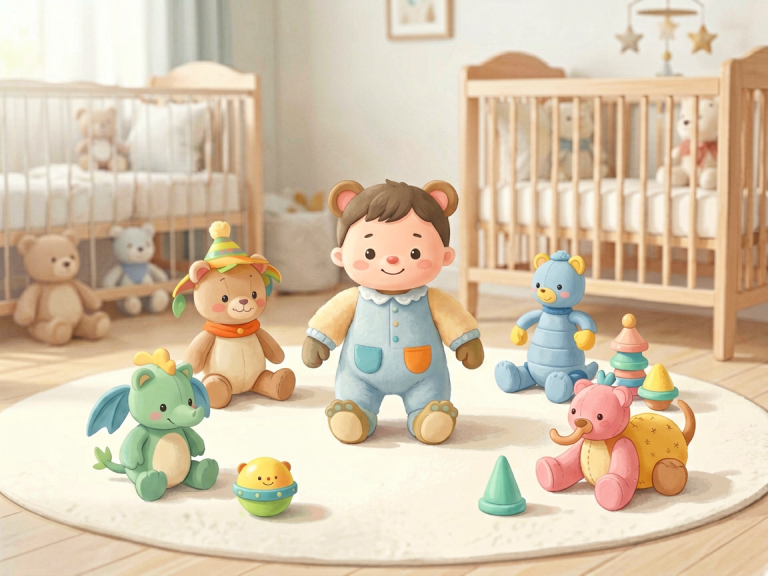
At this stage, babies are discovering the world through their senses. High-contrast black-and-white cards help develop vision. Soft fabric books with crinkly pages and mirrors stimulate touch and self-awareness. Grasping beads, wooden rings, and rattles encourage fine motor control. A play mat with dangling objects invites reaching and kicking. Avoid anything with flashing lights or sounds—these overstimulate the developing brain. Instead, the best screen-free toys for infants are those that respond to their own actions: a rattle shakes when they move it, a ball rolls when they push it. This cause-and-effect learning is the precursor to logical thinking.
For Toddlers (1–3 Years): Movement, Imitation, and Problem-Solving
Toddlers are on the move, and their toys should support their need to climb, push, pull, and sort. A sturdy wooden push cart or a ride-on toy helps develop balance and leg strength. Shape sorters and simple jigsaw puzzles (with knobs) teach spatial reasoning. A set of stacking cups or rings introduces concepts of size and order. Imitation is huge at this age: toy telephones, child-sized brooms, and play kitchens let toddlers mimic adult behavior, building social understanding. Choose items that are large enough to not be choking hazards and have smooth edges. Avoid toys with small magnets or buttons that can be removed.
For Preschoolers (3–5 Years): Imagination and Structured Play
Preschoolers have blossoming imaginations and longer attention spans. This is the golden age for pretend play. A wooden dollhouse with diverse characters, a train table with tracks, a dress-up trunk with costumes, and a puppet theater are all excellent choices. Building sets like magnetic tiles or large LEGO bricks allow both physical construction and storytelling. Art supplies—washable markers, finger paints, child-safe scissors, and modeling clay—support creativity and fine motor skills. Board games like Candy Land and Hi Ho! Cherry-O introduce turn-taking and counting. The key is to provide a rich environment where a child can choose between different types of play, but not so many toys that they become overwhelmed. Rotate toys every few weeks to maintain novelty.
For School-Age Children (6+): Complexity, Strategy, and Creativity
As children enter elementary school, they crave challenge and mastery. Construction sets become more intricate: LEGO Technic, marble runs, magnetic building balls, or woodworking kits for older kids. Board games shift to strategy-based ones like Settlers of Catan, Ticket to Ride (junior versions), or chess. Science kits—crystal growing, volcano eruptions, simple circuits—combine learning with excitement. Arts and crafts evolve into knitting looms, bead jewelry kits, or origami paper. This is also an age where outdoor screen-free toys shine: a jump rope, a frisbee, a soccer ball, or a slackline encourage physical activity and peer socialization. The goal is to provide tools that demand thinking, planning, and perseverance.
Common Pitfalls to Avoid When Choosing Screen-Free Toys
The "Educational" Trap
Many toys market themselves as "educational" with bells and whistles that claim to teach letters or numbers. In reality, direct instruction from a toy is far less effective than playful hands-on discovery. A child who plays with a set of magnetic letters on the fridge will learn the alphabet more naturally through touching, arranging, and seeing them in context than through a plastic toy that repeats "A is for Apple." Trust the child’s innate curiosity rather than a toy’s electronic boast.
The "More Is Better" Fallacy
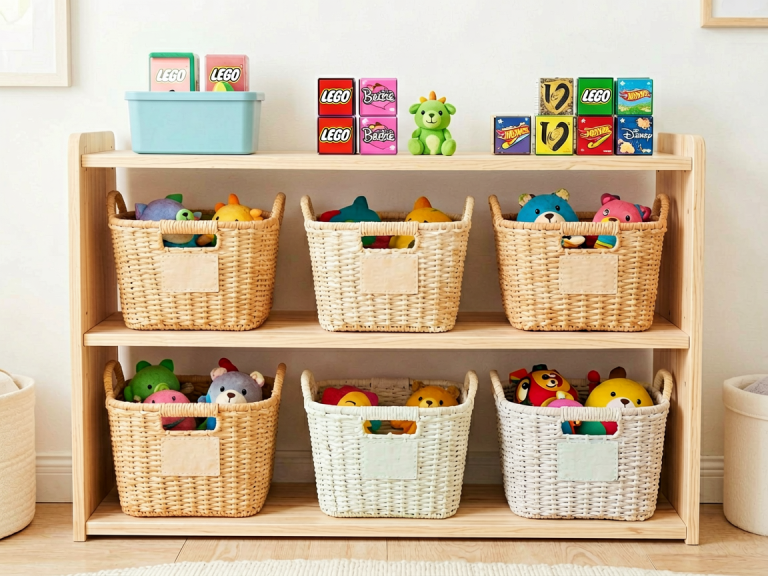
A cluttered playroom actually inhibits deep engagement. When children are surrounded by dozens of toys, they flit from one to another without settling into sustained play. Experts recommend having no more than a few types of toys accessible at a time, and storing the rest in rotation. A small collection of high-quality, open-ended toys is far more beneficial than a mountain of cheap, single-function plastic gadgets.
The "Passively Sophisticated" Toy
Some toys look impressive but require little from the child. An electronic toy that talks, moves, and lights up without any input from the child teaches nothing except passive watching. A beautifully crafted wooden train set with magnetic cars, on the other hand, requires the child to connect tracks, push the train, and create a story. When in doubt, choose the toy that demands action, not the one that performs action.
Conclusion: The Joy of Unplugged Play
Choosing screen-free toys is not about rejecting technology; it’s about intentionally carving out time for the kind of deep, imaginative, and relationship-building play that screens cannot replicate. By prioritizing open-endedness, age-appropriateness, material safety, and social interaction, you equip your child with the tools to explore, create, and connect. Start small: maybe replace one battery-operated toy with a set of plain wooden blocks. Observe how your child interacts with it—the slow, thoughtful stacking, the triumphant crash, the quiet murmuring of a story in the making. That is the sound of childhood at its richest. In a world buzzing with notifications, the stillness of a simple toy offers something priceless: the freedom to grow without a screen.