Building More Than Blocks: Why Parents Should Invest in Building Sets for Their Children
Introduction
In the age of digital screens, virtual reality, and endless streaming content, parents often find themselves grappling with a fundamental question: what toys actually benefit their children’s development? Among the vast array of options available, building sets—such as LEGO bricks, magnetic tiles, wooden blocks, and advanced construction kits—stand out as timeless classics. Yet many parents hesitate: are these toys worth the cost? Do they truly promote learning, or are they just another source of clutter? This article explores the multifaceted advantages of building sets, addresses common concerns, and provides a balanced perspective to help parents make an informed decision. Ultimately, the evidence suggests that building sets are not merely toys but powerful tools for cognitive, social, and emotional growth.
Cognitive Development: Engineering Young Minds
Building sets are often described as “toys that teach,” and for good reason. When a child picks up a handful of blocks or clicks together interlocking bricks, they engage in a complex cognitive process. First, there is spatial reasoning—the ability to visualize how three-dimensional objects fit together. Studies have shown that early spatial skills are strong predictors of later success in science, technology, engineering, and mathematics (STEM). A child constructing a tower must consider balance, symmetry, and geometric relationships. They learn through trial and error: why does the structure fall? How can I make it taller without collapsing? These questions foster a natural sense of physics and engineering.
Moreover, building sets encourage problem-solving and critical thinking. Unlike many passive toys that do the work for the child, a pile of loose pieces presents a blank slate. The child must decide what to build, plan steps, and adapt when things go wrong. This process mirrors real-world problem-solving: identify a goal, test strategies, and refine based on feedback. For instance, a child attempting to build a car with moving wheels must figure out how to attach axles and ensure the wheels rotate freely. Such challenges build resilience and persistence—qualities that are far more valuable than memorizing facts.
Creativity and Imagination: No Limits, Only Possibilities
One of the most compelling arguments for buying building sets is their ability to unleash creativity. Unlike toys with fixed functions—a battery-operated robot that only moves forward, or a doll that says pre-recorded phrases—building sets are open-ended. A set of magnetic tiles can become a castle one day and a spaceship the next. A box of LEGO bricks can transform into a zoo, a pirate ship, or an abstract sculpture. This open-endedness invites divergent thinking, the type of creativity that generates multiple solutions to a single problem. In an era where many children are glued to structured apps and videos, building sets offer a rare opportunity for free play.
Research in developmental psychology consistently finds that creative play enhances cognitive flexibility, the ability to switch between different ideas and perspectives. A child who builds a tower and then decides to turn it into a bridge is practicing flexible thought. Furthermore, building sets can be combined with other toys—action figures, animals, or even household items—to create elaborate narratives. This storytelling aspect strengthens language skills, narrative thinking, and emotional understanding. The child becomes an architect, director, and storyteller all at once.
Social and Emotional Skills: Learning Together
Building sets are often portrayed as solitary activities, but they can be profoundly social. When siblings or friends build together, they must negotiate roles, share limited resources, and collaborate toward a common goal. “I want to build the roof, you build the walls” may seem simple, but it involves communication, compromise, and empathy. A child who becomes frustrated when their structure collapses learns to manage emotions and ask for help. Playing with building sets in a group setting also teaches turn-taking, conflict resolution, and the value of teamwork.
From an emotional perspective, building sets provide a healthy outlet for stress and frustration. The satisfying click of a brick snapping into place, the physical act of manipulating small objects, and the sense of accomplishment upon completing a complex model can be calming and meditative. For children with anxiety or attention difficulties, the repetitive nature of building can serve as a grounding exercise. Additionally, the process of making mistakes and rebuilding fosters a growth mindset—the belief that abilities can be developed through effort. When a child knocks down their tower and tries a different design, they learn that failure is not final but a step toward improvement.
Practical Considerations: Age, Quality, and Budget
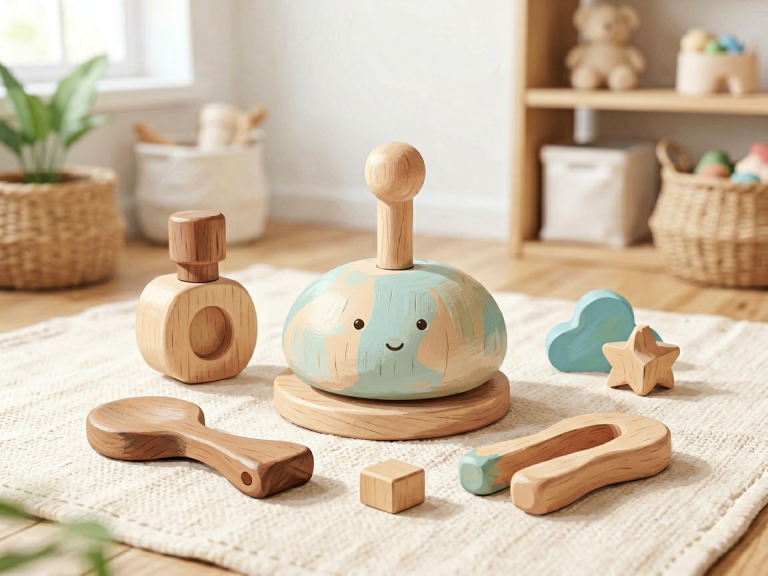
Despite the profound benefits, parents must carefully consider the practical aspects of purchasing building sets. Not all building sets are created equal, and factors such as age appropriateness, material safety, and cost matter greatly. For toddlers and preschoolers, large wooden blocks or chunky plastic bricks are ideal because they prevent choking hazards and are easy to grasp. At this age, the goal is sensory exploration and motor skill development, not complex construction. For older children, kits with smaller pieces and specialized components—such as gears, motors, or electronics—can introduce concepts of mechanics and programming.
Quality should never be compromised. Cheap, poorly made sets may break easily, contain harmful chemicals, or have sharp edges. Brands like LEGO, Magna-Tiles, and Brio have built reputations for durability and safety, though they come at a higher price. However, parents need not break the bank. Garage sales, online marketplaces, and toy libraries offer affordable second-hand options. Additionally, many parents find that a smaller investment in a high-quality set yields years of use, whereas cheap sets often end up in the trash within weeks.
Another common concern is clutter. Building sets, especially LEGO, have a notorious reputation for scattering across floors and getting lost under furniture. Parents can mitigate this by establishing clear rules: one set out at a time, a designated storage bin, and a “clean-up before new activity” policy. Involving children in the organization process teaches responsibility. Some families even dedicate a corner of the playroom or a large tray to keep pieces contained. The mess is a small price to pay for the developmental rewards.
Addressing Common Misconceptions
Some parents worry that building sets are too structured or that children will merely follow instructions and lose creativity. While it is true that many sets come with instruction booklets, these are not the only way to play. A healthy approach is to allow children to build the suggested model once (which builds reading comprehension and sequencing skills) and then encourage them to dismantle it and create something of their own. The instructions are a scaffold, not a cage. In fact, designers of high-quality sets intentionally include versatile pieces that can be repurposed.
Another misconception is that building sets are only for boys—a persistent gender stereotype. In reality, building toys benefit all children regardless of gender. Girls who play with construction sets develop the same spatial and mathematical skills as boys, and they often bring unique creative perspectives. Parents should actively counteract gender bias by offering building sets to daughters and encouraging open-ended play. Many companies now market gender-neutral sets with themes like botanical gardens, architecture, and animals, appealing to a wide range of interests.
Conclusion: A Sound Investment in Childhood
After examining the cognitive, creative, social, and emotional benefits of building sets, the answer to the question “Should parents buy building sets?” is a resounding yes—with caveats. Building sets are not a panacea; they work best when combined with other forms of play, outdoor activity, and parental involvement. But they offer a unique combination of hands-on learning, imaginative freedom, and skill development that few other toys can match. In a world increasingly dominated by passive screen time, building sets provide an active, constructive alternative.
Parents should choose age-appropriate, high-quality sets that match their child’s interests, and they should model creative building themselves. A parent sitting on the floor with a child, constructing a bridge or a castle, creates memories and strengthens bonds. The initial cost and inevitable mess are minor drawbacks compared to the long-term gains: a child who thinks critically, solves problems creatively, and collaborates with others. Building sets are not just blocks; they are foundations for a lifetime of learning. So, the next time you see a colorful box on the shelf, do not hesitate—grab it, bring it home, and build something wonderful together.