Are Building Blocks Worth It for Preschoolers? Unlocking the Power of Play
Introduction: The Timeless Toy in a Digital Age
In an era dominated by glowing screens, interactive apps, and voice-activated smart toys, the humble building block might seem quaint, even outdated. Yet, every year, millions of parents find themselves standing in a toy aisle, staring at a wall of colorful wooden or plastic blocks, and asking the same question: “Are building blocks really worth the investment for my preschooler?” The answer, supported by decades of developmental research, is a resounding yes—but only if we understand why. Building blocks are not merely entertainment; they are a sophisticated learning tool that scaffolds cognitive, motor, social, and emotional development during the critical preschool years (ages 3–5). This article will explore the multifaceted benefits of building blocks, address potential drawbacks, and ultimately help parents decide how to integrate them into their child’s play in a worthwhile way.
Cognitive Development: More Than Just Stacking
One of the most compelling arguments for building blocks is their profound impact on cognitive skills. Preschoolers are at a stage where their brains are developing executive functions—the set of mental processes that enable planning, focus, memory, and self-control. Building blocks naturally exercise these functions. When a child decides to create a tower, they must first visualize a goal (e.g., “I want a castle with a door”), plan a sequence of steps (place a large square, then a cylinder, then a ramp), and continuously monitor progress. If the tower wobbles, they must employ problem-solving: “Why is it falling? Is the base too small? Should I add more support?” This trial-and-error process is a real-world lesson in engineering, physics, and logical reasoning.
Furthermore, blocks introduce mathematical concepts in an intuitive, hands-on manner. Children learn about size, shape, weight, symmetry, and spatial relationships. They begin to understand that two small blocks can equal one longer block, or that a square can be turned to form a diamond. Research from the University of Chicago found that even brief play with blocks in preschool could improve children’s spatial reasoning—a skill strongly linked to later success in STEM fields. Blocks also enhance symbolic thinking: a wooden rectangular block might become a phone, a bridge, or a piece of toast. Such pretend play is the foundation of abstract cognition, allowing children to hold a mental representation of something that is not physically present.
Fine Motor Skills and Hand-Eye Coordination
Preschoolers are still refining their fine motor control. Picking up a small block, rotating it to align with another, and gently placing it without knocking over the structure requires precise small-muscle movements. This builds dexterity in fingers and hands, which directly supports later skills like writing, cutting with scissors, and buttoning clothes. Unlike many digital toys that require only a tap or swipe, physical blocks demand intentional manipulation. The bilateral coordination needed to stabilize a stack with one hand while adding a block with the other also strengthens neural connections between the brain’s two hemispheres.
Additionally, blocks provide proprioceptive feedback—the sense of weight, pressure, and texture. A child learns how much force to apply: too little and the block slides; too much and the structure collapses. These sensory experiences are crucial for developing body awareness and motor planning. For preschoolers who struggle with clumsiness or delayed fine motor skills, regular block play can serve as a therapeutic activity.
Social and Emotional Growth: Learning to Share and Persevere
Blocks are inherently social toys, especially in classrooms or playgroups with siblings. When two or three preschoolers build together, they must negotiate, share space and materials, and coordinate their visions. One child might say, “I want to make a long road,” while another insists, “Let’s build a big tower.” Resolving these conflicts teaches compromise, communication, and empathy. Studies in early childhood education show that block play fosters collaborative problem-solving more effectively than many other activities, because the goal is tangible and the consequences of poor teamwork are immediately visible—the tower falls.
Equally important is the emotional lesson of resilience. Building blocks are notoriously unstable. A tower might teeter and crash just before completion, leading to tears or frustration. But with adult guidance, preschoolers learn that failure is not the end. They can try a different strategy, rebuild stronger, or laugh at the accident. This process builds perseverance, a growth mindset, and emotional regulation—skills that are far more valuable than any academic fact. For a preschooler, experiencing a collapsed tower and choosing to rebuild is a profound act of character development.
Creativity and Open-Ended Play
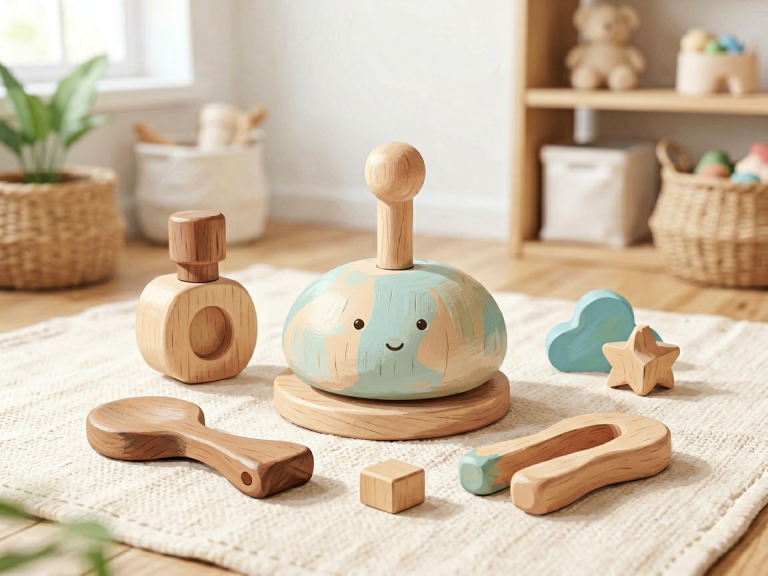
Unlike many modern toys that have fixed functions (e.g., a battery-operated car that only goes forward), building blocks are open-ended. A set of plain wooden blocks can become a zoo in the morning, a spaceship in the afternoon, and a city skyline by evening. There are no instructions dictating the “right” way to play. This freedom ignites imagination and divergent thinking—the ability to generate multiple ideas from a single resource. A child who learns to see a block as a wall, a phone, or a hat is developing cognitive flexibility, a hallmark of creative intelligence.
Furthermore, open-ended play reduces the pressure to perform. A preschooler who fails to build a perfect castle has not “failed”; they simply have a different structure. This low-stakes environment encourages experimentation and risk-taking. In contrast, some educational toys that require correct answers (like puzzles with specific slots) can inadvertently cause anxiety in young children. Blocks offer a safe sandbox for trial and error.
Potential Drawbacks: Cost, Safety, and Overwhelm
No discussion is complete without acknowledging possible downsides. The first concern is cost: high-quality building block sets, especially those made of sustainably harvested wood or non-toxic plastics, can be expensive. A name-brand wooden block set with 100 pieces may cost $50–$100. However, this is a one-time purchase that lasts for years (even decades if passed down). Cheaper alternatives exist, but parents must be vigilant about safety: small blocks can be a choking hazard for toddlers under 3, and cheap paint or plastic may contain harmful chemicals like lead or phthalates. Always look for certifications such as ASTM or EN71.
Another drawback is the potential for overstimulation or mess. If a preschooler dumps all 200 blocks onto the floor, the sheer quantity can overwhelm them, leading to scattered play rather than focused building. Some children may become frustrated if they cannot achieve a specific structure. In these cases, parental guidance is needed—not to take over, but to model strategies like sorting blocks by shape, starting with a simple base, or using a tray to contain the chaos. A well-organized play space with a few targeted sets is often more valuable than a giant, chaotic pile.
How to Maximize the Worth of Building Blocks
To ensure building blocks are truly “worth it,” parents and caregivers should follow a few evidence-based practices:
- Be present, but not directive. Sit nearby, offer encouragement (“I see you’re making a tall tower!”), and ask open-ended questions (“What do you think will happen if you add one more block?”). Avoid imposing your own vision (“Let’s make a house this way”).
- Provide variety, not quantity. A small set of unit blocks (standard uniform shapes) combined with a few accessories—like plastic animals, people, or cars—is more beneficial than a massive set of novelty shapes. Unit blocks allow children to learn proportions and symmetry.
- Rotate toys. Instead of keeping all blocks out all the time, bring them out for specific play sessions. This maintains novelty and focus.
- Create challenges. Occasionally suggest a playful constraint: “Can you build a bridge that a toy car can drive under?” or “Let’s see how high a tower we can make with only ten blocks.” This deepens problem-solving.
- Integrate literacy and storytelling. After building, encourage the child to tell a story about their creation. This connects block play to language development and narrative skills.
Conclusion: A Foundation for Life
So, are building blocks worth it for preschoolers? Absolutely—but not as a magical cure-all. Their worth depends on how they are used, the quality of materials, and the role of the adult in facilitating play. Unlike flashy electronic toys that promise instant engagement but often deliver passive consumption, blocks demand active creation. They teach children that they are capable builders—of towers, of ideas, of friendships, and of resilience. In a world that increasingly prizes quick answers and external validation, the slow, messy, joyful process of stacking and re-stacking blocks offers something irreplaceable: the confidence that one can try, fail, and try again. And that, above all, is worth every penny.
(Word count: approximately 1,050)