Are Building Blocks Worth It for 18-Month-Olds? A Comprehensive Analysis
Introduction
Parenthood often brings a flood of questions about the best toys for a child’s development. Among the most classic and enduring playthings is the humble building block. But are building blocks truly worth introducing to an 18-month-old, an age when a toddler is just beginning to explore the world with newfound mobility, curiosity, and a rapidly developing brain? The short answer is yes—but not all blocks are created equal, and the benefits depend heavily on how they are used. This article explores the developmental, cognitive, and motor benefits of building blocks for 18-month-olds, addresses safety and practical considerations, and offers guidance for parents on how to maximize the value of this timeless toy. By the end, you will have a thorough understanding of whether investing in building blocks is a wise choice for your toddler.
The Developmental Landscape at 18 Months
Before evaluating building blocks, it is essential to understand what an 18-month-old is capable of and what they are striving to achieve. At this age, toddlers are in the midst of a major developmental leap. They are typically walking independently, climbing onto low furniture, and using their hands with increasing precision. Their attention span remains short—often only a few minutes—but their curiosity is boundless. Language skills are emerging, with many 18-month-olds using 10 to 50 words and understanding far more. Socially, they engage in parallel play rather than cooperative play, meaning they enjoy being near other children but do not yet share or take turns.
Cognitively, an 18-month-old is beginning to understand cause and effect, object permanence, and simple problem-solving. They love to stack, dump, fill, and empty containers. They are also entering a stage where imitation and pretend play begin to surface. This developmental backdrop makes building blocks uniquely suited to their needs—blocks offer open-ended opportunities that align perfectly with these emerging skills.
Subheading 1: Cognitive and Motor Skill Development
One of the strongest arguments in favor of building blocks is their capacity to promote fine motor skill development. At 18 months, a toddler’s pincer grasp—the ability to pick up small objects between thumb and forefinger—is still maturing. Grasping blocks of various sizes, lifting them, and attempting to place them on top of one another requires significant hand-eye coordination. This repetitive action strengthens the small muscles in the hands and fingers, which are crucial later for writing, buttoning clothes, and using utensils.
Moreover, building blocks support spatial awareness and early geometry. When a child tries to balance a square block on a triangular one, they are learning about shapes, sizes, and the physical laws of balance and gravity. Even if the tower topples after two blocks, the toddler is internalizing that certain configurations work and others do not. This is a foundational step in logical thinking and problem-solving. Research from child development experts, including studies cited by the American Academy of Pediatrics, indicates that block play is associated with improved spatial reasoning and later mathematical ability.
Language development also gets a boost. As you play alongside your 18-month-old, you can name colors, shapes, and sizes (“red block,” “big square,” “on top”). You can use phrases like “stack it,” “knock it down,” or “put the blue one here.” This rich verbal interaction helps expand vocabulary and comprehension. Even when playing alone, toddlers often babble or talk to themselves, practicing sounds and words.
Subheading 2: Safety and Practical Considerations
Given that 18-month-olds explore with their mouths as well as their hands, safety is paramount. Not all building blocks are suitable for this age. The primary risk is choking. Blocks must be large enough that they cannot fit entirely into a child’s mouth. A good rule of thumb is that any block should be at least 1.25 inches (about 3.2 centimeters) in diameter—preferably larger. Also, avoid blocks with small magnets, detachable parts, or painted finishes that could chip or contain toxic lead or phthalates.
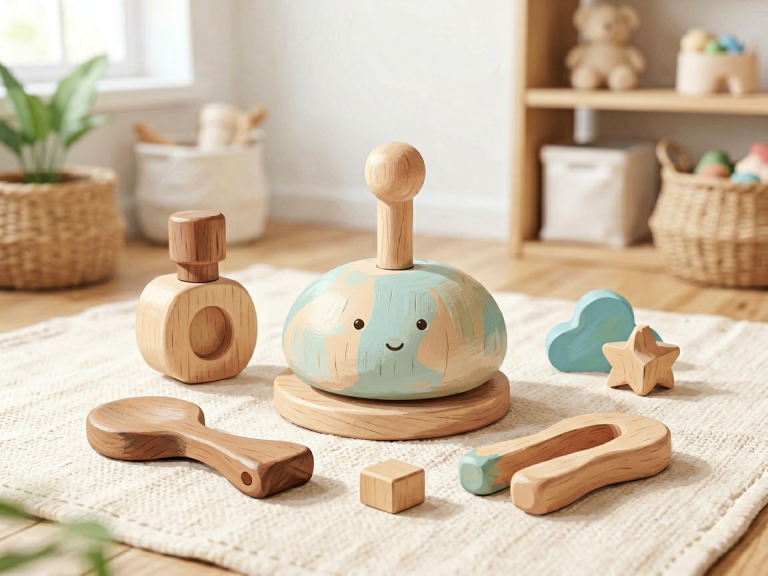
Materials matter. Soft fabric or foam blocks are excellent for younger toddlers because they are lightweight, quiet, and pose no risk of injury if thrown or fallen upon. Wooden blocks are durable and classic but ensure they are made from solid, untreated or non-toxic coated wood with rounded edges. Plastic blocks can work if they are BPA-free and large enough. Avoid rigid plastic blocks with sharp corners. Magnetic blocks, while popular, are not recommended until at least age 3 due to the risk of swallowing magnets, which can cause serious internal injury.
Supervision is key. You should always be within arm’s reach when your 18-month-old plays with blocks, not only to prevent accidents but also to guide and engage. Additionally, keep the play area free of clutter and ensure the child is seated or standing on a soft surface to cushion any falls.
Subheading 3: Types of Blocks That Appeal to 18-Month-Olds
Not all blocks offer the same value. For an 18-month-old, simplicity wins. Basic wooden or foam cubes, rectangular prisms, and cylinders are ideal because they are easy to grasp and stack. Avoid sets that require precise alignment or have complex interlocking mechanisms—these frustrate rather than challenge. Chunky blocks with different textures or a slight weight difference can add sensory engagement. Some sets include blocks with painted letters or numbers, but these are visually stimulating rather than educational at this age; the child is more focused on the physical act of stacking than on reading.
Stacking cups or nesting blocks are also excellent options. They allow a toddler to practice placing smaller into larger, an act that reinforces concepts of size and order. These are often more forgiving than traditional blocks because they don’t require perfect balance. Another popular variant is the “block cart” or “block wagon” that pulls along, giving the child a dual purpose: building and transporting. This encourages gross motor movement as they carry blocks around the room.
Subheading 4: How to Introduce Building Blocks for Maximum Benefit
Introducing blocks to an 18-month-old should be a gradual, playful process. Start by simply letting the child explore the blocks freely. Sit on the floor with them and show how to stack two blocks, then knock them down with a joyful “boom!” Toddlers love cause-and-effect—they will likely want to imitate the knocking-down motion first, which is perfectly fine. Allow them to set their own pace.
Over time, you can model more complex actions, such as building a simple tower of three or four blocks. Do not expect perfection; at this age, a two-block tower is an achievement. Celebrate every attempt. You can also incorporate naming games: “Where is the red block? Can you hand me the red block?” or “Let’s put the blue one on top.” Use exaggerated facial expressions and enthusiastic tone to maintain engagement.
It is equally important to know when to step back. If your child becomes frustrated because a tower keeps falling, offer gentle help without taking over. Sometimes it’s better to redirect to a different activity—like filling a bucket with blocks and dumping them out—which also builds fine motor and cognitive skills. Remember that the primary goal is joy and exploration, not a finished product.
Subheading 5: Potential Drawbacks and How to Mitigate Them
Despite their many benefits, building blocks are not without potential downsides for 18-month-olds. The most obvious is the mess. Blocks scattered across the floor can become a tripping hazard for adults and a frustration for parents who value order. This can be mitigated by designating a specific play mat or bin, and by making clean-up a simple game. At 18 months, children can be taught to “put the blocks in the box” with repeated modeling and encouragement.
Another issue is that some toddlers may lose interest quickly. An 18-month-old’s attention span is naturally short, and blocks might be abandoned after 30 seconds in favor of a more stimulating toy. This is normal and does not mean blocks are a waste. Rotating toys—keeping blocks out for a few days, then putting them away for a week—can renew interest. Also, combine blocks with other toys: placing a small action figure on top of a block tower, or using blocks as pretend food, can extend playtime.
Finally, there is the concern that blocks might be too simplistic in an era of electronic, flashy toys. Yet research consistently shows that open-ended, non-electronic toys offer deeper developmental benefits because they require active, imaginative engagement rather than passive reception. Blocks are a tool for the child to create, not just to consume.
Conclusion: Are Building Blocks Worth It?
Given the evidence, the answer is a resounding yes—building blocks are not only worth it for 18-month-olds; they are among the most valuable toys you can provide. They support fine motor skills, spatial reasoning, language development, and problem-solving in a natural, playful way. They also foster creativity and provide a foundation for later mathematical and scientific thinking. With proper attention to safety—choosing large, non-toxic blocks and supervising play—the risks are minimal. The mess and occasional loss of interest are easily managed with smart parenting strategies.
Ultimately, blocks are an investment in your child’s development that pays dividends for years. The tower may topple, but the learning that happens in the process stands firm. So go ahead: buy that set of wooden or foam blocks, sit down on the floor, and watch your 18-month-old build not just a tower, but a brain.