Building Blocks and Magnetic Tiles for 6-Month-Olds: A Parent’s Guide to Safe Sensory Play
Introduction
The first year of life is a whirlwind of rapid development. By six months, most infants have begun to sit with support, reach for objects, and explore the world through their mouths and hands. As parents, we naturally want to provide toys that stimulate curiosity, enhance motor skills, and lay the groundwork for cognitive growth. Among the most popular early-learning toys are building blocks and magnetic tiles. But are these classic playthings appropriate for a six-month-old? The short answer is: it depends entirely on the specific design, materials, and safety features. This article examines the developmental needs of a half-year-old, evaluates the risks and benefits of traditional building blocks versus magnetic tiles, and offers evidence-based recommendations for safe, engaging alternatives.
—
The Developmental Needs of a 6-Month-Old
At six months, a baby is in the throes of sensorimotor development, a term coined by psychologist Jean Piaget to describe the stage when infants learn through sensory experiences and physical actions. Key milestones include:
- Oral exploration: Everything goes into the mouth. This is how babies learn about texture, temperature, and shape.
- Grasping and releasing: The palmar grasp is still dominant, but the pincer grasp (using thumb and forefinger) is just beginning to emerge.
- Visual tracking: Babies can follow moving objects and are fascinated by contrasting colors and patterns.
- Cause and effect: They start to understand that shaking a rattle produces sound, or that dropping a toy makes it disappear.
To support these milestones, toys must be:
- Large enough to prevent choking (no smaller than 1.25 inches in diameter, per US safety standards).
- Free of small parts that could detach and be swallowed.
- Made of non-toxic, washable materials, since drool and mouthing are constant.
- Soft or rounded to avoid injury from falls or throws.
With this lens, let us examine the two toy categories in question.
—
Traditional Building Blocks: Pros and Cons for Infants
Classic wooden or plastic building blocks have been a nursery staple for generations. For a six-month-old, however, not all blocks are created equal.
Pros
- Sensory diversity: Wooden blocks offer different weights, textures (smooth vs. grainy), and sometimes natural scents. Plastic blocks can be brightly colored, stimulating visual contrast.
- Motor skill development: Stacking and knocking over blocks—even if the baby can only grasp one and drop it—strengthens fine motor muscles and hand-eye coordination.
- Open-ended play: Blocks encourage creativity as the child grows. A six-month-old might simply enjoy mouthing a block, but by 12 months, they may attempt to stack two.
Cons
- Choking hazard: Many standard wooden blocks are small enough (e.g., 1-inch cubes) to present a choking risk. Always choose blocks that are at least 2 inches in each dimension.
- Hard edges: If a baby falls onto a wooden block or throws it, injury can occur. Some blocks have sharp corners.
- Weight: Large wooden blocks can be heavy. A block dropped on a baby’s face or toes can cause bruises.
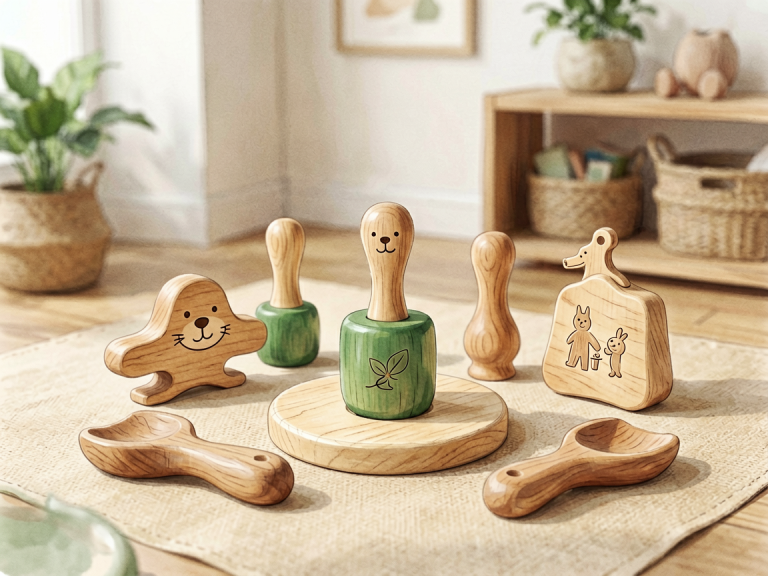
Recommendation: For a six-month-old, look for extra-large, lightweight blocks made of soft foam, fabric, or hollow plastic with rounded edges. Avoid solid wood unless the blocks are very large (e.g., 3-inch cubes) and sanded smooth. Brands like Melissa & Doug offer “Jumbo” blocks specifically labeled for infants.
—
Magnetic Tiles: Why They Are Not Suitable for Infants
Magnetic tiles—such as Magna-Tiles, Picasso Tiles, or Playmags—have become immensely popular for toddlers and preschoolers. Their clear, geometric shapes snap together with embedded magnets, allowing children to build castles, cars, and abstract structures. But are they safe for a six-month-old? The overwhelming consensus among pediatricians, child development experts, and safety organizations is no.
The Magnetic Ingestion Risk
Small, powerful magnets—especially neodymium magnets—can be found inside many magnetic tiles. If a baby manages to crack or break a tile, the magnets can fall out. Ingesting one magnet is dangerous; ingesting two or more can cause them to attract each other through intestinal walls, leading to perforations, infections, blockages, or even death. Emergency surgeries for magnet ingestion have risen sharply in recent years. Six-month-olds lack both the judgment to avoid mouthing toys and the strength to handle tiles carefully.
Size and Shape Concerns
Magnetic tiles are typically 1–2 inches wide and have thin edges. They are small enough to be a choking hazard if a piece breaks off. Moreover, the plastic casing can crack when a baby bites down (infants have strong gums!). Even if the tiles are marketed as “durable,” they are not designed for the relentless chewing of a teething six-month-old.
Developmental Mismatch
The primary appeal of magnetic tiles—snapping them together to form structures—requires fine motor precision and intentional planning that a six-month-old simply does not possess. At this age, babies are still mastering the ability to transfer an object from one hand to the other. They cannot click magnets into place, and they lack the spatial reasoning to build. Instead, they will mouth, throw, or bang the tiles, all activities that increase the risk of breakage and magnet exposure.
Manufacturer Warnings
Nearly all reputable magnetic tile brands, including Magna-Tiles, explicitly state that their products are for children aged 3 and older. Some have warning labels about choking hazards and magnet ingestion. Ignoring these age recommendations is not only risky but also contradicts the manufacturer’s safety testing.
Conclusion on Tiles: For the safety of your baby, do not give magnetic tiles to a six-month-old under any circumstances. Wait until at least age 3, and supervise closely even then.
—
Safe Alternatives: Soft Blocks and Sensory Toys
If building blocks and magnetic tiles are largely off-limits for a six-month-old, what can parents use to encourage similar developmental benefits? Fortunately, the market offers excellent alternatives specifically designed for infants.
Soft Fabric or Foam Blocks
These are essentially oversized, squishy “blocks” made of plush fabric or EVA foam. They often come in sets of 6–10 with different textures, crinkly inserts, squeakers, and bright patterns.
- Why they work: They are lightweight, safe for mouthing, and can be stacked (with difficulty, which is fine—the baby enjoys knocking them over).
- Safety: No hard edges, no magnets, and typically large enough (4–5 inches) to prevent choking.
- Developmental boost: Babies practice grasping, transferring, and hitting. The different sounds (crinkle, bell, squeak) teach cause and effect.
Rattle-and-Stack Rings
While not exactly blocks, stacking rings (like the classic Fisher-Price Rock-a-Stack) offer similar stacking concepts with a central post.
- Safety: The rings are large, soft plastic, and the post is stable.
- Skill: Babies learn to remove rings (harder to put them on at 6 months) and coordinate both hands.
Silicone Teething Blocks
Some brands now produce 100% food-grade silicone blocks that are designed to be chewed. They are BPA-free, dishwasher safe, and have raised bumps for sensory stimulation.
- Why they’re good: They combine teething relief with block-like shapes. They are soft yet sturdy, and they float in water (great for bath time).
- Caution: Ensure the silicone is intact and that there are no hollow parts where water or mold could accumulate.
Activity Gyms with Hanging Blocks
Instead of loose blocks, consider a play gym that has dangling soft “blocks” or shapes. The baby can bat at them, grasp them, and watch them swing. This builds visual tracking and hand-eye coordination without any risk of swallowing small pieces.
—
Expert Recommendations and Safety Guidelines
To help parents navigate the toy aisle, several authoritative organizations provide age-based safety advice.
American Academy of Pediatrics (AAP)
- The AAP advises that toys for infants under 12 months should be “large enough that they cannot be swallowed or lodged in the throat.” They explicitly warn against toys with small magnets, batteries, or button batteries.
- For building toys, they recommend soft blocks and stacking cups, and they emphasize that any toy with a string longer than 12 inches should be removed to prevent strangulation.
Consumer Product Safety Commission (CPSC)
- The CPSC tracks injury data related to toys. In recent years, magnet ingestion incidents have led to recalls and stricter standards. They recommend checking toys for loose parts and ensuring that all magnets are securely enclosed—but they stress that “no magnet toy is safe for children under 3.”
Pediatric Occupational Therapists
- Many OTs suggest that the best “building block” for a six-month-old is the parent’s own face and voice. Interactive play—peek-a-boo, singing, and showing the baby soft objects—is more valuable than any commercial toy. When introducing blocks, therapists recommend starting with just one or two soft blocks and letting the baby explore them freely without expectations.
Practical Checklist for Parents
Before buying any building toy for a six-month-old, ask yourself:
- Is it larger than a ping-pong ball?
- Is it made of a material that is safe to chew? (No paint chips, no toxic glues.)
- Does it contain any magnets, batteries, or small parts?
- Is it easy to clean? (Babies will drool and possibly spit up on it.)
- Does it have a manufacturer’s age recommendation of 6+ months or 0+?
If the answer to any of the first three is “no,” skip it.
—
Conclusion
Building blocks and magnetic tiles are wonderful tools for older toddlers and preschoolers, but they are not appropriate for six-month-old infants. The primary risks—choking, ingestion of powerful magnets, and injury from hard edges—far outweigh any potential developmental benefits at this age. Instead, parents should focus on safe, soft, and sensorially rich alternatives: foam blocks, fabric stacking toys, silicone teethers, and activity gyms.
The most crucial “building block” in a baby’s life is not a piece of plastic or wood—it is the responsive, loving interaction with a caregiver. A six-month-old learns best when you sit on the floor with them, hold a soft block in front of their eyes, say “block,” and watch them reach for it. That simple exchange builds neural connections far more effectively than any magnet ever could. So save the magnetic tiles for the third birthday party, and for now, let your baby chew, drool, and giggle over a plush, squishy block that is as safe as it is stimulating.
*(Word count: 1,250+)*