The Building Blocks of Childhood: Should You Buy Building Blocks for Elementary School Kids?
Introduction: A Simple Toy with Profound Impact
As parents and educators navigate the ever-expanding universe of children's toys, one question recurs with surprising frequency: *Should I buy building blocks for elementary school kids?* At first glance, the answer might seem self-evident—blocks are classic, harmless, and universally adored. Yet in an age of flashy electronic gadgets, STEM kits, and screen-based learning apps, the humble block often gets overlooked. This article explores the multifaceted benefits of building blocks for children aged six to twelve, addressing cognitive, social, emotional, and academic dimensions. After a thorough examination, the evidence overwhelmingly suggests that building blocks are not merely a good purchase—they are an essential investment in a child's holistic development.
What Are Building Blocks? A Brief Overview
Building blocks come in countless forms: wooden cubes, plastic interlocking bricks (like LEGO), magnetic tiles, foam shapes, or even cardboard bricks. For elementary school kids, blocks range from simple geometric shapes to complex construction sets with gears, wheels, and connectors. The key characteristic is that they require active manipulation, spatial reasoning, and creative problem-solving. Unlike passive entertainment, blocks demand engagement. They are open-ended, meaning there is no single correct outcome—only endless possibilities.
## Cognitive Development: More Than Just Stacking
Enhancing Spatial Awareness and Mathematical Thinking
One of the most compelling reasons to buy building blocks is their profound impact on spatial intelligence. Elementary school is a critical period for developing the ability to visualize, rotate, and manipulate objects mentally. Research published in the *Journal of Educational Psychology* shows that children who engage in regular block play score significantly higher on spatial reasoning tests. When a child builds a tower, they must estimate the base size, balance weight, and predict stability. This is physics in action—without textbook formulas. As they experiment with different arrangements, they internalize concepts like symmetry, proportion, and geometry. A child who builds a bridge learns about span and load; one who builds a castle grasps volume and perimeter.
Strengthening Executive Function and Problem-Solving
Building blocks are a natural training ground for executive functions—the cognitive processes that govern planning, focus, and self-control. An elementary school child attempting to construct a complex structure must set a goal (e.g., "I want to build a skyscraper"), break it into steps (foundation, floors, roof), and adjust when the blocks topple. They develop patience, persistence, and the ability to tolerate frustration. Each collapse becomes a learning opportunity: *Why did it fall? Was the base too narrow? Did I place the heavy block on top?* This iterative process mirrors the scientific method and fosters a growth mindset. The child learns that failure is not the end but a stepping stone to success.
Boosting Creativity and Divergent Thinking
Unlike puzzles with a single solution, building blocks invite divergent thinking—the ability to generate multiple ideas from a single stimulus. One set of blocks can become a spaceship, a dinosaur, a city, or an abstract sculpture. This freedom encourages originality and imagination. In a world where many school activities demand convergent thinking (one correct answer), block play provides a necessary counterbalance. It allows children to express their inner world and make decisions autonomously. Creativity nurtured through blocks often spills over into writing, art, and scientific inquiry.
## Social and Emotional Benefits: Building Together
Fostering Cooperation and Communication
Building blocks are inherently social when shared. In a classroom or family setting, children must negotiate roles, share resources, and articulate their ideas. "I think we should build the tower here," says one child. "No, we need a wider base first," responds another. These interactions teach compromise, active listening, and collaboration. For elementary school kids, who are developing social skills, block play provides a low-stakes environment to practice turn-taking and conflict resolution. Studies in early childhood education show that block play reduces aggressive behaviors and increases prosocial interactions.
Building Confidence and Self-Efficacy
Completing a challenging block structure gives children a tangible sense of accomplishment. Unlike grades or praise from adults, the tower they built stands as a physical testament to their effort. This boosts self-esteem and encourages them to take on more ambitious projects. For children who struggle in traditional academic subjects—like reading or math—block building offers an alternative avenue for success. It validates their intelligence and competence, reminding them that they are capable learners. This is especially important for children with learning differences or those who feel marginalized in school.
Emotional Regulation and Mindfulness
The repetitive, hands-on nature of stacking and fitting blocks can be meditative. Children often enter a state of flow—total absorption in the activity—which reduces anxiety and promotes calmness. For elementary school kids navigating the stresses of school and social dynamics, block play provides a healthy outlet. It allows them to process emotions through construction: knocking down a tower can be a safe way to express anger, while rebuilding it symbolizes resilience. Therapists frequently use blocks in play therapy for this very reason.
## Academic and STEM Connections
A Foundation for Engineering and Architecture
Building blocks are the simplest form of engineering education. When children design a structure, they engage in the same core processes as professional engineers: defining a problem, generating concepts, selecting materials, testing, and refining. Many schools now incorporate block-based learning into STEM curricula. For example, LEGO Education sets come with lesson plans that teach levers, gears, and simple machines. A child who builds a crane with pulleys is learning mechanical advantage—a concept they will encounter formally in middle school. By making these ideas tangible, blocks lay a concrete foundation for abstract learning.
Integrating Math and Literacy
Teachers can use blocks to teach fractions (a half-block vs. a full block), addition (counting total blocks used), and even algebra (if you need 10 blocks for the first floor and 6 for the next, how many total?). Writing activities can accompany block play: ask children to describe their creation, write instructions for someone else to build it, or create a story about the structure. This interdisciplinary approach reinforces academic skills in a joyful context. For reluctant writers, describing their latest block fortress can be far more engaging than a generic writing prompt.
Preparing for Future Technology Skills
The spatial reasoning and logic developed through block play translate directly into computational thinking—the foundation of computer programming. Block-based coding languages like Scratch are deliberately named after physical blocks because they draw on the same cognitive skills: sequencing, decomposition, and pattern recognition. Children who have manipulated physical blocks find it easier to grasp virtual ones. Even the simple act of sorting blocks by color or size mirrors data organization skills.
## Practical Considerations: How to Choose and Use Blocks
Age-Appropriate Recommendations
For elementary school kids (ages 6–12), avoid tiny blocks that pose choking hazards for younger siblings. Instead, look for sets with a variety of shapes, sizes, and connectors. Interlocking bricks like LEGO are excellent for fine motor development and complex builds. Magnetic tiles (e.g., Magna-Tiles) are great for younger elementary children because they are easy to connect and visually appealing. For older kids, consider construction sets with wheels, axles, and motors (such as K'NEX or LEGO Technic) to introduce mechanical principles. Wooden unit blocks remain timeless and versatile, especially if you buy a large set with arches, cylinders, and rectangles.
Quantity and Quality Over Brand Names
You do not need to buy the most expensive branded sets. Generic blocks often work just as well, though check for safety certifications (non-toxic materials, smooth edges). A large quantity of blocks is more important than a specialized set, because volume enables larger, more imaginative structures. Consider buying second-hand blocks from thrift stores or online marketplaces. Also, mix and match different types of blocks to expand creative possibilities.
Encouraging Free Play vs. Guided Play
Research suggests that the best approach is a balance: allow plenty of unstructured, child-led play, but occasionally introduce challenges or prompts. For example, “Can you build a tower that is at least 12 inches tall and can hold this toy car on top?” Or “Design a house for a family of four with two bedrooms.” These guided challenges stretch problem-solving skills without stifling creativity. Avoid over-directing; let children make mistakes and discover solutions themselves.
Safety and Storage
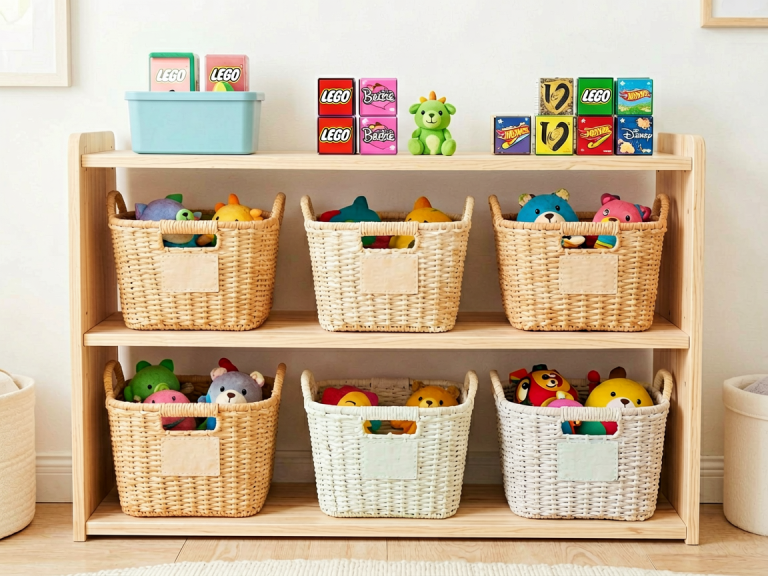
Blocks are generally safe, but be mindful of tripping hazards. A large block set will require storage bins or shelves. Teach children to sort and clean up—this is a valuable organizational skill. For magnetic blocks, ensure magnets are securely encased to prevent ingestion.
## Counterarguments and Caveats
Are Blocks Outdated in a Digital World?
Some parents worry that blocks are not “educational enough” compared to tablets or coding robots. This is a misconception. The digital world is abstract; blocks are concrete. Children need tactile experiences to build neural pathways. Moreover, screen time often involves passive consumption, while blocks require active creation. Blocks complement, not replace, digital learning. In fact, many progressive schools use both.
What If My Child Loses Interest?
Interest in blocks can wax and wane. The key is to keep blocks accessible and to model play. Join your child in building sometimes—this quality time is priceless. Also, rotate the blocks with other toys to renew novelty. If a child dislikes blocks, do not force them; other construction toys like magnetic tiles or foam bricks may appeal more. The principle is the same, even if the medium differs.
Cost and Space Constraints
Building blocks can be expensive and take up space. However, you can start small: a set of 50–100 wooden blocks costs less than a video game and lasts for years. For space, consider under-bed storage or a dedicated shelf. Many libraries and community centers also have block sets available for borrowing, allowing you to test interest before investing.
## Conclusion: The Verdict Is Clear
So, should you buy building blocks for elementary school kids? The answer is a resounding yes—provided you choose age-appropriate sets, encourage both free and guided play, and participate alongside them when possible. Building blocks are not just toys; they are tools for cognitive growth, emotional resilience, social bonding, and academic readiness. They teach children how to think, not what to think. In a world increasingly dominated by instant gratification and passive entertainment, blocks demand patience, creativity, and perseverance—qualities that serve children for a lifetime.
From the first wobbly tower that falls in three seconds to the majestic castle that stands for days, every block placed is a lesson learned. Invest in blocks, and you invest in your child's future—one brick at a time.