Beyond Tiny Pieces: Screen-Free Alternatives to Small Parts Toys
Introduction
In many modern homes, the toy box is a landscape of plastic fragments and digital screens. Small parts toys—such as miniature building bricks, tiny action figures, and micro-sized puzzle pieces—have long been celebrated for promoting fine motor skills and problem-solving. Yet they also come with well-documented drawbacks: choking hazards for toddlers, constant cleanup frustration for parents, and a tendency to lose critical pieces that render a set useless. Meanwhile, screen-based entertainment, from tablets to interactive gaming consoles, has surged in popularity, raising concerns about sedentary behavior, reduced social interaction, and overstimulation. As families seek a healthier balance, the search for screen-free alternatives to small parts toys becomes not only practical but essential. These alternatives must be engaging, developmentally appropriate, and—crucially—free from the risks of both tiny choking hazards and glowing screens. Below, we explore a range of rich, open-ended play options that replace small parts with big ideas.
The Problem with Small Parts Toys and Screen Time
Small parts toys are ubiquitous because they are cheap to manufacture and often marketed as “educational.” However, pediatricians consistently warn that children under three should avoid toys with pieces smaller than a standard toilet paper roll. Even for older children, tiny parts frequently scatter under furniture, get vacuumed up, or become a source of household stress. The lost brick or missing puzzle piece can trigger frustration that undermines the joy of play. On the other side of the spectrum, screen-based activities promise endless entertainment without physical clutter, but they come at a cost. Excessive screen time has been linked to delayed language development, reduced attention span, and poorer sleep quality in young children. The American Academy of Pediatrics recommends no screen time for children under 18 months (except video calls) and limited high-quality programming for older kids. Clearly, neither small parts toys nor screens offer a fully satisfying solution. What parents and educators truly need are screen-free alternatives that are robust, safe, and capable of sparking deep, imaginative play—without requiring a hundred tiny pieces.
Large-Scale Building Blocks and Construction Sets
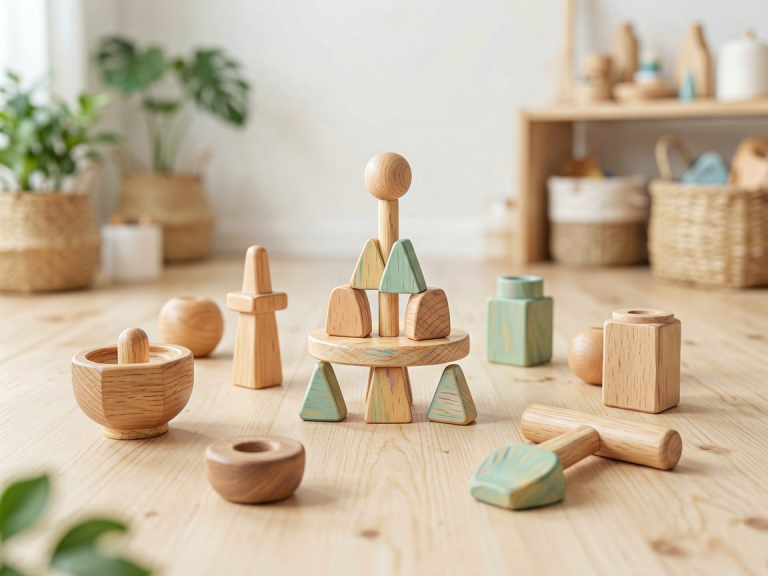
One of the most straightforward replacements for small parts toys is larger-scale building blocks. Instead of millimeter-accurate plastic bricks that demand precision and often cause pain when stepped on, consider oversized wooden blocks, foam bricks, or magnetic tiles. These items are large enough to pose no choking risk, yet they offer the same core benefits of construction play: spatial reasoning, planning, and cause-and-effect learning. For example, a set of jumbo cardboard blocks (often sold as “giant building blocks”) allows a preschooler to stack towers higher than her own head, experiencing weight distribution and stability in a tangible way. Magnetic tiles, such as those from Magna-Tiles or Picasso Tiles, are another excellent choice. Their smooth edges and large size make them safe for even young toddlers, and they click together with satisfying ease. Unlike small building bricks that require precise finger placement, magnetic tiles reward broader hand movements and can be used to build three-dimensional structures like castles, bridges, and rockets. Older children can combine them with fabric or blankets to create elaborate play environments. The key advantage of large-scale construction is that it promotes gross motor development—reaching, lifting, and balancing—alongside the cognitive challenges of engineering. Plus, cleanup is far simpler: a few big blocks are much easier to collect than a rain shower of minuscule pieces.
Sensory Play with Natural and Found Materials
Children are naturally drawn to sensory experiences—touching, pouring, squishing, and exploring textures. Small parts toys often attempt to simulate these experiences but in a miniature, controlled form (think of tiny plastic animals or beads). A richer alternative is sensory play using natural and safe household materials. For instance, a large plastic bin filled with dry rice or oats can become a mini “farm” or “construction zone” when combined with large scoops, funnels, and toy trucks—provided the rice grains are large enough to avoid inhalation (long-grain rice works well). Even more engaging is a “mud kitchen” outdoors: children mix dirt, water, leaves, and stones (chosen for size) to create pretend soups and pies. This type of play involves no small parts that can be swallowed; the materials are organic and, if supervised, entirely safe. Another favorite is homemade playdough, which can be colored with natural dyes and shaped into big blobs, snakes, and pancakes. Unlike modeling clay that might contain small decorative elements, playdough encourages whole-hand manipulation. Water play, whether in a sink, bathtub, or kiddie pool, is also a magnificent screen-free alternative. Large measuring cups, floating toys without detachable parts, and sponges provide endless entertainment without risk. Sensory play develops neural connections, calms anxious children, and builds language as they describe textures and actions—all without a single tiny piece or glowing screen.
Fabric and Open-Ended Props
Perhaps the most versatile screen-free alternative to small parts toys is a simple collection of fabric and open-ended props. A few yards of muslin, a set of large silk scarves, or an old bedsheet can be transformed into capes, tents, rivers, or ocean waves. Children intuitively use these materials to create worlds. Unlike a store-bought playset that comes with specific small accessories (a plastic teapot, a tiny spoon), fabric props invite endless reimagination. A blanket draped over two chairs becomes a cave; a scarf tied to a stick becomes a flag. The beauty of this play is that it requires no fine motor manipulation of tiny objects—instead, it encourages whole-body movement, collaboration, and narrative thinking. Adding a few large items like cardboard boxes, plastic storage tubs, and pillows further expands the possibilities. Cardboard boxes, in particular, are a gift to the creative mind. They can be cut (with adult help), decorated with washable markers, stacked, or simply entered as a house or rocket ship. The absence of small parts means that even very young children can engage safely, while older siblings can orchestrate elaborate dramas. This type of play also strengthens social skills: children must negotiate roles, share space, and communicate their ideas—all vital for development. And it costs almost nothing compared to the ever-growing pile of themed plastic toys.
Art and Craft without Choking Hazards
Art supplies often fall into the trap of including tiny items: googly eyes, sequins, beads, and miniature pom-poms. For screen-free alternatives that are safe for all ages, focus on chunky, non-toxic materials. Finger paints, for example, allow children to smear color directly onto large sheets of paper—no brushes, no small caps. Crayons should be egg-shaped or jumbo-sized, impossible to bite in half. Washable markers with fat barrels are ideal for little hands. Clay and dough that is non-toxic and free from small additives can be pressed, rolled, and sculpted into big shapes. Instead of beads and sequins, offer items like large buttons (sewn onto fabric beforehand), strips of felt, or pieces of yarn for gluing. Another wonderful project is collaborative mural-making: unroll a long strip of butcher paper on the floor and let children crawl, draw, and paint together. This activity develops creativity without requiring a single tiny part. The emphasis should be on the process—mixing colors, feeling textures, making marks—rather than on producing a perfect, detailed outcome. Such messy, open-ended art is a powerful antidote to the structured, digital world. And because there are no choking hazards, parents can relax and join in the fun.
Active Outdoor Play and Nature Exploration
Nothing replaces the physical and emotional benefits of being outdoors, yet modern children spend far fewer hours outside than previous generations did. Instead of confining play to a box of small parts, take it outside. A simple set of large, soft balls (like beach balls or foam soccer balls) encourages running, throwing, and catching without the risks of hard, small parts. Sandboxes equipped with big buckets and shovels—rather than tiny molds—allow children to dig, mound, and sculpt. Gardening is another fantastic screen-free alternative: planting large seeds (sunflower, bean) and watering with a child-sized can develops responsibility and patience. Nature itself provides the best open-ended materials: sticks (chosen for size and smoothness), large pinecones, smooth stones, and fallen leaves can be collected and used for building “fairy houses” or sorting by color and size. Outdoor play also supports vestibular and proprioceptive development: swinging, climbing, and balancing on logs or low walls are activities that no screen can replicate. Furthermore, the absence of small parts means that parents can spend less time worrying about lost pieces and more time playing alongside their children. This shared experience strengthens family bonds and builds a lifelong appreciation for nature.
Board Games and Puzzles with Larger Pieces
While many board games and puzzles are notorious for their tiny tokens and fiddly pieces, there are excellent alternatives designed with larger components. For puzzles, seek out floor puzzles measuring 12 inches or more per piece, or wooden knob puzzles for toddlers. These eliminate choking risk while still teaching shape recognition and persistence. Board games such as “Hoot Owl Hoot!” or “My First Orchard” feature chunky wooden pieces that are easy for small hands to grasp. Cooperative games, where players work together rather than compete, further reduce frustration and promote social learning. Card games can be adapted by using oversized playing cards or creating custom decks with large images. The key is to avoid games that require handling dozens of tiny plastic tokens or cards. Even older children can enjoy strategy games that use large tiles or blocks instead of miniature figurines. By choosing games with big, safe components, families can enjoy quality time together without the constant fear of missing pieces or eye strain from a screen.
Conclusion
The shift away from small parts toys and screens is not about deprivation—it is about liberation. Liberating children from the tyranny of lost pieces, from the passive glow of a tablet, and from the pressure to manipulate objects that are too small for their developing hands. The screen-free alternatives described here—large building blocks, sensory bins, fabric props, big-scale art, outdoor play, and oversized puzzles—offer richer, more inclusive experiences. They encourage movement, creativity, social interaction, and a deep connection to the physical world. As parents and educators, we can embrace these alternatives not as inferior substitutions but as superior foundations for childhood. The next time you are tempted to buy a set of tiny plastic pieces or hand your child a device, pause and consider a big cardboard box, a pile of scarves, or a trip to the garden. You may find that the biggest joys come from the simplest, screen-free play.