Beyond the Tiny Danger: Safe and Practical Alternatives to Button Batteries in Children’s Toys
Introduction
Every parent knows the sinking feeling when a toy stops working and the only solution seems to be a tiny, shiny disc — a button battery. These small power sources are ubiquitous in modern toys, from singing plush animals to light-up wands and interactive books. Yet, behind their convenience lies a well-documented and terrifying hazard. When swallowed, a button battery can cause severe internal burns within just two hours, leading to lifelong injury or even death. Thousands of children are treated in emergency rooms each year for button battery ingestion, and despite public awareness campaigns, the risk remains alarmingly high.
The industry has made incremental improvements, such as child-resistant packaging and bitter coatings on batteries, but these measures are not foolproof. A curious toddler with a screwdriver — or simply a worn-out battery compartment — can still access the power source. The real solution lies not in making button batteries safer, but in replacing them altogether with truly safe alternatives. This article explores a range of viable, child-safe power options for toys, from mechanical designs to advanced rechargeable systems, and argues that the toy industry must move decisively away from button batteries to protect the most vulnerable consumers.
The Dangers of Button Batteries in Toys
Before discussing alternatives, it is essential to understand why button batteries are uniquely dangerous. Unlike cylindrical batteries (AA, AAA, C, D), button batteries are small, smooth, and coin-like — perfectly sized for a child’s mouth and esophagus. When swallowed, they create an electric current in the saliva, which triggers a chemical reaction that produces sodium hydroxide, a caustic substance that burns through tissue. Because the battery is often lodged in the esophagus, the burn can perforate the trachea, esophagus, or major blood vessels, leading to catastrophic bleeding. Even if the battery passes into the stomach, it can still cause severe injury.
The statistics are sobering. In the United States alone, the National Capital Poison Center reports more than 3,500 cases of button battery ingestion each year, with approximately 15–20 resulting in severe injuries or death. Despite regulations requiring secure battery compartments (e.g., using a screw or a lock that requires a coin), many cheaply manufactured toys still have flimsy covers that children can pry open. Moreover, discarded button batteries from household items like remote controls, hearing aids, and garage door openers often end up within reach of children. The only true solution is to eliminate the danger at its source.
Why Traditional Alternatives Are Not Enough
Some might argue that the problem is not the battery itself but poor design and lack of parental supervision. However, relying on vigilance alone is unrealistic. Toddlers are naturally curious, and a moment’s distraction is all it takes. Moreover, even the best battery compartment designs can fail over time. A plastic latch may break, or a screw may be lost. Another common suggestion — using rechargeable button batteries — does not solve the ingestion risk because the physical shape and chemistry remain the same. Coating button batteries with a bitter substance (like Bitrex) has reduced ingestion in some cases, but it does not prevent burns once the battery is inside the body.
Therefore, the search for safe alternatives must focus on entirely different power principles or on designs that make the battery permanently inaccessible to a child. The following sections present three promising categories of alternatives, each with its own advantages and limitations.
Safe Alternative 1: Battery-Free Toys – The Power of Play Without Electricity
The most radical and effective alternative is to design toys that do not require any battery at all. Before the widespread use of button batteries, millions of children enjoyed mechanical and manual toys that stimulated imagination and motor skills without a single watt of electricity. Today, this approach is enjoying a renaissance as parents and manufacturers rediscover the value of low-tech play.
Mechanical action toys use springs, wind-up mechanisms, gears, and gravity to create movement. A classic example is the wind-up toy that walks or dances when a key is turned. Modern versions can incorporate sophisticated gear trains that produce complex movements for minutes at a time. Similarly, pull-back cars store kinetic energy in a spring and release it when the child releases the car. These toys are not only safe from battery ingestion but also teach basic physics concepts.
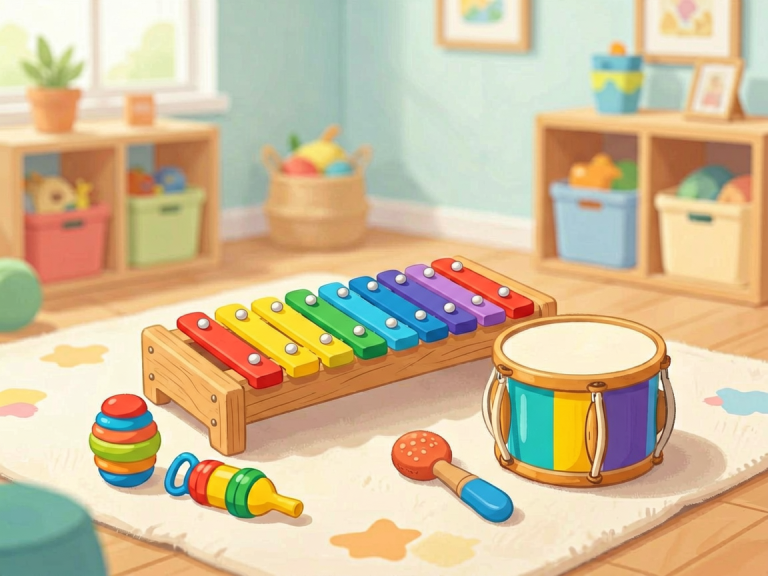
Human-powered toys include push-and-pull vehicles, spinning tops, yo-yos, and simple construction sets. Even sound-producing toys can be battery-free: whistles, bells, rattles, and even musical instruments like xylophones or harmonicas rely on physical action. For interactive books, traditional flap books with crinkly textures or pop-ups provide sensory stimulation without electronics.
Solar-powered toys represent another non-battery option. Small solar panels can power a moving figure or a spinning ornament under direct light, and they are completely harmless if a child touches or even mouths the panel (provided it is fully enclosed). However, solar power is inconsistent indoors, so these toys are best for outdoor or well-lit play areas.
The main drawback of battery-free toys is the perception that they are less “exciting” than their electronic counterparts. But many parents report that children actually engage more deeply with mechanical toys because they require active participation rather than passive observation.
Safe Alternative 2: Toys with Encapsulated Rechargeable Batteries – The "Sealed for Life" Approach
For toys that genuinely require electricity — such as those with lights, motors, or digital components — the safest option is to use an integrated, non-removable rechargeable battery system. This means the battery is permanently enclosed within a sealed plastic or metal casing that can only be opened with specialized tools, or ideally not at all. The battery is recharged via a USB cable through a waterproof, child-proof port.
How it works: The toy contains a small lithium-ion or lithium-polymer cell that is spot-welded to the circuit board, then overmolded with hard plastic. The entire power unit is inaccessible to a child without breaking the toy. When the battery depletes, a parent plugs in a charging cable — much like charging a smartphone. Some modern designs use wireless charging pads, eliminating even the need for a USB port.
Why it is safer: There is no removable button battery to accidentally fall out or be pried loose. Even if a child manages to break the toy open, the battery is a small, flat pack, not a coin-shaped disc. While lithium batteries can still pose a fire risk if punctured, the ingestion hazard is dramatically reduced because the battery is too large and awkward to swallow. Furthermore, these batteries are rarely coated with toxic chemicals like mercury or cadmium, which are sometimes found in older button cells.
Real-world examples: Many high-end educational toys, such as tablets for toddlers and interactive learning robots, already use this approach. The Toy Association and the Consumer Product Safety Commission have endorsed sealed rechargeable batteries as a preferred solution for toys intended for children under three. However, the price point is higher, which limits adoption in budget toys.
Potential issues: The toy becomes dependent on a charger, and if the battery dies permanently (after hundreds of cycles), the entire toy becomes e-waste. Manufacturers should design for easy battery replacement at a certified service center, but this is rarely done. Despite these environmental concerns, from a child safety perspective, encapsulated rechargeable batteries are far superior to button cells.
Safe Alternative 3: Toys Using Standard Batteries with Tamper-Proof Compartments
When an integrated rechargeable battery is not feasible — perhaps because the toy is very small or very inexpensive — the next best option is to use standard cylindrical batteries (AA, AAA, C, or D) housed in a compartment that is physically impossible for a child to open. This approach requires careful engineering.
Tamper-proof compartment features: The battery door should be secured with a Phillips or Torx screw that requires a screwdriver — not a coin slot, because a coin can be used by a child. Alternatively, a sliding lock that must be pressed and slid simultaneously (like those on some remote controls) can be effective. The compartment should be recessed so that even if the door is forced open, the batteries remain held in place by a tight spring clip. Many regulations already require that battery compartments be secured with a screw or a captive fastener, but enforcement is lax.
Why standard batteries are safer than button batteries: AA and AAA batteries are longer and larger, making them much less likely to be swallowed. A toddler cannot easily fit a AA battery in their mouth. If one is swallowed (which is rare), it will usually pass through the digestive tract without causing the same electrochemical burn because the terminals are further apart and the current path is different. However, any battery ingestion is dangerous, so the priority must be prevention.
Best practices: The compartment should also have a secondary latch or a child-resistant mechanism similar to medicine bottle caps. Additionally, the toy itself should be designed with a warning that the batteries must be inserted and removed only by an adult. Some manufacturers now include a “battery lock” feature that requires a combination of actions (e.g., press and slide while pushing a hidden button).
Limitations: This approach does not eliminate the hazard entirely, especially if the toy is discarded or the screw is lost. Also, these compartments can be cracked under impact, exposing batteries. Nevertheless, for toys that need replaceable power, it is the safest conventional option.
Additional Safety Measures and Industry Responsibility
Even with the best alternatives, no solution is perfect. Parents should always inspect toys for loose battery compartments, and manufacturers must comply with voluntary and mandatory standards. The International Electrotechnical Commission (IEC) 62115 standard for electric toys, and the United States’ ASTM F963, already require secure battery compartments. However, these standards are not universally applied, especially in low-cost imports.
Education remains crucial: Adults must store discarded button batteries in child-proof containers and recycle them immediately. But education alone cannot prevent the 3,500 annual ingestions. The toy industry must take a proactive stance by phasing out button batteries entirely in toys intended for children under eight. Already, some major retailers have announced policies to eliminate button batteries from their private-label toys, and the European Union is considering a ban for certain product categories.
Innovations to watch: Researchers are developing a new generation of printed batteries that are flexible and nontoxic, made from materials like carbon or zinc. These could one day be integrated into toys without the coin-shape hazard. Some companies are experimenting with kinetic energy harvesting (using the child’s motion to power a light or sound) and radio-frequency energy harvesting (power from ambient Wi-Fi signals). While these are not yet practical for mass-market toys, they point toward a future where electrical power is as safe as it is invisible.
Conclusion
The hidden danger of button batteries in children’s toys is a preventable tragedy. While regulations and warnings have helped, they have not eliminated the risk. The most effective solution is to remove the source of danger: button batteries themselves. By embracing battery-free mechanical toys, encapsulated rechargeable battery systems, or secure standard-battery compartments, manufacturers can create toys that are not only safer but often more engaging and durable. Parents, too, can make informed choices by prioritizing these alternatives over cheap electronic gadgets. As consumers demand safety, the market will follow. The next generation of toys should spark joy, not fear — and with the right choices, they can.