Beyond the Screen: Why Screen-Free Toys Are Winning the Battle for Child Development
Introduction
In the modern parenting landscape, few decisions are as loaded with anxiety as the choice between screen-free toys and app-based toys. On one side, traditional building blocks, wooden puzzles, and stuffed animals offer tactile, open-ended play. On the other, app-based toys—from interactive robots to learning tablets—promise cognitive stimulation, instant feedback, and a head start in a digital world. As technology infiltrates every corner of childhood, a growing body of research in developmental psychology, neuroscience, and early childhood education suggests that screen-free toys hold significant advantages over their app-based counterparts. This article examines the evidence behind both categories, explores their respective impacts on cognition, social skills, physical development, and emotional regulation, and offers a balanced perspective for parents navigating this complex terrain.
The Appeal and Limitations of App-Based Toys
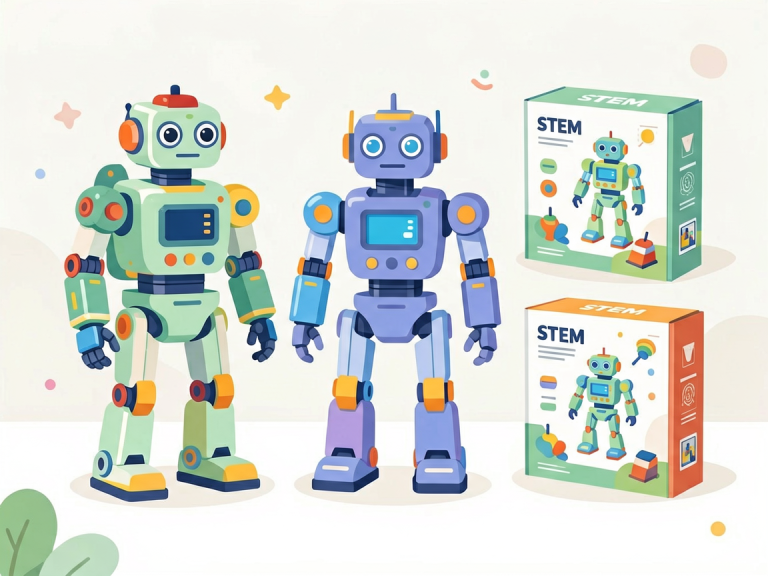
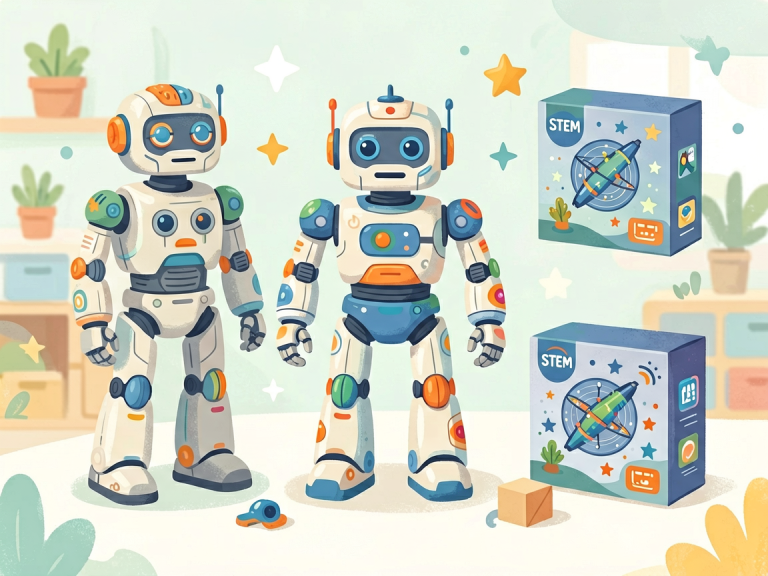
App-based toys, often marketed as "smart toys" or "STEM toys," leverage digital interfaces to deliver interactive experiences. They can teach letters, numbers, coding basics, or foreign languages through games, rewards, and adaptive difficulty. Their allure is undeniable: they promise to make learning fun and to keep children engaged for extended periods. However, this engagement often comes at a cost.
One major concern is the nature of the interactivity. App-based toys typically operate on a stimulus-response model: the child taps, swipes, or speaks, and the toy responds with lights, sounds, or praise. While this can reinforce certain skills, it limits creativity and divergent thinking. A child building with blocks can transform a tower into a castle, a spaceship, or a zoo; an app-based toy, by contrast, offers predetermined pathways. Research from the American Academy of Pediatrics (AAP) has repeatedly warned that excessive screen time in early childhood is linked to language delays, attention problems, and reduced executive function. Furthermore, many app-based toys collect data on children’s behavior, raising privacy concerns that parents often overlook.
Another limitation is the passive, sedentary nature of digital play. Even when the toy requires physical movement (e.g., a dance mat), the screen still dominates the child’s visual attention. This constant visual stimulation can overstimulate the developing brain, leading to irritability and difficulty self-soothing. A 2020 study in *JAMA Pediatrics* found that infants who used touchscreen devices more frequently had more fragmented sleep and lower sleep efficiency. The interactive feedback loop—bright colors, sudden sounds, achievement badges—can also create a cycle of dependency, where a child seeks constant external reward rather than intrinsic satisfaction.
The Cognitive and Creative Superiority of Screen-Free Toys
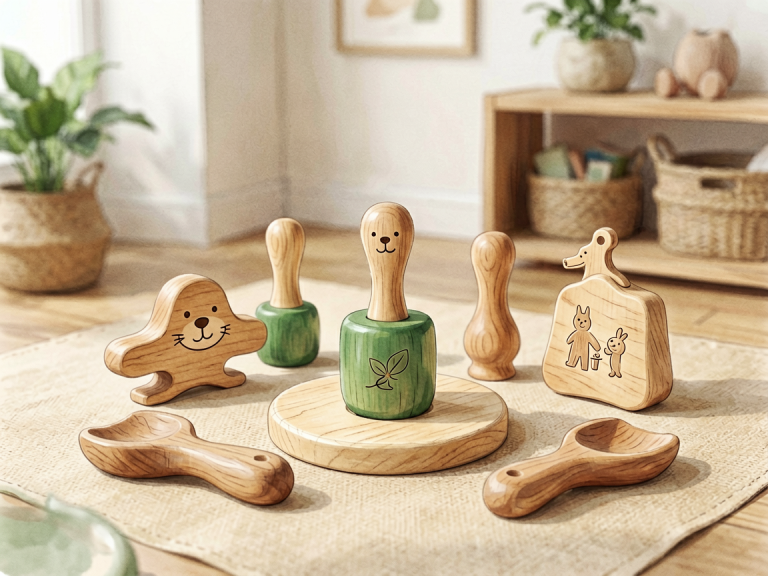
Screen-free toys, by contrast, encourage what psychologists call “divergent thinking”—the ability to generate multiple solutions to a problem. A simple set of wooden blocks, for instance, requires the child to imagine structures, balance them, and test physical properties like gravity and symmetry. There is no app telling them when they have “won”; success is self-defined. This open-endedness is crucial for developing executive functions, such as planning, flexibility, and impulse control.
Research in child development also highlights the importance of “loose parts” theory. The educator Simon Nicholson proposed that the more variable and manipulable the elements of a toy, the more creativity it inspires. Screen-free toys—like sand, water, clay, LEGO bricks, and dollhouses—are classic examples of loose parts. App-based toys, by contrast, are largely fixed. You cannot rearrange the code or change the rules; the child is a consumer, not a creator. A 2019 meta-analysis published in *Computers & Education* found that physical manipulatives (e.g., building blocks) significantly outperformed digital simulations in promoting understanding of spatial reasoning and mathematical concepts among preschoolers.
Moreover, screen-free toys support sustained attention in a way that apps rarely do. Because there is no timer, no distracting animation, and no external reward, a child can spend 45 minutes arranging figurines or painting a picture without interruption. This deep immersion—often called “flow state”—is essential for developing patience, perseverance, and the ability to delay gratification. In contrast, apps are engineered to snap attention away every few seconds with notifications or new levels. Over time, this can shorten a child’s attention span.
Social and Emotional Development: The Human Element
One of the most significant differences between screen-free and app-based toys lies in social interaction. Screen-free toys naturally invite collaboration. Two children playing with a train set must negotiate roles, share pieces, and resolve conflicts. A child playing with a doll enacts complex emotional scenarios—comforting, imagining dialogue, practicing empathy. These interactions are rich in non-verbal cues: facial expressions, tone of voice, physical proximity. They build the foundational skills of emotional regulation and perspective-taking.
App-based toys, even those designed for multi-player use, often isolate the child. A typical tablet game involves one child staring at a screen, with only the device as a communication partner. While some apps encourage peer play (e.g., passing a tablet back and forth), the quality of interaction is diminished. The screen becomes a mediator, reducing the need for eye contact, turn-taking, and reading body language. A 2021 study in *Child Development* found that children who played with app-based toys were less likely to show collaborative behaviors and more likely to persist in solitary play than those using physical toys.
Emotional development also suffers when a toy provides all the feedback. A screen-based toy might cheer “Great job!” when a child selects the correct answer, but it cannot comfort a child who is frustrated. During real play with a physical toy, a child may cry, get angry, or persevere. These moments are learning opportunities. The child learns to manage frustration, to try again, or to ask for help from an adult. Screen-free toys, especially open-ended ones, allow for mistakes without judgment; the child is not racing against a timer or being scored. This low-stakes environment is essential for building resilience and a growth mindset.
Physical Development and Sensory Engagement
From a physical standpoint, screen-free toys win hands-down. App-based play predominantly involves fine motor skills in a limited range: tapping, swiping, gripping a stylus. While these have some value, they cannot replace the rich sensory and gross motor experiences that physical toys offer. Pushing a tricycle, stacking blocks, molding clay, or digging in a sandbox engages the whole body: large muscles, balance, hand-eye coordination, and proprioception (the sense of where the body is in space). These activities are critical for developing body awareness, core strength, and fine motor dexterity in a three-dimensional world.
Sensory integration is another area where screen-free toys excel. A child playing with a sensory bin filled with rice, beans, and scoops is processing texture, weight, sound, and temperature simultaneously. App-based toys offer visual and auditory input only—and often in a highly processed, unnatural way (think of the screechy sound effects of a math game). The human brain evolved to learn through physical interaction with the environment. The American Occupational Therapy Association emphasizes that hands-on, sensory-rich play is vital for neural development, especially for children with sensory processing disorders.
Furthermore, outdoor screen-free toys—bicycles, kites, jump ropes, balls—encourage physical activity and exposure to natural light, both of which are linked to better eyesight, bone health, and mood regulation. The rising rates of childhood myopia (nearsightedness) have been correlated with increased screen time and reduced time outdoors. A 2022 study in *Ophthalmology* found that children who spent at least two hours outdoors daily had a significantly lower risk of developing myopia compared to those who used screens more.
Parental Perspectives and Practical Considerations
Many parents turn to app-based toys out of convenience. A tablet can occupy a child during a long car ride or while a sibling has a doctor’s appointment. For busy families, these tools can be a practical time-saver. However, experts caution against using them as a default pacifier. The AAP recommends that for children aged 2 to 5, screen time should be limited to one hour per day of high-quality programming, co-viewed with a parent. For children under 18 months, they advise avoiding screens altogether (with the exception of video calls). App-based toys that market themselves as “educational” may still count as screen time and should be used sparingly.
Another practical consideration is cost and durability. App-based toys often require batteries, charging, software updates, and subscriptions. A broken screen can render a toy useless. Screen-free toys, especially those made of wood, fabric, or metal, can last for decades and be passed down to younger siblings. They also do not require Wi-Fi or the ability to download a new version. For families on a budget, a few high-quality screen-free toys offer more long-term value than a fleet of app-based gadgets that may become obsolete.
That said, the goal is not to demonize app-based toys entirely. An interactive globe that teaches geography through touch can be engaging and informative for an eight-year-old. A coding robot that requires the child to program physical movements can bridge the digital-physical divide in a constructive way. The key is moderation and intentionality. When an app-based toy is used for a specific, time-limited learning activity—and the child is also given ample time for free, screen-free play—it can be a complementary tool, not a replacement.
Conclusion
The debate between screen-free toys and app-based toys is ultimately not about technology versus tradition, but about the quality of the play experience. Screen-free toys—blocks, dolls, sand, board games, art supplies—offer unparalleled opportunities for creative thinking, social connection, physical movement, and emotional regulation. They respect the developmental pace of the child and do not hijack the brain’s reward system. App-based toys, while convenient and sometimes educational, often narrow the range of play, reduce sensory richness, and risk overstimulation.
The evidence from developmental science is clear: the best toy for a child is one that requires them to be an active participant, not a passive recipient. It is one that allows for trial and error, that can be used in a hundred different ways, and that invites a human presence—whether a parent, sibling, or friend. As we raise the next generation in an increasingly digital world, we must remember that the most powerful learning tool is not an app, but a child’s own imagination, set free from the constraints of a screen. Choosing screen-free toys is not a rejection of technology; it is an investment in the foundational skills that will prepare children to use technology wisely when they are older—skills like curiosity, perseverance, empathy, and the ability to think without a prompt. And that, in the end, is the truest form of intelligence.
Explore Screen-Free Toy Decisions
This guide is the main starting point for this topic. Use these focused guides to explore specific ages, needs, risks, and practical choices.
- Beyond the Glow: The Battle Between Screen-Free Toys and App-Based Playthings in Child Development
- Beyond the Buzz: Rediscovering the Quiet Magic of Screen-Free, Noiseless Play
- Screen-Free Toys Review for Parents: Why Less Screen Time Means More Playtime
- The Ultimate Screen-Free Play Guide for Parents: Rediscovering the Joy of Unplugged Childhood
- The Ultimate Guide to Choosing Screen-Free Toys: What Every Parent Should Know