Beyond Screens: The Best Alternatives to Educational Tablets for 6-Month-Olds
Introduction
In today’s digital age, it is tempting to hand a glowing tablet to a fussy 6-month-old. Marketers promise “educational” apps that teach letters, shapes, and sounds from the very first months of life. However, a growing body of pediatric research warns that screen time for infants under 18 months—with the sole exception of live video chat—offers little cognitive benefit and may actually hinder language development, attention span, and parent-child bonding. At six months, a baby’s brain is wiring itself through multisensory, real-world interactions: feeling textures, hearing voices, tasting objects, and exploring cause and effect through movement. So what are the best alternatives to educational tablets for a 6-month-old? The answer lies not in high-tech gadgets but in thoughtfully designed, low-tech tools that stimulate developmentally appropriate learning. This article presents five categories of proven alternatives that nurture a six-month-old’s growing mind without a single pixel on a screen.
1. Sensory Play Mats and Fabric Books: The Original “Touchscreens”
A six-month-old’s primary learning modality is sensory exploration. Educational tablets offer only two senses—sight and hearing—through a flat, static surface. In contrast, sensory play mats and fabric books engage touch, sound, and even taste (since everything goes into the mouth). Look for mats with contrasting black-and-white patterns, crinkly textures, attached teethers, mirrors, and dangling toys. These items encourage tummy time, which strengthens neck and shoulder muscles while teaching the baby to track objects visually. Fabric “soft books” made from felt, cotton, or polyester offer pages that squeak, rattle, or have flaps to lift. Unlike a tablet’s glowing screen, these books provide immediate, tactile feedback: when a baby bats a crinkly page, it makes a sound. That cause-and-effect is far more powerful for neural development than a touchscreen swipe, because it involves motor planning, tactile sensation, and auditory response simultaneously.
Why it works: The American Academy of Pediatrics (AAP) recommends that infants under 18 months avoid screen media because they learn best from unstructured, hands-on play. Sensory mats and fabric books provide exactly that—an opportunity for the baby to control the environment through physical action, not passive consumption.
2. Unbreakable Board Books with High-Contrast Images
While tablets display animated images that flicker and change without the baby’s input, board books offer static, predictable visuals that allow a child to fixate and process at their own pace. For a 6-month-old, high-contrast books (black, white, and red patterns) are especially effective because their visual acuity is still developing. Choose books with simple, bold shapes—zigzags, circles, faces—and minimal text. Read to your baby not by focusing on words, but by pointing at pictures, making animal sounds, and letting the baby gnaw on the corners (board books are durable). This shared reading experience builds vocabulary through social interaction, something a tablet can never replicate. Studies show that when parents read to infants, the back-and-forth “serve and return” conversation—parent says “Look, a dog!” baby coos, parent responds “Yes, woof woof!”—creates stronger neural connections than any app.
Why it works: A 2019 study in *Pediatrics* found that infants who were read board books by their parents had higher language scores at 18 months than those exposed to screens. The key is the human interaction, not the medium. Board books are the antithesis of a tablet’s solitary, one-way screen experience.
3. Simple Cause-and-Effect Toys: The Real “Interactive” Learning
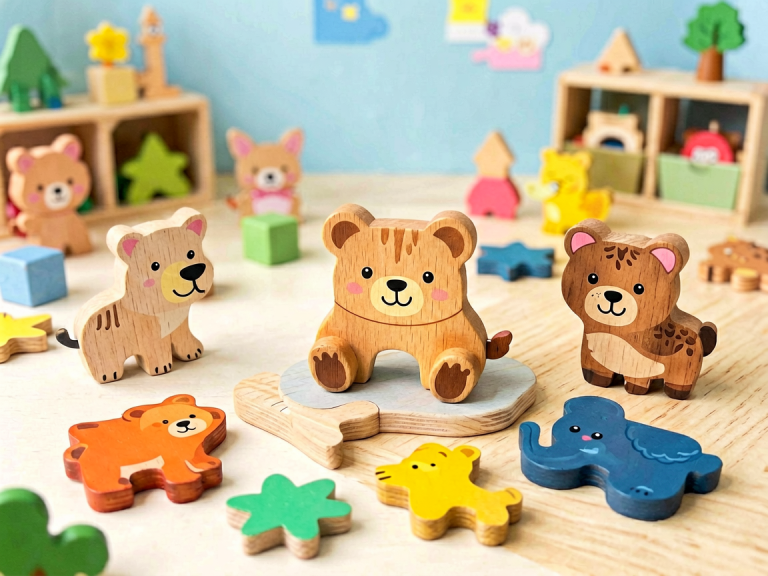
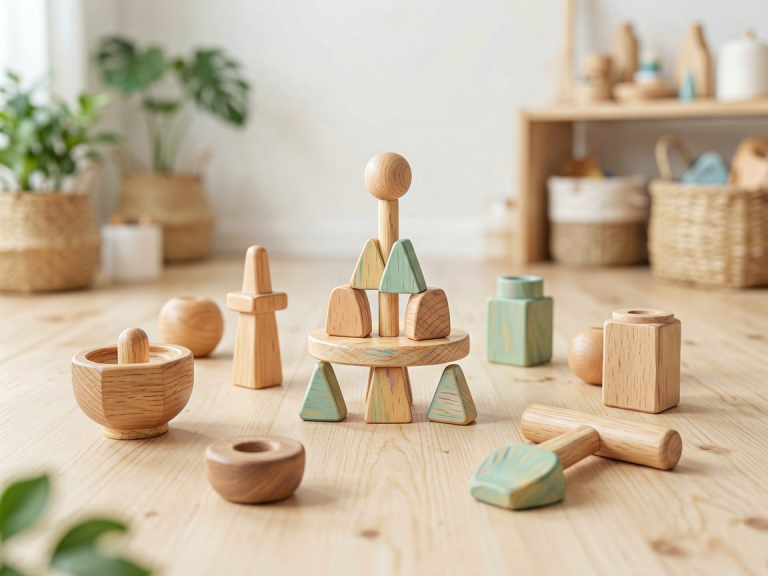
Educational tablets claim to teach cause and effect—tap a button, a cartoon appears. But for a six-month-old, true cause-and-effect learning must be physical. The best alternatives are toys that require the baby to perform a motor action to achieve a result: a textured ball that rattles when shaken, a soft block that lights up when squeezed (battery-operated but simple), a pop-up toy where pressing a button makes a character jump, or a “baby activity center” with knobs, sliders, and spinners. These toys encourage fine-motor development, hand-eye coordination, and problem-solving. Unlike a tablet, they work in three dimensions: the baby can hold, drop, mouth, and manipulate them from every angle.
Specific examples: The Fisher-Price “Rock-a-Stack” stacking rings teach size relationships and hand control. Oball rattles with holes are perfect for grasping and shaking. A “Busy Board” with latches, zippers, and switches provides endless fascination. Each activity gives immediate, predictable feedback that aligns with an infant’s limited attention span (2–5 minutes per toy).
Why it works: Developmental psychologist Jean Piaget’s sensorimotor stage (birth–2 years) emphasizes that infants learn through physical interaction with objects. Tablets bypass this essential stage, offering virtual feedback that doesn’t match the baby’s cognitive level. Physical toys force the brain to coordinate vision, touch, and movement—far more beneficial.
4. Music-Making Instruments: Unstructured Auditory Stimulation
Many “educational” tablet apps claim to teach music through colorful sound buttons. But passive listening is not the same as active music-making. For a six-month-old, the best alternative is a set of baby-safe instruments: a small maraca, a jingle bell bracelet, a wooden rattle, a soft drum that can be banged with hands or a mallet. These instruments allow the baby to experiment with volume, rhythm, and cause and effect—shaking hard makes a loud noise; shaking gently makes a soft one. Even banging a wooden spoon on an overturned pot is more valuable than a digital soundboard because it engages the whole body. Moreover, singing lullabies or nursery rhymes while the baby shakes a rattle enhances auditory processing and bonding.
Why it works: A 2020 review in *Frontiers in Psychology* found that active music-making in infancy improves neural processing of speech sounds and social communication. Tablets that play recorded music remove the element of physical control. Provide instruments and let the baby be the conductor.
5. Mirror Play and Face-to-Face Interaction: The Ultimate Social Learning
The most “educational” tool for a six-month-old is the human face. A tablet can show a smiling avatar, but it cannot respond contingently. Infants learn about emotions, social cues, and language through live, reciprocal interactions. A simple baby-safe mirror (unbreakable, with soft edges) becomes a source of self-discovery. The baby watches their own movements, makes faces, and gradually learns that the reflection is “me.” Play peek-a-boo with the mirror. Make exaggerated expressions. Combine mirror time with floor play where you lie face-to-face with your baby and imitate their coos and gestures. This type of serve-and-return interaction is the foundation of all later learning—including literacy, math, and emotional regulation.
Why it works: The Harvard Center on the Developing Child’s research on “serve and return” shows that responsive interactions build strong brain architecture. A tablet cannot provide that. Even the most sophisticated AI app cannot read a baby’s facial expressions and laugh back at exactly the right moment. So the best alternative is you—no batteries required.
Conclusion: Trust the Simple, Ditch the Screen
At six months, a baby’s brain is not a mini-computer waiting to be programmed with digital inputs. It is a biological organ designed to learn through movement, touch, sound, and above all, human connection. Educational tablets for infants are a marketing fiction; they offer passive stimuli that cannot match the rich, multisensory, and relational learning that physical toys and caregivers provide. The alternatives outlined here—sensory mats, board books, cause-and-effect toys, musical instruments, and mirror play—are not only safer and cheaper; they are pedagogically superior. They respect the developmental stage of a six-month-old, who needs to mouth, shake, drop, and interact with real objects in real space. As parents and caregivers, we can confidently set aside the screens and instead offer our babies the world they are actually wired to explore: a world of crinkles, rattles, faces, and voices. That is the truest education of all.