Beyond the Screen: Safe and Effective Alternatives to Educational Tablets for Children
—
Introduction
In recent years, educational tablets have become ubiquitous in classrooms and homes, marketed as indispensable tools for modern learning. They promise interactivity, access to vast digital libraries, and adaptive software that tailors lessons to individual children. Yet, a growing body of research in child development, cognitive science, and public health is raising serious concerns about the over-reliance on screens for education. Excessive screen time has been linked to sleep disruption, reduced attention span, increased rates of myopia, and even behavioral issues. Moreover, tablets often expose children to distracting notifications, inappropriate content, and the subtle erosion of face-to-face social skills.
For parents and educators seeking a more holistic, safer approach to learning, the question is not whether technology has a place, but how to prioritize alternatives that nurture the whole child—mind, body, and imagination. This article explores a range of safe, low-tech, and high-engagement alternatives to educational tablets. These options not only reduce screen exposure but also foster deeper cognitive processing, fine motor skills, creativity, and resilience. By understanding and implementing these alternatives, we can create an educational environment that is both effective and genuinely safe for children’s long-term well-being.
—
The Concerns with Educational Tablets: Why We Need Alternatives
Before diving into alternatives, it is important to acknowledge why tablets, despite their convenience, are not always the best choice for young learners. Studies have shown that children who spend more than two hours per day on screens demonstrate lower performance on language and literacy tests. The passive consumption of content, even when labeled “educational,” often lacks the tactile, social, and kinesthetic feedback that young brains need for optimal development. Furthermore, the blue light emitted by screens can disrupt circadian rhythms, while the instant gratification of swiping and tapping reduces tolerance for sustained effort—a skill critical for academic success.
Safety concerns also extend to data privacy. Many educational apps collect data on children’s behavior, preferences, and even location, often in ways that parents are not fully aware of. Cybersecurity risks and the potential for accidental exposure to adult content are additional worries. By turning to safer alternatives, we can bypass these digital pitfalls while still providing rich learning experiences.
—
Safe Alternative 1: Traditional Books and Paper-Based Learning
The most obvious, yet profoundly powerful, alternative to educational tablets is the humble printed book. Unlike a screen, a book does not flicker, buzz, or interrupt with notifications. It offers a linear, immersive reading experience that encourages deep comprehension and empathy. Research consistently shows that children retain information better when reading from print rather than from a screen, partly because the physical act of turning pages and seeing one’s progress provides spatial cues that aid memory.
Moreover, paper-based workbooks, flashcards, and activity sheets allow for hands-on engagement without the risk of eye strain. Children can write, draw, circle, and erase, reinforcing learning through fine motor practice. For early readers, picture books with textured pages (like those with felt or fabric) are especially valuable because they engage multiple senses. Libraries, book swaps, and second-hand stores make print materials affordable and accessible. Parents can also create “quiet reading corners” with a selection of age-appropriate books, encouraging children to self-select and explore at their own pace—a skill that tablets often undermine with algorithm-driven suggestions.
—
Safe Alternative 2: Hands-On Manipulatives and Educational Toys
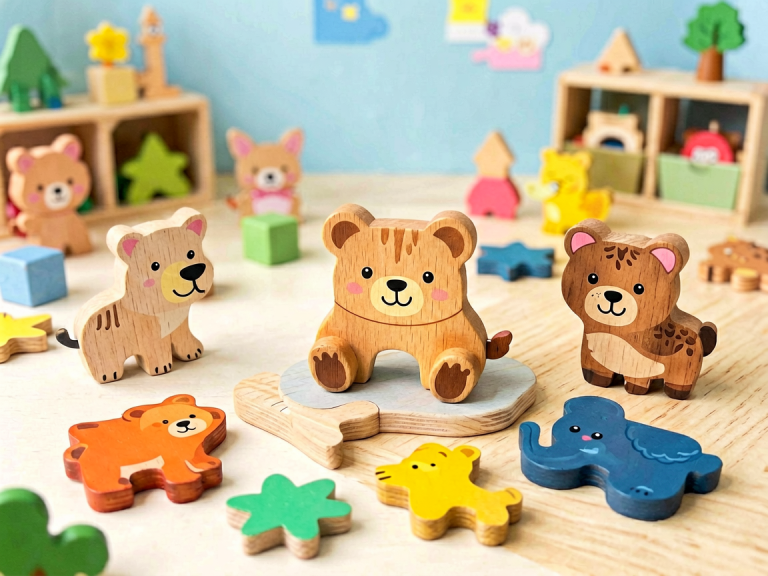
Educational tablets often attempt to mimic hands-on learning through digital approximations of puzzles, blocks, or counting games. However, these virtual experiences lack the crucial tactile feedback that builds spatial reasoning and problem-solving skills. Physical manipulatives—such as wooden blocks, magnetic tiles, counting beads, geometric shapes, and pattern boards—offer a sensory-rich environment where children can experiment with cause and effect, balance, and symmetry.
For example, Montessori-style math materials like number rods or golden bead sets allow children to literally “hold” numbers, making abstract concepts concrete. Similarly, science kits that involve mixing simple ingredients, building circuits with snap-together parts, or observing plant growth provide experiential learning that no app can replicate. These toys are safe not only from screens but also from the chemical concerns of some cheap plastic tablets; choosing toys made from natural wood, non-toxic paints, or recycled materials further enhances safety. Importantly, such toys require no batteries, no Wi-Fi, and no updates—they work as long as children’s hands are willing to explore.
—
Safe Alternative 3: Outdoor and Nature-Based Learning
One of the most effective ways to replace tablet time is to simply step outside. Nature is a boundless classroom that offers multisensory stimulation—the sound of birds, the texture of bark, the smell of rain, the sight of changing light. Outdoor learning has been shown to reduce stress, improve attention, and boost physical fitness. Instead of learning about ecosystems from a tablet video, children can turn over rocks to find insects, collect leaves to press in a journal, or observe the life cycle of a caterpillar in a jar.
Structured outdoor activities, such as nature scavenger hunts, gardening, or building forts, teach planning, cooperation, and resilience. For older children, mapping trails, measuring tree heights with shadows, or identifying constellations can integrate math, science, and literacy without a single pixel. Many communities offer forest school programs or simply have parks and trails that are free to use. Even a backyard or balcony can become a learning zone with a small planter box, a bird feeder, or a simple weather station. The key is to treat nature as a primary educational resource, not just a break from tablets.
—
Safe Alternative 4: Audio-Based Learning and Podcasts
For families who still want the convenience of portable, screen-free media, audio recordings are an excellent alternative. Audiobooks, educational podcasts, and music with rich narratives engage children’s listening comprehension and imagination without visual stimulation. Unlike video, audio does not tax the eyes or require sustained focus on a glowing screen. Children can listen while doing puzzles, drawing, playing with blocks, or even during car rides.
Podcasts such as “But Why: A Podcast for Curious Kids,” “Wow in the World,” or “Story Pirates” cover science, history, and storytelling in an age-appropriate, ad-free manner. Parents can download episodes onto a simple MP3 player or use a dedicated audio device that has no screen, ensuring complete safety from online distractions. Additionally, listening to music (especially classical or instrumental) can enhance mood and cognitive function. Creating a daily “listening time” can replace a tablet session while still delivering educational content.
—
Safe Alternative 5: Low-Tech Writing Tools and Art Supplies
Handwriting is a complex cognitive task that strengthens neural connections in ways that typing on a tablet cannot. When children write by hand, they engage motor, visual, and memory systems simultaneously. The tactile feedback of a pencil on paper, or a crayon on construction paper, is irreplaceable. Providing a variety of writing tools—pencils, pens, markers, chalk, paintbrushes—encourages experimentation and self-expression.
Art supplies, such as clay, playdough, finger paints, and collage materials, allow children to create three-dimensional works that develop spatial intelligence and creativity. Unlike tablet-based drawing apps, physical art supplies have no undo button; mistakes become part of the process, teaching perseverance and adaptability. To keep it safe, choose non-toxic, washable, and natural materials. Even simple activities like cutting with safety scissors, gluing, and threading beads can build fine motor skills essential for later writing and self-care tasks. A dedicated art station with a smock and wipe-clean table can be a perfect alternative to a tablet.
—
Safe Alternative 6: Social and Collaborative Play
Perhaps the most overlooked alternative to educational tablets is unstructured, face-to-face play with peers or family. Tablets often isolate children, even when they are ostensibly “learning” together. In contrast, board games, card games, role-playing, and group storytelling encourage turn-taking, negotiation, empathy, and verbal communication—all critical life skills that no app teaches as effectively.
Games like Scrabble Junior, Math Bingo, or cooperative puzzles turn learning into a shared, joyful experience. For younger children, simple activities like building a block tower together or playing “shop” with a toy cash register naturally incorporate counting, language, and social rules. Parents can also organize “learning circles” with neighborhood children, where each child brings a book or a natural object to discuss. This not only reduces screen time but also builds community. Importantly, social play requires no power source, no internet connection, and no passwords—just human connection.
—
How to Integrate These Alternatives Without Banning Tablets Completely
A complete ban on tablets may not be practical or necessary. The key is to use tablets intentionally and sparingly, reserving them for specific, high-quality uses such as video calls with distant relatives, learning a language through a well-designed app with strong privacy protections, or accessing specialized content that truly cannot be replicated offline. For most everyday learning, however, the alternatives described above can be woven into daily routines.
Start by designating “screen-free hours” each day, such as during meals, the first hour after waking, and the last hour before bed. Stock your home with accessible books, art supplies, and outdoor gear. Model the behavior yourself—read a paper book, do a puzzle, or garden alongside your child. Gradually, children will discover that the real world offers richer, more engaging experiences than any glowing rectangle ever could.
—
Conclusion
Educational tablets are not inherently evil, but their overuse poses genuine risks to children’s physical health, cognitive development, and emotional well-being. By embracing safe alternatives—printed books, hands-on manipulatives, outdoor exploration, audio learning, writing and art materials, and social play—we can provide children with a well-rounded education that respects their natural need for movement, touch, and human connection. These alternatives are not regressive; they are timeless. They have been tried and tested by generations of learners and backed by modern research. The path to safer, more effective education lies not in more screens, but in rediscovering the richness of the world beyond them. As parents and educators, we owe our children that gift.