Beyond the Screen: Rediscovering Educational Alternatives to Educational Tablets
In classrooms and living rooms around the world, the tablet has become the de facto symbol of modern education. Sleek, interactive, and packed with thousands of apps promising to teach everything from phonics to quantum physics, it seems like the perfect learning tool. Yet a growing chorus of educators, child psychologists, and parents is beginning to question this digital monopoly. The concerns are not trivial: excessive screen time is linked to reduced attention spans, poor sleep, and a decline in fine motor skills. Moreover, the algorithmic nature of many apps can turn learning into a passive, reward-driven activity rather than a deep, exploratory process. This does not mean we should reject technology outright; rather, we should thoughtfully consider educational alternatives to educational tablets—tools and methods that engage children’s minds, bodies, and social instincts without the drawbacks of a glowing rectangle. The following sections explore several powerful, research-backed alternatives that can enrich learning experiences from early childhood through adolescence.
The Return of Tactile Learning: Paper, Books, and Hands-On Materials
One of the most immediate and effective alternatives is the revival of physical, tactile learning materials. Before the tablet became the default, children learned through books, notebooks, crayons, blocks, and puzzles. Research in cognitive science consistently shows that handwriting, for example, activates neural circuits related to memory and comprehension far more robustly than typing or swiping. The physical act of forming letters by hand requires fine motor coordination and spatial awareness that digital tapping simply cannot replicate. Similarly, reading from a printed book allows for better narrative absorption because there are no notifications, hyperlinks, or autoplay videos vying for attention.
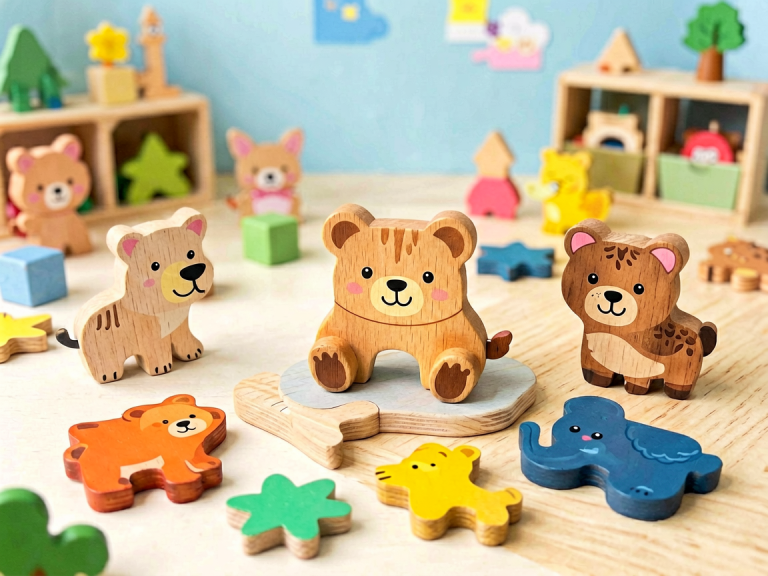
In practical terms, an educational alternative to a tablet might be a carefully curated collection of high-quality picture books and chapter books, paired with a set of sketch pads, watercolor paints, and modeling clay. For math, nothing beats physical manipulatives: counting beads, base-ten blocks, and fraction tiles that children can hold, sort, and combine. These materials encourage open-ended exploration and problem-solving. A child learning geometry can literally feel the angles of a wooden triangle; a child learning addition can move physical objects from one pile to another. This kind of embodied learning builds intuitive understanding that a screen-based app, which abstracts everything into pixels, often fails to deliver. Furthermore, paper-based activities require no charging, do not contain distracting ads or in-app purchases, and can be easily shared among siblings or classmates. By returning to these foundational resources, we tap into a century of pedagogical wisdom that values patience, craftsmanship, and deep engagement.
Interactive Play and Project-Based Learning: The Power of “Making”
Another powerful alternative lies in project-based learning (PBL) and the “maker” movement. Instead of consuming educational content on a tablet, children can become creators using low-tech and high-tech tools alike. For example, building a birdhouse with wood, nails, and a hammer teaches measurement, geometry, physics, and perseverance. Constructing a simple circuit with batteries, wires, and LEDs introduces electricity and design principles far more vividly than any simulation app. Even activities like cooking a meal from a recipe involve fractions, chemistry (leavening agents), and time management—all without staring at a screen.
For older students, alternatives like programmable robots (e.g., LEGO Mindstorms or the micro:bit) or electronics kits (e.g., Snap Circuits or Arduino) offer a hands-on, engaging way to learn coding and engineering. Unlike tablet-based coding apps (which are often gamified and limited), these physical kits require children to connect wires, troubleshoot hardware issues, and watch their code come to life in the real world. This process fosters critical thinking, resilience, and a deep understanding of cause and effect. Similarly, project-based learning can be applied to history and social studies: instead of watching a video about the Roman Empire, a student might build a model of a Roman aqueduct or reenact a marketplace simulation. These immersive experiences create lasting memories and connections that a passive tablet lesson rarely achieves. The key insight is that learning is not just about information transfer; it is about active construction of knowledge through meaningful, tangible work.
Social Learning and Guided Discussion: The Human Connection
Perhaps the most underappreciated alternative to the solitary tablet experience is structured social interaction. Education is fundamentally a social endeavor, yet many tablet apps isolate the child in a one-on-one relationship with a machine. In contrast, group discussions, peer tutoring, debates, and collaborative projects cultivate interpersonal skills, empathy, and deeper reasoning. For instance, a “literature circle” where four or five students read the same book and then meet to discuss characters, themes, and predictions develops critical reading skills far more effectively than a comprehension quiz on a screen. The spontaneous questions, disagreements, and clarifications that arise in conversation force students to articulate their thoughts, listen actively, and refine their ideas.
In a classroom or homeschool setting, teachers and parents can facilitate Socratic dialogues or use structured protocols like “think-pair-share” to encourage every voice to be heard. For younger children, dramatic play—setting up a pretend grocery store or post office—teaches math, literacy, and social norms through natural interaction. Even hands-on science experiments are more powerful when done in pairs or small groups, as children can discuss observations, challenge each other’s hypotheses, and collaboratively design next steps. These social alternatives do not require expensive hardware; they rely on the human capacity for conversation, cooperation, and mentorship. By intentionally designing learning experiences that prioritize face-to-face interaction, we not only reduce screen dependency but also nurture the relational skills that are essential for future success in both professional and personal life.
Outdoor and Nature-Based Education: Learning from the Real World
Stepping outside the classroom—and away from the tablet—opens up a vast, free, and infinitely rich educational environment. Nature-based learning, sometimes called “forest schooling” or “place-based education,” engages all the senses and provides authentic contexts for math, science, language, and art. A child counting the rings of a tree stump is doing concrete math while learning biology. Sketching a leaf, writing a haiku about a sunset, or tracking animal footprints in the mud integrates observation, vocabulary, and creativity in a way that no app can replicate. Moreover, time in nature has been shown to reduce stress, improve mood, and enhance cognitive function—benefits that directly support learning.
Outdoor alternatives can be as simple as a weekly “nature journal” session where children record their findings with pencil and paper, or as structured as a school garden where students plan, plant, tend, and harvest vegetables. The garden becomes a living laboratory for lessons in ecology, nutrition, commerce (selling the produce), and even history (learning about indigenous food plants). For urban families, a trip to a local park, a visit to a community garden, or even a balcony herb pot provides valuable learning moments. Additionally, field trips to museums, libraries, factories, or farms—though requiring more planning—offer real-world contexts that make abstract concepts tangible. The common thread is that these experiences are immersive, multi-sensory, and unfiltered by the flat screen. They teach children to pay attention to the subtle details of the world around them, to ask questions born from direct observation, and to develop a sense of wonder that no tablet-based trivia game can sustain.
Low-Tech and No-Tech Tools: The Role of Analog Creativity
Finally, we must not overlook the vast array of analog creativity tools that serve as excellent educational alternatives. Board games, card games, and strategy games (like chess, Settlers of Catan, or Scrabble) are time-tested ways to develop logic, vocabulary, planning, and social skills. Unlike tablet games, these require real-world interaction, manual dexterity, and patience. Building with LEGO bricks, creating stop-motion animation with a simple camera (not a tablet app), or making a podcast with a basic recorder all engage different aspects of creativity and communication. Even traditional art supplies—oil pastels, charcoal, clay, fabric scraps, and collage materials—encourage open-ended expression and problem-solving that a digital drawing app, with its undo button and preset brushes, tends to stifle.
For older learners, writing by hand in a journal, using a typewriter, or creating physical flashcards for language learning can be surprisingly effective. The deliberate slowness of these processes actually aids retention; the brain has more time to encode information when it is not rushing through a screen-based quiz. Additionally, many low-tech activities, such as knitting, wood carving, or origami, develop patience, attention to detail, and fine motor skills that transfer to academic pursuits like writing and drawing. By consciously choosing analog tools for certain learning tasks, we can restore balance to a child’s educational diet, providing the deep, repetitive practice that only tangible mediums can offer.
Conclusion
The tablet is not the enemy of education, but its dominance should not go unchallenged. Educational alternatives to educational tablets—such as tactile materials, hands-on projects, social discussions, outdoor experiences, and analog creativity tools—offer richer, more developmentally appropriate pathways to knowledge. These alternatives honor the way children naturally learn: through movement, interaction, trial and error, and genuine curiosity. They reduce reliance on screens, foster deeper cognitive engagement, and build essential social and emotional skills. As educators and parents, we have the opportunity—and the responsibility—to design learning environments that prioritize depth over speed, connection over consumption, and reality over the illusion of interactivity. By embracing these alternatives, we do not reject technology; we simply put it in its proper place as one tool among many, ensuring that the most important educational resource remains the curious, active, and human mind.