Beyond the Screen: The Best Alternatives to Educational Tablets for 9-Month-Olds
Introduction
In today’s digital age, parents are bombarded with advertisements for educational tablets marketed as “learning tools” for babies as young as nine months old. These devices promise to boost cognitive development through colorful apps and interactive animations. However, a growing body of research from pediatricians, child development experts, and early childhood educators strongly advises against screen time for infants. The American Academy of Pediatrics recommends no screen time—except video chatting—for children under 18 months, because fast-paced digital stimuli can actually hinder the neural wiring needed for real-world interaction, attention regulation, and sensory integration. At nine months old, a baby’s brain is developing at an astonishing rate, forming millions of new neural connections every second. What a baby truly needs at this stage is not passive consumption of digital content, but active, hands-on exploration of the physical world. This article explores the best alternatives to educational tablets for nine-month-olds—alternatives that are not only safer but also far more effective in nurturing the core developmental milestones of this critical age: sensorimotor skills, cause-and-effect understanding, language acquisition, social bonding, and self-discovery. Each alternative is grounded in developmental science and offers rich, multi-sensory experiences that a tablet simply cannot replicate.
—
1. Sensory Play Mats and Activity Gyms: Laying the Foundation for Movement
At nine months, most babies are either crawling, scooting, or pulling themselves up to stand. A sensory play mat or an activity gym is an excellent alternative to a tablet because it encourages gross motor development and tactile exploration in a safe, stimulating environment. Unlike the flat, two-dimensional screen of a tablet, a play mat offers a three-dimensional space where babies can roll, reach, and grasp. Look for mats with contrasting patterns, crinkly textures, attached mirrors, and dangling toys that make sounds when batted. These features stimulate multiple senses simultaneously—vision, hearing, touch, and even proprioception (the awareness of body position). For example, when a baby reaches up to grab a hanging ring, they are practicing hand-eye coordination and learning about spatial relationships. The mat itself often provides a cushioned surface that supports tummy time, which strengthens neck, shoulder, and arm muscles—essential for later crawling and walking. Moreover, unlike a tablet that can be held or propped, a play mat encourages the baby to move their whole body. The unpredictability of a mobile dangling toy—swaying slightly after a hit—teaches the infant about cause and effect in a way that is physically grounded. Parents can join in by gently shaking rattles over the baby or encouraging them to roll over to reach a favorite toy. This shared attention, without a glowing screen, builds the foundation for joint attention and social reciprocity.
—
2. Soft Building Blocks and Stacking Toys: Cultivating Cognitive and Fine Motor Skills
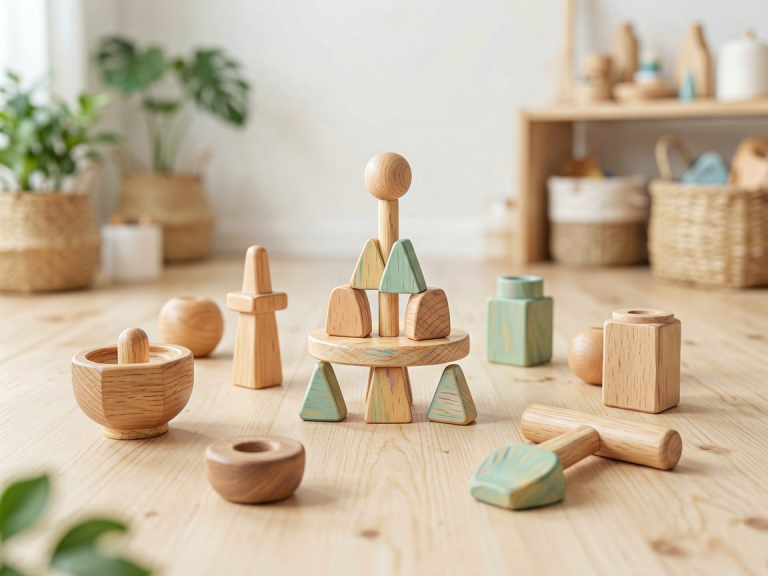
Where a tablet presents digital objects that can only be tapped or swiped, soft building blocks offer tangible, graspable forms that a baby can manipulate physically. For a nine-month-old, stacking toys—whether made of fabric, lightweight plastic, or soft silicone—are powerful tools for developing fine motor control, spatial reasoning, and early problem-solving. When a baby picks up a block, transfers it from one hand to the other, and attempts to place it on top of another block, they are engaging in a series of complex neural processes. They learn about weight, balance, and gravity. They also develop the pincer grasp (using thumb and forefinger) which is a key fine-motor milestone. Unlike the instant gratification of a tablet app that responds to a tap, stacking a block requires patience and trial-and-error. If a tower falls, the baby experiences a natural consequence—and the chance to try again. This iteration builds persistence and frustration tolerance, skills that are far more valuable than any digital “reward.” Choose blocks that have different textures (bumpy, smooth, ribbed) or that squeak when squeezed, as these provide sensory feedback. Some stacking toys come with rings that fit over a central post, which introduces the concept of sequencing (big to small or small to big). Again, the parent can model stacking, talk about colors (“That’s the red block!”), and celebrate when the baby succeeds, reinforcing language and social connection.
—
3. Musical Instruments and Sound-Making Toys: Tuning the Auditory System
A child’s auditory cortex undergoes rapid development in the first year of life. Nine-month-olds are becoming increasingly sensitive to pitch, rhythm, and the emotional tone of voices. Educational tablets often feature recorded songs and sounds, but these are passive listening experiences. Far better are real musical instruments designed for infants: maracas, jingle bells, small drums, xylophones with soft mallets, and shaker eggs. When a baby shakes a rattle, they produce a sound that is directly linked to their own action—a powerful lesson in causality. They also begin to discriminate between loud and soft, fast and slow. Playing with a drum encourages bilateral coordination (using both hands together) and upper-body strength. Many musical toys include multiple ways to produce sound—pressing a button, turning a wheel, squeezing a toy—which helps a baby understand that different actions yield different auditory outcomes. Parental participation is key: sing along with the music, tap out simple rhythms on the baby’s hands, or dance together while shaking maracas. This shared musical experience not only enhances auditory processing but also strengthens the emotional bond. Moreover, exposure to live, variable sounds (as opposed to the fixed, digitized sounds of a tablet) supports the brain’s ability to process real-world noise, which is essential for future speech and language comprehension. Always ensure that instruments are safe, non-toxic, and free from small parts that could pose a choking hazard.
—
4. Board Books and Cloth Books: Building Early Literacy Through Touch and Interaction
Reading to a nine-month-old is one of the most powerful alternatives to screen time. But not just any book—choose board books with thick, chewable pages or cloth books with crinkly elements, flaps to lift, and mirrors to peek into. At this age, babies explore books with their mouths and hands as much as with their eyes. When you sit with your baby on your lap and turn the pages of a sturdy book, you create a warm, intimate context for language learning. Unlike a tablet’s animation, a book is static and allows the baby to control the pace: they can stare at a picture of a dog for as long as they want, and they can hear your voice change as you say “woof woof.” This back-and-forth interaction—pointing, labeling, making sounds—is the foundation of dialogic reading, which has been shown to boost vocabulary and comprehension far more than passive exposure to digital stories. Cloth books with textures (fuzzy bunny, smooth leaf) add a tactile dimension that a screen can’t provide. The repetitive nature of reading a favorite book helps babies anticipate what comes next, developing memory and prediction skills. Most importantly, the physical closeness and eye contact during reading release oxytocin in both parent and child, reinforcing attachment and emotional security—a benefit no tablet can deliver.
—
5. Unbreakable Mirrors and Self-Discovery Toys: Fostering Social-Emotional Awareness
The “mirror stage” is a classic developmental milestone that peaks around nine months. Babies become fascinated with their own reflection, though they do not yet recognize themselves as a separate being. A child-safe, shatterproof acrylic mirror attached to a play mat or mounted low on a wall is a fantastic educational alternative to a tablet. When a baby sees their own movement mirrored, they begin to understand that they have agency—that the face in the mirror moves when they move. This is the earliest form of self-awareness. Mirror play also encourages emotional development: as the baby makes silly faces or sees their parent’s face reflected beside their own, they learn about facial expressions and social cues. Some mirrors come with built-in patterns or animal faces that further engage visual attention. Additionally, toys that let a baby see their own hands or feet—like a wrist rattle or an anklet with a bell—help them discover body parts. Combine mirror time with simple peek-a-boo games (use a cloth to hide and reveal your face) to teach object permanence. These interactions are rich in social-emotional learning and cannot be replaced by a screen’s glowing image.
—
6. Simple Cause-and-Effect Toys: Mechanical Thinking Without a Screen
Nine-month-olds are natural scientists: they love to drop things, throw things, and press buttons to see what happens. Instead of a tablet app that rewards a tap with a cartoon, offer physical cause-and-effect toys that require real effort. Examples include: a “pop-up” toy where the baby pushes, slides, or turns a knob to make a character pop up; a ball track where the baby drops a ball and watches it roll down a ramp; a busy box filled with latches, switches, and spinning dials; or a shape-sorter with large, easy-to-grasp shapes. These toys teach the same causality as a digital app—action leads to reaction—but in a way that engages multiple sensory channels: the sound of the latch clicking, the weight of the ball in the hand, the visual tracking of its motion. The baby also learns that their actions have to be precise: a shape must be oriented correctly to fit into the hole, for instance. This requires concentration and fine-motor control. When the baby successfully makes the toy work, the reward is intrinsic—a feeling of competence—rather than an artificial digital star. Parents can scaffold learning by demonstrating a movement and then letting the baby attempt it, offering verbal encouragement. Over time, the baby will repeat successful actions, building memory and neural pathways for problem-solving.
—
7. Nature and Outdoor Exploration: The Ultimate Multi-Sensory Classroom
One of the best alternatives to any indoor toy—tablet or otherwise—is the great outdoors. At nine months, babies are highly sensitive to changes in light, temperature, and air movement. Taking your baby outside to explore natural objects can be an incredibly rich educational experience. Spread a blanket on the grass and let your baby feel different textures: grass blades, smooth stones, a rough piece of bark, a soft dandelion. Let them watch leaves rustle in the wind. Bring a small basket of safe natural items (e.g., a large pinecone, a clean seashell, a piece of fabric) for them to grasp and mouth (always supervised). The changing light—sunlight filtering through trees, shadows moving—provides visual stimulation that is far more complex than a backlit screen. The sounds of birds, rustling leaves, and distant traffic help the baby learn to filter and focus on different auditory stimuli. Outdoors, babies also have more space to practice crawling on uneven terrain, which challenges their balance and coordination. A simple walk in a carrier or stroller, with you pointing and talking about what you see (“Look at the big red flower!”), is a language-rich activity that beats any flashcard app. Even if you only have a small balcony or yard, placing a few potted plants with interesting leaves (safe, non-toxic plants like spider plants or herbs) can offer a mini-nature experience.
—
Conclusion: The Irreplaceable Power of Human Connection
In the end, the best alternative to an educational tablet for a nine-month-old is not any single toy or activity, but the engaged, responsive presence of a loving caregiver. Tablets are designed to replace human interaction, but at nine months, babies need human interaction more than anything else. They need to hear your voice, feel your touch, see your face, and follow your gaze. The alternatives described above—sensory mats, blocks, musical instruments, books, mirrors, cause-and-effect toys, and nature exploration—all work best when an adult is actively involved, narrating, modeling, and responding to the baby’s cues. This back-and-forth, serve-and-return interaction is what builds the architecture of the brain. A tablet cannot smile back, cannot adjust its pace to your baby’s mood, and cannot offer the warmth of a hug when the tower of blocks falls. By choosing these screen-free alternatives, you are not depriving your baby of education—you are giving them the richest, most developmentally appropriate education possible. So put down the device, get down on the floor, and let your baby lead the way. The best learning happens in the real world, one crinkle, one rattle, one giggle at a time.