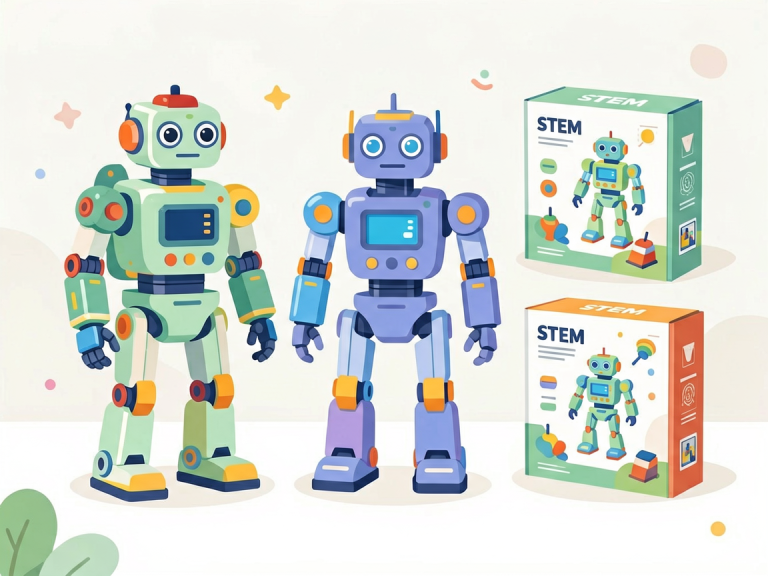
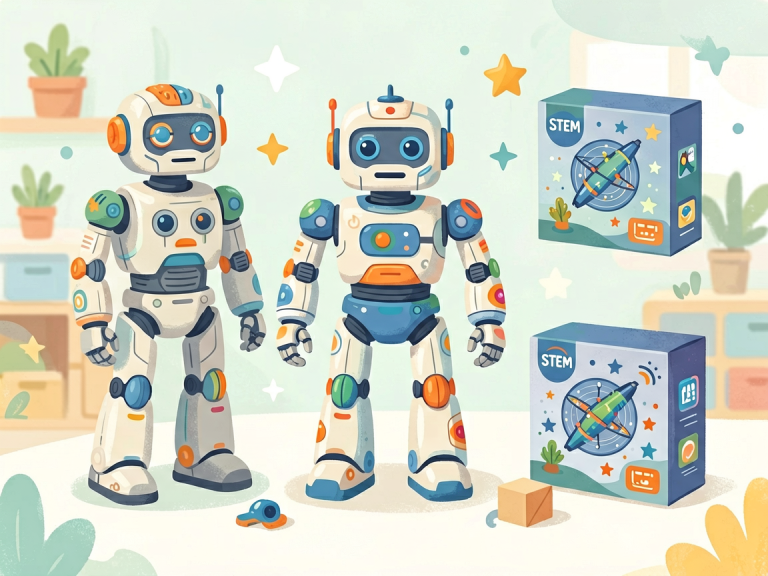
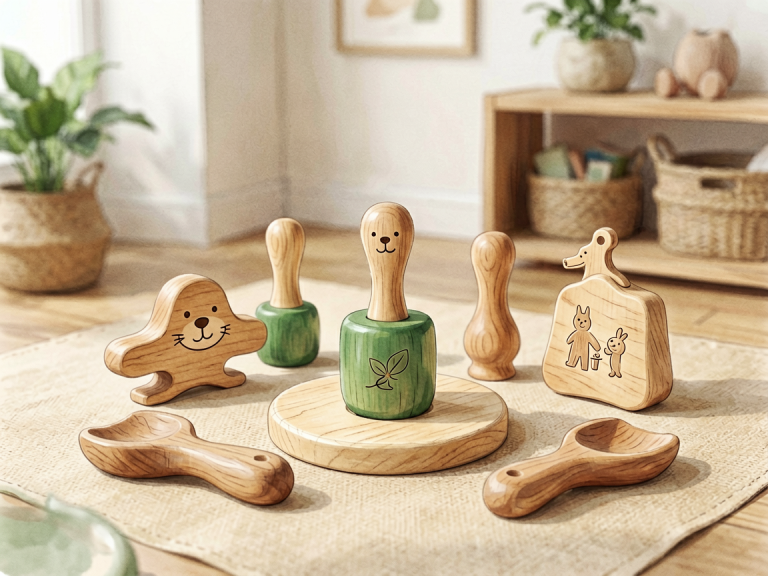
Beyond Play: How Science and Engineering Toys Shape Tomorrow’s Innovators
Introduction: The Quiet Revolution in the Playroom
In an era where digital screens dominate childhood, a quiet but powerful revolution is taking place on living room floors, in school maker spaces, and at kitchen tables around the world. Science toys and engineering toys—ranging from simple building blocks to programmable robotics kits—are reshaping how children learn, think, and create. These are not mere distractions; they are cognitive tools that bridge the gap between abstract concepts and tangible experience. While traditional toys entertain, science and engineering toys educate, inspire, and cultivate the problem-solving mindset that will define the leaders of the future. This article explores the profound impact of these toys on child development, the educational principles behind their design, and why they matter more than ever in a world driven by technology.
The Historical Roots of Hands-On Learning
The idea that children learn best by doing is not new. Maria Montessori, the pioneering educator of the early 20th century, argued that hands-on materials allow children to internalize complex ideas through sensory exploration. Her philosophy gave rise to a generation of educational toys designed to teach mathematics, geometry, and language through physical manipulation. Later, the construction toy industry—most famously exemplified by the Danish company LEGO—demonstrated that simple interlocking bricks could teach concepts of symmetry, load distribution, and structural integrity without a single textbook. In the 1960s, Seymour Papert, a mathematician and educator at MIT, developed the LOGO programming language, enabling children to command a robotic turtle using code. This was the birth of the "engineering toy" as we know it today: a device that blends physical construction with computational thinking. Over the decades, these toys have evolved from wooden blocks to sophisticated kits containing microcontrollers, sensors, and actuators. Yet the core principle remains unchanged—learning through active creation.
The Cognitive Science Behind Science Toys
What happens inside a child’s brain when they assemble a model of a solar system or build a bridge from popsicle sticks? Neuroscience and developmental psychology offer compelling answers. When children engage with science toys, they activate multiple neural pathways simultaneously. Tactile manipulation stimulates the sensorimotor cortex, while planning and problem-solving engage the prefrontal cortex. The iterative process of trial and error—so central to engineering play—strengthens executive function, including working memory, cognitive flexibility, and inhibitory control. For instance, a child trying to make a simple rocket launcher from a plastic bottle and vinegar may fail several times before achieving launch. Each failure forces the brain to analyze why the outcome was different from the prediction, leading to a revised hypothesis and a new attempt. This cycle mirrors the scientific method itself: observation, hypothesis, experiment, and conclusion. Unlike passive learning from a screen, active play with science toys creates durable memory traces because the learning is embodied—it involves the whole body, emotions, and immediate feedback.
Engineering Toys: From Tinkering to Systems Thinking
Engineering toys take this a step further by introducing the concepts of design, constraints, and optimization. A child building a structure with KEVA planks quickly learns that height and stability are trade-offs. A student programming a Lego Mindstorms robot to navigate a maze discovers that a slight error in a loop statement can send the robot spinning in circles. These experiences cultivate what educators call "systems thinking"—the ability to see how parts interact within a whole. Consider the popular engineering toy known as "Magna-Tiles." These translucent magnetic shapes allow children to construct 3D geometric forms. A four-year-old stacking a cube learns about spatial relationships; an eight-year-old creating a geodesic dome begins to grasp the structural efficiency of triangles over squares. As children grow older, more advanced kits—such as the Arduino starter set or Snap Circuits—introduce concepts of electronics, feedback loops, and energy flow. Each component is a metaphor for a larger system: a resistor controls current like a valve controls water; a transistor acts as a switch that can amplify a signal. Engineering toys thus scaffold understanding from simple cause-and-effect to complex, multi-variable systems.
The Role of Failure: Why Engineering Toys Build Resilience
One of the most underappreciated benefits of science and engineering toys is their capacity to normalize failure. In traditional academic settings, failure is often stigmatized—a low grade or a wrong answer can be demoralizing. But with engineering toys, failure is an integral part of the process. A bridge that collapses teaches more about tension and compression than a successful build. A code that crashes reveals a logic flaw that the programmer must debug. This "productive failure" is a cornerstone of what psychologist Carol Dweck calls a growth mindset. When children play with engineering toys, they encounter obstacles that are neither too easy nor impossibly hard. They learn that persistence, not innate talent, leads to mastery. Over time, this builds emotional resilience and a tolerance for ambiguity—attributes that are far more valuable than any specific technical skill. Research from the University of Chicago’s LEGO Foundation suggests that children who engage in regular construction play score higher on measures of self-regulation and are less likely to give up on challenging academic tasks.
Examples of Transformative Science and Engineering Toys
To make the discussion concrete, let us examine a few examples that illustrate the breadth of this category.
*Snap Circuits*: This classic toy allows children as young as eight to build working electronic devices—such as a doorbell, a flying fan, or a voice recorder—by snapping components onto a plastic grid. No soldering is required, so the barrier to entry is low. Yet the toy teaches Ohm’s law, series and parallel circuits, and the function of capacitors and transistors. A child who builds a light-sensitive alarm is not just being entertained; she is internalizing the principles of sensor technology.
*LEGO Boost*: This kit combines traditional LEGO bricks with a programmable motor and sensor. Children build a robotic cat, a guitar, or a moving vehicle, then use a simple coding interface to program its behavior. The toy introduces sequencing, loops, and conditional statements without the intimidation of a blank computer screen. It also demonstrates feedback loops: if the distance sensor detects an obstacle, the robot can back up and turn. This is the same logic used in autonomous vacuum cleaners and self-driving cars.
*Thames & Kosmos Chemistry Kits*: These science toys come with lab-grade materials (safety goggles, test tubes, chemicals) and guided experiments ranging from crystal growing to color-changing reactions. They teach the scientific method in a structured yet open-ended way. A child who follows the instructions to produce a "magic" pH indicator learns about acids and bases; a child who then deviates from the instructions to try a different combination is doing genuine experimental science.
Implications for Education and Society
The rise of science and engineering toys has significant implications for how we design curricula and assess learning. Many schools are already integrating "maker education" into their programs, setting up dedicated spaces with 3D printers, sewing machines, and electronic components. These environments mirror the playroom but add structure and mentorship. The benefits extend beyond STEM (science, technology, engineering, mathematics) content. Children who play with engineering toys also develop stronger communication and collaboration skills when they work in teams to solve a design challenge. They learn to articulate their ideas, listen to peers, and compromise—skills that are essential in any career.
Moreover, in a world where many jobs of the future have not yet been invented, the most valuable education is one that teaches adaptability. Science and engineering toys do not simply prepare children for specific careers in robotics or medicine; they cultivate a habit of mind—curiosity, experimentation, and creative confidence—that will serve them regardless of the field they enter. As the economist and author of "The Second Machine Age," Erik Brynjolfsson, has argued, the greatest economic value will come not from replicating what machines can do, but from doing what machines cannot: thinking creatively, solving novel problems, and collaborating with others. Engineering toys are a rehearsal for that kind of work.
Conclusion: Play with Purpose
In the end, science toys and engineering toys are more than mere playthings. They are the tools through which children learn to ask questions, test ideas, and build solutions. They transform passive consumers into active creators. They replace the fear of being wrong with the joy of figuring out what went wrong. As parents, educators, and policymakers, we must recognize that these toys are not optional luxuries but essential investments in human potential. A child who grows up with a box of gears, a chemistry set, and a programmable robot does not just learn science and engineering—he or she learns how to learn. And that, ultimately, is the most important skill of all. So the next time you see a child absorbed in building a wobbly tower of straws or coding a tiny robot to follow a line, remember: you are witnessing the future being assembled, one piece at a time.